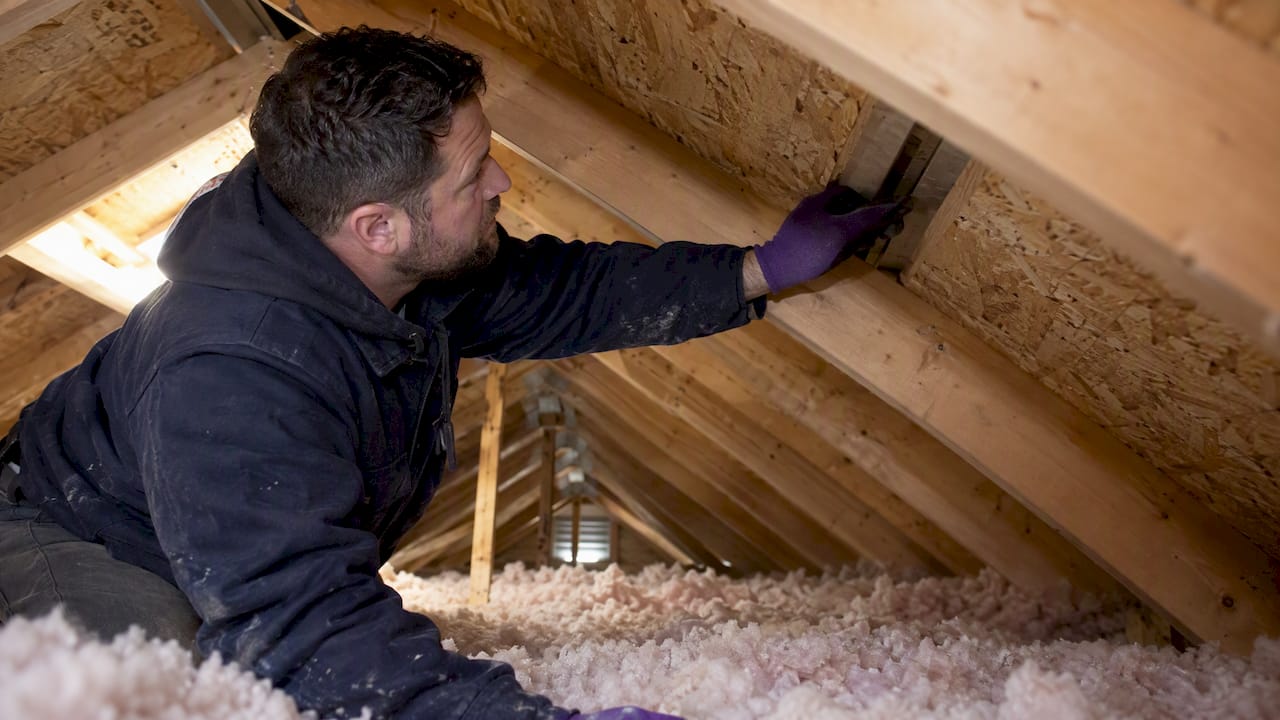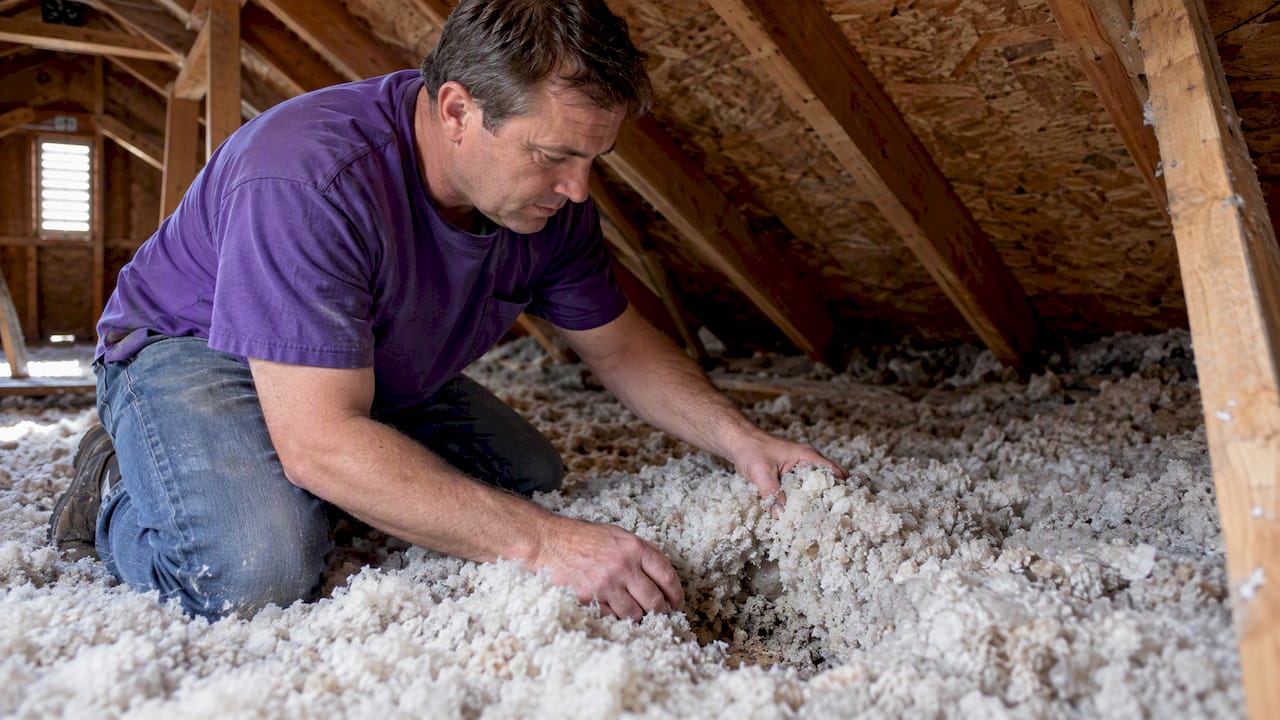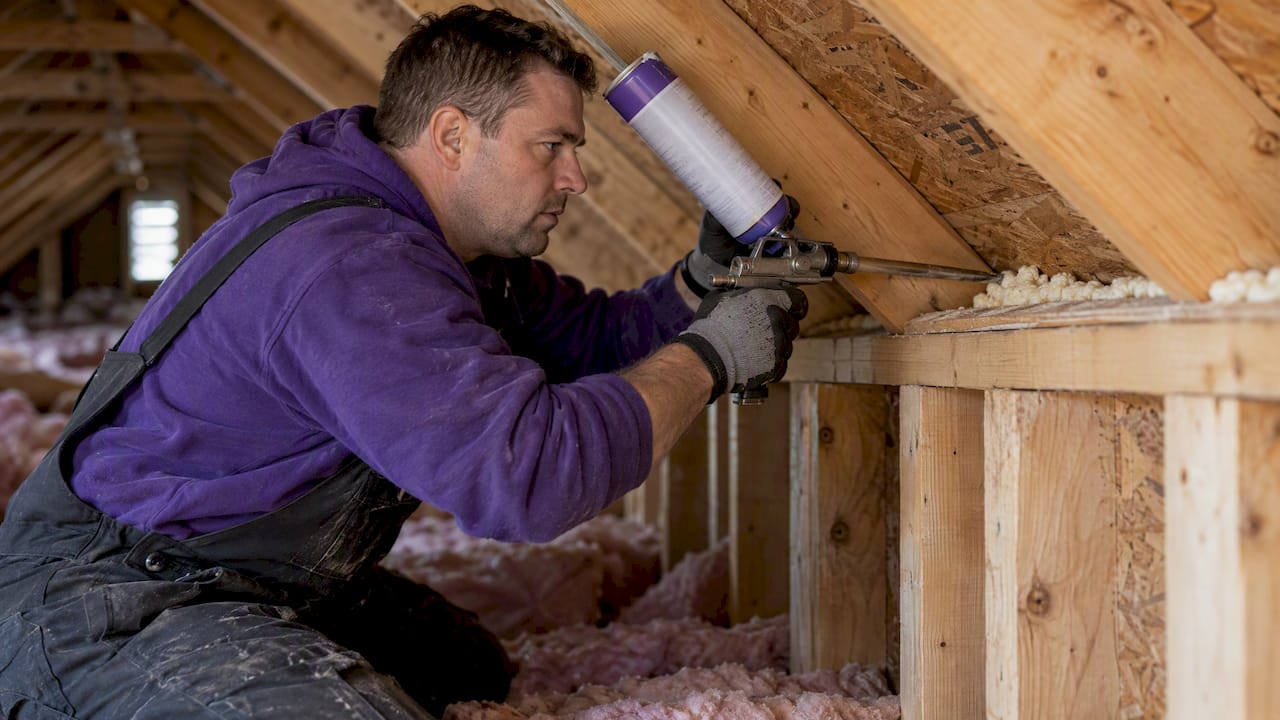
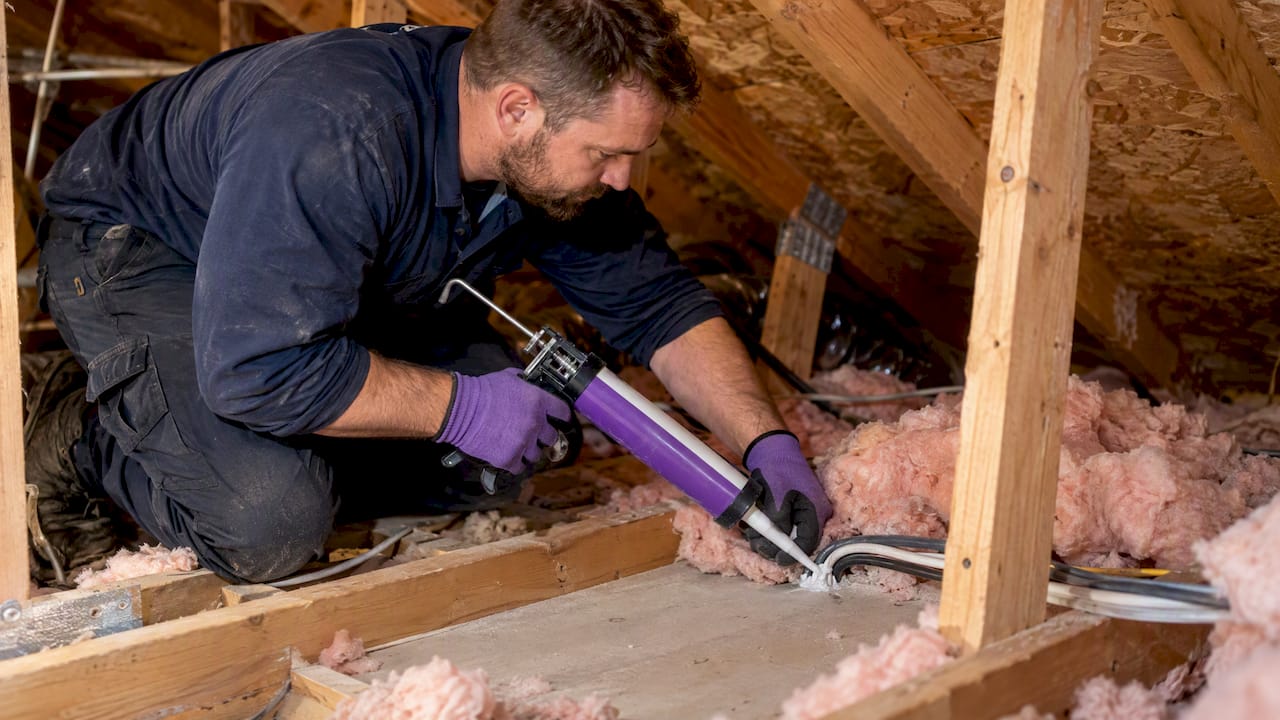
Air sealing and insulation are not rivals, and they are not interchangeable. Air sealing stops air from moving through gaps in your ceiling. Insulation slows the heat that moves through materials. In an existing attic, the right order is to seal first and insulate second, because new insulation laid over open leaks wastes much of what you paid for.
This guide explains what each one does, how to tell which your home needs most, what the order looks like in a typical Chicagoland attic, and where Illinois utility programs fit in.
TL;DR
- Air sealing blocks airflow. Insulation resists heat flow. You need both, and one cannot stand in for the other.
- The Department of Energy’s guidance is to air seal attic floor penetrations first, then add insulation.
- Dirty, darkened patches on old attic insulation usually mark where air is leaking and where sealing should start.
- Check combustion appliances and ventilation before tightening a home. Sealing without that check can create safety problems.
- In Illinois, utility incentives can require sealing before insulation and a program-approved contractor.
Table of Contents
- What each one actually does
- Why the order matters
- How much can each one save?
- How to tell what your home needs
- Where the biggest leaks hide
- Safety before you seal
- What the job looks like in a Chicagoland attic
- When insulation can come first
- Utility programs and incentives in Illinois
- Our perspective
- Get an assessment before you buy
- FAQ
- Sources
What each one actually does
The University of Illinois Extension offers a useful picture. Air sealing works like a windbreaker: it keeps conditioned air in and outdoor air out. Insulation works like a sweater: it slows conductive heat flow. A sweater on a windy day only goes so far, and a windbreaker alone will not keep you warm in January.
| Air sealing | Insulation | |
|---|---|---|
| What it controls | Where air can move | How fast heat moves through a material |
| Typical materials | Caulk, one-part foam, rigid blocking, flashing | Fiberglass, cellulose, spray foam |
| Where it goes in a vented attic | Gaps and penetrations in the attic floor | On top of the sealed ceiling plane |
| What it fixes | Drafts, uneven rooms, dust, moisture carried into the attic | Heat loss and gain through ceilings and walls |
| Measured by | Blower door test | R-value |
Insulation does reduce air movement a little, but that is not its job. The Department of Energy’s building science pages state plainly that insulation is not an air barrier. Air can pass through or around it, and it carries moisture along.
Why the order matters
Here is the practical problem. Most attics in Arlington Heights, Palatine or Naperville already have some insulation on the floor. It hides the holes. Wire penetrations, plumbing stacks, the tops of interior walls, dropped soffits over kitchen cabinets and bath fans all sit under that blanket.
If you pile new insulation on top without sealing, those holes stay open, and warm, moist indoor air keeps rising through them. The Department of Energy notes that this moisture can lead to rot, mold and ice dams. Ice dams are a familiar winter sight across the Northwest Suburbs.
In a vented attic, the thermal boundary sits at the ceiling. The drywall ceiling is normally the air barrier, with insulation on top of it. Your job is to make that barrier continuous. If you want a deeper explanation, we cover it in what an attic air barrier is and why it matters.
Fiberglass makes the case stronger
Loose or batt fiberglass is the most common attic insulation in older homes. It filters air poorly and can be bypassed when air moves around and through it. Cellulose and spray foam behave differently, but none of them replaces a sealed ceiling plane. That is why a thick new layer on a leaky attic often disappoints homeowners.
How much can each one save?
Be skeptical of anyone who promises a precise number before looking at your house. Public figures are modest and come with ranges. ENERGY STAR says sealing air leaks and adding insulation can provide up to a 10% savings on annual energy bills. The Illinois Extension cites up to 10 to 15% on annual heating and cooling costs when the two are combined.
Your result depends on how leaky the house is, what is already in the attic and how the rest of the home performs. A drafty 1970s split-level in Elk Grove Village will usually gain more than a tight newer home in Vernon Hills. Comfort gains often show up before the bill does: fewer cold rooms, less dust, steadier temperatures upstairs.
How to tell what your home needs
You can learn a lot with a flashlight and an attic hatch. Stay on the joists or a board, and stop if you see signs of mold, droppings or wet material.
- Look for dirty insulation. Dark or dusty patches show where air has filtered through, and ENERGY STAR treats them as a guide to where sealing is needed.
- Check the depth. If you can see the tops of the joists, you probably have too little insulation. Our guide on signs your attic needs an insulation upgrade lists more clues.
- Note the symptoms. Rooms over the garage that never feel right, cold floors in winter, a hot second floor in July, and icicles along the eaves all point to air movement as well as low R-value.
- Look at the hatch. An unsealed, uninsulated attic hatch is a common leak.
- Consider an audit. Home energy audits, often with a blower door test and infrared imaging, are the standard professional method for finding where a house loses energy. They help avoid paying for insulation that will not fix a problem caused by hidden leaks. For what happens after the test, see what to fix in the attic after a blower door test.
Where the biggest leaks hide
Homeowners tend to chase hairline cracks. ENERGY STAR advises the opposite: plug the big holes first, because that is where most of the savings are. Typical big ones include:
- Top plates of interior walls
- Dropped soffits and chases above cabinets, tubs and stairwells
- Plumbing and wiring penetrations
- Openings around ducts and bath fan housings
- Recessed can lights (see our note on stopping air leaks from recessed lights)
- The attic hatch or pull-down stairs
We go deeper on this in why sealing attic bypasses matters.
Safety before you seal
Tightening a house changes how it breathes, so a few checks come first.
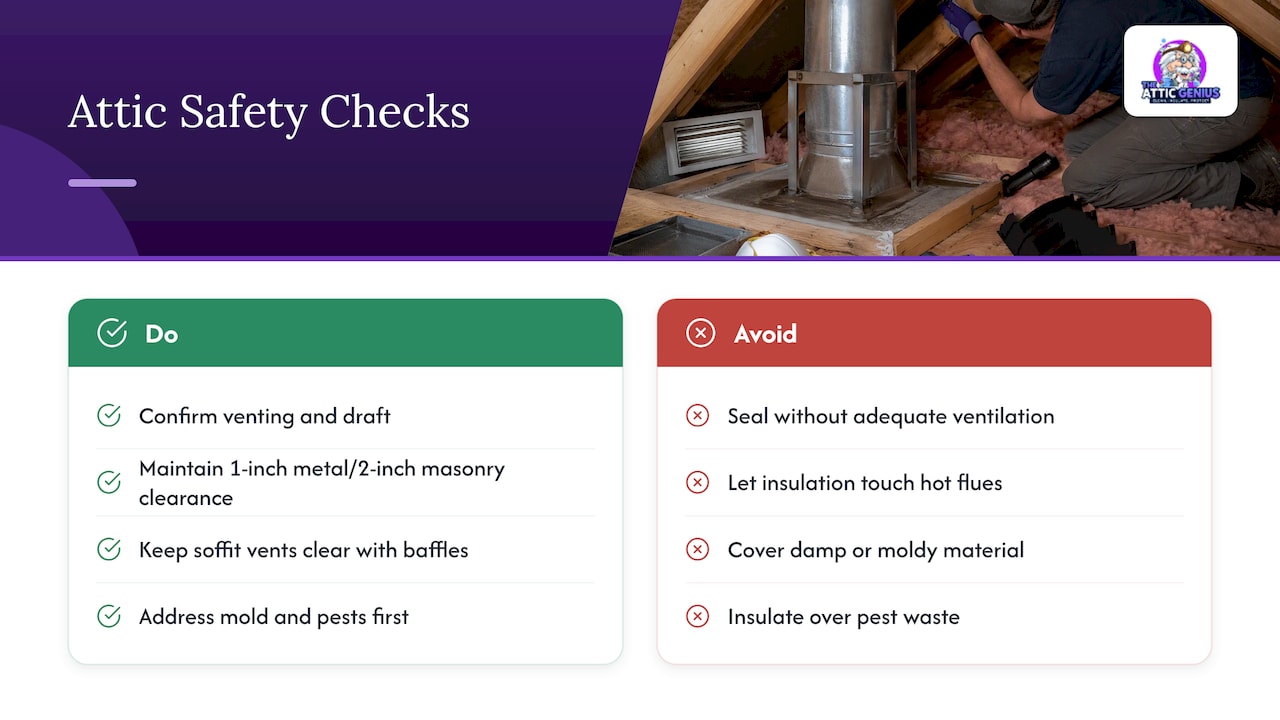
Combustion appliances. The Department of Energy warns that sealing a home too tightly without adequate ventilation can allow pollutants, moisture and combustion gases to build up, including from furnaces and water heaters. If you have a gas furnace or water heater, ask your contractor how they will confirm proper venting and draft. A licensed HVAC technician can test it.
Flues and chimneys. Codes typically call for 1 inch of clearance around metal flues and 2 inches for masonry chimneys. Metal flashing dams hold insulation back from the hot surface. Insulation touching a hot flue is a fire hazard.
Attic ventilation. Sealing the ceiling does not mean sealing the attic from outside air. A vented attic still needs intake and exhaust, and baffles keep insulation from blocking the soffits. Read about soffit versus gable vents and baffles.
Existing moisture, mold or pests. Insulation should not go over damp, moldy or contaminated material. Mold and pest waste should be dealt with first. We explain the sequence in attic insulation after a pest infestation.
What the job looks like in a Chicagoland attic
A sensible project usually runs in this order:
- Inspect. Look at existing insulation, ventilation, wiring, flues, moisture and signs of pests.
- Clear or move material. Where there is a floored attic, only the flooring needed to reach leaks is removed. The DOE’s job aid for floored attics describes this approach. Our page on preparing your attic tells you what to clear.
- Air seal. Close the large openings with blocking, sealant or one-part foam, then the smaller gaps.
- Protect. Install flue dams, baffles and hatch covers.
- Insulate. Add or replace insulation to the depth the home needs. If old material is contaminated or compressed, removal comes first.
- Verify. Check depth, clearances and, where available, retest.
One caution on DIY. ENERGY STAR itself calls attic air sealing generally a challenging DIY project. Working above a drywall ceiling, near wiring and flues, is where homeowners most often get hurt or cause damage. We list the usual errors in attic insulation mistakes DIY homeowners must avoid.
When insulation can come first
There are exceptions. If an attic has almost no insulation and the leaks are minor, or if you are building new, the work happens together. In a newer home with a well-sealed ceiling, adding insulation may be the main fix. A professional assessment tells you which situation you are in. The rule “seal first” is about order, and it does not mean every home needs heavy sealing work.
Utility programs and incentives in Illinois
Illinois utilities have programs for envelope work. ComEd’s Home Energy Savings FAQs describe weatherization measures for income-eligible customers, including air sealing and insulation. Gas customers can look to Nicor Gas programs. Both typically require work by program-approved contractors to qualify, and terms change from year to year. Confirm current amounts and rules with the utility before you sign anything.
We summarize how invoices and caps work in our guide to Nicor insulation rebates. Ask your contractor whether sealing has to be documented before insulation, since program rules often care about sequence.
Our perspective
We work only in attics and insulation-related services, and the same story repeats. A homeowner bought more insulation, saw little change and assumed insulation “doesn’t work.” Usually the insulation was fine. The attic floor was a sieve.
So we start with the attic, not a sales plan. We look at what is up there, where air is moving and whether ventilation, moisture or pests need attention first. Sometimes a home needs mainly sealing. Sometimes it needs a full upgrade or complete removal and replacement. We would rather tell you which one than sell you the biggest job.
Three things we hold to. Sealing comes before insulation in an existing vented attic. Ventilation and clearances are never an afterthought. And you should get the scope, price and warranty in writing, with upfront pricing, so you know what you are buying.
— Jim
Get an assessment before you buy
If you are in the Northwest Suburbs or elsewhere in Chicagoland, we can inspect your attic and tell you whether you need sealing, insulation or both. We offer same-day inspections where available. Learn about our air sealing service or request a free inspection. We also handle ventilation, mold remediation and pest waste cleanup, so a problem found in the attic does not leave you hunting for a second contractor.
FAQ
Should I air seal or insulate first?
Air seal first. The Department of Energy recommends sealing attic floor penetrations before adding insulation, because old insulation hides leaks and new insulation can lock them in place. Sealing afterward is far harder.
Is air sealing an attic worth it?
For most older homes, yes. It is among the most cost-effective efficiency steps, according to ENERGY STAR, and it protects the insulation you add. Savings vary with how leaky the home is, so an inspection or blower door test gives you a better answer than a general rule.
How effective is insulation without air sealing?
Less effective than its R-value suggests. Insulation slows heat conduction but does not stop air from flowing through gaps, so heat and moisture still move into the attic. In fiberglass especially, air movement undermines performance.
Can I air seal too much?
A home can become too tight for its ventilation. The Department of Energy cautions that sealing without adequate ventilation can trap moisture and combustion gases. Have a professional check furnace and water heater venting and the home’s ventilation plan before and after sealing.
Sources
- Seasonal Savings, University of Illinois Extension
- Air Sealing Existing Attics, Building Science Education (DOE)
- Air Barriers in Ventilated Attics, Building Science Education (DOE)
- Guide to Air Sealing, U.S. Department of Energy
- Attic Air Sealing Project, ENERGY STAR
- Sealing Air Leaks: Attic, ENERGY STAR
- Seal and Insulate with ENERGY STAR
- Home energy audit case study, U.S. Department of Energy
- Job Aid 2-7: Air Seal a Floored Attic, U.S. Department of Energy
- Single Family FAQs, ComEd