A blower door test gives you a precise, numeric measure of how much air your home leaks, in the form of CFM50 and ACH50 scores, and pinpoints exactly where that air escapes. The payoff is concrete: lower energy bills, fewer drafts, less moisture stress on your walls and attic, and a documented before-and-after record if you invest in air sealing.
TL;DR:
- Homes with ACH50 above 8 require targeted sealing around attic bypasses, rim joists, and duct penetrations to achieve significant efficiency improvements.
- Retesting after air sealing can reduce leakage by 40 to 50 percent, but initial testing at rough-in is most cost-effective for new construction.
- Achieving a score below 3 ACH50 usually involves sealing leaks in conjunction with insulation upgrades to prevent moisture and comfort issues.
- Older homes often score above 10 ACH50, indicating a need for comprehensive sealing efforts and possibly ventilation adjustments.
- Cost and complexity increase with house size and features, so scheduling at early stages or during energy audits ensures easier, cheaper repairs.
Table of Contents
- What Does a Blower Door Test Actually Measure?
- Primary Benefits: Energy, Comfort, Air Quality, and Durability
- When Should You Schedule a Blower Door Test?
- How Do You Read Your Blower Door Test Results?
- What to Expect: Time and Cost of a Blower Door Test
- How Do Professionals Locate and Fix Air Leaks?
- What Are the Limits of a Blower Door Test?
- A Practitioner’s View: Turning Test Numbers Into Attic Fixes
- Ready to Act on Your Blower Door Results?
- Sources
- FAQ
What Does a Blower Door Test Actually Measure?
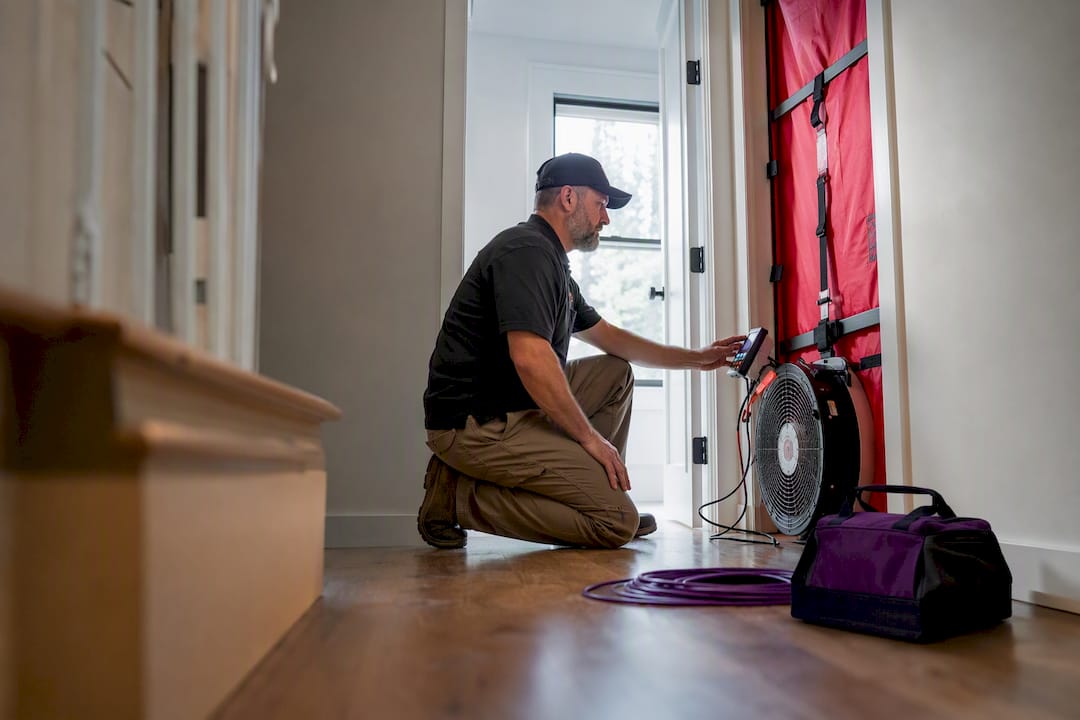
A blower door setup consists of a calibrated fan mounted in a temporary door panel, hooked to a manometer that tracks pressure. The technician depressurizes the house to a standard 50 Pascals, roughly the pressure of a 20 mile-per-hour wind hitting every side of the building at once, and measures how much air the fan has to move to hold that pressure.
That airflow reading is called CFM50, cubic feet per minute at 50 Pascals. On its own, CFM50 tells you how leaky a specific house is, but it doesn’t let you compare a 1,200-square-foot bungalow to a 4,000-square-foot colonial fairly. That’s where ACH50 comes in: air changes per hour at 50 Pascals, which divides CFM50 by house volume so leakage rates become comparable across different home sizes.
Auditors often calculate a related figure called effective leakage area, a theoretical hole size that would produce the same airflow as all the home’s actual gaps combined. During the test itself:
- A calibrated fan and manometer establish the 50 Pa reference pressure
- CFM50 measures raw airflow needed to maintain that pressure
- ACH50 normalizes the result by house volume for fair comparison
- Infrared cameras or smoke pencils get paired with the fan running, since depressurization exaggerates airflow at leak points and makes them easier to find
Primary Benefits: Energy, Comfort, Air Quality, and Durability
Air leakage is not a minor comfort issue. It’s a direct energy cost, a moisture risk, and often the reason one room in your house never feels right no matter how you set the thermostat.
The core benefits break down into four categories:
- Energy savings. Uncontrolled infiltration forces your furnace and air conditioner to constantly recondition outside air leaking in through the attic, rim joists, and duct chases. Reducing that infiltration cuts the load on both systems, which shows up directly on utility bills.
- Comfort. Sealing the gaps a blower door test finds eliminates the draft near baseboards, evens out temperature swings between floors, and cuts down on outside noise bleeding through wall penetrations.
- Durability and moisture control. Warm, moist indoor air that escapes into wall cavities or attic assemblies condenses when it hits cold surfaces, which sets the stage for mold, wood rot, and ice dams along the roofline. Air sealing interrupts that pathway before damage starts.
- Indoor air quality. Leaks pull air from attics, garages, and crawl spaces into living space, carrying dust, pollen, and sometimes combustion byproducts along with it. The Building America Solution Center lists reduced infiltration, improved durability, and better comfort as the three headline benefits of the test.
There’s a downstream benefit that gets overlooked: HVAC sizing. A tighter envelope reduces peak heating and cooling load, which means a properly sized system runs fewer, longer cycles instead of short-cycling to fight constant infiltration. That’s better for equipment life and for humidity control, since longer cycles let the system actually dehumidify the air.
When Should You Schedule a Blower Door Test?
Timing determines how easy and how cheap the fixes are. Testing at the wrong stage means finding problems after they’re buried behind drywall.
- New construction, pre-drywall. Testing at rough-in catches gaps in the air barrier while framing and rough plumbing are still exposed, when correcting them costs far less than after finishes go in.
- New construction, final. A closeout test verifies the completed home meets code or program targets and gives the buyer documented proof of performance.
- Before insulating an existing home. Testing first identifies bypasses that insulation alone won’t fix, since insulation slows heat transfer but doesn’t stop air movement through gaps.
- During an energy audit. A test establishes a baseline before you commit to bigger investments like a furnace or AC replacement.
- Post-remediation verification. Retesting after air sealing work quantifies the improvement and confirms the money spent actually worked.
How Do You Read Your Blower Door Test Results?
CFM50 and ACH50 numbers only matter once you know what range you’re in and what your local code expects.
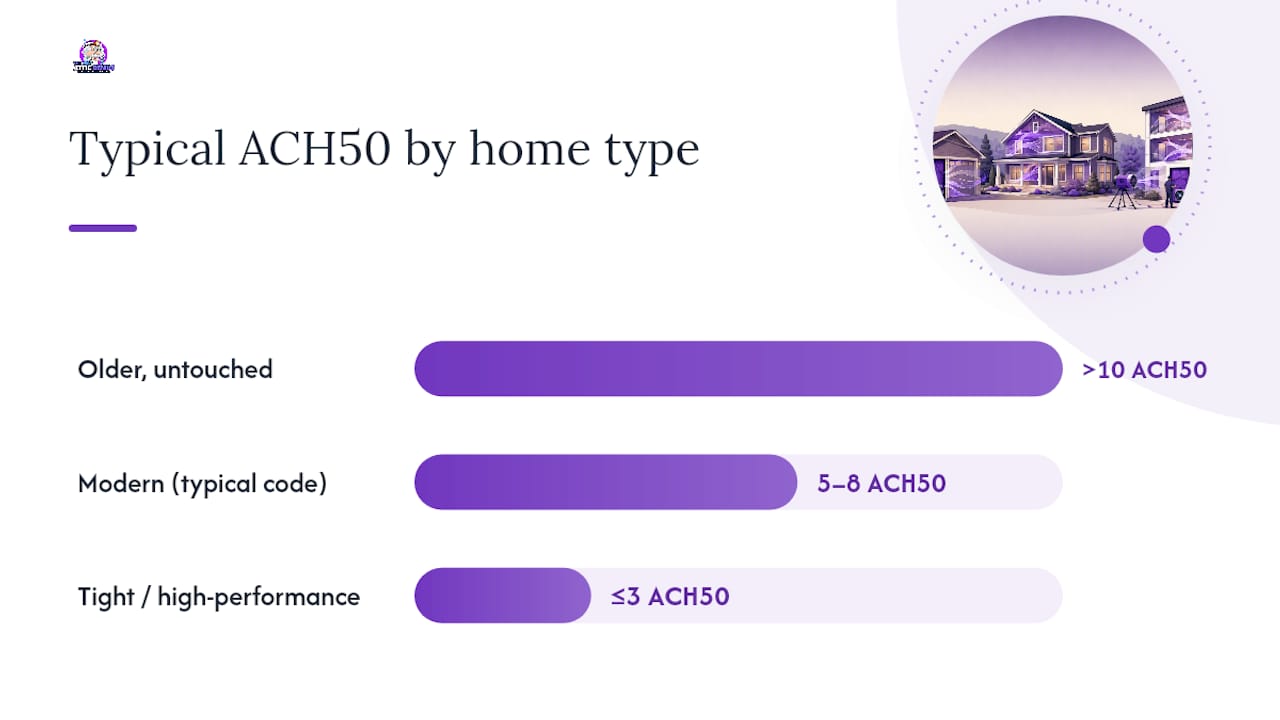
Older, untouched homes commonly land above 10 ACH50, sometimes well above it. That’s a lot of unintentional ventilation. Homes built to typical modern code, without an aggressive air-sealing push, often fall somewhere in the 5 to 8 ACH50 range. Homes built or retrofitted to tight, high-performance standards frequently land at 3 ACH50 or lower.
A few practical notes on using these numbers:
- ACH50 is the figure to use when comparing your house to a neighbor’s or to a program target, since it accounts for house volume.
- CFM50 alone is still useful for absolute airflow checks and for the report a rater files with a certification program.
- Local energy codes and programs like Energy Star set their own specific ACH50 thresholds, so check what your jurisdiction requires rather than assuming a national number applies.
- Use your score to prioritize, not panic. A home at 9 ACH50 doesn’t need to hit 3. It needs targeted sealing at its worst leak points.
What to Expect: Time and Cost of a Blower Door Test
A standard residential test typically runs 30 to 60 minutes, including setup, calibration, and walking the house while the fan runs. Larger homes or commercial buildings take longer, sometimes much longer, since bigger volumes and more zones mean more setup and more pressure readings.
Cost depends on a few variables:
- Local availability. Fewer certified raters in your area means more travel cost baked into the quote.
- House size and complexity. A larger home with multiple stories or additions takes more time to test and diagnose.
- Add-on diagnostics. Pairing the blower door with an infrared scan or duct leakage test adds to the price but adds real diagnostic value.
On-site, the technician seals intentional openings like dryer vents temporarily, runs the fan to establish pressure, walks the house with a smoke pencil or infrared camera to spot leaks in real time, then delivers a report with your CFM50 and ACH50 numbers.
How Do Professionals Locate and Fix Air Leaks?
Running the fan is only half the test. The real value comes from what happens while it’s running: a technician walks the house with the depressurization exaggerating every gap, making leaks that are invisible at normal pressure easy to detect.
Tools commonly used during a directed air-sealing session:
- Smoke pencils or fog show air movement visually at suspected gaps.
- Infrared cameras reveal temperature differences at leak points, especially useful for attic bypasses hidden above insulation.
- Manual hand checks at outlets, baseboards, and window trim catch smaller leaks a camera might miss.
- Duct leakage testing identifies losses in the duct system itself, separate from envelope leaks.
Fine Homebuilding’s guide to blower-door-directed sealing notes that stack effect concentrates the biggest leaks at the top and bottom of a house, which is why attic bypasses, rim joists, and duct boots consistently deliver the highest payback per hour of sealing work.
Pro Tip: Ask whether your test includes a follow-up retest after sealing. Weatherization programs commonly document CFM50 reductions of 40 to 50 percent on leaky homes, and that number only means something if you have a real before-and-after comparison.
What Are the Limits of a Blower Door Test?
A blower door test is a diagnostic tool, not a magic fix, and it comes with real tradeoffs worth knowing before you book one.
- Cost and access. Rural properties or areas with few certified raters often pay more, since the tester has to travel farther.
- Physical disruption. The pressure change can stir up dust and pollen, and in homes with loose or old flooring, it occasionally causes minor lifting.
- Ventilation risk. A house sealed tighter without a plan for mechanical ventilation can trap moisture and pollutants that used to leak out passively, so tightening the envelope and improving attic ventilation usually need to happen together.
- A snapshot, not a constant. Wind, temperature, and how residents use exhaust fans all affect real-world infiltration on any given day, so the test number is a controlled reference point, not a live reading of everyday conditions.
A Practitioner’s View: Turning Test Numbers Into Attic Fixes
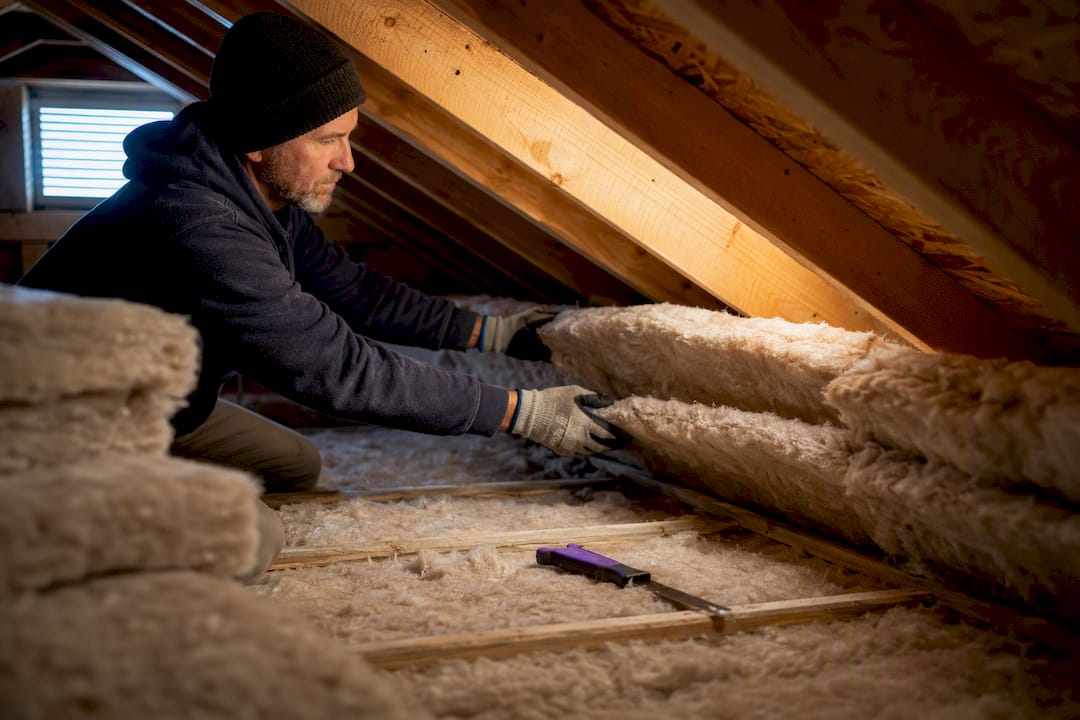
Numbers on a report are only useful if someone acts on them. After a blower door test, a critical focus is identifying where the attic contributes to the score, since attic bypasses around chimneys, plumbing stacks, and can lights are consistently among the highest-leakage points in a house.
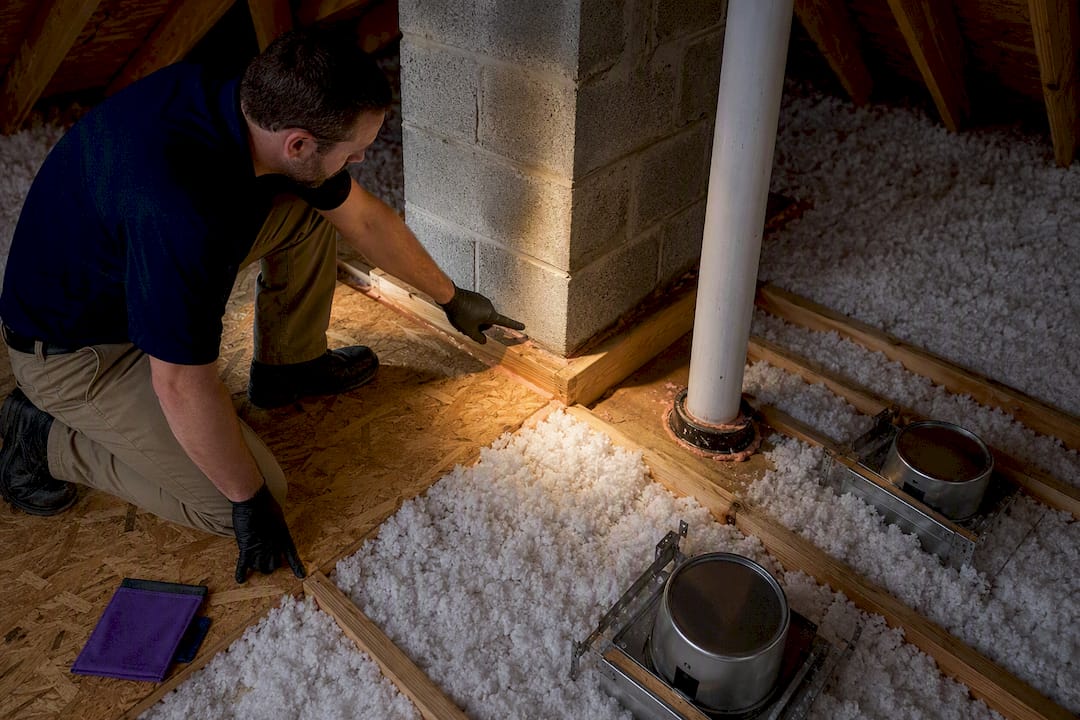
Air sealing is typically paired with insulation work rather than treated separately, because sealing gaps without addressing thin or compressed insulation leaves half the problem unsolved.
If you’ve had a test done, or suspect you’d benefit from one, the next move is straightforward: get the diagnostic, then schedule targeted sealing with a verification retest. We back every job with upfront pricing and a written warranty, so you know what you’re paying for before work starts.
— Jim
Ready to Act on Your Blower Door Results?
A blower door test tells you where the leaks are. Specialist crews focusing on attics, air sealing, and ventilation can help close these leaks effectively, rather than having your home treated as a side job among other trades.

If your test flagged high CFM50 or ACH50 numbers, air sealing targeted at your attic bypasses is usually the highest-leverage fix available, often paired with an attic insulation upgrade since sealed air gaps and thin insulation tend to travel together. If sealing tightens the envelope enough to raise moisture concerns, our ventilation solutions and mold remediation services cover that side too. Every job starts with upfront pricing and comes backed by a written warranty, and we offer same-day inspections across Chicagoland and the Northwest Suburbs. Start with a free inspection and get a real plan based on where your home is actually losing air.
Sources
The Building America Solution Center documents the test procedure and its core benefits. The NAHB technical note on air tightness covers code benchmarks. Energy Conservatory’s Blower Door Basics explains diagnostic technique, and DOE’s home energy assessment guidance outlines how the test fits into a full audit.
- Enclosure leakage test — Building America Solution Center (PNNL)
- NAHB technical note — Building air tightness
- Blower Door Basics — Energy Conservatory
FAQ
Is a Blower Door Test Worth It?
Yes, for most homes it’s worth the cost because it converts guesswork into a specific, actionable leakage number and pinpoints exactly where air sealing will pay off most.
What Is a Good Score on a Blower Door Test?
A tight home commonly scores around 3 ACH50 or lower, typical code-built homes often land between 5 and 8 ACH50, and older, untouched homes frequently score above 10 ACH50; check your local code for the specific target that applies to you.
What Is the Average Cost of a Blower Door Test?
Cost varies based on local rater availability, house size, and whether you add diagnostics like infrared scanning; a company like The Attic Genius provides current pricing directly, and a free inspection is a good starting point before committing to a paid test.
When Should a Blower Door Test Be Done?
Test new construction at rough-in and again at final completion, and test existing homes before insulating, during an energy audit, or as a retest after air sealing to confirm the improvement.
Sources:
BASC PNNL – Enclosure leakage test | BASC PNNL – Drawbacks | DOE – Home energy assessments | NAHB – Building air tightness | Energy Conservatory – Blower Door Basics | Fine Homebuilding – Blower-door-directed air sealing