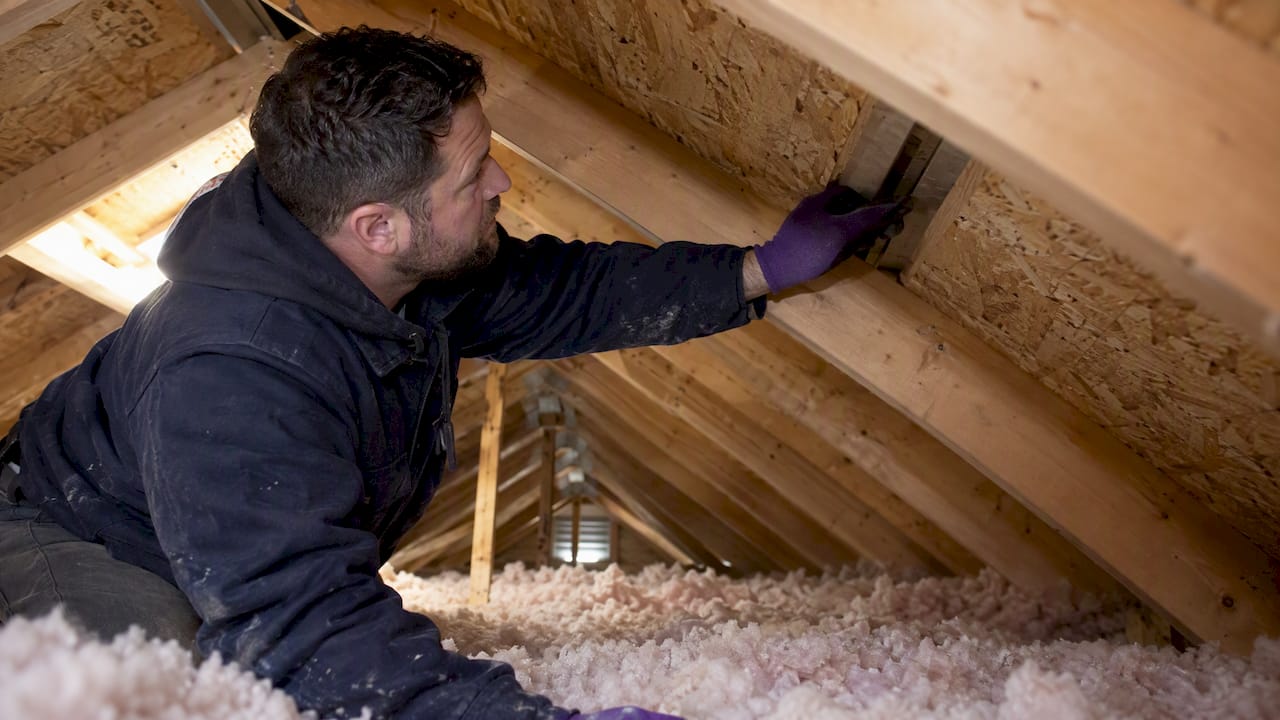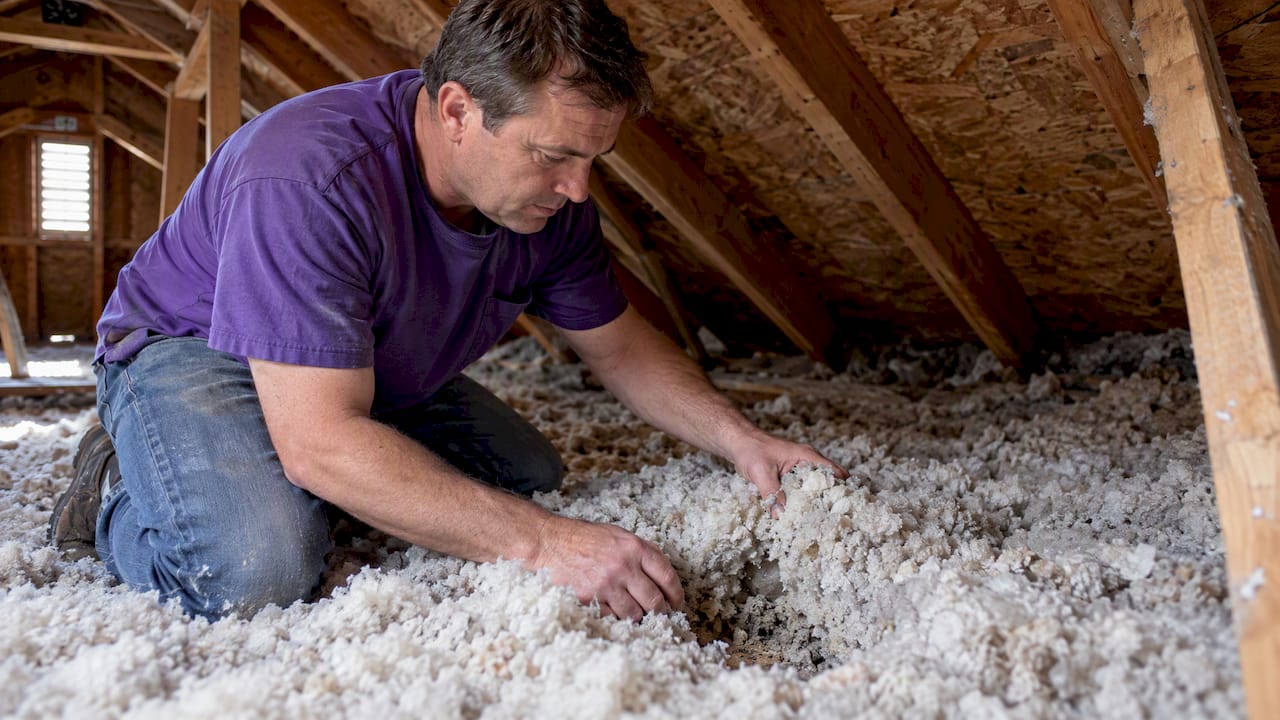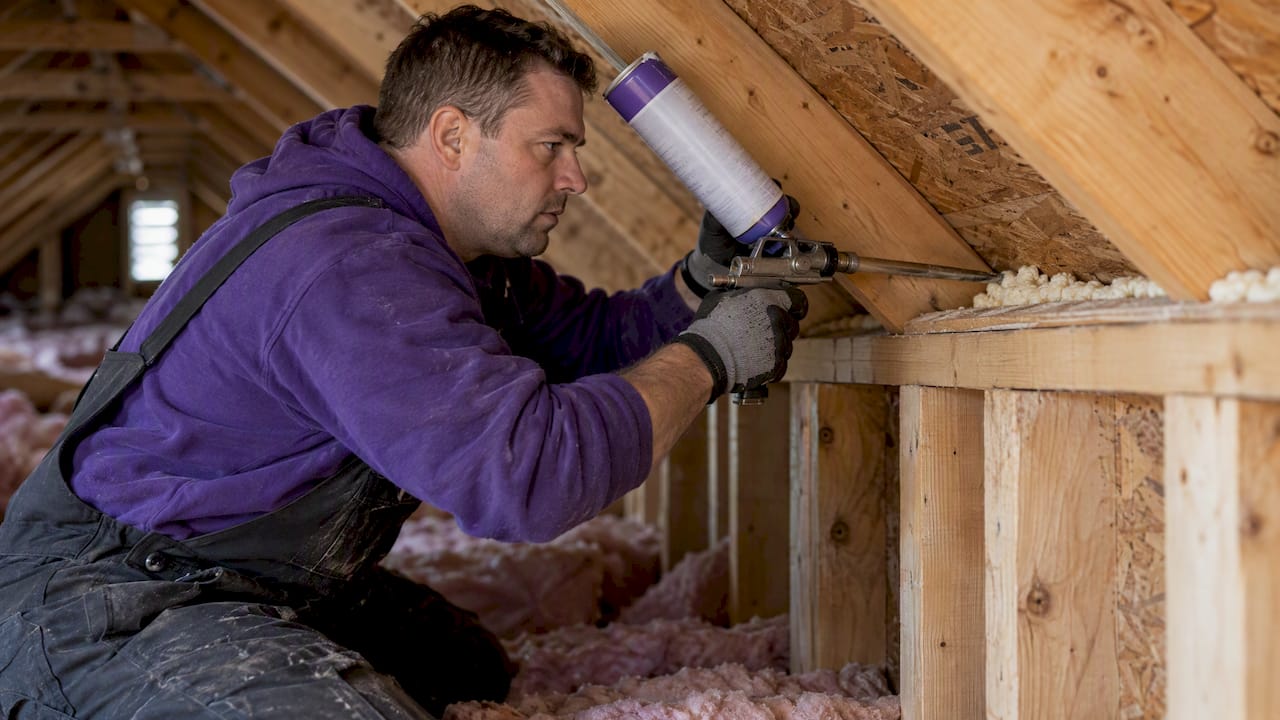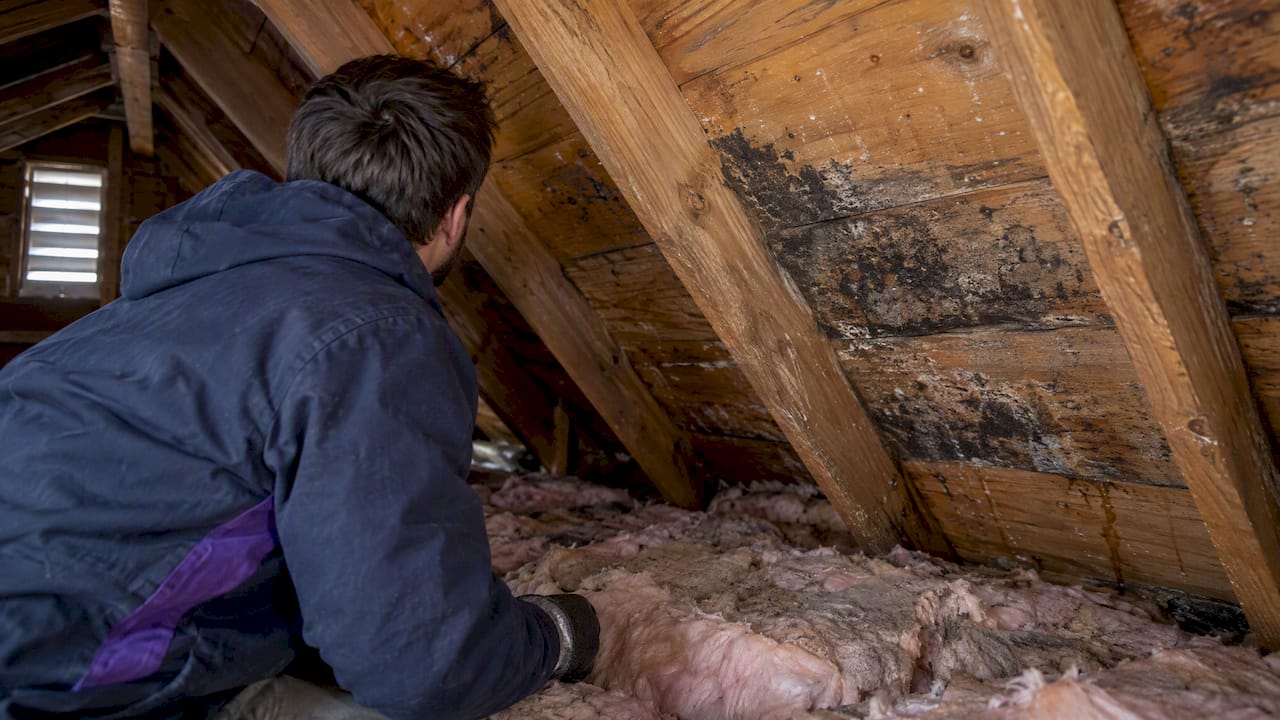
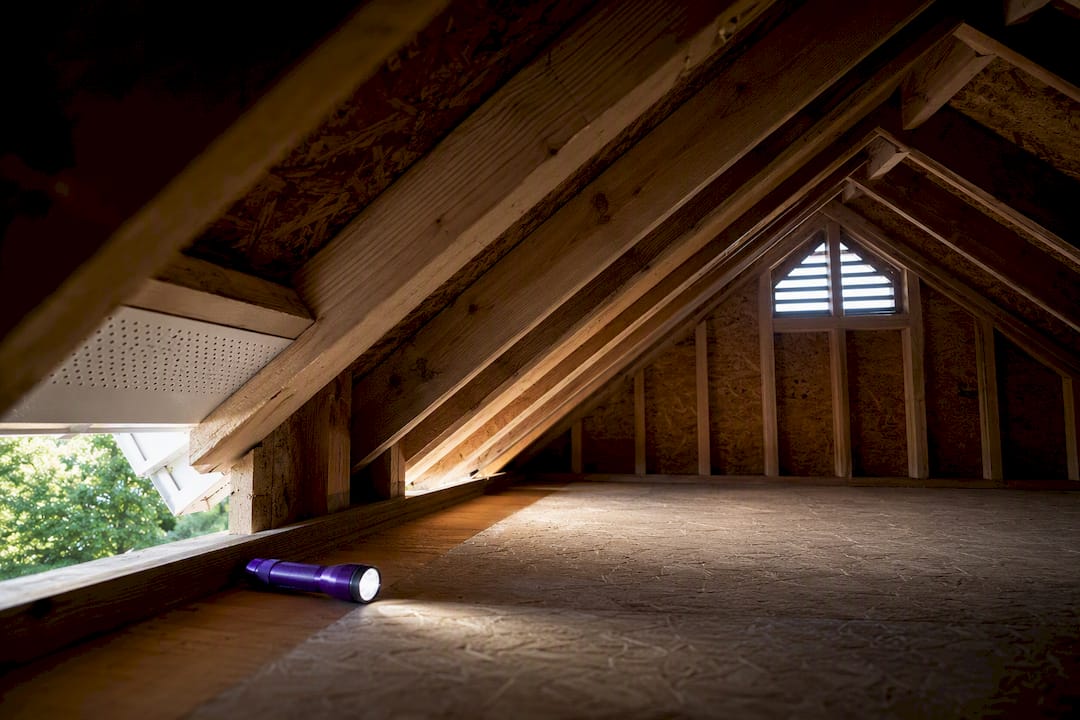
For most homes, continuous soffit intake paired with high exhaust through a ridge vent gives the most balanced, reliable attic ventilation. Gable vents are a reasonable alternative only when soffits or eaves aren’t available, or a full roof retrofit isn’t practical. Either way, check your soffit airflow and confirm rafter baffles are in place before assuming your attic is properly ventilated.
TL;DR:
- Proper attic ventilation relies on continuous soffit intake paired with ridge exhaust, which provides even airflow and helps prevent moisture buildup and ice dams.
- Gable vents depend heavily on wind direction and are less effective at evenly ventilating the entire attic, especially in still or crosswinds, making them suitable mainly for retrofit or homes with no soffits.
- To ensure soffit vents function correctly, installers must prevent insulation from blocking airflow with proper rafter baffles and by avoiding covering vents with insulation, verified by checking daylight from outside.
- Attic ventilation sizing follows the 1:150 to 1:300 ratio based on attic area, requiring careful calculation of net free vent areas and balanced intake and exhaust to avoid short-circuiting or inefficiency.
- Common attic issues include blocked soffit vents and missing baffles, which can be fixed through air sealing, installing or replacing baffles, and proper vent sizing, with full solutions ideally performed after sealing and insulation.
Table of Contents
- Soffit vs gable vents: how they work and where they differ
- Why soffit vents are the preferred intake for most attics
- What gable vents do well, and where they fall short
- How to choose: a decision checklist for your roof
- How much vent area you actually need
- Common mistakes that quietly ruin attic ventilation
- What we typically find during attic inspections
- Seal first, insulate second, ventilate third
- Getting your attic’s airflow checked and fixed
- Sources
- FAQ
Soffit vs gable vents: how they work and where they differ
Soffit vents sit under the roof’s overhang and pull outside air into the attic at the lowest point of the roofline. Gable vents sit higher, usually near the peak of the end walls, and rely more on wind direction and pressure differences to move air in or out.
The two systems solve the airflow problem differently. Soffit vents paired with a ridge vent create a steady, low-to-high current that pulls in cool air at the eaves and pushes warm, moist air out at the peak. Ridge vents provide continuous, uniform exhaust across the entire roofline when there’s enough intake to feed them. Gable vents, by contrast, work best when wind blows directly across them, which means performance can swing depending on the day and the direction of the storm.
Here’s how the two stack up on the problems homeowners actually worry about:
- Moisture and ice dams: Soffit-to-ridge airflow flushes humid attic air consistently, which helps prevent the freeze-thaw cycle behind ice dams; gable vents alone often leave pockets of stagnant air near the eaves where ice dams start.
- Summer heat buildup: Continuous soffit and ridge ventilation cools the attic more evenly across the whole roof deck, while gable vents tend to ventilate best near the gable ends and less near the center of a long roof.
- Retrofit situations: Gable vents can be added to a wall without touching the roofline, making them a practical fix for homes with short or nonexistent eaves.
- Wind dependency: Gable vents work well in a crosswind but can stall or even reverse airflow when wind hits the roof from an unhelpful angle.
Neither system is wrong on its own. The question is which one matches your roof’s shape, your attic’s condition, and how much retrofit work you’re willing to take on.
Why soffit vents are the preferred intake for most attics
Soffit vents do one job: bring in fresh air at the lowest point of the attic so it can rise and flush out warmer, moist air near the ridge. That low-to-high path is the backbone of what roofing professionals call balanced ventilation, where intake area should equal or exceed exhaust area to keep the system working as intended.
Done right, soffit intake delivers a few concrete benefits. It flushes the entire attic evenly rather than just the areas near a single vent. It reduces the moisture buildup that leads to mold, rot, and rusted fasteners. It lowers the odds of ice dams by keeping the underside of the roof deck closer to outdoor temperature in winter. And it keeps summer attic temperatures from climbing as high, which takes pressure off your air conditioning and the insulation doing the real work against heat transfer.
None of that happens automatically. Soffit vents only work if air actually has a clear path from the opening up into the attic. That means:
- Continuous soffit venting (or evenly spaced individual vents) along as much of the eave as possible.
- Rafter baffles installed in every bay, holding a clear air channel between the insulation and the roof deck.
- Insulation kept clear of the vent openings rather than pushed into the eaves where it blocks airflow entirely.
ENERGY STAR specifically warns against covering soffit vents with insulation, since a blocked intake defeats the entire system no matter how good the exhaust side looks. Baffles are what keep that channel open once insulation goes in, and they’re inexpensive compared to the moisture and heat problems that show up when they’re missing. For more on how eaves handle this job, see how eave vents control attic heat and moisture.
Pro Tip: Shine a flashlight up from outside at each soffit vent on a bright day. If you can’t see daylight from inside the attic at that spot, the path is likely blocked.
What gable vents do well, and where they fall short
Gable vents are openings placed high on the triangular end walls of a roof, typically near the peak. They work primarily through wind pressure: air pushes in on the windward side and pulls out on the leeward side, creating cross-ventilation across the attic space. Without a steady breeze hitting the vent at the right angle, that airflow slows down considerably.
That wind dependency is both their strength and their weakness. On a breezy day, a pair of gable vents can move a surprising amount of air. On a still day, or when wind comes from an angle that doesn’t line up with the vents, the attic can sit with almost no exchange at all.
Gable vents earn their place in a few specific situations:
- Retrofit-friendly: They install into an existing end wall without cutting into the roof deck, which makes them far less invasive than adding a ridge vent system after the fact.
- No-overhang homes: Houses with minimal or no soffit overhang have nowhere to put intake vents low on the roof, so gable vents become one of the few realistic options.
- Budget-conscious fixes: For homeowners who need some ventilation improvement without a full roofing project, gable vents are a lower-cost entry point.
The limitations matter just as much. Coverage is uneven, since airflow concentrates near the gable ends and tapers off toward the middle of a long roof. When gable vents are combined with a ridge vent, the ridge (being the path of least resistance) tends to pull air from the nearest gable vent instead of from the soffits, a problem covered in the next section. And in winter, gable vents positioned near roof valleys or ice-prone areas can behave inconsistently depending on snow cover and wind exposure.
How to choose: a decision checklist for your roof
Matching the ventilation system to your actual roof, rather than picking whatever your neighbor has, saves money and prevents callbacks. Run through this checklist before deciding:
- Soffit and ridge earns the top spot when: your eaves are continuous or near-continuous, your rafter bays can accommodate baffles, and you want even attic flushing across the whole roof rather than concentrated at one end.
- Gable vents become an acceptable choice when: your home has no soffit or a very short eave, you’re not planning a roof replacement anytime soon, and you need a simpler retrofit that avoids cutting into the roof deck.
- Cold, snowy climates favor continuous soffit and ridge ventilation, since it more reliably flushes the moist air that drives ice dam formation along the eaves.
- High-wind or coastal areas can make gable vents perform better than expected, since consistent wind gives them the pressure differential they depend on, though this comes at the cost of even coverage.
- Wildfire-prone areas call for vents with ember-resistant mesh regardless of type; check local building requirements before installing either style.
- Mixed conditions (partial soffit, partial gable) usually call for a professional assessment rather than a guess, since the fix often involves blocking one system to let the other work properly.
Roof geometry decides more of this than personal preference does. A ranch home with long, continuous eaves is a natural fit for soffit and ridge. A cape or bungalow with short eaves and prominent gable ends often leans the other way.
How much vent area you actually need
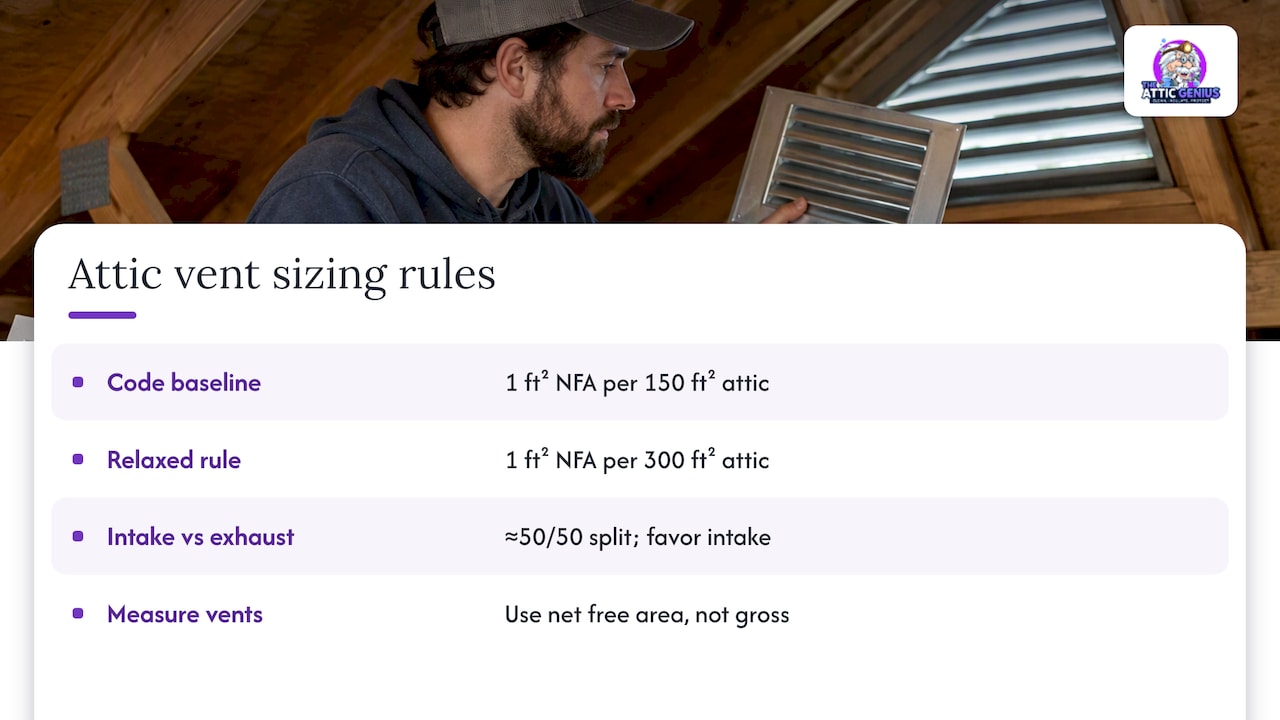
Building codes don’t leave vent sizing to guesswork. The baseline rule, commonly called the 1:150 ratio, requires 1 square foot of net free ventilation area for every 150 square feet of attic floor space, according to International Building Code guidance. That ratio can often be relaxed to 1:300 when specific conditions are met, such as a vapor retarder installed on the warm side of the ceiling or when at least half the required ventilation is split between low intake and high exhaust.
Here’s how that plays out for a sample attic (illustrative numbers only, not a substitute for measuring your own attic):
The general guidance is to keep intake and exhaust close to a 50/50 split, and to favor intake slightly if you can’t hit an exact balance, since insufficient intake forces the exhaust vents to work harder and can pull in wind-driven rain or snow. A common measurement mistake is calculating vent area based on the vent’s total opening size rather than its net free area, which is almost always smaller once you account for louvers and mesh screening; check the manufacturer’s spec sheet rather than measuring the frame.
Common mistakes that quietly ruin attic ventilation
Most attic ventilation problems aren’t caused by picking the wrong vent type. They’re caused by installation details that get overlooked once the insulation goes in.
Blocked soffit vents are the most frequent issue. Loose-fill insulation shifts over time and spray foam applied without care can seal the vent opening from inside the attic, cutting off intake entirely even though the vent looks fine from outside. A quick check from inside the attic with a flashlight, looking for daylight at each soffit opening, catches most of these before they become moisture problems.
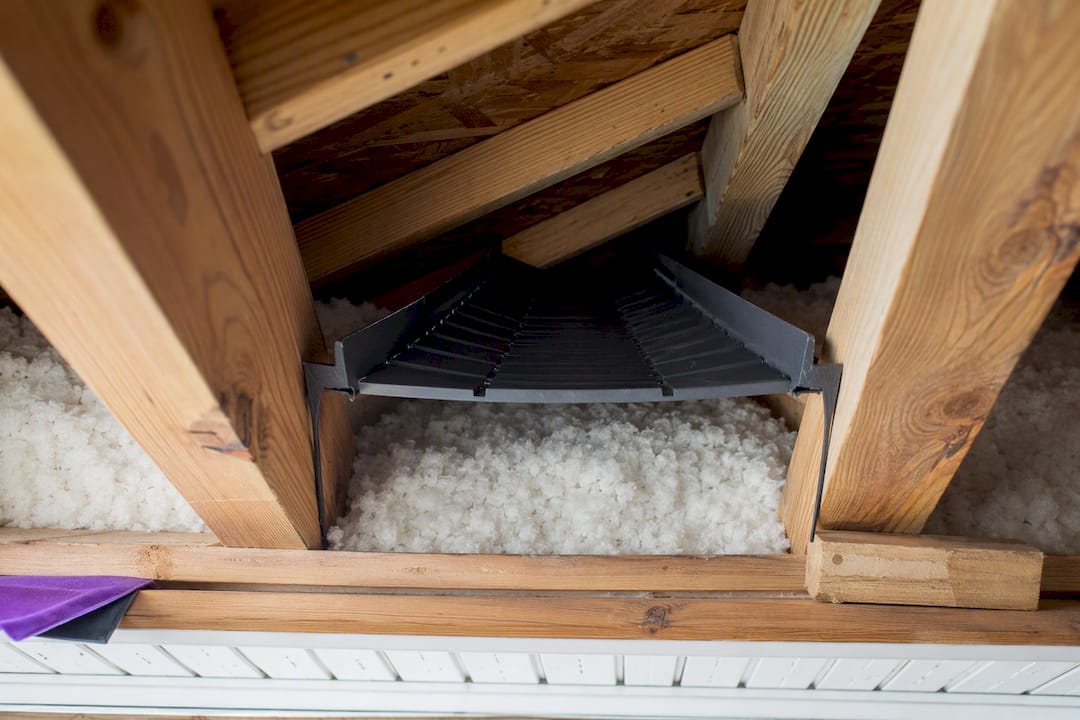
Missing rafter baffles cause the same failure by a different path. Without a baffle holding the channel open, insulation settles directly against the roof deck and blocks the route from soffit to ridge. Baffles maintain roughly a 2-inch air gap and should be visible in every rafter bay where a soffit vent feeds air in; see our page on attic baffles and their role in ventilation for what a correct installation looks like.
Mixing exhaust types causes a subtler problem called short-circuiting. When gable vents and a ridge vent are both present, the ridge (being the easier path) pulls air from the nearest gable vent instead of from the soffits, leaving other parts of the attic stagnant. Building Science recommends blocking gable vents with plywood once a ridge vent is installed, rather than running both systems at once.
Powered attic fans deserve caution too. If soffits are blocked or the attic floor isn’t air-sealed, a fan can pull conditioned air out of the living space instead of pulling fresh air through the vents, which raises energy bills instead of lowering them.
- Check soffit vents from inside the attic with a flashlight before assuming they’re functional.
- Confirm a baffle sits in every rafter bay that has a soffit vent below it.
- Block unused gable vents with plywood once a ridge vent is the primary exhaust.
- Skip powered attic fans until soffits are clear and the attic floor is properly sealed.
Pro Tip: If you can hear or feel a strong draft at one gable vent but nothing at the others, that vent has likely become the dominant exhaust path and needs to be blocked.
What we typically find during attic inspections
Across attic inspections throughout Chicagoland, a handful of ventilation problems show up over and over. Blocked soffit vents, usually from insulation that’s shifted or been blown in too aggressively, are one of the most common findings. Insufficient total intake area is another, often on homes where a partial soffit retrofit never accounted for how much exhaust it needed to feed. Missing baffles show up nearly as often, especially in older homes where insulation was added without anyone addressing the air channel underneath it.
The corrective work is usually straightforward once the diagnosis is clear: air sealing the attic floor to stop conditioned air from leaking upward, adding baffles where they’re missing, upgrading soffit or ridge ventilation to hit the right intake-to-exhaust ratio, and topping off or replacing insulation that’s been compressed or contaminated. None of these fixes require tearing off the roof. Most come down to correcting details that were skipped the first time around.
Seal first, insulate second, ventilate third
Ventilation gets a lot of attention, but it’s the third step, not the first. Air sealing the attic floor stops conditioned air and moisture from leaking upward in the first place. Correcting insulation depth keeps heat where it belongs. Only once those two are handled does balanced ventilation do its intended job of managing the moisture and heat that still make it through.
Skip the sequence and you’re often just moving the same problem around. A homeowner can check for obvious signs, daylight at soffit vents, visible baffles, and even insulation depth, without a professional. Diagnosing short-circuited airflow or sizing a system to code usually calls for someone who does this daily.
— Jim
Getting your attic’s airflow checked and fixed
Diagnosing whether your attic needs better soffit intake, a gable vent fix, or a full ventilation rebalance is easier with an extra set of eyes that does this work daily. The Attic Genius offers a free inspection that covers soffit airflow, baffle placement, and whether your current setup meets the intake-to-exhaust ratios your attic actually needs.

From there, the fix might be as simple as air sealing attic bypasses, or it might call for a full attic ventilation upgrade alongside insulation work. If inspection turns up moisture damage, mold remediation is handled under the same visit rather than a separate referral. Every job comes with upfront pricing and a written warranty, so you know the scope before work starts. Request your free inspection to find out exactly what your attic needs.
Sources
- BSD-102 Understanding Attic Ventilation | Building Science
- International Building Code (IBC) ventilation guidance — ICC
- About attic ventilation | ENERGY STAR
- Why are ridge vents popular with roofers? | Roofing Contractor
FAQ
Should I have soffit vents with gable vents?
Generally no, not without addressing airflow conflicts first. If a ridge vent is present, Building Science recommends blocking gable vents so the ridge doesn’t short-circuit airflow by pulling from the nearest gable vent instead of the soffits.
Should gable vents be closed in winter?
Gable vents don’t need to be closed seasonally in a properly designed system, but if they’re paired with a ridge vent, they should be permanently blocked year-round rather than opened and closed with the seasons. The goal is a single consistent exhaust path, not a switch between systems.
Why don’t all houses have soffits?
Some roof designs, especially homes with minimal overhangs or certain architectural styles, simply don’t have the eave space needed for soffit vents. In those cases, gable vents or alternative intake methods become the practical option instead.
What is the most effective roof venting system?
For most homes, continuous soffit intake paired with a continuous ridge vent is the setup roofing professionals prefer because it provides steady, even airflow with minimal dead spots. The right choice still depends on your roof’s shape and whether continuous soffit venting is physically possible.