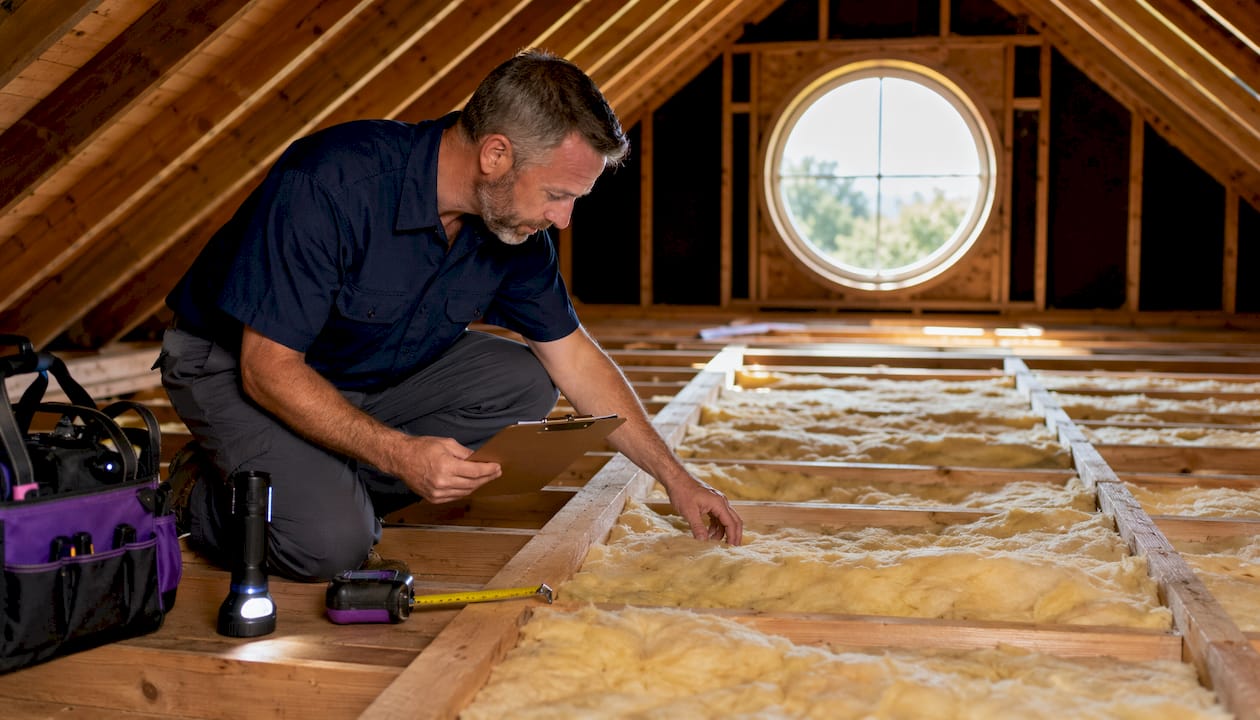
Attic insulation is defined as thermal resistance material installed in your attic space to slow heat transfer between your living area and the outdoors. The U.S. Department of Energy and ENERGY STAR both recognize proper attic insulation as one of the highest-impact upgrades a homeowner can make. Heat flows through conduction, convection, and radiation, and insulation slows the first two. Most homes lose up to 40% of heated or cooled air through a poorly insulated attic. Understanding what attic insulation is, which materials work best, and how to install it correctly puts that energy loss under your control.
What is attic insulation and which types should you consider?
Attic insulation is measured by R-value, a number that rates how well a material resists heat flow. The higher the R-value, the better the thermal resistance. No single material is the best choice for every home. Material choice depends on your climate, budget, attic layout, and installation method.
Blown-in cellulose and fiberglass
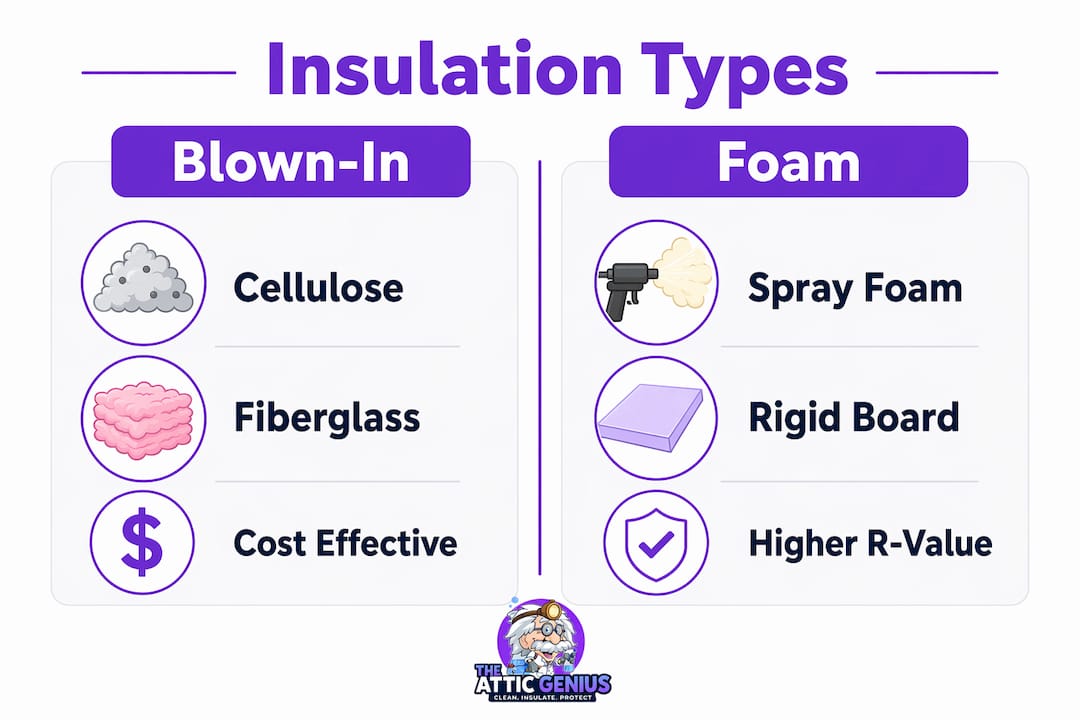
Blown-in loose-fill insulation is the industry standard for attic floors. Contractors use a blowing machine to fill irregular spaces around wires, joists, and pipes without gaps. Blown-in cellulose or fiberglass costs $0.60–$2.30 per square foot installed as of 2026. That range makes it the most budget-accessible option for most homeowners. The Attic Genius recommends blown-in cellulose as a starting point for most Chicagoland homes because it performs well in cold climates and installs quickly.
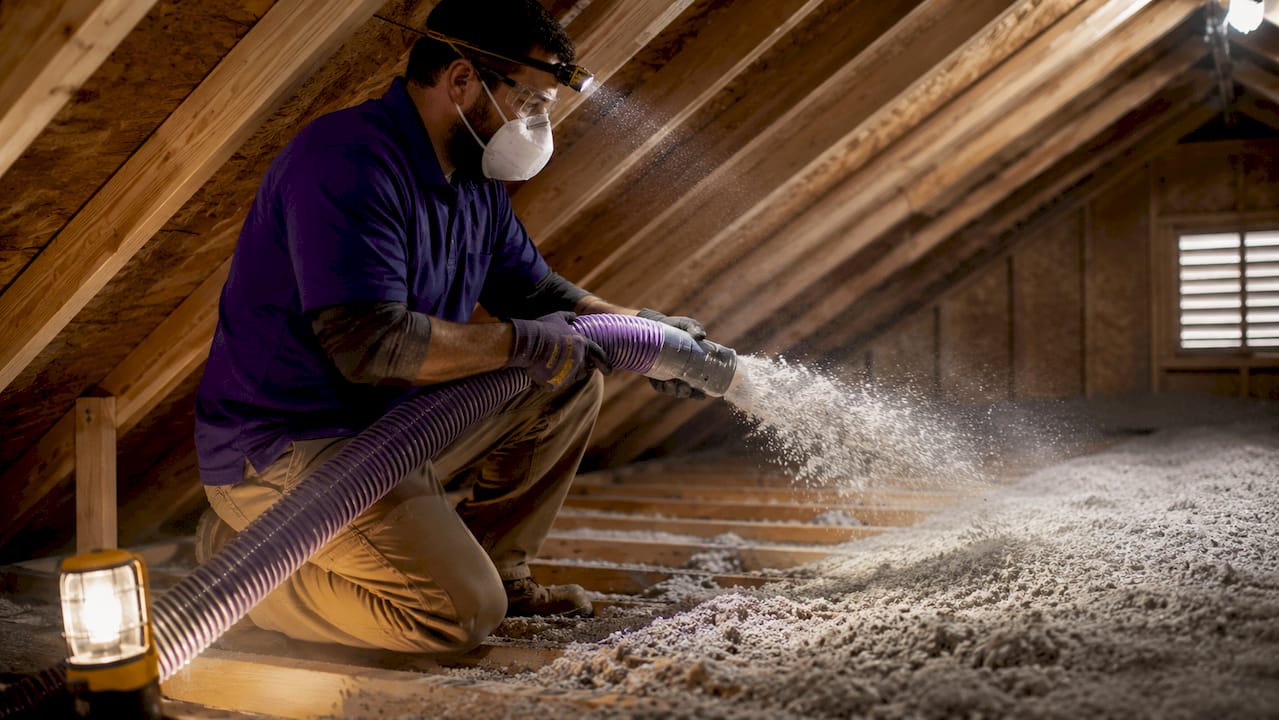
Pro Tip: Blown-in cellulose is made from recycled paper treated with fire retardant. It fills odd-shaped spaces better than batts and costs less than spray foam.
Spray foam insulation
Spray foam comes in two forms: open-cell and closed-cell. Open-cell foam is softer, expands more, and delivers around R-3.5 per inch. Closed-cell spray foam reaches R-6 to R-7 per inch and acts as both an air barrier and a vapor barrier. That dual function makes it the top performer per inch of thickness. The trade-off is cost. Closed-cell foam runs 3–5 times more than blown-in cellulose, so it works best in targeted areas like rim joists or cathedral ceilings rather than large open attic floors.
Rigid foam board and radiant barriers
Rigid foam board is cut and fitted between rafters or against attic walls. It works well in finished attic spaces where blown-in material is not practical. Radiant barriers are reflective foil sheets installed on the underside of roof decking. They reduce radiant heat gain in hot climates but add little benefit in cold climates like Chicago. Radiant barriers are not a substitute for mass insulation. They work best as a supplement in warm southern climates.
| Material | R-value per inch | Typical cost per sq ft | Best use |
|---|---|---|---|
| Blown-in cellulose | R-3.2 to R-3.8 | $0.60–$2.30 | Attic floors, existing homes |
| Blown-in fiberglass | R-2.2 to R-2.7 | $0.60–$2.00 | Attic floors, budget projects |
| Closed-cell spray foam | R-6 to R-7 | $1.50–$3.50 | Rim joists, cathedral ceilings |
| Open-cell spray foam | R-3.5 | $0.80–$1.50 | Interior walls, sound control |
| Rigid foam board | R-3.8 to R-6.5 | $0.25–$1.50 | Finished attics, walls |
| Radiant barrier | N/A (reflects radiant heat) | $0.10–$0.50 | Hot climates, roof decking |
What are the energy efficiency benefits of attic insulation?
Upgrading an under-insulated attic can reduce heating and cooling costs by 15% to 30%, depending on your prior insulation condition and local climate. That is not a minor adjustment. For a home spending $2,400 per year on energy, that savings equals $360–$720 annually. The payback period on a blown-in upgrade is often under five years.
R-value recommendations by climate zone
The 2021 International Energy Conservation Code (IECC) sets attic insulation targets based on climate zone. Recommended R-values range from R-30 in warm southern climates to R-60 in cold northern climates. ENERGY STAR refines this further. It recommends R-30 to R-38 for Zones 1–3, R-38 to R-49 for Zone 4, and R-49 to R-60 for Zones 5–8. Chicago sits in Zone 5, which means most Chicagoland homes need at least R-49 in the attic to meet current standards.
| Climate zone | ENERGY STAR R-value target | Typical location |
|---|---|---|
| Zones 1–3 | R-30 to R-38 | Florida, Texas, Southern California |
| Zone 4 | R-38 to R-49 | Mid-Atlantic, Pacific Northwest |
| Zones 5–8 | R-49 to R-60 | Chicago, Minnesota, Northern Wisconsin |
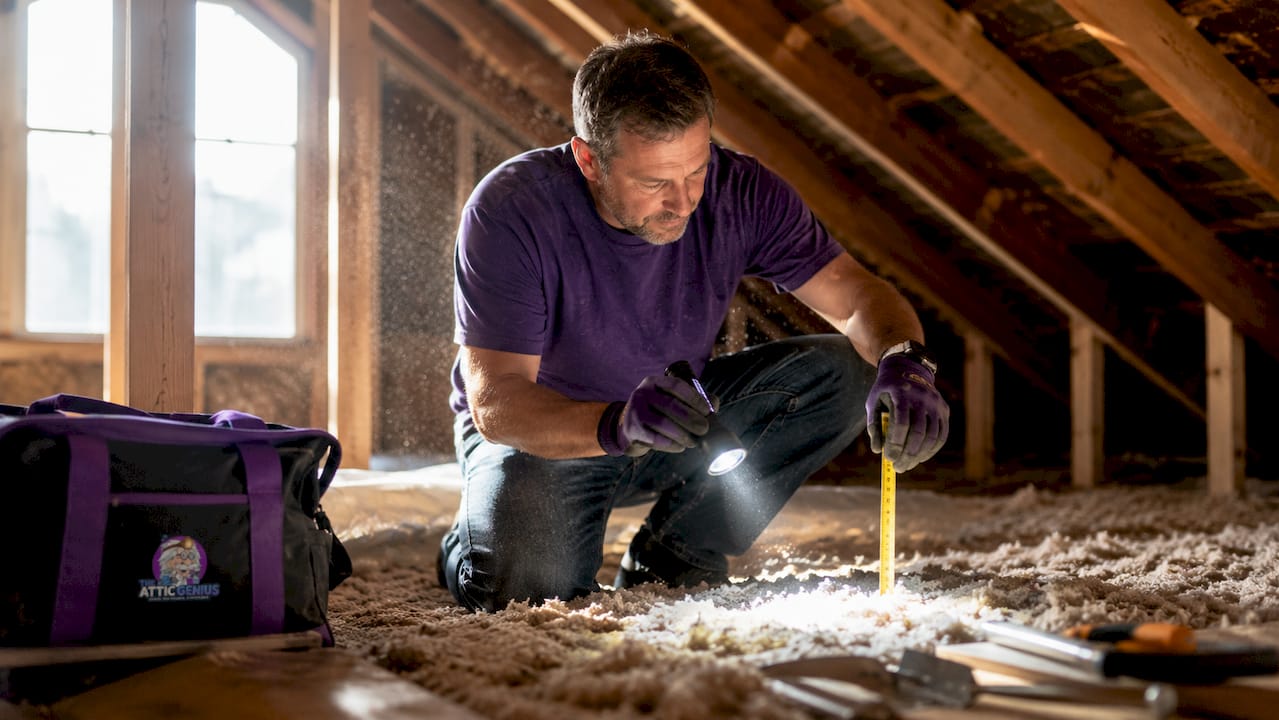
Pro Tip: Before adding new insulation, measure your existing depth with a ruler. Multiply the depth in inches by the R-value per inch of your current material to find your starting point.
Insulation alone does not seal your home. Air sealing must be done separately because insulation resists heat flow but does not stop air movement. Skipping air sealing drops insulation effectiveness by 15%–25%. Moisture control matters too. Wet insulation loses R-value fast and can lead to mold growth in the attic cavity.
How is attic insulation installed correctly?
Proper installation determines whether your insulation performs at its rated R-value or falls short. The most common attic insulation defect found in field audits is poor coverage and compression. Compression reduces R-value and is most common at the eaves where the roof meets the attic floor. Maintaining proper depth across the entire attic floor, including the edges, is non-negotiable.
The right installation sequence
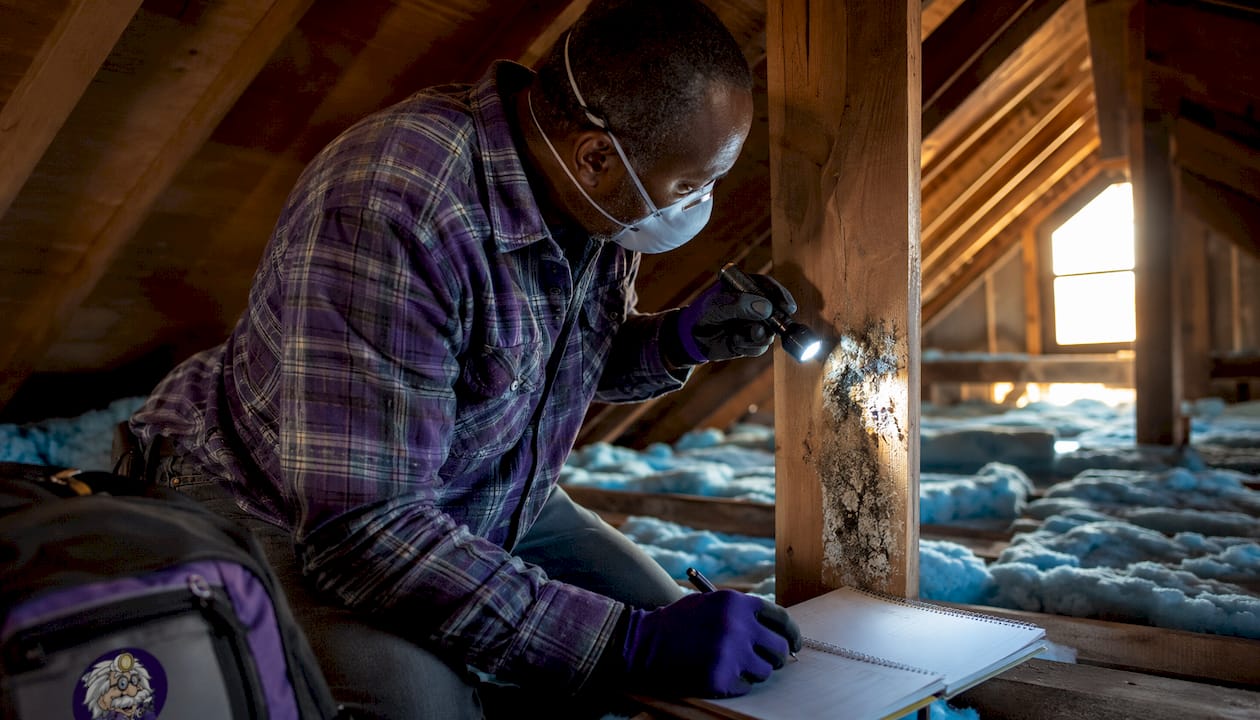
- Inspect the attic for existing damage, moisture, mold, or pest waste before adding any new material.
- Air seal all bypasses including plumbing stacks, recessed light fixtures, and top plates before insulating.
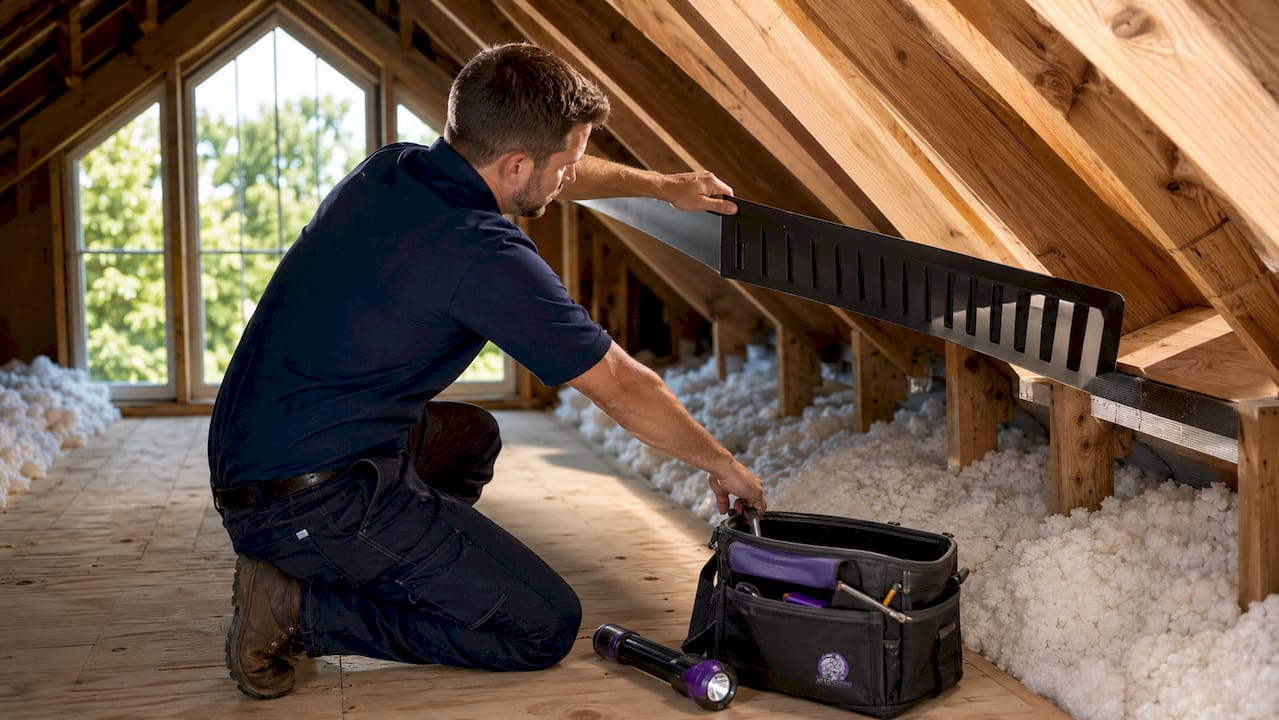
- Install baffles at the eaves to maintain airflow from soffit vents and prevent insulation from blocking ventilation.
- Blow in or lay insulation to the depth required for your target R-value.
- Verify depth and coverage with a ruler or depth markers placed across the attic floor.
Air sealing is the step most homeowners skip. Typical home air leaks are equivalent to leaving a window open all year. Sealing those bypasses before adding insulation is what separates a good job from a great one.
Pro Tip: Use foam backer rod and canned spray foam to seal around plumbing penetrations. Use rigid foam board and caulk to cap large openings like dropped soffits above kitchen cabinets.
DIY vs. hiring a professional
DIY blown-in installation is possible if you rent a blowing machine and follow depth charts carefully. The risks are real though. Skipping air sealing, compressing insulation at the eaves, or missing coverage in corners all reduce performance. A professional installer brings calibrated equipment, knows local code requirements, and can spot attic health hazards like mold or pest waste that a homeowner might miss. For most Chicagoland homes targeting R-49 or higher, professional installation pays for itself in accuracy and warranty protection.
What are the most common attic insulation mistakes?
The most expensive attic insulation mistake is skipping air sealing. Skipping air sealing wastes 15%–25% of potential energy savings because conditioned air escapes through bypasses like plumbing stacks and recessed lights. Adding more insulation on top of unsealed bypasses does not fix the problem. It just buries it.
Other frequent mistakes homeowners make include:
- Choosing the wrong R-value for their climate zone. Installing R-30 in a Zone 5 home leaves significant energy savings on the table.
- Compressing batt insulation. Stuffing thick batts into shallow spaces crushes the air pockets that create thermal resistance. Compressed insulation underperforms its rated R-value.
- Blocking soffit vents. Insulation pushed against the eaves without baffles cuts off airflow, which leads to moisture buildup and roof damage over time.
- Ignoring moisture issues before insulating. Adding insulation over existing mold or wet material traps the problem and accelerates structural damage. Check for moisture and mold before any upgrade.
- Failing to document the upgrade. Buyers and appraisers want proof of energy efficiency improvements. Documenting insulation upgrades with specific R-values and air sealing records supports home sale appraisals and energy audits.
Checking your work with a thermal camera or blower door test after installation confirms that coverage is complete and air sealing held. Many professional installers offer this as part of the job. If yours does not, ask for it.
Key takeaways
Proper attic insulation requires the right R-value for your climate zone, complete air sealing before installation, and verified coverage depth to deliver real energy savings.
| Point | Details |
|---|---|
| R-value targets by zone | Chicago-area homes need at least R-49; colder zones require up to R-60 per ENERGY STAR. |
| Air sealing comes first | Skipping air sealing wastes 15%–25% of potential savings regardless of insulation depth. |
| Blown-in is the standard | Blown-in cellulose or fiberglass costs $0.60–$2.30 per sq ft and fills irregular spaces well. |
| Compression kills performance | Compressed or blocked insulation underperforms its rated R-value, especially at the eaves. |
| Document every upgrade | Recording R-values and air sealing work supports home resale value and energy audits. |
What I’ve learned after years of attic insulation work
Most homeowners ask me which insulation material is best. My honest answer is that the material matters less than the air sealing underneath it. I have seen homes with R-60 of blown-in cellulose that still had sky-high energy bills because nobody sealed the recessed lights and plumbing chases first. The insulation was doing its job. The air was just going around it.
Budget is a real concern, and I get that. Blown-in cellulose is where I point most homeowners first. It is affordable, performs well in cold climates, and installs fast. Spray foam is worth the cost in specific spots like rim joists, but it is rarely the right call for an entire attic floor.
One thing I wish more homeowners knew: over-insulating without addressing ventilation creates its own problems. A tight, well-insulated attic still needs airflow from soffit to ridge to prevent moisture buildup. Insulation and attic ventilation work together. One without the other creates problems down the road.
Finally, write it down. When you upgrade, record the R-value, the material, and the air sealing work you did. That documentation pays off when you sell. Buyers and appraisers notice it, and it sets your home apart from the competition. Check out the 2026 selling guide if you are planning to list your home soon.
— Jim
The Attic Genius is ready to assess your attic
If your energy bills are climbing or your home never quite reaches the right temperature, your attic insulation is worth a closer look. The Attic Genius serves homeowners across Chicagoland and the Northwest Suburbs with professional attic insulation services backed by 25+ years of combined experience and 400+ five-star reviews.

The team handles everything from air sealing and blown-in upgrades to full removal and reinstallation. Same-day inspections are available, and every job comes with upfront pricing and written warranties. If you are not sure where your attic stands, request a free inspection and get a clear answer without any guesswork on your part.
FAQ
What is attic insulation and why does it matter?
Attic insulation is thermal resistance material installed in your attic to slow heat transfer between your living space and the outdoors. Without it, homes lose a significant portion of heated or cooled air, driving up energy bills year-round.
What R-value do I need for my attic?
ENERGY STAR recommends R-49 to R-60 for homes in climate Zones 5–8, which includes Chicago and most of the Midwest. Warmer climates in Zones 1–3 require R-30 to R-38.
What is the best type of attic insulation for most homes?
Blown-in cellulose or fiberglass is the most practical choice for most existing homes. It fills irregular spaces around joists and wires, costs $0.60–$2.30 per square foot installed, and performs well in cold climates.
What is asbestos attic insulation and is it a concern?
Asbestos attic insulation refers to older insulation materials, including some vermiculite and loose-fill products installed before the 1980s, that contain asbestos fibers. If your home was built before 1980 and has original attic insulation, have it tested by a certified inspector before disturbing it.
What is attic flat ceiling insulation?
Attic flat ceiling insulation refers to insulation installed along the flat ceiling plane of a home rather than along the roof slope. It is the most common attic insulation configuration and is where blown-in cellulose or fiberglass performs best.