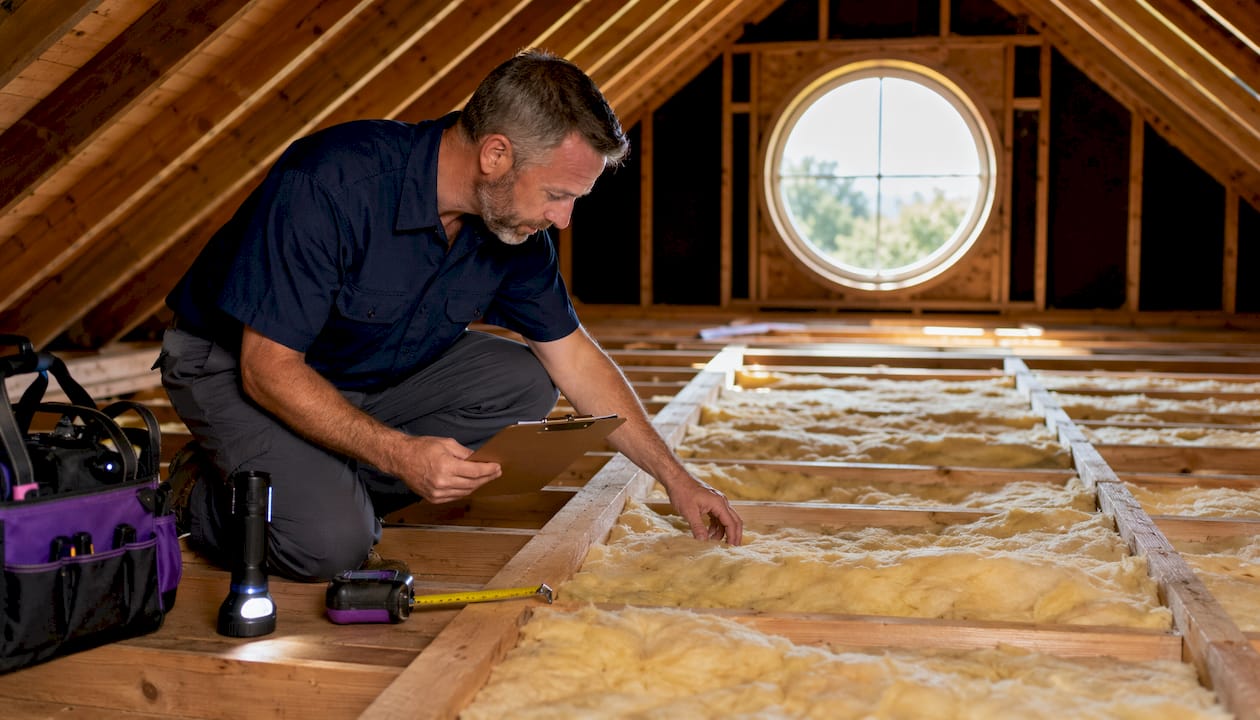
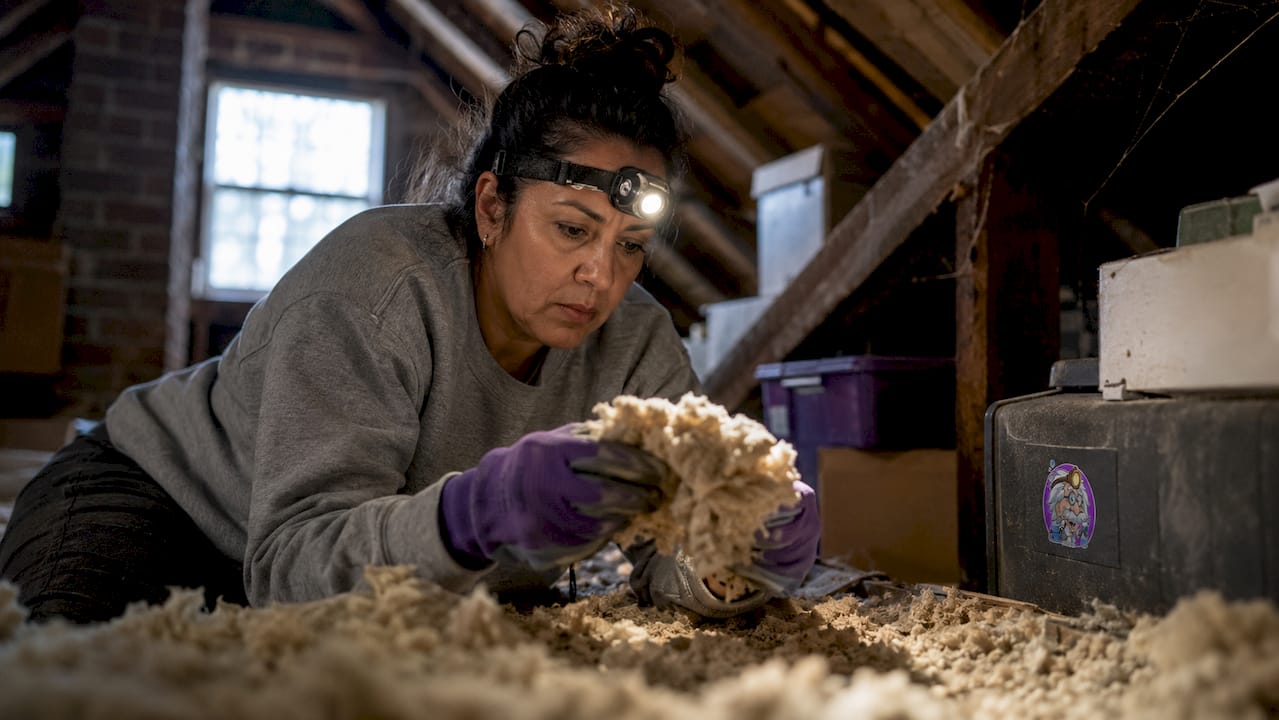
Attic health hazards are the harmful substances and conditions in your attic that degrade your home’s air quality and threaten your family’s health. The four main threats are mold, asbestos in older vermiculite insulation, pest waste contamination, and chemical off-gassing from degraded insulation materials. The EPA and the American Lung Association both recognize attic air quality as a direct contributor to indoor respiratory illness. Most homeowners never look up there until symptoms appear. The Attic Genius has seen this pattern repeatedly across Chicagoland: the attic is the last place homeowners check and the first place problems start.
What are the main attic health hazards explained?
Four categories of hazards account for the vast majority of attic-related health problems.
-
Asbestos in vermiculite insulation. Vermiculite was a common attic insulation material used widely before the 1990s. Much of it came from a mine in Libby, Montana, which was heavily contaminated with asbestos. The EPA confirms no safe exposure level exists for asbestos fibers. Smokers face compounded risk. The material looks like small gray or silver pebbles. If you see it, do not touch it.
-
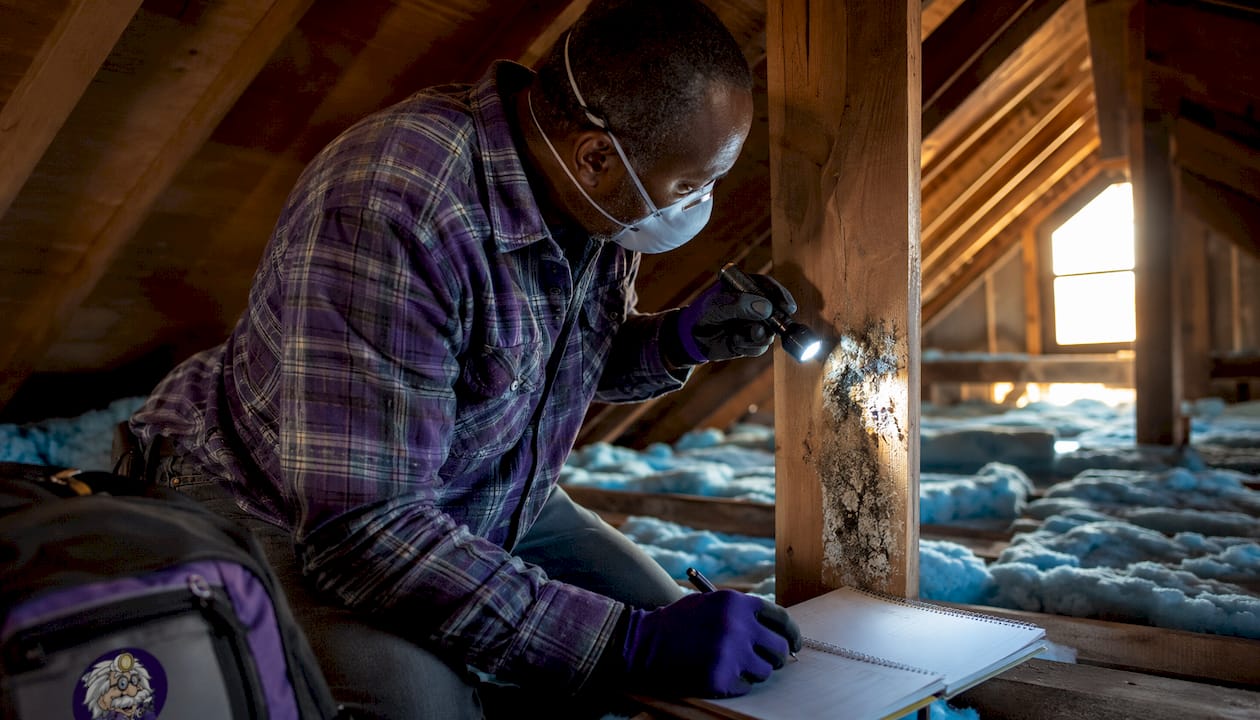
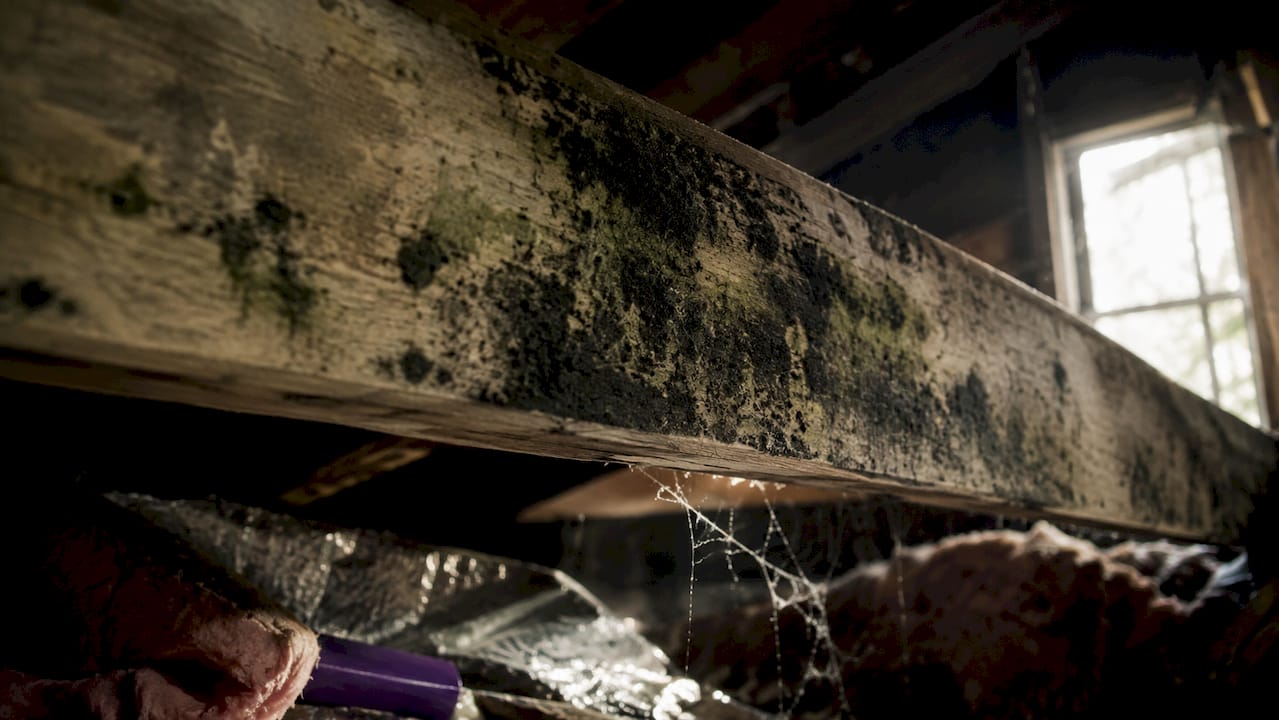
Attic mold. Mold grows on roof sheathing and framing when warm, moist air from your living space rises and condenses on cold wood surfaces. The most common types found in attics are Cladosporium, Penicillium, and Stachybotrys (black mold). All produce spores and microbial volatile organic compounds (mVOCs) that irritate the respiratory system.
-
Pest and rodent waste. Rodents, birds, and insects leave behind droppings, urine, nesting material, and carcasses. These decompose and release airborne particles that carry bacteria and allergens. Rodent activity in an attic with vermiculite insulation is especially dangerous. Rodent nests in insulation physically disturb the material, releasing asbestos fibers into the air.
-
Chemical off-gassing. Older fiberglass batts and certain spray foam products can release formaldehyde and other volatile organic compounds as they degrade. These are less common with modern materials but remain a concern in homes with original insulation from the 1970s and 1980s.
Why does mold grow in attics, and how does poor ventilation make it worse?
Attic mold is almost never caused by a roof leak alone. The real driver is warm, humid air escaping from your living space through gaps in the ceiling and condensing on cold roof sheathing. This process explains why mold grows on attic wood even in homes with perfectly intact roofs.
The most common ventilation failures that cause mold to spread are:
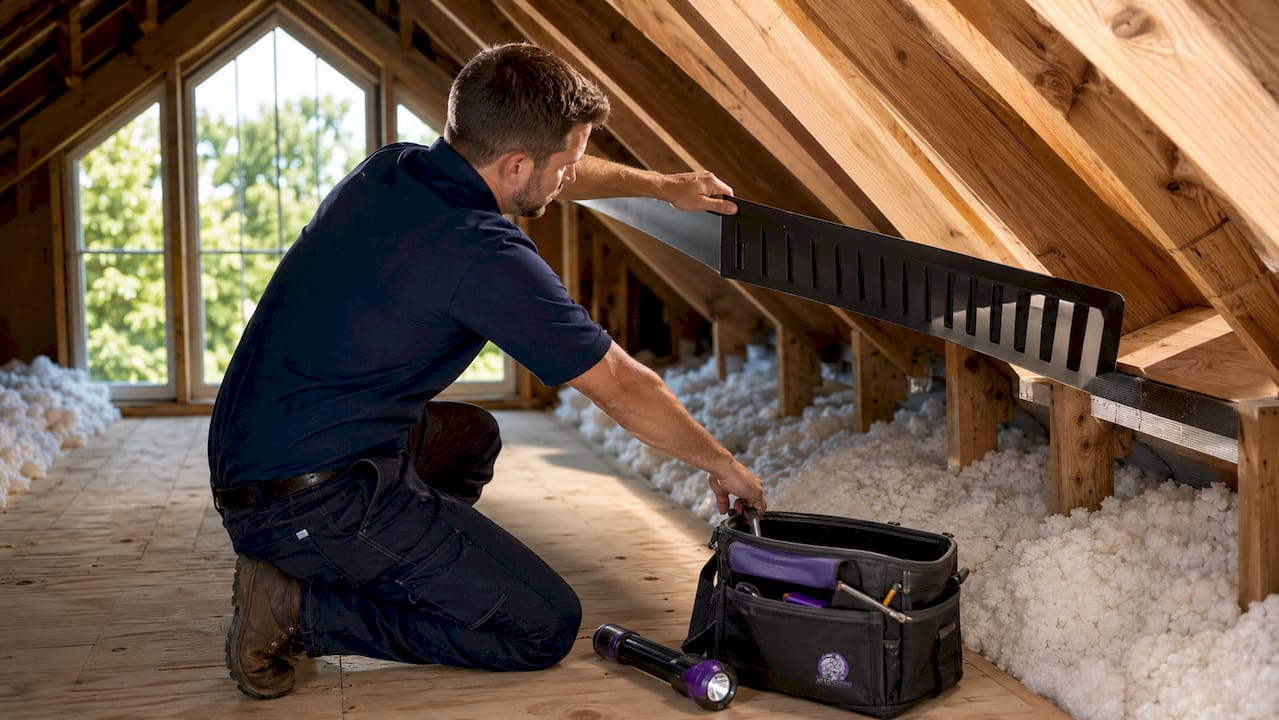
- Blocked soffit vents. Insulation pushed against the eaves cuts off the fresh air intake that keeps the attic dry.
- Bathroom fans venting into the attic. This pumps warm, moisture-laden air directly onto wood surfaces. Correct practice routes these fans through the roof or a gable wall.
- Inadequate ridge or gable vents. Without proper exhaust, moisture has nowhere to go. Proper ventilation requires at least 1 sq. ft. of net free ventilation area per 150 sq. ft. of attic floor.
- Air gaps around recessed lights, plumbing stacks, and attic hatches. These are the primary pathways for moist air to enter the attic space.
Once mold establishes itself, it releases spores and mVOCs through those same air gaps back into your living space. Mold remediation without fixing the underlying ventilation and air sealing problems is purely cosmetic. The mold returns within weeks.
Pro Tip: If you see staining patterns on roof sheathing that align with gaps in your insulation, that is a ventilation or air sealing issue, not a roof leak. A roofer cannot fix it.
How do attic hazards affect your indoor air quality?
The stack effect is the mechanism that makes attic hazards a whole-home problem. Warm air inside your house rises and exits through the attic. As it does, it pulls replacement air up from below, creating a continuous upward draft. The stack effect carries mold spores, asbestos fibers, rodent allergens, and mVOCs directly into your living areas through every unsealed gap.
Homeowners often report symptoms before they ever see visible mold or identify a pest problem:
- Persistent sinus congestion or runny nose with no seasonal explanation
- Worsening asthma or allergy symptoms, especially at home
- Unexplained headaches or fatigue that improve when you leave the house
- Musty odors in upstairs rooms or near the attic hatch
Health symptoms like sinus issues and headaches frequently appear before attic mold is ever visually detected. That is the stack effect at work. Children, elderly adults, and anyone with asthma or a compromised immune system face the greatest risk from these exposures.
Stained drywall on upper-floor ceilings and a persistent musty smell in bedrooms are not cosmetic issues. They are signs that attic contaminants have already crossed into your living space and are actively affecting the air your family breathes.
What practical steps can homeowners take to detect and prevent attic hazards?
Start with a careful visual inspection before touching anything. Here is what to look for:
- Gray or silver pebble-like material in the insulation. This is likely vermiculite. Do not disturb it. Call a licensed asbestos professional.
- Dark staining or fuzzy growth on roof sheathing. This is mold. Note the pattern. If it aligns with insulation gaps, the cause is air leakage, not a roof leak.
- Droppings, nesting material, or chewed insulation. These indicate active or past pest activity. The area requires professional biohazard cleanup.
- Frost on the underside of the roof deck in winter. This signals serious moisture accumulation from poor ventilation or air sealing.
The most effective prevention strategy combines air sealing with proper ventilation. Seal around recessed lights, plumbing penetrations, and the attic hatch with fire-rated caulk or foam. Verify that soffit vents are clear and that bathroom exhaust fans vent outside, not into the attic.
Pro Tip: Use a flashlight and a mirror to check whether your bathroom fan duct terminates at a roof cap or gable vent. If you see the duct end inside the attic, that fan is actively growing mold every time someone showers.
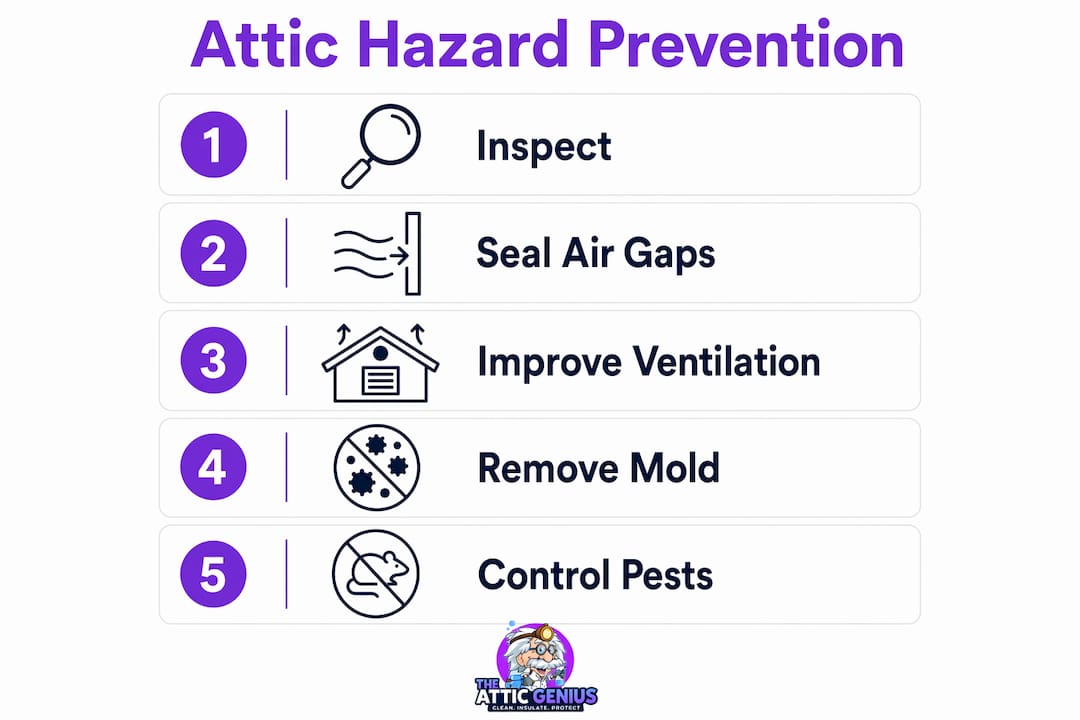
The table below summarizes when to handle an issue yourself versus when to call a professional.
| Situation | Recommended action |
|---|---|
| Suspected vermiculite insulation | Do not disturb. Hire a licensed asbestos inspector. |
| Visible mold on sheathing | Professional mold remediation plus ventilation correction. |
| Rodent droppings or nesting | Professional biohazard cleanup before any insulation work. |
| Blocked soffit vents | Homeowner can clear if no hazardous materials are present. |
| Bathroom fan venting into attic | Licensed HVAC or contractor to reroute duct to exterior. |
What are the risks of disturbing attic hazards without proper precautions?
Disturbing hazardous attic materials without protection is one of the most preventable causes of serious long-term illness in homeowners. The risks are not immediate. They accumulate silently over years.
- Asbestos exposure from disturbed vermiculite causes asbestosis, lung cancer, and mesothelioma. Symptoms can appear decades after the original exposure. There is no safe threshold.
- Stirring up mold colonies during a DIY cleanup sends millions of spores airborne. Without containment, those spores spread to every room in the house through the HVAC system.
- Handling rodent waste without protective equipment exposes you to hantavirus, leptospirosis, and salmonella. These are serious illnesses, not minor irritants.
- Improper asbestos removal by an untrained contractor increases airborne fiber levels rather than reducing them. The EPA recommends professional removal for any renovation involving suspected asbestos materials.
The safest practice with vermiculite is to leave it completely undisturbed and restrict attic access, especially for children. Do not store boxes, holiday decorations, or any items in an attic that contains vermiculite. Every trip up there disturbs the material and increases exposure.
Insufficient ventilation and air sealing create a system imbalance that compounds every hazard over time. Fixing one problem without addressing the others leaves the root cause intact.
Key Takeaways
Attic health hazards require a systemic fix: address air sealing, ventilation, mold, and pest contamination together, because correcting only one issue leaves the others to worsen.
| Point | Details |
|---|---|
| Mold is a ventilation problem | Fixing mold without correcting air sealing and ventilation causes it to return within weeks. |
| Vermiculite demands zero disturbance | Suspected vermiculite insulation requires a licensed asbestos inspector, not a DIY approach. |
| Stack effect spreads contaminants | Attic pollutants travel into living spaces through ceiling gaps, causing symptoms before mold is visible. |
| Pest waste is a biohazard | Rodent droppings and nesting material require professional cleanup before any insulation work begins. |
| Symptoms appear before visible damage | Sinus issues, fatigue, and musty odors at home are early warning signs of attic contamination. |
What I’ve learned after years of attic inspections
Most homeowners I talk to assume their attic is just dead space. They think problems up there stay up there. That assumption is wrong, and it costs people their health.
The most common mistake I see is treating mold as a surface problem. A homeowner scrubs the sheathing, maybe applies a mold-killing spray, and considers it done. Six months later the mold is back, often worse. The wood was never the issue. The air moving through the ceiling was the issue. Until you seal those gaps and fix the ventilation, you are just cleaning a symptom.
The second mistake is renovation without inspection. Homeowners add recessed lights, pull old insulation for a remodel, or hire a general contractor to “clean up the attic.” None of these people test for asbestos first. That is how a manageable situation becomes a serious health event.
My honest recommendation: treat your attic like a mechanical system, not a storage closet. Inspect it before you renovate. Inspect it before you add insulation on top of old insulation. And if you see gray pebbles, walk back down the stairs and call a professional. The attic health risks are real, but they are also entirely manageable when you approach them in the right order.
— Jim
How The Attic Genius addresses attic health at the source
The Attic Genius handles every layer of attic health for homeowners across Chicagoland and the Northwest Suburbs. That means mold remediation paired with ventilation correction, not one without the other. It means pest waste cleanup before new insulation goes in, so contamination does not get sealed into your home. And it means attic insulation and air sealing services that close the pathways driving moisture and contaminants into your living space.

The team brings 25+ years of combined experience and 400+ five-star reviews. Same-day inspections are available. If you are unsure what is in your attic or whether your ventilation is working, a free attic inspection is the right first step. Upfront pricing and written warranties come standard.
FAQ
What are the most common health hazards found in attics?
The four main attic health hazards are asbestos in vermiculite insulation, mold on roof sheathing, rodent and pest waste, and chemical off-gassing from degraded insulation. Each can affect indoor air quality and cause respiratory illness.
How does attic mold spread into my living space?
The stack effect pulls warm air from your living space up through ceiling gaps into the attic, and draws attic air back down into your home. Mold spores and mVOCs travel through this same pathway, affecting air quality in rooms below.
Is it safe to go into an attic that has vermiculite insulation?
The EPA recommends limiting attic access if vermiculite is present and avoiding any activity that disturbs the material. Children should not enter the space at all. A licensed asbestos inspector should assess the material before any work is done.
What causes mold to grow on attic wood?
Mold grows on attic wood when warm, moist air from the living space rises through ceiling gaps and condenses on cold roof sheathing. Poor ventilation, blocked soffit vents, and bathroom fans venting into the attic all accelerate this process.
How do I test attic air quality?
A licensed industrial hygienist or environmental inspector can perform air sampling for mold spores, asbestos fibers, and VOCs. A professional attic inspection, like the free assessment offered by The Attic Genius, is the practical starting point for most homeowners.