Convection in attics is defined as the natural circulation of air driven by temperature differences, where warm air rises and cooler air sinks, creating a continuous loop of heat transfer. This process is the primary engine behind attic heat transfer and directly affects how much energy your home consumes year-round. A poorly managed attic can lose up to 40% of your heated or cooled air, according to Theatticgenius, and convection is a major reason why. Understanding how this air movement works gives you the knowledge to make real improvements to your home’s comfort and energy bills.
What is convection in attics and how does it move heat?
Convection is the movement of heat through a fluid, and in attics, that fluid is air. Warm air is less dense than cool air, so it rises. As it reaches the roof deck and loses heat, it cools, becomes denser, and sinks back down. This cycle repeats continuously, creating convection cells that circulate air throughout the attic space.
The stack effect is the most important convection-related force in your home. It describes how warm air rises through the building and escapes at the top, drawing cold outdoor air in at the bottom. In winter, this pulls heated air out of your living space and up through attic bypasses like recessed light fixtures, plumbing chases, and attic hatches. A 1,200 sq ft attic with R-40 insulation in a cold climate can lose about 1,950 BTU/hr due to convection-driven heat transfer, roughly 4% of a typical heating load.
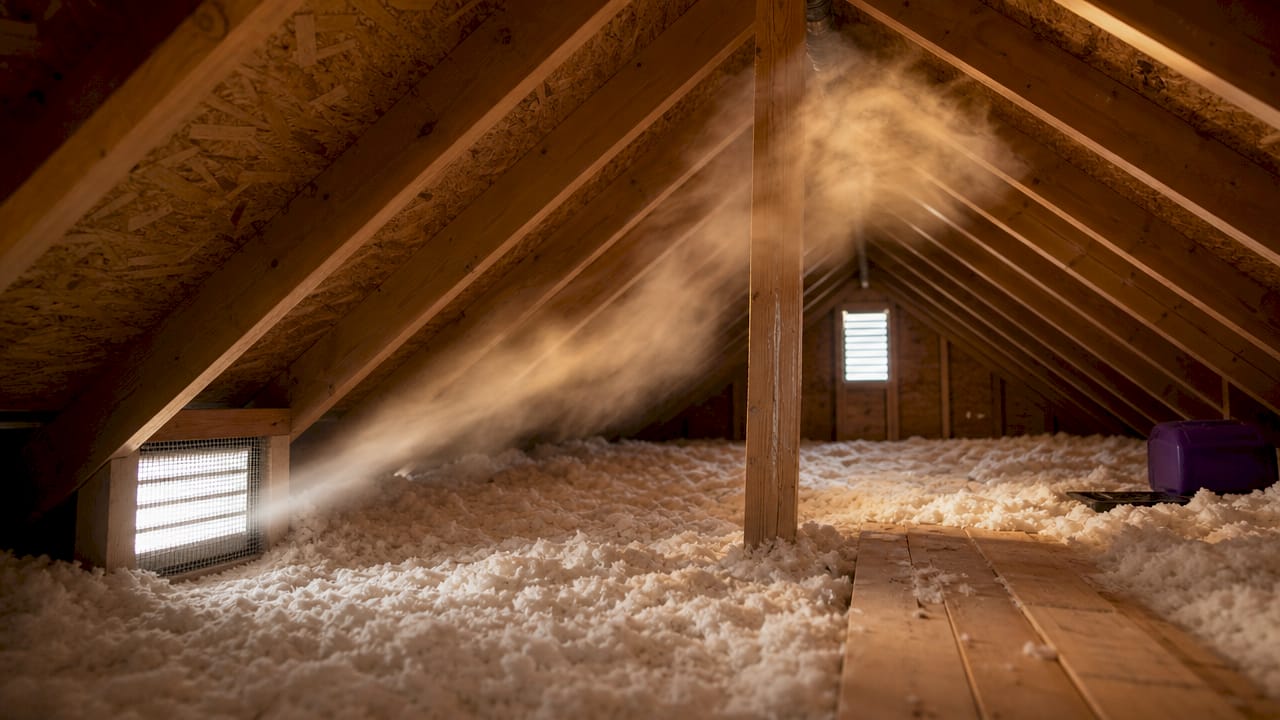
Attic convection also works in two modes: natural and forced. Natural convection happens on its own through temperature differences. Forced convection occurs when mechanical fans or wind pressure push air through the attic. Most residential attics rely on natural convection, which makes vent placement and airflow path design critical.
Pro Tip: Check your attic on a hot summer afternoon. If it feels like an oven, your natural convection system is not moving enough air. The fix usually starts with the intake vents at the soffits.
Key convection effects homeowners notice include:
- Uneven room temperatures, especially on upper floors
- Ice dams forming at roof edges in winter
- High summer cooling bills from heat radiating down through the ceiling
- Moisture buildup and mold from trapped humid air
How do attic ventilation methods use convection?
Passive attic ventilation systems use natural convection and wind pressure to move air without any mechanical parts. The design is simple: cool air enters through soffit vents at the eaves, warms up as it absorbs heat from the attic, rises, and exits through ridge vents at the peak. This continuous airflow removes heat in summer and moisture in winter.
The system works well when it is balanced and unobstructed. Passive ventilation systems operate continuously without power, and failure is almost always caused by blocked airflow rather than mechanical breakdown. Insulation piled over soffit vents, debris in ridge vents, or improperly installed baffles all choke the convection cycle.
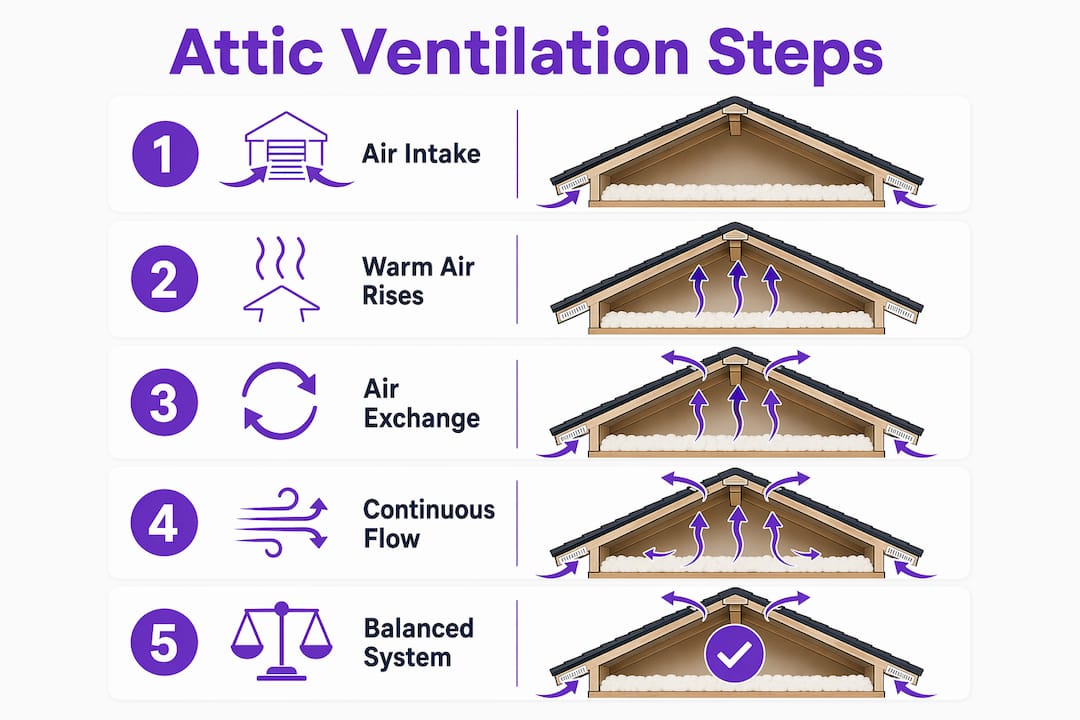
Balanced intake and exhaust sizing is the most overlooked factor in attic ventilation. A large ridge vent cannot function without adequate intake. Without sufficient intake vents, even oversized exhaust vents cannot sustain effective convection-based ventilation. The replacement air simply is not there to keep the cycle moving.
Proper ventilation that uses natural convection delivers measurable benefits beyond comfort:
- Shingle life extension. Proper attic ventilation extends asphalt shingle service life by 20–30% by keeping attic temperatures and moisture levels in check. That translates to years of extra life on a major home investment.
- Moisture control. Convection carries water vapor out of the attic before it condenses on roof sheathing and framing. Trapped moisture leads to mold, rot, and structural damage.
- Ice dam prevention. In cold climates, a well-ventilated attic stays close to outdoor temperatures, which prevents the freeze-thaw cycle that causes ice dams at the eaves.
- Lower cooling costs. Moving hot air out of the attic reduces the heat load on your ceiling and air conditioning system during summer months.
For a full look at attic ventilation options, Theatticgenius covers the range of passive and active systems suited to Chicagoland homes.
Why insulation alone does not control convection
Insulation slows conductive heat transfer, meaning it resists heat moving through a solid material. It does not stop air from moving. This is the most common misconception homeowners have about attic performance. You can have R-49 insulation and still lose significant heat if air is leaking through bypasses in the attic floor.
Air sealing attic bypasses is the step that actually stops convective heat loss. Bypasses are gaps where the ceiling plane is interrupted: recessed light cans, attic hatches, top plates of interior walls, plumbing and electrical chases. Warm air from your living space rises through these gaps and feeds the stack effect directly.
The results of combining air sealing with insulation are significant. Proper attic air sealing and insulation reduce stack effect-related air movement by 30–50%, lowering HVAC runtime and improving temperature uniformity throughout the home. That reduction shows up directly on your energy bills.
Pro Tip: Before adding more insulation, have a professional check for air bypasses. Adding insulation on top of unsealed gaps is like putting a thick blanket over a screen door.
Common pitfalls homeowners run into when relying on insulation alone:
- Adding blown-in insulation without sealing the attic hatch, which remains a major air leak
- Covering soffit baffles with insulation, blocking the intake vents that drive convection
- Ignoring recessed lights, which can each leak as much air as leaving a window cracked open
- Skipping the top plates of interior walls, one of the largest bypass areas in most homes
Theatticgenius handles air sealing services alongside insulation work, which is the correct sequence for controlling both conduction and convection losses.
What factors change how strong convection is in your attic?
Several physical characteristics of your attic determine how intense the convective airflow becomes. Understanding these factors helps you predict where problems are most likely to develop.
Roof pitch is one of the biggest variables. Steeper roof pitches increase convection cell size and the volume of air moving through the attic, which increases ventilation needs. A steeply pitched attic has more volume and a longer airflow path from soffit to ridge, which amplifies the convection cycle. Flatter roofs have smaller convection cells and may need mechanical assistance to move air effectively.
Attic volume and insulation depth also matter. A larger attic holds more air, which takes longer to heat and cool, moderating the convection cycle. Thicker insulation at the attic floor reduces the temperature difference between the living space and the attic, which lowers the driving force behind the stack effect.
Climate shapes how convection behaves seasonally. In cold climates like Chicagoland, winter convection is the primary concern because the stack effect pulls heated air out of the home aggressively. In warm climates, summer convection is the bigger issue, as hot attic air radiates heat downward into living spaces. Convection acts as a double-edged force: it helps vent summer heat but drives winter heat loss through the stack effect.
| Factor | Effect on convection |
|---|---|
| Steep roof pitch | Larger convection cells, higher airflow volume |
| Shallow roof pitch | Smaller cells, may need mechanical ventilation |
| Deep insulation at floor | Reduces temperature differential, moderates stack effect |
| Blocked soffit vents | Breaks convection cycle, traps heat and moisture |
| Large attic volume | Slows temperature swings, buffers convection intensity |
How to optimize attic convection for energy efficiency
Managing convection in your attic comes down to three things: clear airflow paths, sealed bypasses, and the right amount of insulation. Getting all three right is what separates a comfortable, efficient home from one that costs too much to heat and cool.
Practical steps homeowners can take:
- Balance your vents. Make sure soffit intake area matches or slightly exceeds your ridge exhaust area. An imbalanced system cannot sustain natural convection.
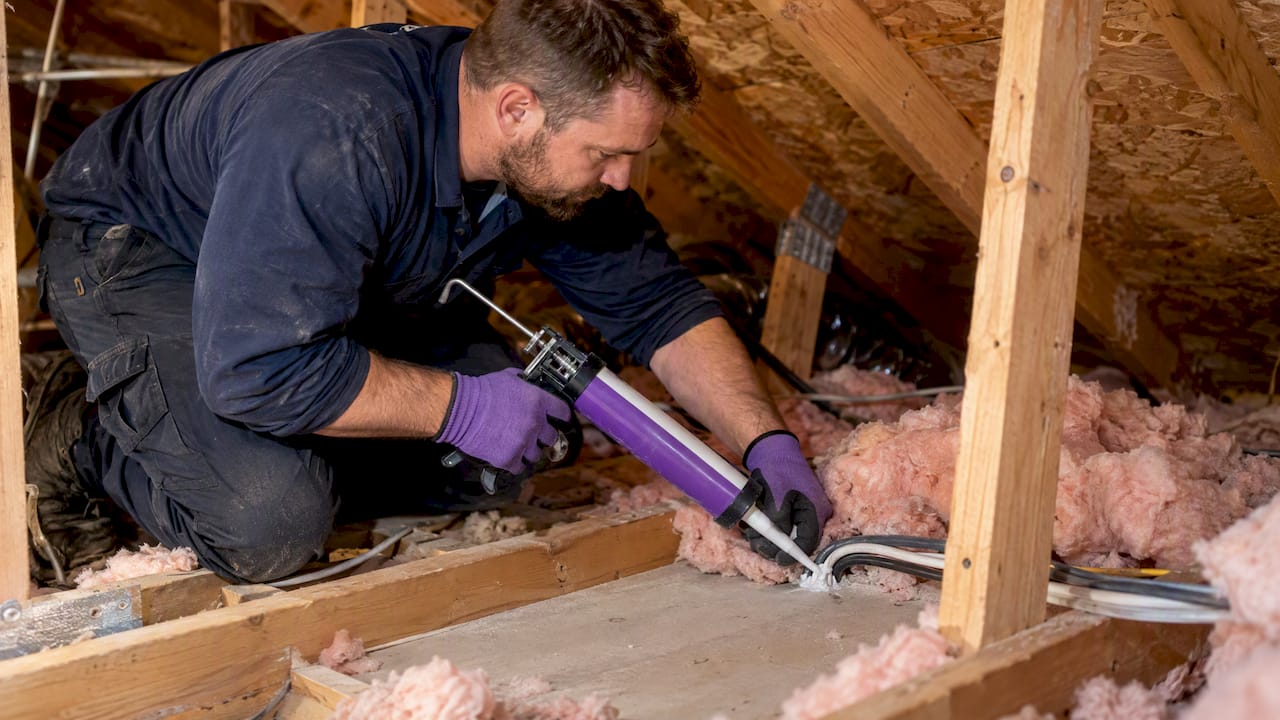
- Seal bypasses before adding insulation. Use foam or caulk to close gaps around light fixtures, hatches, and wall top plates. This is the single highest-impact step for reducing the stack effect.
- Keep soffit vents clear. Check that insulation baffles are installed and that blown-in insulation has not covered the soffit openings. Clear pathways are what keep passive ventilation working year-round.
- Inspect annually. Debris, bird nests, and settling insulation can block vents without any visible sign from inside the home.
- Get a professional assessment. Theatticgenius offers same-day inspections and can identify exactly where your attic is losing air and heat. A free inspection takes the guesswork out of prioritizing repairs.
For homeowners considering blown-in insulation, it pairs well with air sealing because it fills irregular gaps and conforms to attic geometry, reducing both conductive and convective losses when installed correctly.
Key Takeaways
Controlling convection in attics requires balanced ventilation, sealed air bypasses, and adequate insulation working together, not any single fix applied alone.
| Point | Details |
|---|---|
| Convection drives attic heat transfer | Warm air rises and cool air sinks continuously, moving heat through your attic year-round. |
| Air sealing stops the stack effect | Sealing bypasses like light fixtures and hatches reduces convective air movement by 30–50%. |
| Balanced vents sustain airflow | Intake and exhaust vents must be sized proportionally or passive ventilation fails entirely. |
| Roof pitch changes convection intensity | Steeper pitches create larger convection cells and require more ventilation capacity. |
| Insulation alone is not enough | Insulation slows conduction but does nothing to stop air moving through unsealed gaps. |
What I’ve learned from years of attic work
Most homeowners I talk to think insulation is the whole answer. They add a few inches of blown-in, their energy bills barely move, and they assume the product did not work. The real problem is almost always air movement, not heat conduction.
The stack effect is relentless in a Chicago winter. I have seen attics with R-38 insulation that were hemorrhaging heat through a single unsealed attic hatch. The hatch had no weatherstripping, no insulated cover, nothing. That one gap was doing more damage than a foot of missing insulation would have.
The other mistake I see constantly is unbalanced ventilation. Homeowners add a power attic fan thinking more exhaust means better performance. Without matching intake, the fan depressurizes the attic and pulls conditioned air up from the living space through every crack in the ceiling. They have made the stack effect worse, not better.
Convection is not your enemy. It is a tool. Managed correctly through balanced passive ventilation, it keeps your attic dry in winter and cooler in summer without a single moving part. The homeowners who get the best results are the ones who treat air sealing, insulation, and ventilation as one system, not three separate projects.
— Jim
Theatticgenius can assess and fix your attic’s convection issues
Convection problems in attics show up as high energy bills, uneven temperatures, ice dams, and moisture damage. Theatticgenius has 25+ years of combined experience diagnosing exactly these issues for homeowners across Chicagoland and the Northwest Suburbs.

The team at Theatticgenius handles attic insulation, air sealing, and ventilation as a complete system, which is the only way to fully control convective heat loss. Same-day inspections are available, with upfront pricing and written warranties on every job. If your attic is working against you, a professional assessment tells you exactly what needs to change and what it will cost before any work begins.
FAQ
What is convection in an attic?
Convection in an attic is the continuous movement of air caused by temperature differences, where warm air rises and cooler air sinks. This cycle transfers heat through the attic and drives both ventilation and heat loss.
Does insulation stop convection in attics?
Insulation slows conductive heat transfer but does not stop convective air movement. Air sealing attic bypasses is required to control convection-driven heat loss.
How does the stack effect relate to attic convection?
The stack effect is convection operating at the whole-house scale, pulling warm air upward and out through attic gaps while drawing cold air in below. Sealing attic bypasses reduces stack effect air movement by 30–50%.
Why does roof pitch affect attic convection?
Steeper roof pitches create larger convection cells and higher airflow volumes inside the attic, which increases ventilation requirements. Flatter roofs have weaker natural convection and may need mechanical ventilation support.
How do I know if my attic ventilation is balanced?
A balanced system has intake vent area at the soffits that matches or slightly exceeds the exhaust vent area at the ridge. If your attic runs hot in summer or shows moisture in winter, an imbalanced system is a likely cause.