An attic smell after rodents indicates contamination from urine, droppings, nesting materials, or a hidden carcass. Rodent urine odor can persist for months or even years because porous materials like fiberglass insulation, blown cellulose, and wood absorb odor-causing compounds. In contrast, the smell from a dead rodent carcass typically fades within a few weeks as decomposition completes. To eliminate the odor, it is essential to remove soiled insulation, thoroughly clean contaminated surfaces, and seal entry points to prevent future infestations.
An attic that smells after rodents has almost always been contaminated by more than one thing: urine soaked into insulation, droppings, nesting material, and sometimes a carcass you cannot see. Air freshener will not fix it. The smell leaves when the source leaves, which usually means removing the soiled insulation, cleaning the surfaces underneath, and sealing the openings the animals used to get in.
This guide explains what each odor tells you, how long it lasts, what you can safely do yourself, and when the job belongs with a professional crew.
What are the key takeaways for dealing with attic rodent smells?
- A sharp ammonia or urine smell points to soaked insulation and droppings. A rotten, sweet, heavy smell points to a dead animal, often in a spot you cannot reach.
- A carcass smell usually fades in a few weeks. Urine in insulation can linger for months because insulation is porous and holds odor.
- Never sweep or vacuum rodent waste. Air the attic out, wear protective gear, and wet-clean surfaces first.
- Poison bait is the usual reason a mouse ends up dying inside a wall or attic. Snap traps and sealing entry points work better.
- If the insulation is stained, matted or full of droppings, removal and replacement is the fix that actually ends the smell.
What topics are covered in this guide to attic rodent smells?
- What the smell is telling you
- Why urine odor lasts so long
- How long a dead rodent smell lasts
- Safety first: before you go into the attic
- Find the source of the smell
- Cleaning up after rodents: what works
- Stop it from happening again
- Our perspective: smell is a symptom, so treat the cause
- Getting help in the Chicago suburbs
- FAQ
- Sources
What the smell is telling you
Different odors point to different problems, and sorting them out tells you where to look.
| What you smell | Likely cause | What it usually means |
|---|---|---|
| Sharp ammonia, like a litter box | Rodent urine in insulation or on wood | Active or past infestation, contamination spread across an area |
| Rotten, sweet, heavy odor that is strongest in one spot | Dead rodent | A carcass in insulation, a wall void or behind a vent |
| Musty, damp, earthy | Moisture or mold, sometimes alongside pests | Roof leak, poor ventilation or condensation |
| Stale, dusty, oily | Old droppings and nesting debris | Long-term nesting, often in compressed insulation |
Often you get a blend. Rodents urinate constantly as they travel, so the same attic can smell of ammonia in the corners, rot near one vent, and mustiness along the roof deck. If the dominant smell is musty rather than animal, read our guide to fixing a musty attic smell, because moisture needs its own solution.
Why it gets worse in warm weather
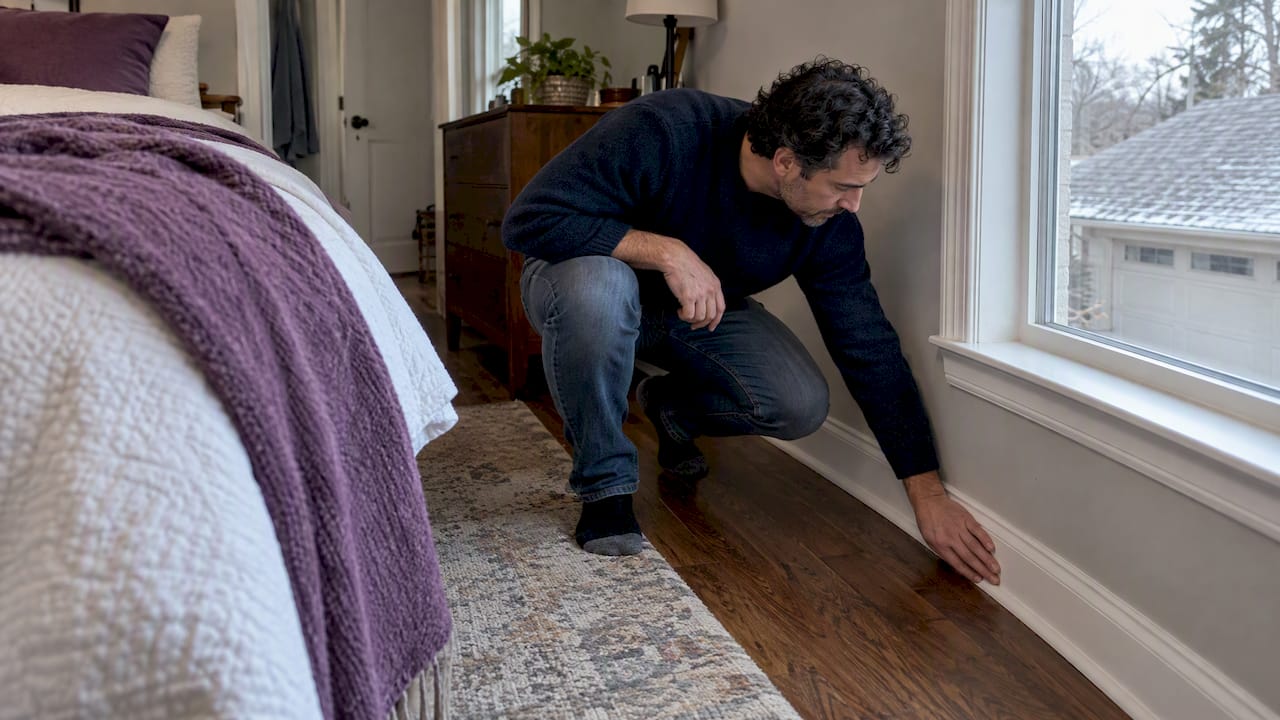
Heat speeds decomposition and makes odor compounds more volatile. An attic in July can run far hotter than the living space below, which pushes the smell down through light fixtures, attic hatches and gaps around ductwork. A smell you barely noticed in March can drive you out of the upstairs bedroom by summer. In our Chicagoland service area, the reverse also happens: when the furnace runs in January, warm air rises into the attic and carries the odor with it.
Why urine odor lasts so long
A dead mouse is a finite problem. Urine is not. Insulation, especially fiberglass batts, blown cellulose and the wood beneath them, is porous. Odor-causing compounds soak into porous materials such as wood, insulation and drywall and can persist for months or even years, while hard, sealed surfaces clear far faster. That is why wiping the visible droppings off a rafter rarely ends the smell. The urine has already traveled into the material.
Warm, humid days can also reactivate old urine odor. Homeowners often report the smell “coming back” after the pests are gone. It is not new activity. It is old contamination releasing again.
How long a dead rodent smell lasts
A single mouse typically produces a strong odor for a couple of weeks, though heat, airflow and insulation can stretch that. A rat or a squirrel is a larger problem and takes longer. University of Illinois Extension warns that rodents poisoned with bait typically hide in walls, vents or attics as symptoms set in, and that decomposition odor can persist for weeks. Extension specialists therefore discourage poison baits indoors and favor active trapping plus physical exclusion.
You may have heard of a “5-day rule” for how long a poisoned mouse takes to die. Treat it as a rough guess at best. Extension guidance describes the timing as unpredictable, and where the animal dies is the bigger issue than when.
When should you wait or act on an attic rodent smell?
If you find and remove a single carcass quickly, the odor often fades on its own. Waiting is a reasonable plan when all of these are true:
- You are confident only one small animal died.
- You see no droppings, urine stains or nesting material.
- The smell is getting weaker week to week.
If you see droppings, hear activity, or the odor holds steady after three or four weeks, assume there is contamination that will not leave on its own.
Safety first: before you go into the attic
Rodent waste is not just unpleasant. Humans contract hantavirus by breathing dust contaminated by the urine, saliva or feces of an infected rodent. The Illinois Department of Public Health says the risk for Illinois residents remains very low, and that the best protection is keeping rodents out and cleaning up after them safely. Low risk is not no risk, and the safe procedures cost little.
The CDC’s hantavirus guidance recommends airing out a closed space for 30 minutes before starting cleanup. In an attic, open the hatch and any windows or gable vents you can reach, leave, and come back later.
Then follow these rules:
- Do not sweep or vacuum. The CDC says rodent urine, droppings and nesting material should not be vacuumed or swept because that sends contaminated droplets into the air you breathe.
- Wear protection. Use rubber or nitrile gloves, eye protection and a properly fitted respirator rated for fine particles, plus disposable coveralls you can bag afterward.
- Do not try to mask the smell first. Spraying fragrance over contaminated insulation hides the evidence while leaving the hazard in place.
- Know your limit. Heavy contamination across large areas, anything near wiring, or insulation that is wet and matted is a crew job, not a weekend project.
Sealing and entry points matter before cleanup too. Animals reach attics through gaps that are easy to overlook, including vents. For an example of how wildlife turns an ordinary opening into a nest, see this piece on birds nesting in a dryer vent, and apply the same thinking to every attic vent, soffit return and roof penetration.
Find the source of the smell
Start with your nose and a flashlight, from outside the attic if possible.
- Trace the strongest spot. Odor from a carcass gets sharper as you approach it. Check corners, the area near the eaves, and the space around chimneys and plumbing stacks.
- Look for flies. A cluster of flies near a vent or one section of attic can point at a carcass.
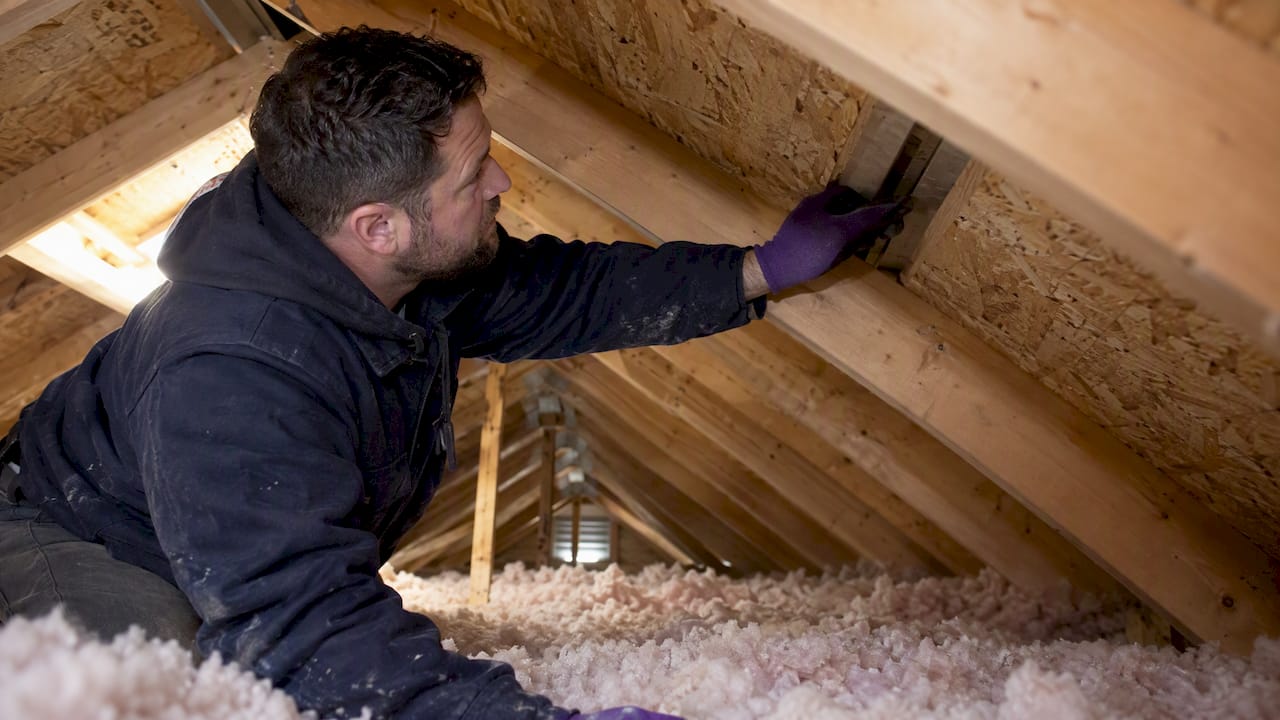
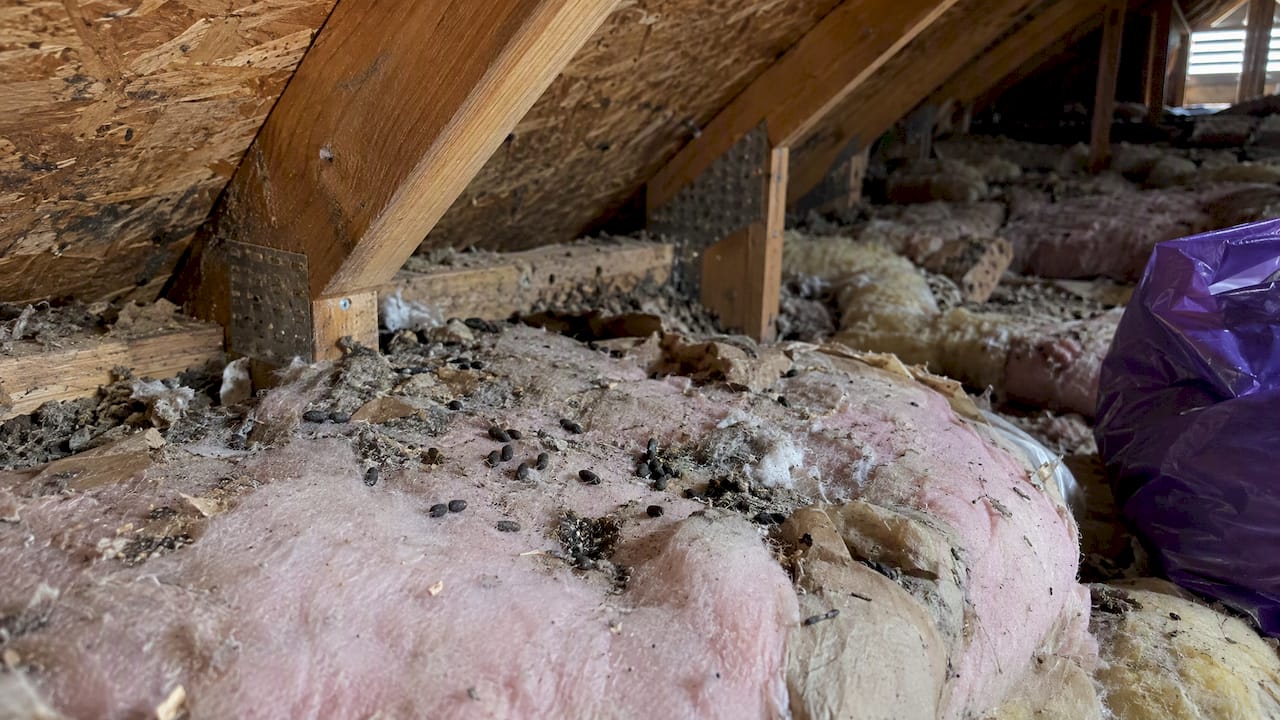
- Check insulation for trails. Flattened paths, tunnels, dark staining and droppings show where animals traveled and nested. Our guide on why animals nest in attic insulation explains why insulation is so attractive to them.
- Note the sound history. If you heard activity before the smell started, a simple sound log helps identify what you are dealing with and when.
- Identify the animal. The animal changes the cleanup. Squirrel nests, raccoon latrines and bat guano each have different risks. See our pages on raccoon attic cleanup, squirrel nests and bat guano.
If the smell comes from inside a wall or a ceiling cavity you cannot open, you may need a pro to locate it. Guessing and cutting holes in drywall is a costly way to find nothing.
Cleaning up after rodents: what works
The cleaning approach depends on how much contamination you found.
Light contamination: a few droppings, no soaked insulation
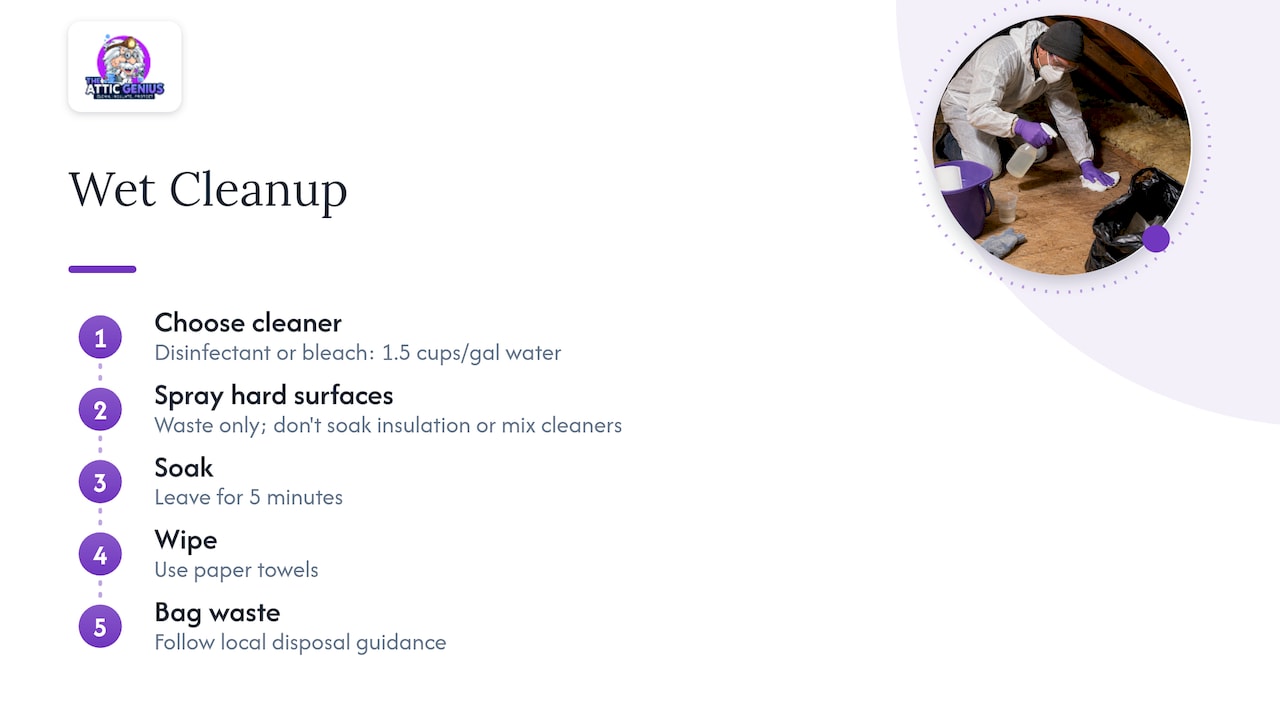
The CDC’s wet method applies. Spray droppings and urine with a disinfectant or a bleach solution made from 1.5 cups of household bleach per gallon of water, let it soak for 5 minutes, then wipe up with paper towels. Bag the waste and dispose of it according to local guidance. Bleach is for hard surfaces such as wood framing, not for soaking insulation or mixing with other cleaners.
Moderate to heavy contamination: insulation is stained, matted or full of droppings
This is where most homeowners hit a wall. Spraying disinfectant on insulation does not reach the urine that has soaked through, and you cannot wash fiberglass. The reliable fix is:
- Remove the contaminated insulation using HEPA-filtered vacuum equipment designed for the job.
- Remove droppings, nesting debris and any carcasses.
- Clean and treat the exposed wood and surfaces.
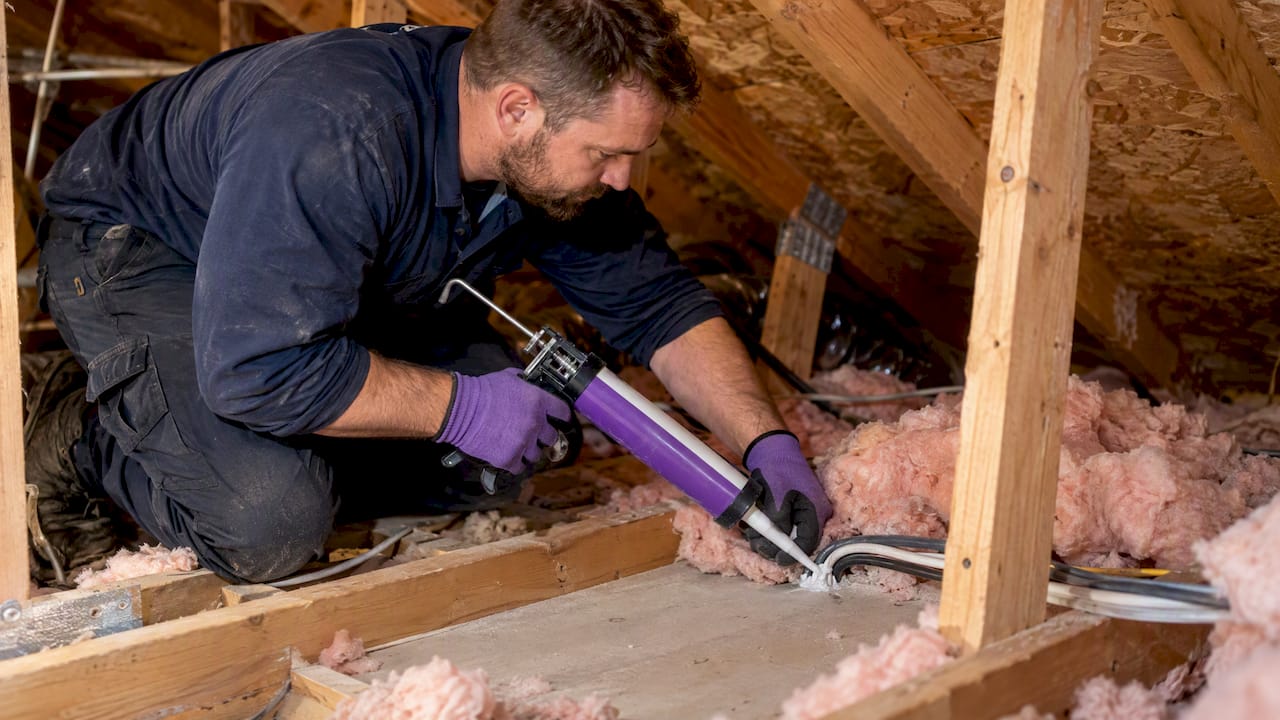
- Seal the entry points.
- Install new insulation once the attic is clean and sealed.
Our guide to attic insulation after a pest infestation walks through when to replace and when you can keep what you have. Our pest and vermin droppings cleanup page describes what the service covers.
How effective are odor-control products for rodent smells?
Botanical repellents can help at the margin. One EPA-registered product label, for example, lists balsam fir oil as its active ingredient and says it lasts up to 30 days in cold storage areas, with the scent needing replacement as it fades. Effectiveness depends on air exchange and temperature, and an attic swings widely on both. Use such products as a supplement after cleanup, never as a substitute for it or for a solution to an existing infestation.
How can you prevent rodent smells from returning to your attic?
Cleanup without exclusion is a temporary fix. Rodents come back to places that already smell like their own nest.
- Seal every opening. Mice can fit through gaps as small as a quarter inch, about the diameter of a pencil. The EPA bulletin notes that rodents chew through foam or plastic alone, so pair steel wool with caulk or foam, and use hardware cloth for larger openings.
- Use traps, not poison. Extension guidance favors sealing entry points and using snap traps instead of poison baits, so animals do not die where you cannot reach them.
- Check the building envelope. Gaps around vents, pipes, wires and the roofline are the usual routes. Illinois Extension’s tips for keeping pests out of your home are a good checklist for the outside.
- Fix the air leaks inside. Bypasses around chimneys, wiring and recessed lights let warm air and scent travel and make the attic more inviting. Our page on air sealing attic bypasses explains how, and our air sealing service handles it.
- Keep the attic dry. Moisture adds mold to the odor problem. Proper ventilation, covered in our attic ventilation solutions, protects new insulation.
Our perspective: smell is a symptom, so treat the cause
Most homeowners call us after trying the same thing: a candle, a spray, a bag of odor absorber, a few weeks of waiting. Sometimes that is enough for a single mouse. When the attic holds old nesting and soaked insulation, it never is.
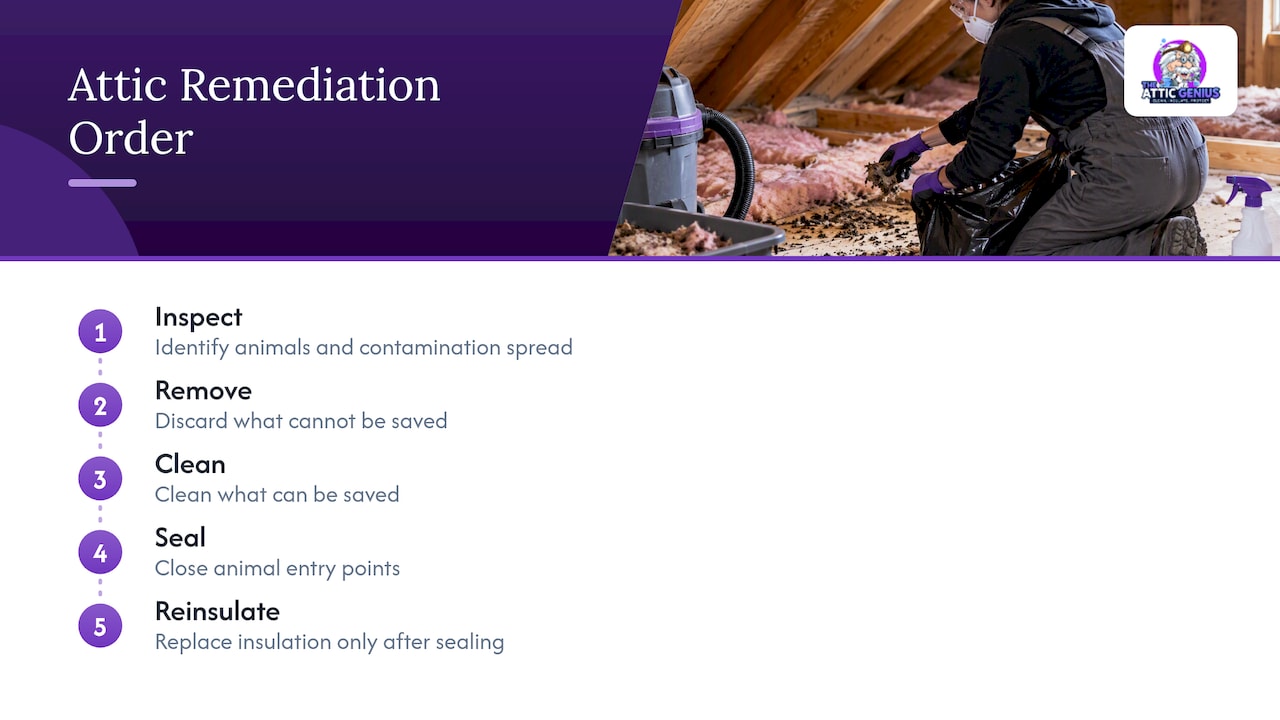
We approach it in a fixed order because the order is what makes it stick. First we inspect and work out what lived there and how far the contamination spreads. Then we remove what cannot be saved, clean what can, seal what let the animals in, and only then insulate again. Skipping a step, particularly sealing, is how you pay for the same job twice.
We would also rather tell you when you do not need us. A tidy attic with one dead mouse and clean insulation does not need a full replacement. A soaked, matted blanket of insulation does, and putting fresh insulation over it only seals the smell in. Our crews are specialists in attic and insulation work, and we back the work with written warranties and upfront pricing, so you know the scope before it starts.
— Jim
Getting help in the Chicago suburbs
If the smell is strong, if you see droppings across the attic, or if you simply do not want to crawl through contaminated insulation, we can help. The Attic Genius serves homeowners across the Northwest Suburbs and greater Chicagoland, including Arlington Heights, Palatine, Schaumburg, Naperville and Wheaton, plus parts of Wisconsin.
We offer a free inspection where we look at the insulation, find the entry points and tell you what needs to be removed, cleaned, sealed or replaced. Same-day inspections may be available. Pest and vermin waste cleanup, insulation removal and new installation all come from the same specialist team, so you do not coordinate three contractors. If you also find mold or moisture, our moisture and mold remediation service covers that, and our mold remediation steps explain the process.
Want more background on what lives in contaminated attics? Our overview of attic health hazards covers the common ones.
FAQ
Why does my attic smell like urine?
An ammonia or urine smell usually means rodents, squirrels or raccoons have urinated in the insulation or on the wood. Porous materials absorb it and keep releasing odor, especially on warm or humid days. Removing the soiled insulation and cleaning the surfaces underneath is what ends it.
How long does the smell of a dead rodent last in the attic?
For a single mouse, usually a few weeks, though heat and trapped air can stretch that. Larger animals take longer. If the smell has not clearly improved after three or four weeks, look for a second source or for urine contamination.
Can I just spray something to get rid of the smell?
Sprays and odor bags cover the smell without removing the cause. Illinois health guidance advises prioritizing safe cleaning over masking odors, and the wet-cleaning method for droppings and urine is the CDC’s recommended approach. Use deodorizing products only after the contamination is gone.
Do I have to replace the insulation after rodents?
Not always. If a few droppings sit on top of otherwise clean insulation, careful cleanup can be enough. If the insulation is stained, flattened, tunneled or smells of urine, replacement is the dependable fix, and a professional inspection can confirm which applies.
Is the smell dangerous to breathe?
The smell itself is mainly a nuisance, but the dust that comes with rodent waste is the real concern. Air the space out, avoid disturbing droppings, and do not sweep or vacuum. If anyone in the home develops fever, aches or breathing trouble after exposure to rodent waste, contact a doctor and mention the exposure.
What are the sources for information on attic rodent smells?
- CDC: How to Clean Up After Rodents
- CDC: Preventing Hantavirus brochure
- Illinois Department of Public Health: Hantaviruses
- IDPH Update on Hantavirus
- University of Illinois Extension: How to Get Rid of a Mouse in the House
- University of Illinois Extension: Tips for keeping pests out of your home
- EPA Indoor airPLUS Technical Bulletin: Pest Entry Prevention
- EPA pesticide product label, botanical rodent repellent
- ScienceInsights: How Long Does Rat Urine Smell Last in a House?