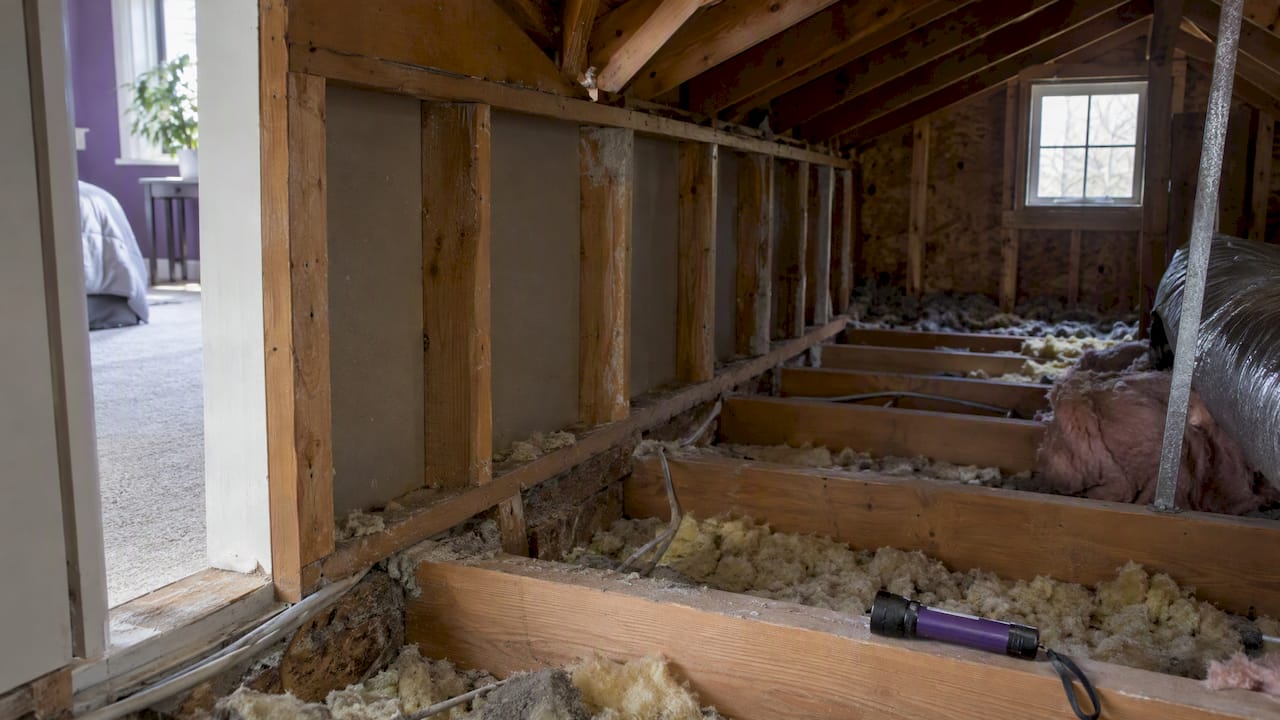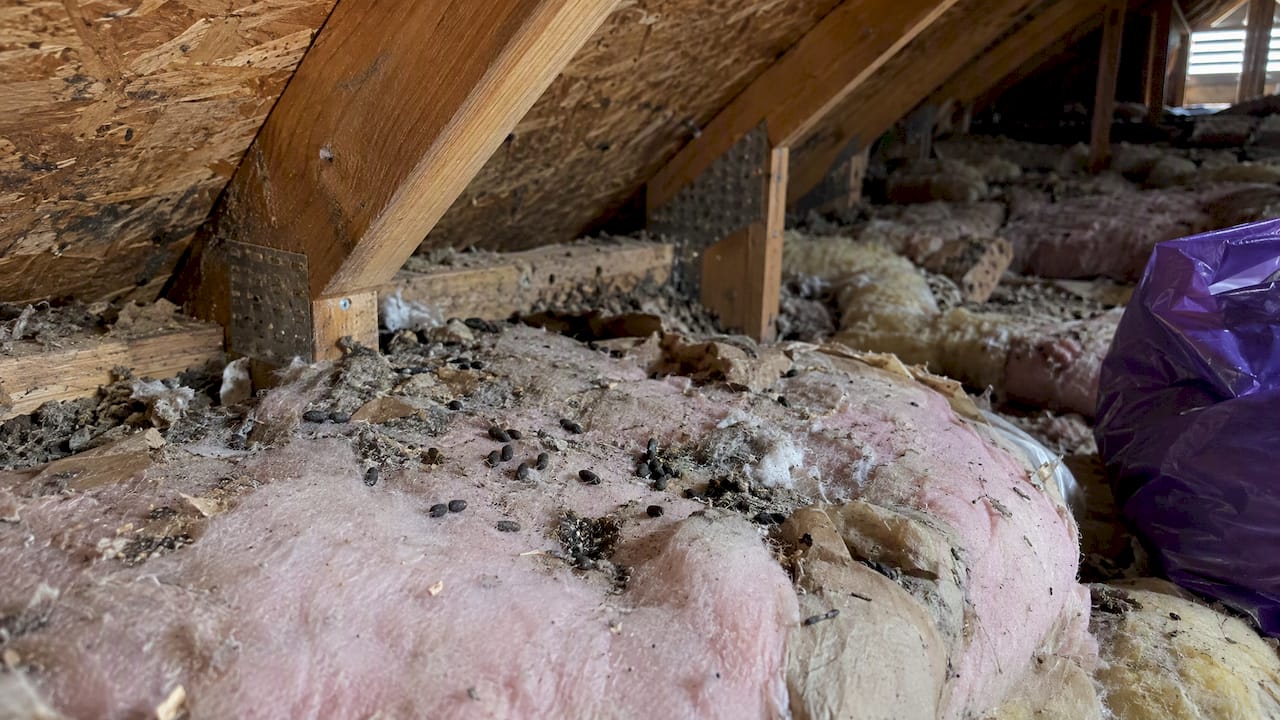

Once you’ve confirmed every raccoon is out of the attic, the priority shifts entirely to safety. Contaminated insulation and nesting debris almost always get removed rather than cleaned, since raccoon waste carries risks ordinary disinfectants don’t neutralize. Follow CDC guidance on containment, or bring in a crew like The Attic Genius that already runs this sequence daily.
TL;DR:
- Raccoon droppings can carry eggs that remain viable in insulation and dust for years, posing risks that standard disinfectants cannot neutralize.
- Proper cleanup requires a detailed, step-by-step process, including verification of removal, PPE usage, removal of contaminated insulation, and structural repairs.
- Contaminated insulation is usually unsalvageable if stained or odorous, and must be fully removed and replaced with materials like blown-in cellulose or mineral wool.
- Disinfecting raccoon droppings with regular cleaners is ineffective; heat treatment or manual removal is necessary to inactivate eggs on nonporous surfaces.
- Sealing attic entry points with heavy-gauge metal and regular property maintenance like trimming trees and securing garbage prevents raccoon re-entry long-term.
Table of Contents
- Why raccoon attic cleanup carries more risk than other pest jobs
- How do you clean an attic after raccoons step by step?
- Should you remove or clean contaminated attic insulation?
- Can you disinfect raccoon droppings with regular cleaners?
- How do you seal an attic so raccoons can’t get back in?
- What does raccoon attic cleanup cost and how long does it take?
- Long-term prevention measures beyond sealing entry points
- When should you upgrade attic ventilation after a raccoon cleanup?
- The Attic Genius perspective: what a full remediation should include
- Ready to fix the attic properly after raccoons
- Sources
Why raccoon attic cleanup carries more risk than other pest jobs
Raccoon droppings aren’t just unpleasant. They can carry Baylisascaris procyonis, a roundworm whose eggs take 2 to 4 weeks to become infectious after being shed, then remain viable in dust and insulation for years. That delay is deceptive: a homeowner who sweeps up droppings the same week might think they’ve dodged exposure, but eggs deposited weeks earlier in an undisturbed latrine site are often the more dangerous ones. Standard household cleaners barely touch them.
The hazard list around an active or former raccoon attic infestation extends well past the roundworm itself:
- Fleas and ticks riding in on the fur of a resident animal
- Bacterial pathogens in urine-soaked insulation and wood
- Structural staining and weakened drywall from repeated urine saturation
- Chewed or stripped wiring insulation, a fire risk that’s easy to miss in a dark attic
A lingering odor after a first cleanup attempt is a diagnostic, not just a nuisance. It usually means contaminated material is still trapped in a wall void, duct chase, or insulation pocket that got missed. Masking it with sprays does nothing for the actual contamination sitting behind it.
How do you clean an attic after raccoons step by step?
Professional attic wildlife cleanup follows a sequence for a reason: skip a step and you either waste money or leave a health hazard behind. The standard order runs from confirmation to final insulation.
- Confirm removal. Verify, ideally with photos or a wildlife professional’s written note, that no raccoons (especially juveniles in a den) remain before any work starts.
- Inspect and document. Walk the attic locating latrine sites, checking wiring for chew damage, inspecting ductwork for punctures, and noting mold growth or saturated insulation.
- Suit up. A Tyvek coverall, a P100 or equivalent respirator, nitrile gloves, and boot covers are the baseline. This isn’t optional gear for a bad smell; it’s the minimum barrier against roundworm eggs and dried urine dust.
- Remove contaminated insulation and debris. Hand-collect visible droppings and double-bag them immediately. A HEPA-filtered vacuum system pulls loose, contaminated insulation without aerosolizing dust throughout the space.
- Decontaminate remaining surfaces. Nonporous surfaces (framing, ductwork exteriors) can be treated; porous ones generally can’t be salvaged.
- Repair structural and electrical damage. Replace chewed wiring runs, patch duct punctures, and address any weakened decking before anything goes back in.
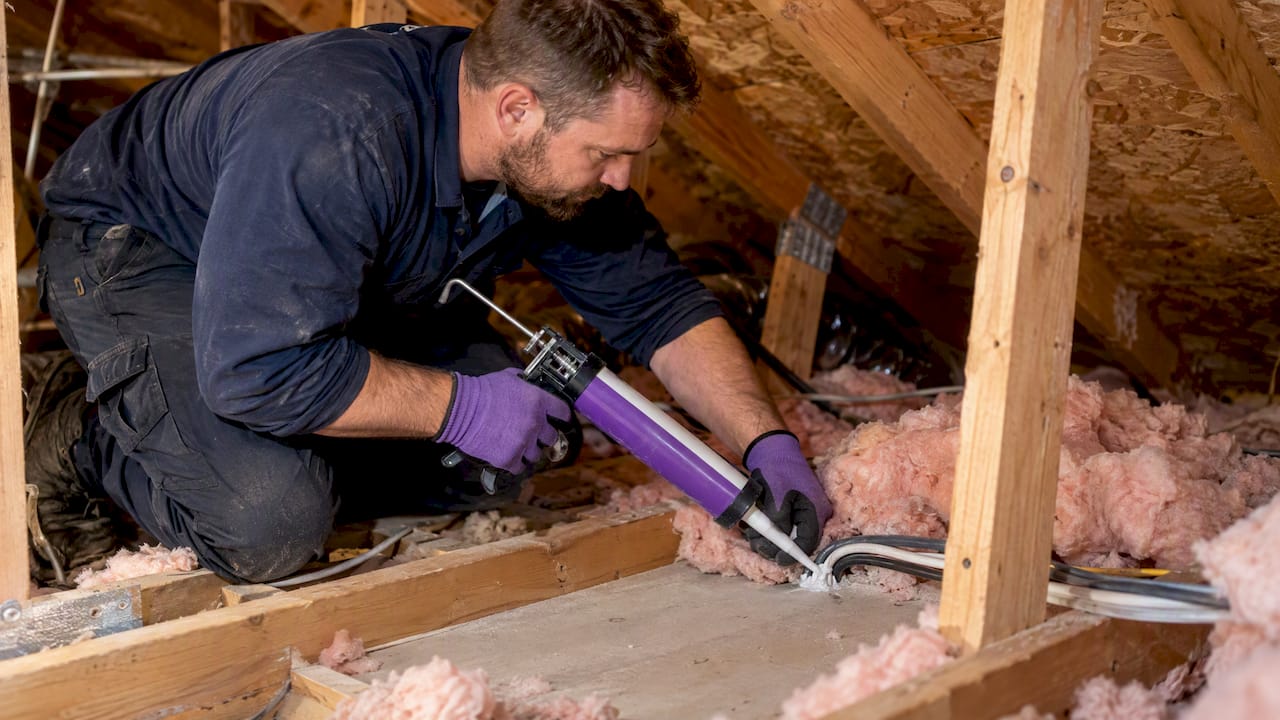
- Seal entry points. Close every access hole with materials that hold up to a raccoon’s strength, not just weather.
- Re-insulate. Only after every prior step is finished, install fresh insulation to the right depth and R-value for your climate.
Pro Tip: Don’t let a contractor skip straight from removal to re-insulation. If step 2’s documentation isn’t in writing with photos, you have no way to confirm the latrine sites were actually found and treated.
Should you remove or clean contaminated attic insulation?
Insulation soaked in raccoon urine or sitting under a repeatedly used latrine site almost never gets salvaged. Fiberglass and cellulose are porous, and once urine or fecal matter penetrates the fibers, no amount of surface cleaning removes the contamination sitting deep inside. The general threshold: if staining is visible, if a latrine was active for more than a few weeks, or if odor persists after surface cleaning, plan on full removal.
Removal itself should route through HEPA-filtered extraction equipment, not a shop vac and a tarp, and contaminated material needs proper bagging and disposal rather than a trip to the curb bin. Once the attic is clear and decontaminated, you’re choosing replacement insulation:
- Blown-in cellulose covers irregular joist spacing well and is a common choice for full attic replacement
- Mineral wool offers stronger moisture and pest resistance in attics with recurring wildlife pressure
- Air sealing gaps and penetrations before insulation goes in matters more than the insulation product itself, since air leaks undercut R-value no matter what material sits on top
If a contractor tells you insulation can be salvaged, ask for photo documentation of the exact areas kept versus removed. Legitimate attic insulation after pest infestation work always separates the two clearly on the invoice.
Can you disinfect raccoon droppings with regular cleaners?
Not reliably. The CDC is direct on this point: standard chemical disinfectants don’t reliably inactivate Baylisascaris eggs, no matter how strong the label claims to be. What actually works is either removing the contaminated material outright or applying heat, since eggs are inactivated at 62°C (144°F) on nonporous surfaces.
That’s a narrow window in practice. Boiling water or steam can work on plywood decking or metal flashing, but only with real fire-safety precautions and never on anything flammable or already fragile. Porous materials, meaning insulation, cardboard, and fabric, don’t get the heat treatment; they get bagged and hauled out.
A few practical rules for anyone handling this personally:
- Double-bag all droppings and debris before moving them through living spaces
- Launder any clothing worn during cleanup in hot water separately from other laundry
- Call your doctor if you suspect direct exposure, especially through a cut or inhaled dust
Latrine sites concentrate infective eggs and stay a long-term source of risk if not addressed promptly, which is exactly why heavy contamination calls for a trained crew rather than a weekend DIY attempt.
How do you seal an attic so raccoons can’t get back in?
Foam and caulk feel like a quick fix, but a determined raccoon tears through both in minutes. Durable exclusion depends on heavy-gauge galvanized hardware cloth (16-gauge or stronger) and metal flashing, mechanically screwed or nailed into the framing rather than just glued or stapled in place.
Check these spots first, since they’re where raccoons get in most often:
- Soffit gaps and damaged fascia boards
- Roof vents and gable vents without protective screening
- Gaps around chimney flashing
- Any spot where a tree branch gives direct access to the roofline
Trim back branches within a few feet of the roof, secure garbage cans with locking lids, and schedule a follow-up inspection a few weeks after sealing to confirm nothing has been reopened or chewed through. A pest and vermin droppings cleanup service typically bundles this exclusion work with the remediation itself, so it doesn’t fall through the cracks between two separate contractors.
What does raccoon attic cleanup cost and how long does it take?
Full raccoon attic remediation cost in the U.S. typically runs $3,000 to $7,200, with comprehensive jobs involving structural repairs or large-scale insulation replacement pushing past $9,600. Size of the contaminated area, the extent of wiring or duct damage, and whether full re-insulation is needed all drive that range.
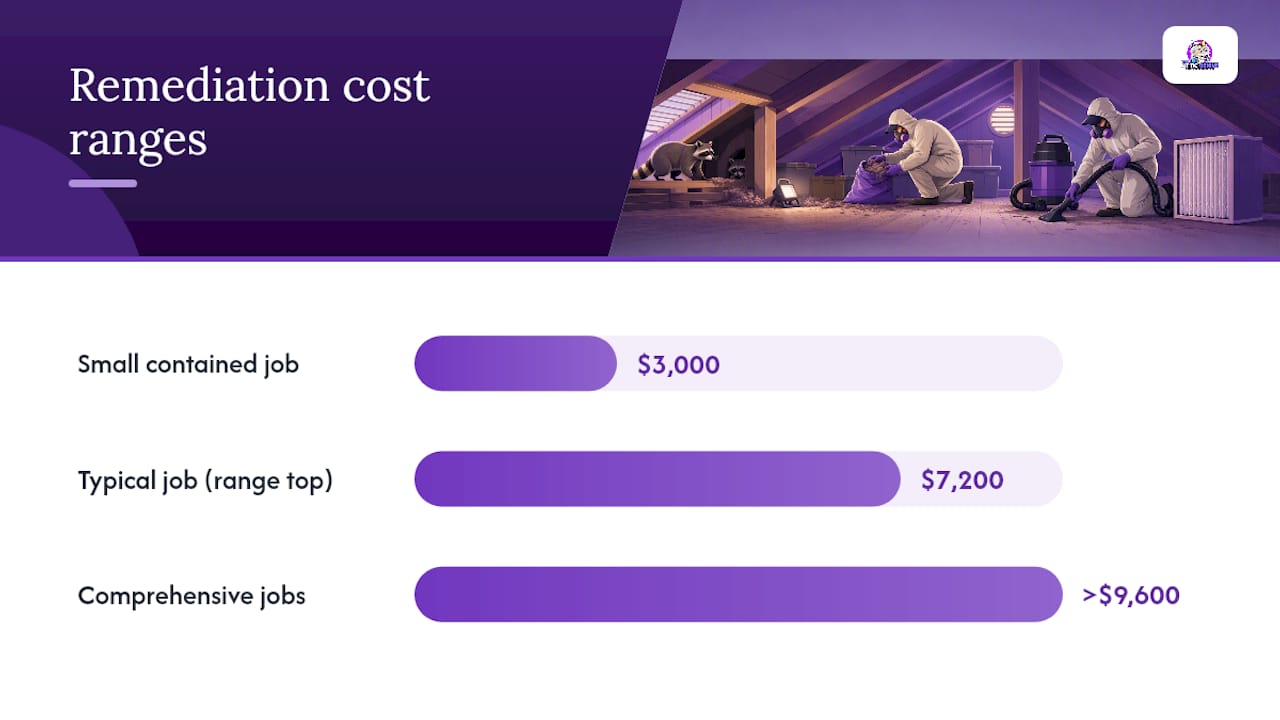
A small, contained job (one latrine site, minor insulation loss) can often finish inspection through re-insulation in two to three days. Larger infestations with structural repairs or full attic insulation replacement can stretch to one to two weeks once you factor in drying time and material lead times.
Before signing anything, ask a contractor these questions:
- Do you use HEPA-filtered equipment for insulation removal and disposal?
- What PPE does your crew wear on this specific job?
- Will you provide photo documentation of the inspection and completed work?
- Is there a written warranty on the exclusion and remediation work?
- Can I get a line-item estimate rather than a flat lump sum?
A contractor who hesitates on any of those five is worth a second call to someone else.
Long-term prevention measures beyond sealing entry points
Sealing the holes raccoons used to get in solves the immediate problem, not the underlying one. Raccoons return to attics because something about the property still looks like a good den site, and that attraction usually outlasts a single repair visit.
Start with what’s drawing them in the first place. Unsecured garbage, pet food left outside overnight, and accessible compost piles all read as a reliable food source to a raccoon scouting territory. Removing those cuts the odds of a repeat visit far more than any amount of additional flashing.
Trim tree limbs back a consistent distance from the roofline every year, not just once after an infestation, since regrowth quietly rebuilds the bridge raccoons used originally. Check chimney caps and vent screens on a seasonal basis, particularly after storms, since wind damage to screening is a common way a sealed attic becomes unsealed again without anyone noticing.
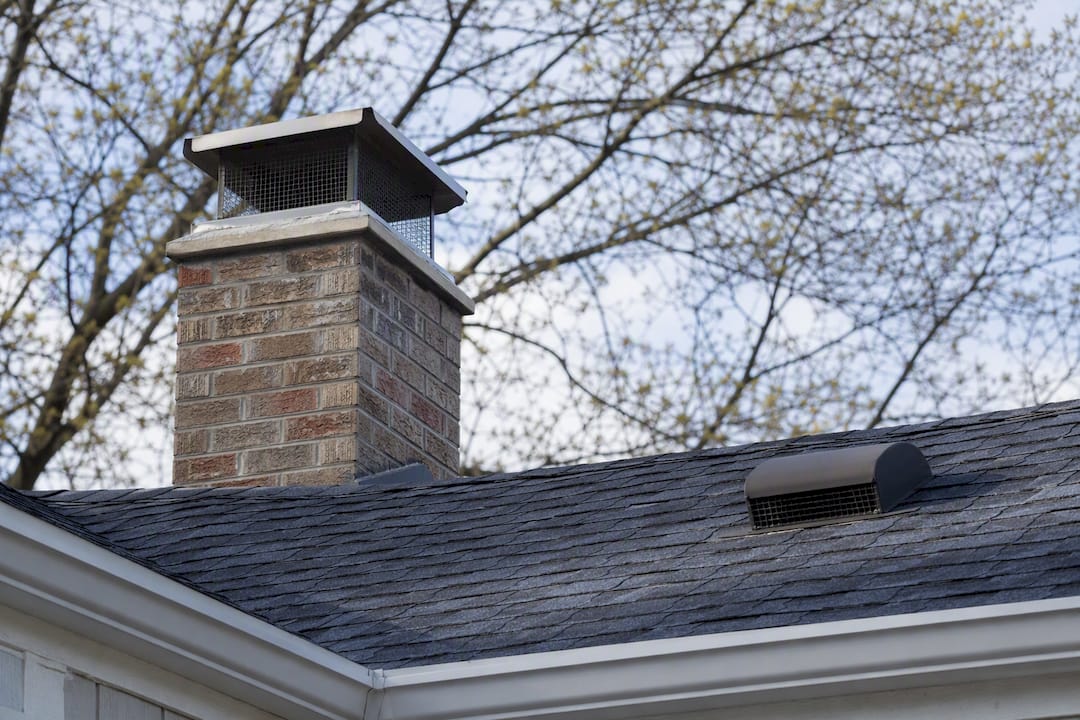
A periodic exterior walk-around, twice a year is reasonable, catches loose flashing, gaps around utility penetrations, and soffit damage before an animal finds them first. Why animals nest in attic insulation covers the attractants side of this in more depth if you’re dealing with a property that’s had repeat visits from any wildlife, not just raccoons.
The most overlooked long-term move: keep the written documentation from your remediation job. If a raccoon does get back in within a year or two, having photos of exactly what was sealed and where makes diagnosing a new breach point far faster than starting the inspection from zero.
When should you upgrade attic ventilation after a raccoon cleanup?
Right after decontamination and repairs, before re-insulation goes in, is the ideal window. Raccoon nesting and urine saturation often expose ventilation problems that were already there but hidden under old, matted insulation, and a stripped attic is the easiest time to fix them since everything is already accessible.
Look for two signs while the attic is open: any mold staining on the roof decking, and any soffit vents that were blocked by compressed insulation or nesting material. Both point to inadequate airflow that likely predates the raccoon problem and will keep causing moisture issues even after cleanup is done.
Adding or clearing soffit vents, checking that baffles keep insulation from choking airflow at the eaves, and confirming ridge or roof vents are unobstructed all belong in this window. Poor ventilation traps moisture, and moisture in fresh insulation defeats the purpose of replacing it in the first place. Attic baffles and their role in ventilation walks through why this step gets skipped so often and what it costs homeowners later in mold remediation bills.
The practical sequence: fix structural damage, address ventilation gaps while the attic is still stripped bare, then insulate. Doing it in reverse order means pulling brand-new insulation back out to fix a vent you should have caught the first time.
The Attic Genius perspective: what a full remediation should include
Homeowners often underestimate how much of this job is documentation, not just labor. A same-day inspection with written findings, HEPA-based removal, and a signed warranty on the exclusion work are the baseline The Attic Genius holds every raccoon remediation job to, backed by over 25 years of combined field experience.
— Jim
Ready to fix the attic properly after raccoons
There’s a real difference between hiring someone to trap a raccoon and hiring a crew that finishes the whole job, including the part where your insulation actually protects your energy bill again. Many wildlife trappers stop the moment the animal is gone, leaving contaminated insulation and open access points behind for the next homeowner problem to surface. The Attic Genius handles attic wildlife cleanup and re-insulation as one project, with same-day inspections and a written warranty covering the exclusion work, so you’re not coordinating three separate contractors for one attic.
If your attic has already been cleared of raccoons and you’re staring at flattened, stained insulation wondering what comes next, that’s exactly where this work starts. The team documents contamination with photos, removes what can’t be salvaged, seals the access points with materials built to outlast a raccoon’s teeth, and reinstalls insulation to the R-value your home actually needs. Start with a pest and vermin droppings cleanup assessment, or check current attic insulation removal cost figures before you commit to a full re-insulation plan. Request a same-day inspection and get a written, line-item estimate before any work begins.
This article is general information, not a substitute for advice from a qualified doctor. Consult a qualified healthcare professional about your own circumstances before acting on anything here.
Sources
- Baylisascaris prevention (CDC)
- Raccoon-borne pathogens and latrine guidance (Emerging Infectious Diseases)
- Attic remediation cost and buyer guidance (AtticFanatics)