
If you’ve found a squirrel nest in the attic, don’t wait it out and don’t reach for poison. Confirm the activity is happening during the day, then install a humane one-way exclusion device or call a licensed wildlife removal service. Once the squirrels are gone, inspect the wiring, remove contaminated insulation, and permanently seal every opening with metal, not foam.
TL;DR:
- Squirrels are active during the day, so signs like fresh chew marks and droppings near attic openings indicate they are present and causing damage.
- Full removal requires installing a one-way exclusion device, confirming no animals remain, then permanently sealing all openings with durable metal hardware.
- Chewing squirrels can damage wiring, creating fire hazards, and contaminate insulation with urine and droppings, significantly lowering energy efficiency.
- DIY attempts risk trapping live animals, which can lead to further damage or legal issues, making professional services the safest and most effective option.
- Post-removal inspections should verify wiring integrity and insulation condition, as contamination often necessitates full replacement to restore attic safety and performance.
Table of Contents
- How to Spot a Squirrel Nest in the Attic
- Why Squirrels Move Into Attics in the First Place
- What Damage a Squirrel Nest Really Causes
- Getting Squirrels Out: Exclusion, Trapping, and What to Skip
- Legal Limits and Safety Rules Homeowners Often Miss
- Cleaning Up the Attic After the Squirrels Are Gone
- Sealing the Roofline So Squirrels Don’t Come Back
- When to Call a Pro, and What It Costs
- A Straight Answer From Someone Who Deals With This Weekly
- Get Your Attic Checked After a Squirrel Nest Removal
- Sources
How to Spot a Squirrel Nest in the Attic
Squirrels are active during daylight hours, so scratching, scampering, or rolling noises overhead between sunrise and dusk almost always point to squirrels rather than mice or rats, which move at night. That timing detail alone is one of the fastest ways to rule out other pests without climbing into the attic at all.
Once you’re up there, the physical evidence is hard to miss. Squirrel nests, sometimes called middens, are loosely woven balls of twigs, dried leaves, and shredded insulation tucked into corners or against the roof deck.
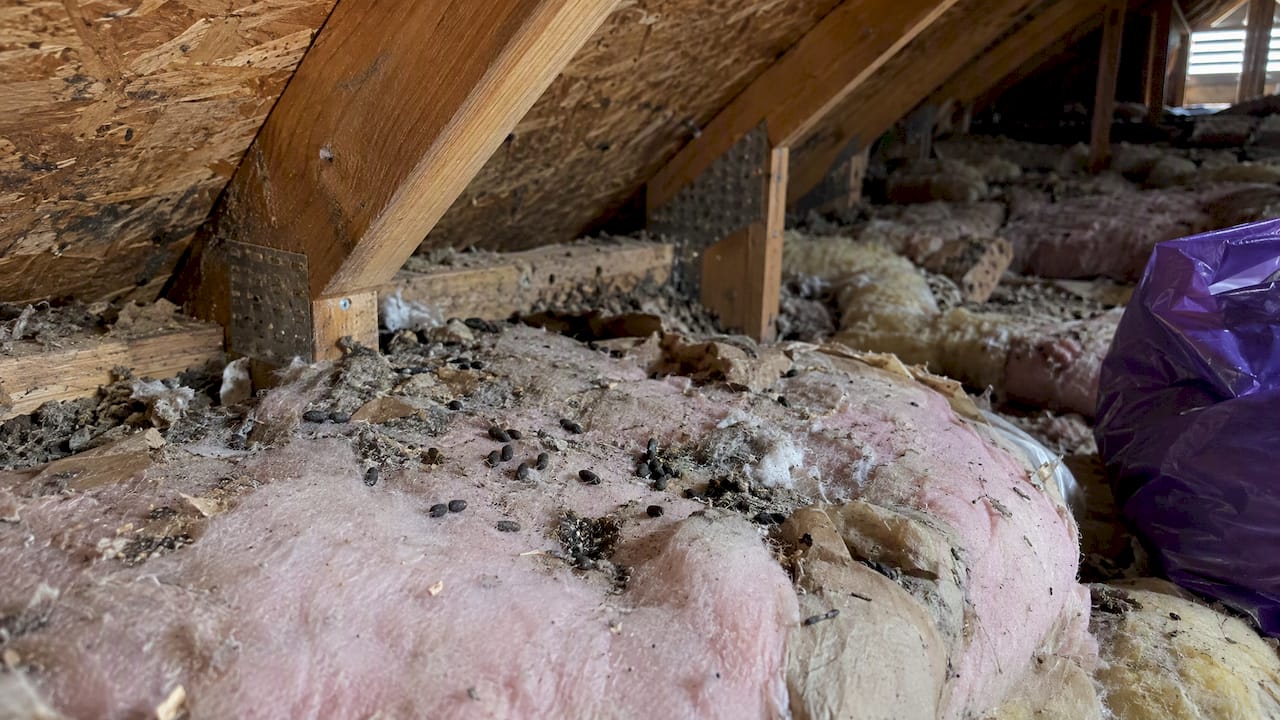
- Droppings that are larger and more pellet shaped than mouse droppings, often clustered near the nest
- Chew marks around vents, soffits, and roof edges where wood or plastic has been gnawed thin
- Shredded or displaced insulation pulled into nest material
- Outdoor clues like a squirrel repeatedly disappearing into the same roofline gap, tail flicking on a branch nearby, or chewed gutter edges
- A musty or ammonia-like odor drifting down through ceiling vents or bathroom fans
If you’re also seeing torn insulation without an obvious nest, it’s worth reading how animals in general exploit attic insulation as nesting material, since squirrels aren’t the only culprit that leaves this kind of trail.
Why Squirrels Move Into Attics in the First Place
An attic offers exactly what a squirrel wants for raising young: a dry, insulated cavity that stays warmer than a tree hollow through cold stretches and cooler than direct sun in summer. Female squirrels typically look for denning sites during two windows each year, one in late winter through early spring and a second in late summer through fall, which is why attic activity tends to spike on a predictable calendar.
Chewing isn’t random destruction. Squirrel incisors grow continuously, and gnawing on wood, vents, and wiring insulation is how they keep those teeth worn down to a usable length.
- Spring litters usually arrive between February and April
- Fall litters typically show up between August and October
- Young squirrels stay dependent on the nest for six to ten weeks before they can move on their own
That dependency window matters more than most homeowners realize. Sealing an attic before confirming there are no nursing young inside traps animals that can’t escape, which creates a bigger problem than the one you started with.
What Damage a Squirrel Nest Really Causes
The chewing habit that helps squirrels manage their teeth is the same habit that turns an attic into a fire risk. When squirrels strip the plastic sheathing off electrical wiring, exposed conductors can short out or arc, and that’s a documented fire hazard that homeowners rarely notice until something smells like burning plastic. Any chewed wire in the attic deserves an electrician’s inspection before you assume the risk has passed.
Insulation contamination is the second major cost. Droppings and urine soak into fiberglass batts or loose fill insulation, lowering its R-value and creating a persistent odor that HVAC systems can circulate through the rest of the house.
- Chewed soffits, fascia boards, and roof vents that let in wind and rain once squirrels widen a gap
- Gutter nests that block drainage and add weight during storms
- Mites and fleas that hitch a ride on squirrel fur and can migrate into living spaces once the animals are gone
Attic insulation typically covers a significant portion of a home’s total surface area exposed to outdoor temperature swings, which is part of why contamination in that one space can affect comfort and energy costs throughout the house. Once urine and droppings have soaked into batts or loose fill, spot cleaning rarely restores performance; most professionals recommend full removal and replacement instead.
Getting Squirrels Out: Exclusion, Trapping, and What to Skip
Removal has a correct order, and skipping steps is how homeowners end up sealing a live animal inside the attic. Work through it in sequence rather than jumping straight to sealing.
- Map every opening. Walk the roofline, soffits, and gable vents from outside, and check the attic interior for daylight leaking through gaps. Note which hole shows fresh chew marks or debris, since that’s the active entrance.
- Install a one-way exclusion device over the primary active opening. These let squirrels leave to forage but block them from re-entering. Leave it in place for 48 to 72 hours while watching for continued activity.
- Confirm the attic is empty before removing the device. Listen at dawn and dusk, since that’s when squirrels are most likely to move around if any are still inside.
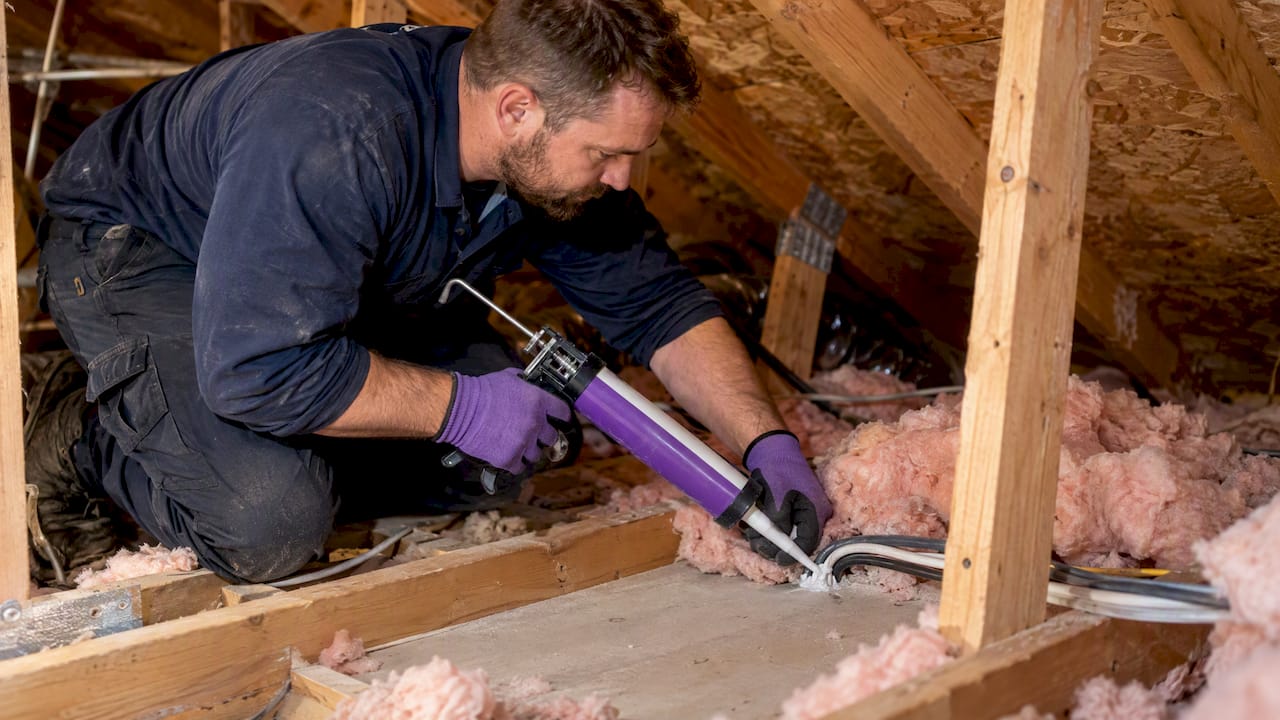
- Permanently seal the opening with metal hardware cloth or flashing once you’re confident the attic is clear. This is the step that actually stops repeat invasions, since exclusion without permanent sealing just leaves the door open for the next squirrel that finds the same gap.
- Use live-capture cage traps only as a backup, when exclusion isn’t practical because of roof geometry or multiple active entrances. Check traps at least twice daily, and confirm your local relocation laws before releasing anything.
Deterrents like bright lights, a radio left playing, or ammonia-soaked rags can nudge a squirrel toward leaving on its own, but they rarely solve a nesting problem by themselves and work best paired with exclusion. Skip poisons and glue traps entirely. Beyond the cruelty, a poisoned squirrel frequently dies inside a wall or the attic itself, and a decaying carcass in an inaccessible space is a worse problem than the one you were trying to fix.
Pro Tip: Install the one-way device in the late morning after squirrels have already left to forage for the day. That way you’re not accidentally trapping an animal inside on day one.
Legal Limits and Safety Rules Homeowners Often Miss
Trapping and relocating wildlife isn’t a free-for-all. Many states and municipalities regulate how and where trapped animals can be released, and releasing an animal on someone else’s property or outside permitted zones can violate local ordinances. A quick call to your local animal control or wildlife agency before you set a trap saves you from a legal headache later.
Timing carries its own risk. If you suspect a nest holds dependent young, during the spring or fall breeding windows, hold off on sealing any opening until you’ve confirmed there are no babies inside that can’t yet leave on their own.
- Check with your state wildlife agency or local animal control before relocating any trapped squirrel
- Never seal an entry point during peak nesting months without confirming the nest is empty
- Leave steep, icy, or high rooflines to professionals who carry fall-protection gear
- Avoid attic work during active heat waves, since attic temperatures can climb well past what’s safe for extended work
Roof access is where a lot of DIY squirrel removal goes sideways. A ladder on wet shingles or a steep pitch isn’t worth the exclusion device you’re trying to install yourself.
Cleaning Up the Attic After the Squirrels Are Gone
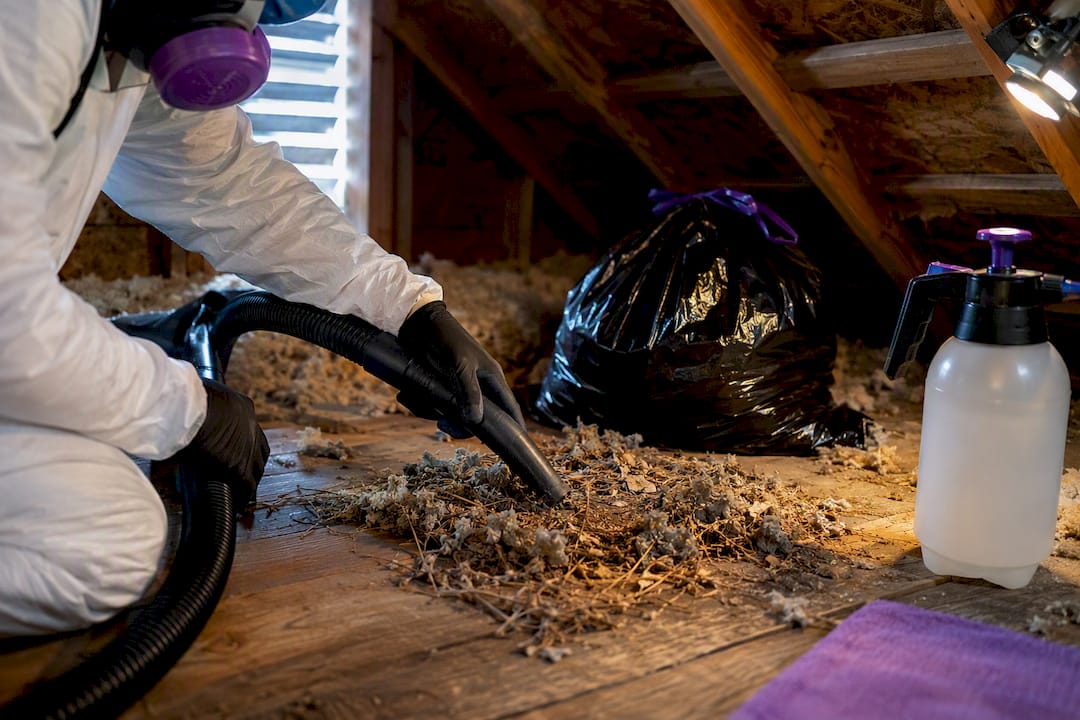
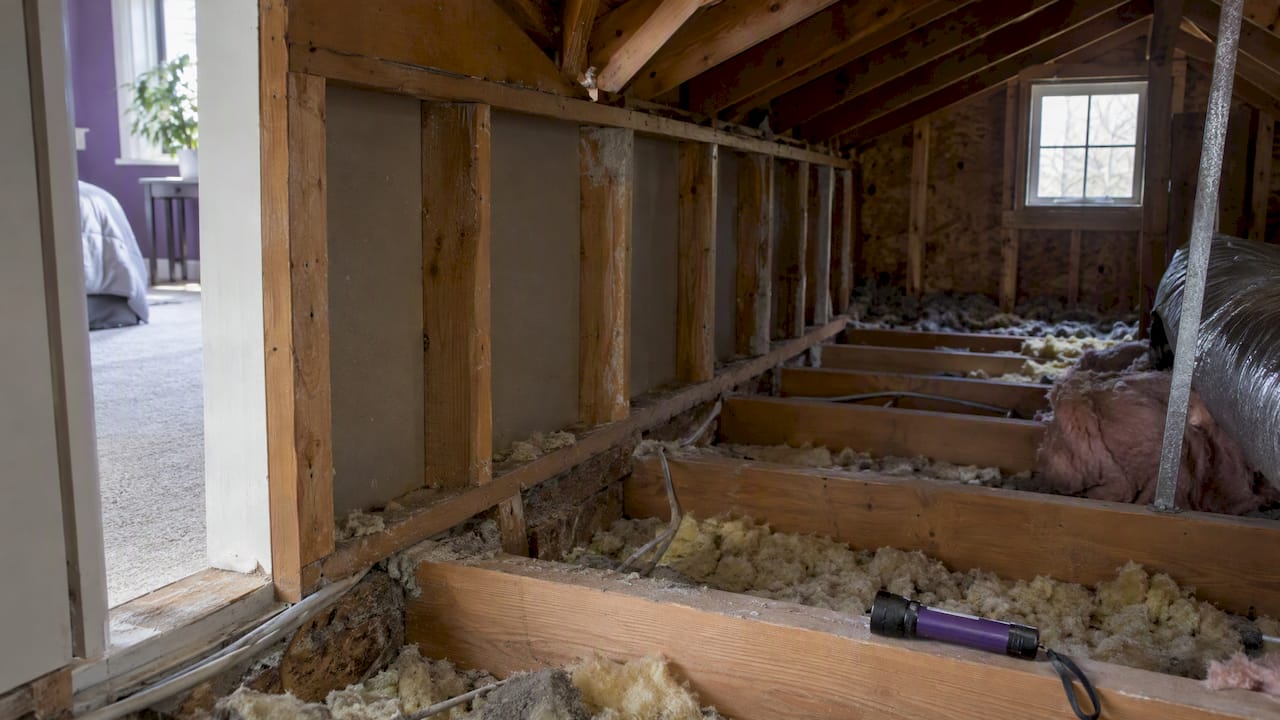
Removal is only half the job. Once the attic is confirmed empty, walk it with a flashlight and check for droppings piles, matted or discolored insulation, a lingering urine smell, and any HVAC ductwork or wiring that looks chewed or displaced.
Not every mess needs full replacement, but contamination usually does. If droppings or urine have soaked into blown-in or batt insulation, plan on removal and replacement rather than spot cleaning, since the material loses its insulating value and keeps generating odor no matter how much surface cleaning you do.
- Droppings and nesting debris scattered across the attic floor
- Wet or compressed insulation, especially near the entry point
- Chewed HVAC duct sections or exposed wiring
- Lingering odor even after visible debris is removed
Professional remediation crews typically handle this as a package: pest waste cleanup, insulation removal and replacement, air sealing at the gaps squirrels widened, and a ventilation check to make sure moisture isn’t trapped behind new insulation. Full-service crews also flag anything that needs an electrician before it becomes a bigger issue.
Pro Tip: Take photos of the damage before cleanup starts. If you ever sell the home, documented remediation work reassures buyers that the issue was handled properly, not just patched over.
The Attic Genius offers same-day inspections and written warranties on this kind of remediation work, which matters when you’re trying to get a clear answer on whether insulation needs a top-up or a full replacement after infestation.
Sealing the Roofline So Squirrels Don’t Come Back
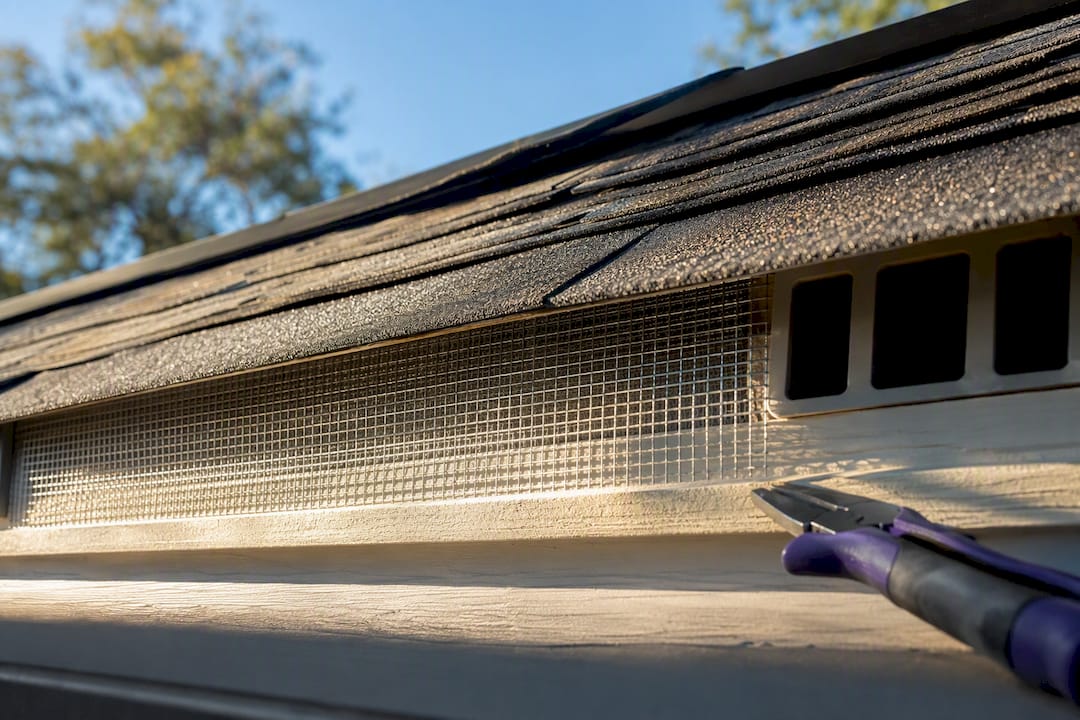
Squirrels are persistent, and they will test the same weak spots year after year if you don’t harden them properly. The materials you use determine whether the fix lasts one season or ten.
Quarter-inch galvanized hardware cloth is the standard for covering vents and gaps, since squirrels can chew through foam, plastic mesh, and even thin aluminum screening without much effort. Sheet-metal flashing works for larger gaps along rooflines and fascia boards, and a rodent-rated chimney cap closes off one of the most commonly overlooked entry points.
- Fasten metal patches with screws and washers into solid, undamaged wood, never just caulk or staples
- Cut out any rotted wood back to clean framing before patching, since squirrels will chew straight through soft, weathered wood around a repair
- Trim tree branches back six to eight feet from the roofline so squirrels can’t jump directly onto shingles
- Secure trash cans and bird feeders, which draw squirrels close to the house even when the roof itself is sealed
- Clear gutters regularly, since debris buildup gives squirrels a soft landing spot and nesting material within reach of the roof edge
Branch trimming near a roofline isn’t always a simple DIY task, especially on mature trees close to the house. If you’re dealing with limbs that overhang the attic access point, a resource like this guide on safe tree removal is worth reviewing before you climb up with a chainsaw. Hardening the building envelope this way is consistently the single change that stops repeat invasions, more than any trap or deterrent used afterward.
When to Call a Pro, and What It Costs
Some situations are worth handing off immediately rather than testing your own patience. Call a professional if you’re hearing daytime activity you can’t safely inspect yourself, if you’ve found chewed wiring anywhere in the attic, if you suspect dependent young are present, or if the roof access is too steep or too high to work on safely.
Timelines vary by severity, but a rough pattern holds across most cases. Initial inspection usually happens same-day to within a week of your call. Exclusion and monitoring typically run two to five days, depending on how quickly the one-way device confirms the attic is clear. Permanent sealing and any insulation remediation can take anywhere from a few days to a couple of weeks if contamination is extensive.
- Get at least two or three written estimates before committing, since scope and materials vary widely between providers
- Basic exclusion and sealing tends to cost less than a full remediation job that includes insulation removal
- Full remediation, insulation replacement, and air sealing together represent a larger investment but address the whole problem at once rather than leaving contaminated material behind
Ask any contractor directly whether their quote includes insulation replacement or just the exclusion work, since those are often priced and scheduled separately.
A Straight Answer From Someone Who Deals With This Weekly
Homeowners tend to treat the squirrel and the insulation as two separate problems. They’re not. After more than 25 years combined on attic jobs and over 400 five-star reviews from Chicagoland homeowners, our team at The Attic Genius sees the same pattern constantly: someone gets the squirrel out, feels relieved, and skips the insulation check entirely because the noise stopped.
That’s the expensive mistake. A squirrel that’s gone for a week doesn’t undo the urine-soaked batts under the old nest or the wire it stripped near the eave. Our approach starts with humane eviction because it’s the right way to handle a wild animal, but it doesn’t end there. We check wiring, we test insulation for contamination, and we don’t recommend replacement unless the material has actually lost its performance. Skipping that second half of the job is how the same squirrel problem, or the next animal that finds the same weak spot, turns into a bigger repair bill down the line.
— Jim
Get Your Attic Checked After a Squirrel Nest Removal
Getting the squirrel out is only the first half of the job. The second half, checking for wire damage, testing whether insulation needs replacing, and closing off the gaps for good, is where most DIY cleanups fall short.
The Attic Genius handles that second half directly. Our team offers pest and vermin droppings cleanup, insulation removal and replacement, air sealing at the openings squirrels widened, and ventilation checks to keep moisture from building up behind new insulation. Every job comes with a same-day inspection and a written warranty, so you know exactly what you’re getting before work starts. If cleaning contaminated batts and chasing down chewed wiring yourself sounds like more than you want to take on, request a free inspection and we’ll tell you plainly whether your attic needs a full insulation replacement or just a targeted repair.
Sources
- Squirrels in the Attic? – Solved! – Bob Vila
- How to Get Rid of Squirrels in Attic – Attic Fanatics Blog
- Will Squirrels Eventually Leave Your Attic On Their Own? Here’s What We Know – House Digest
- What happens if squirrels get in your attic? – Know Animals