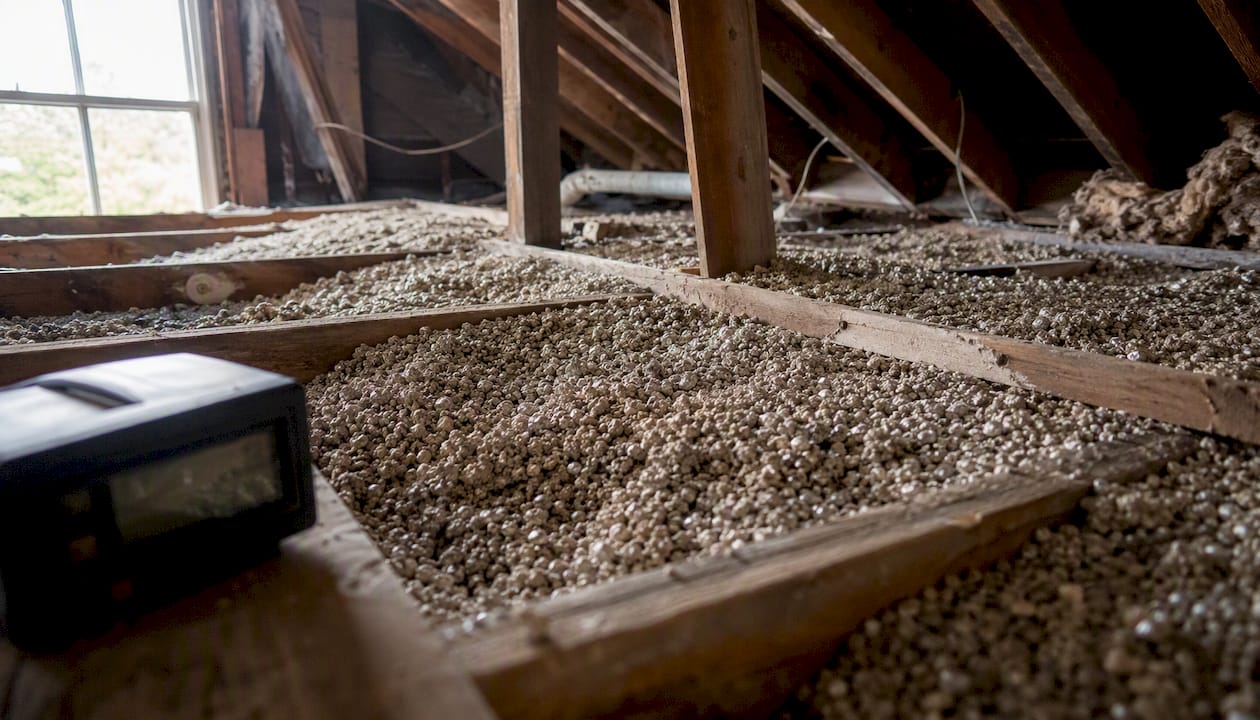
Vermiculite insulation installed before 1990 should be treated as potentially asbestos-contaminated until proven otherwise. The single most important thing you can do right now: do not disturb it. That means no attic storage runs, no DIY inspections, no reaching in to grab a sample. The danger is not the material sitting quietly in your attic. The danger is what happens when it becomes airborne.
- If you found vermiculite and haven’t touched it: Restrict attic access, post a warning at the hatch, and read the rest of this article before doing anything else.
- If you recently disturbed it: Leave the area immediately, close the attic access, minimize airflow between the attic and living spaces, and call a certified asbestos professional today.
- If tradespeople are scheduled: Tell them before they enter. An electrician or HVAC tech who doesn’t know can stir up more fiber in 20 minutes than a homeowner would in a year.
Urgent: If insulation was disturbed and you or family members were present, note the date, duration, and who was exposed. A physician experienced with occupational lung disease can advise on monitoring even when symptoms haven’t appeared yet.
Pro Tip: Tape a handwritten note to the attic hatch that reads “Possible Asbestos Insulation — Do Not Disturb — Call Before Entering.” It costs nothing and can prevent a contractor from making an expensive mistake.
Key Takeaways
Vermiculite insulation installed before 1990 should be treated as potentially asbestos-contaminated, and the safest immediate action is to leave it completely undisturbed until a certified professional assesses it.
| Point | Details |
|---|---|
| Assume contamination | Pre-1990 vermiculite likely came from the Libby, Montana mine, which supplied over 70% of U.S. supply and contained asbestos. |
| Do not disturb | Risk occurs only when fibers become airborne; undisturbed vermiculite in a sealed attic poses minimal day-to-day risk. |
| No known safe level | ATSDR confirms there is no known safe level of asbestos exposure; smoking multiplies disease risk significantly. |
| Testing has real limits | A single negative bulk sample does not clear the material; EPA recommends assuming contamination over relying on inconclusive tests. |
| The Attic Genius | Serves Chicagoland homeowners with same-day inspections, pre-sale attic prep, and post-abatement insulation upgrades. |
Table of Contents
- Why vermiculite insulation can be dangerous
- The Libby, Montana mine and the Zonolite connection
- How asbestos from vermiculite harms your health
- How to tell if your attic insulation is vermiculite
- When vermiculite insulation becomes a real hazard
- What to do immediately if you find or disturb vermiculite
- Testing limitations and what the EPA actually recommends
- Should you remove vermiculite? Options and contractor checklist
- Selling or renovating a home with vermiculite
- What to expect from a professional assessment and abatement
- What I’ve seen homeowners get wrong about vermiculite
- The Attic Genius can help you handle this the right way
- Sources
Why vermiculite insulation can be dangerous
Vermiculite is a naturally occurring mineral that expands when heated, producing lightweight, fire-resistant granules. Builders and contractors used it widely as blown-in attic insulation from the mid-20th century through the late 1980s. It also showed up in loose-fill wall insulation and as a soil amendment in gardening.
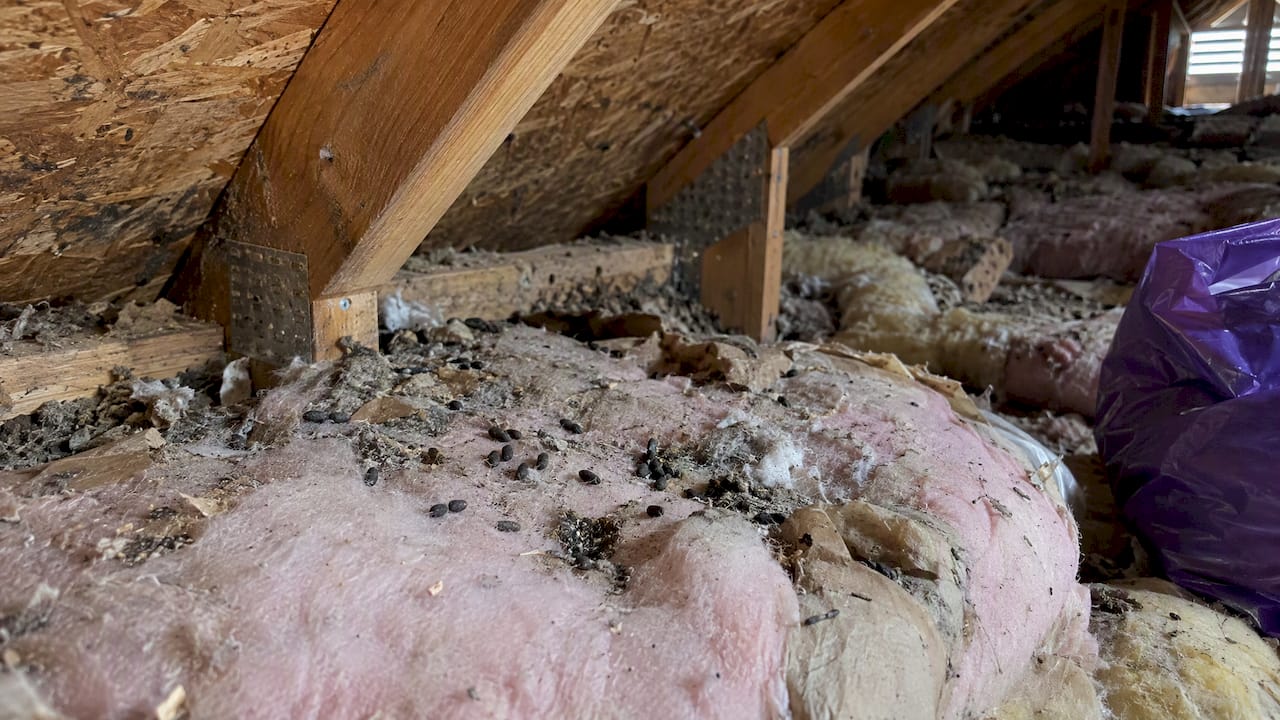
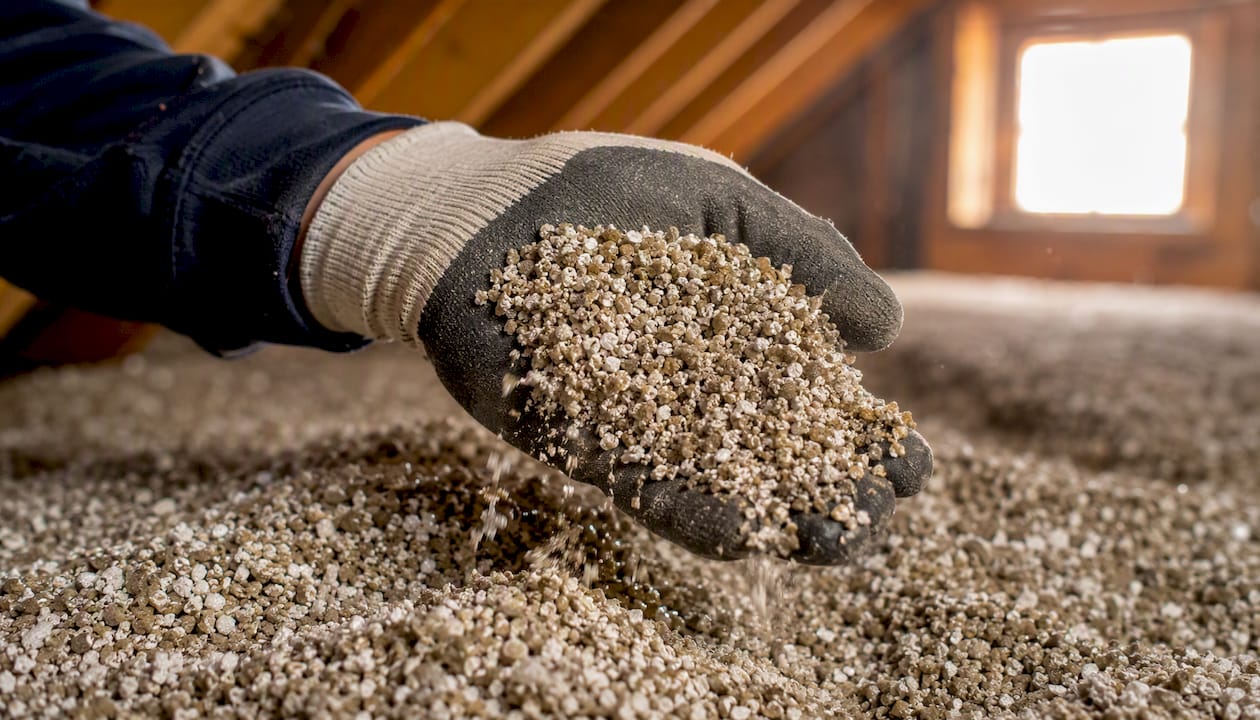
In an attic, vermiculite looks like small, shiny, mica-like flakes. The color ranges from gray-silver to golden-brown. It’s loose and granular, not a batt or board, and it tends to settle into a thin, uneven layer across the attic floor. Older homes sometimes still have bags or partial bags labeled “Zonolite” near the attic access.
- Lightweight and poured in place, so it filled irregular spaces easily
- Naturally fire-resistant, which appealed to mid-century builders
- Decent thermal performance for its era
- Inexpensive and widely available through the 1980s
The problem has nothing to do with vermiculite itself as a mineral. The problem is where most of it came from.
The Libby, Montana mine and the Zonolite connection
[A mine near Libby, Montana supplied over 70% of the vermiculite sold in the U.S. from 1919 to 1990](https://www.epa.gov/asbestos/protect-your-family-asbestos-contaminated-vermiculite-insulation). That mine contained a natural deposit of asbestos running through the same ore body. The two minerals were extracted together, and the asbestos contamination carried through into the finished product.
W.R. Grace & Company marketed Libby vermiculite under the brand name Zonolite. If you find bags or remnants labeled Zonolite in your attic, that is a direct link to the Libby ore. But the absence of that label doesn’t clear the material. Much of the Libby product was sold under other brand names or in bulk, and there’s no reliable way to know the source just by looking.
Key dates worth knowing:
- 1919: Large-scale mining begins at the Libby deposit
- 1963: W.R. Grace acquires the Libby mine
- 1990: The Libby mine closes
- 1999–2000: EPA begins emergency response in Libby after widespread community health impacts are documented
- Post-1990: Vermiculite products from other sources are unlikely to carry the same contamination risk
The practical takeaway: if your home was built or insulated before 1990 and has loose-fill attic insulation, assume it may be from Libby unless proven otherwise.
How asbestos from vermiculite harms your health
Asbestos fibers are dangerous because of their size and shape. When vermiculite is disturbed, it can release microscopic fibers that stay suspended in air long enough to be inhaled deep into the lungs. Once there, the body cannot clear them. They embed in lung tissue and can remain for decades.
According to the ATSDR, inhaled asbestos fibers can cause asbestosis, lung cancer, and mesothelioma, and there is no known safe level of asbestos exposure. Smoking multiplies the risk significantly. A smoker who has had repeated asbestos exposure faces a far higher probability of lung cancer than either risk factor alone would predict.
- Asbestosis: Scarring of lung tissue that causes progressive breathing difficulty
- Lung cancer: Risk increases with cumulative exposure and is sharply elevated in smokers
- Mesothelioma: A rare cancer of the lining of the lungs or abdomen, almost exclusively linked to asbestos
Latency is one of the most unsettling aspects of asbestos-related disease. Symptoms may take many years to appear after exposure. That means a homeowner who spent years doing attic storage runs in the 1990s might not see health consequences until now. If you have reason to believe you had significant exposure, consult a physician experienced with occupational lung disease. Don’t wait for symptoms.
Risk in context: Occasional brief attic entry carries far less risk than sustained, repeated disturbance. A single trip to retrieve holiday decorations is not the same as a contractor who spent three days ripping out insulation without protection. Both carry some risk, but the dose matters.
How to tell if your attic insulation is vermiculite
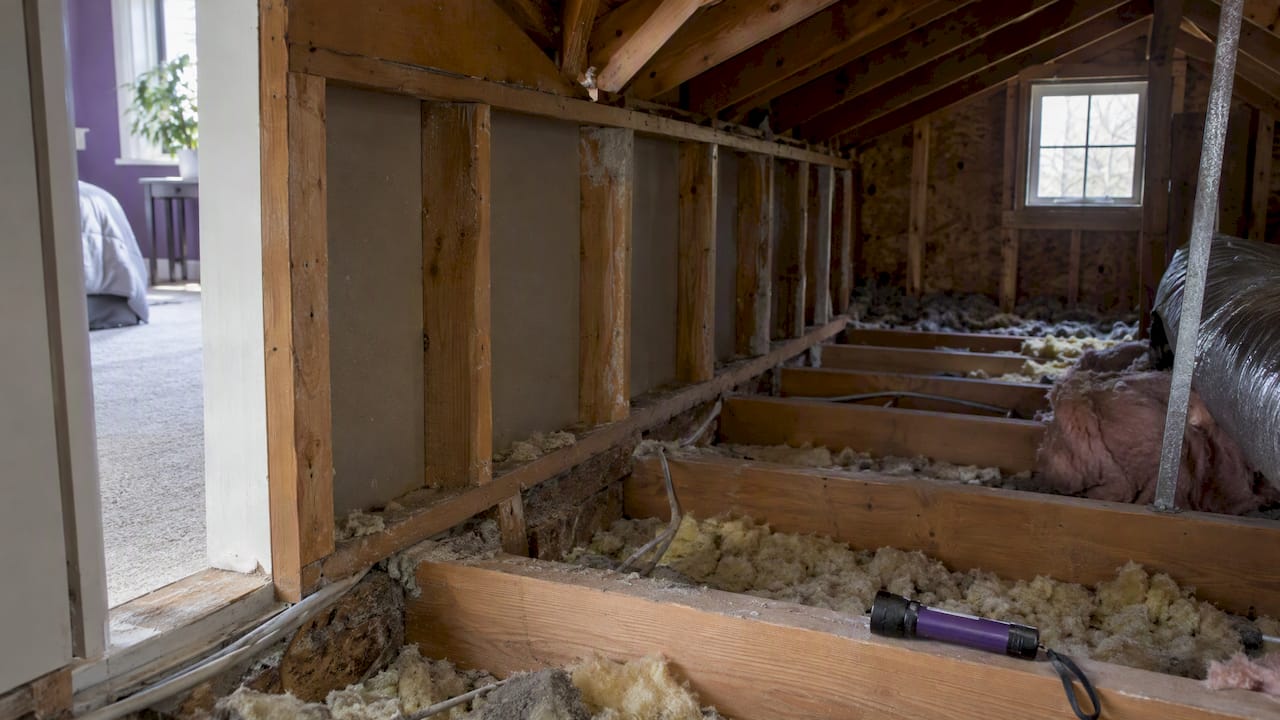
You can do a preliminary visual check without entering the attic. Use a flashlight from the hatch opening and look for these characteristics:
- Texture: Loose, granular, and pebble-like, not fibrous or fluffy
- Color: Gray-silver, golden-brown, or a mix of both
- Sheen: A slight mica-like sparkle when light hits it
- Labeling: Bags or packaging near the hatch marked “Zonolite” or similar
What you should not do: dig in, scoop a sample, or vacuum up a portion to examine it. Any physical disturbance can release fibers.
Even a professional bulk sample test can return a negative result on a contaminated batch, because asbestos distribution in the ore was uneven. One sample from one corner of the attic may test clean while another section is heavily contaminated. This is exactly why the EPA and ATSDR recommend assuming contamination rather than relying on a single negative test result.
Pro Tip: If you’re not sure whether the loose fill in your attic is vermiculite or something else (cellulose and fiberglass are common alternatives), photograph it from the hatch and send the photo to a certified industrial hygienist or asbestos inspector before anyone enters.
When vermiculite insulation becomes a real hazard
Vermiculite sitting undisturbed in a sealed attic poses minimal day-to-day risk. The hazard activates when fibers become airborne. Here’s when that happens:
Common disturbance scenarios:
- Retrieving or storing boxes in the attic
- Electricians, HVAC technicians, or plumbers working in the attic space
- Pest or vermin cleanup that involves moving insulation
- Renovation work that opens ceilings or walls adjacent to the attic
- Installing recessed lighting or attic fans
- Walking across the attic floor without protection
Relative risk by scenario:
- Single brief entry with no disturbance (e.g., looking from the hatch): Low, but not zero
- Retrieving items stored on top of insulation: Moderate — movement stirs surface fibers
- Tradespeople working for hours in the attic: High — sustained disturbance, no respiratory protection
- Full renovation that opens attic floor or ceiling: Very high — professional abatement required before work begins
What to do immediately if you find or disturb vermiculite
If you’ve just discovered vermiculite or accidentally disturbed it, work through this list in order:
- Stop all work in the attic immediately.
- Leave the attic and close the access hatch or door behind you.
- Limit airflow between the attic and living areas. Close HVAC vents in the attic if accessible from below.
- Do not sweep or vacuum any dust or debris that may have fallen into living spaces. Use damp paper towels to pick up visible material, then seal in a plastic bag.
- Remove clothing worn during exposure outdoors, bag it, and shower before moving through the house.
- Wash exposed skin thoroughly with soap and water.
- Photograph the area from the hatch if you can do so without re-entering.
- Write down who was present, how long, and what activity was happening. This record matters for medical consultations and for disclosure if you sell.
- Call a certified asbestos professional for assessment before anyone re-enters.
- Call your doctor if exposure was prolonged or repeated, and mention the potential asbestos contact specifically.
Pro Tip: Keep a simple log in your phone’s notes app: date, who entered the attic, why, and for how long. If a physician or contractor asks about exposure history later, you’ll have it.
Testing limitations and what the EPA actually recommends
Many homeowners assume the first step is to test. The EPA and ATSDR take a different position: assume pre-1990 vermiculite may be contaminated and avoid disturbing it. Routine homeowner testing and air sampling are not routinely recommended, for good reason.
Why testing has real limits:
- Asbestos distribution in Libby ore was uneven, so a single bulk sample can miss contamination present elsewhere in the same attic
- Air monitoring results depend heavily on conditions at the time of sampling — a calm attic on a still day reads very differently from one that was just disturbed
- Lab results can be inconclusive, and a negative result does not guarantee the material is safe
- Testing costs money and can create a false sense of security if the result is negative
If testing is done, use an accredited laboratory and insist on independent sampling. The company collecting the sample should not be the same company that will profit from an abatement contract. That conflict of interest is real and documented in the industry.
Should you remove vermiculite? Options and contractor checklist
Removal is not always the right answer. The EPA notes that removal may not be necessary if vermiculite can be safely left in place. The decision depends on several factors:
Factors that favor leaving it in place:
- The attic is rarely accessed and will remain so
- No renovations are planned that would disturb the insulation
- The material is in good condition with no visible damage or disturbance
Factors that favor professional removal:
- Planned renovation that will open the attic floor or ceiling
- Frequent attic access required (HVAC equipment, storage)
- Buyer or insurer requirements during a home sale
- Occupants with respiratory conditions or elevated vulnerability
What professional removal involves:
Professional abatement uses negative-pressure enclosures, HEPA-filtered vacuums, documented waste disposal, and independent post-abatement air clearance testing before reoccupancy. Workers wear full respiratory protection and disposable coveralls. Waste is double-bagged and transported to a licensed disposal facility with a documented waste manifest.
Contractor checklist — require all of these:
- State license and certification for asbestos abatement
- Proof of liability insurance and workers’ compensation
- Separation between the inspector/assessor and the abatement crew (no same-company inspection and removal)
- Written scope of work before any contract is signed
- Negative-pressure containment with HEPA filtration during removal
- Post-removal air clearance by an independent third-party tester
- Written clearance documentation before reoccupancy
- Waste disposal manifest provided to you at job completion
Pro Tip: Get at least two written estimates and call your state’s environmental or health agency to verify each contractor’s license is current. Licensing databases are usually searchable online.
Selling or renovating a home with vermiculite
Disclosure is not optional in most U.S. states. If you know your home has vermiculite insulation, you are generally required to disclose it as a known hazardous material. Failing to disclose can expose you to legal liability after the sale, even if the buyer never develops health problems.
Practical steps for sellers:
- Document what you know: when the insulation was installed, any test results, any abatement work performed
- Provide lab reports or abatement records to buyers if available
- Limit attic access during inspections. A buyer’s inspector should be informed before entering
- If a buyer requests independent testing, cooperate and use an accredited lab
- Consider professional abatement before listing if the home is in a competitive market or if buyers are likely to request it
For sellers preparing an attic for a home sale, this guide on attic insulation before selling covers the full preparation process.
If renovation is planned: Notify all contractors in writing before work begins. Require that any contractor working near the attic follow asbestos-safe work practices. For renovations that will disturb the insulation, professional abatement before construction starts is the only responsible path.
What to expect from a professional assessment and abatement
A qualified asbestos professional follows a structured process, and knowing what that looks like helps you spot shortcuts.
Assessment steps:
- Visual inspection of the attic from the access point and, if necessary, limited entry with full PPE
- Limited bulk sampling if the material’s identity is uncertain, using an accredited lab
- Risk evaluation tied to the planned use of the space and any upcoming work
- Written scope of work and clearance criteria before abatement begins
During abatement:
- The work area is sealed with plastic sheeting and placed under negative air pressure
- Workers wear respirators rated for asbestos (minimum half-face with P100 filters, typically full-face)
- HEPA vacuums remove residual material after bulk removal
- All waste is double-bagged in labeled, sealed bags and transported with a waste manifest
- An independent tester, not the abatement crew, performs post-work air clearance sampling
Red flags to watch for:
- The same company offers to inspect and perform abatement with no separation
- No written clearance documentation is offered after the job
- The contractor cannot produce a current state abatement license
- No waste manifest is provided at job completion
- The quote includes no mention of negative-pressure containment or HEPA filtration
Pro Tip: Ask specifically: “Who performs the post-abatement air clearance test, and are they independent of your company?” If the answer is “we do it ourselves,” walk away.
For more on attic health hazards beyond vermiculite, including mold and pest waste, that resource covers the full picture.
What I’ve seen homeowners get wrong about vermiculite
The most common mistake isn’t ignoring the problem. It’s overreacting in the wrong direction. Homeowners discover vermiculite, panic, and immediately start scooping samples or tearing out insulation themselves to “see how bad it is.” That single decision turns a manageable situation into an active exposure event.
The second most common mistake is assuming a negative test result means they’re in the clear. One bulk sample from one corner of an attic is not a clean bill of health. The Libby ore contamination was uneven by nature, and industry standards have shifted firmly toward assuming contamination for pre-1990 material rather than betting on a single test.
What actually works: treat it like a slow-moving situation that rewards patience and professional guidance. Most homes with vermiculite are safely managed without dramatic expenses when the insulation is left undisturbed and the right professionals are brought in for any work that would disturb it. The homeowners who end up with the worst outcomes are the ones who tried to handle it themselves or hired the cheapest contractor without checking credentials.
The Attic Genius can help you handle this the right way
If you’re in the Chicagoland area or Northwest Suburbs and you’ve found vermiculite in your attic, The Attic Genius offers same-day inspections to assess what you’re dealing with before anyone disturbs a single granule.
The Attic Genius team can walk through the attic access, document conditions, and connect you with accredited independent testers when sampling is warranted. For homeowners preparing to sell, the team handles the full pre-sale attic prep process, including documentation that buyers and their agents expect to see. After safe abatement by a certified contractor, The Attic Genius can handle the insulation upgrade, air sealing, and ventilation work to bring your attic up to current standards. With 25+ years of combined experience and 400+ five-star reviews across Chicagoland, the team knows what a proper job looks like and what shortcuts to refuse. Book a same-day inspection and get a written estimate before any work begins.
Sources
These are the primary public-health and regulatory sources behind the guidance in this article. Each covers a different aspect of the vermiculite issue.
- Protect Your Family from Asbestos-Contaminated Vermiculite Insulation | US EPA
- Current Best Practices for Vermiculite Attic Draft
- Air: Asbestos in Vermiculite Insulation | Wisconsin Department of Health Services
This article is general information, not a substitute for advice from a qualified doctor. Consult a qualified healthcare professional about your own circumstances before acting on anything here.