Upstairs rooms often become too hot due to warm air rising, trapped attic heat, leaky ducts, and insufficient air mixing. Homeowners can often reduce upstairs temperatures by 1 to 5°F within a day or two by continuously running the HVAC fan and opening all downstairs vents to improve air circulation. For temperature gaps exceeding 8°F, professional solutions like sealing attic ducts and upgrading insulation can lower the difference by up to 8°F, typically costing between $250 and $1,500 for substantial and lasting relief.
Warm air rises and gets trapped by attic heat, leaky ducts, and a single downstairs thermostat that never knows the second floor is roasting. The fastest fix is free: turn the HVAC fan to ON, open every vent, and pull the shades. If the gap between floors still sits above 8°F after that, it’s time to measure and call in a diagnostic.
TL;DR:
- Opening all downstairs vents and running the fan continuously can reduce upstairs temperatures by 1 to 5°F within a day or two through better air mixing.
- Sealing attic ducts and improving insulation have the potential to lower the temperature gap by up to 8°F, especially when ducts run through hot attics.
- The typical temperature difference between floors is around 5°F, with gaps exceeding 8°F indicating significant duct, insulation, or zoning issues.
- Fixes like duct sealing and attic insulation upgrades usually cost between $250 and $1,500 and can provide substantial and lasting relief.
- Professional diagnostics, including duct leak testing and load calculations, are essential before investing in costly zoning or additional HVAC systems.
Table of Contents
- Why Is Upstairs Too Hot? Quick Fixes to Try Today
- Why Is Upstairs Hotter Than Downstairs?
- How Do I Measure the Upstairs to Downstairs Temperature Gap?
- What Does It Cost to Fix a Hot Upstairs, and What’s the Payoff?
- What Should You Expect From Professional Attic Work?
- A Homeowner’s Decision Path for a Hot Upstairs
- Ready to Fix It? Where to Start
- Sources
- FAQ
Why Is Upstairs Too Hot? Quick Fixes to Try Today
Before you spend a dollar on repairs, run through this list. Most homeowners see a real, if partial, improvement within a day or two.
- Open every downstairs vent, even ones you never use. Closing vents to “push” air upstairs seems logical, but it raises static pressure in the ductwork and can strain the blower motor or freeze the coil, according to the Department of Energy. Balance airflow with dampers instead of shutting vents completely.
- Switch the thermostat fan setting from AUTO to ON. Continuous air circulation mixes hot upstairs air with cooler downstairs air throughout the day, not just when the compressor kicks on. Modern ECM blower motors use very little extra electricity to run this way, so the comfort payoff usually outweighs the cost.
- Run ceiling fans counterclockwise in summer. The wind chill effect from a fan lets you feel comfortable at a higher thermostat setting, which takes some load off the whole system.
- Block direct sun with blackout shades or reflective film. A west-facing bedroom window in direct afternoon sun can add several degrees to a room in an hour.
- Check and swap the HVAC filter, and peek at the coil. A clogged filter or dirty coil restricts airflow system-wide, and the upstairs rooms farthest from the air handler feel it first.
- Consider a portable AC or ductless mini-split for one stubbornly hot bedroom. A portable unit is cheap and needs no installation, but it’s noisy and only cools one room. A single-zone mini-split costs more upfront but runs quieter and handles that room permanently, even in winter as a supplemental heat source.
Pro Tip: Run the fan-ON trick for 48 hours before judging results. Air takes time to fully mix through a two-story duct system, and a one-day test often undersells the improvement.
Why Is Upstairs Hotter Than Downstairs?
Heat rises because warm air is less dense than cool air, a basic buoyancy effect sometimes called the stack effect. It’s the same principle that makes a hot air balloon float, and in a house it means warm air migrates to the top floor and stays there unless something actively moves it back down. That’s the baseline. Everything else in this section explains why the effect gets worse in some homes than others.
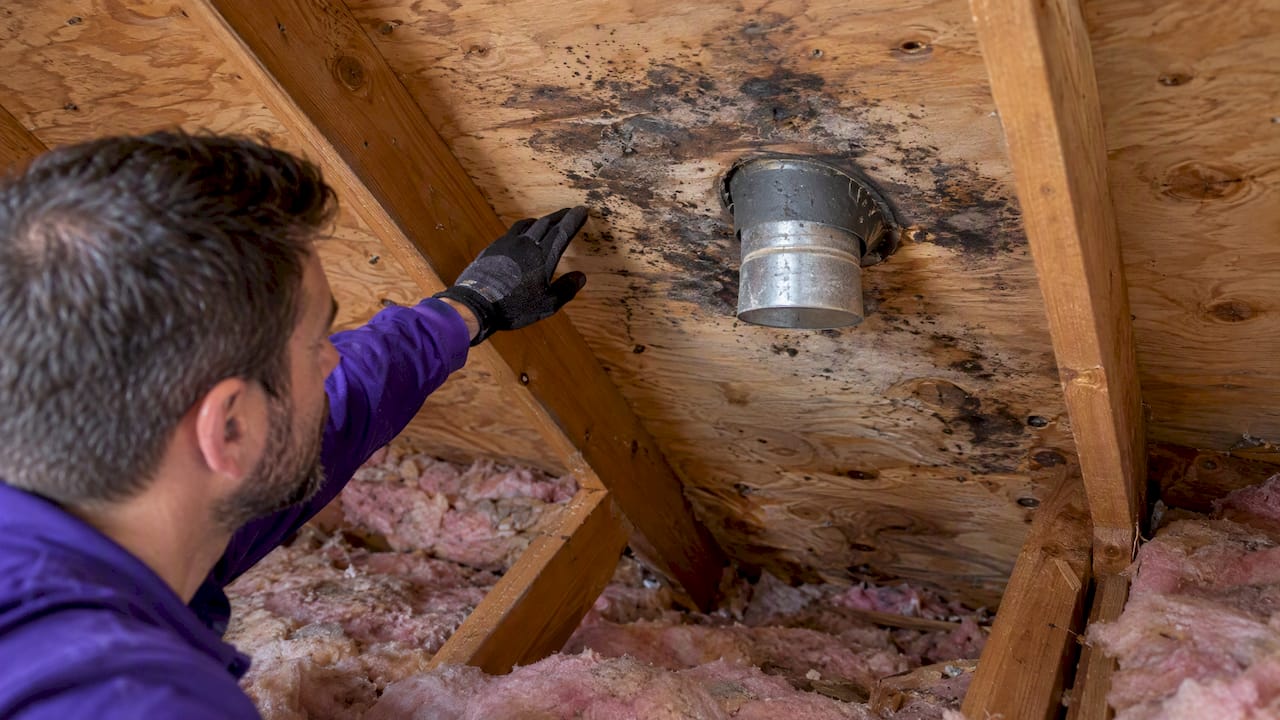
Your attic makes it worse before your HVAC system ever gets involved. On a 90°F summer day, asphalt shingles can push attic air well past 130°F, and that heat radiates down through the ceiling into upstairs bedrooms. A literature review from Lawrence Berkeley National Laboratory found that sealed, properly insulated attics stay much closer to indoor temperatures, but only when airtightness and insulation depth are both adequate. Skip one and the other can’t compensate.
Then there’s the ductwork. If your supply ducts run through that same superheated attic, they’re bleeding cold air before it ever reaches a bedroom register. ENERGY STAR puts typical duct losses at 20 to 30 percent of conditioned air lost in transit, and sealing that leakage usually improves upstairs temperatures by 4 to 8°F. That’s not a rounding error. That’s the difference between a bedroom you can sleep in and one you can’t.
A few other mechanical culprits show up again and again:
- Thermostat location bias. Most single-zone systems have one thermostat, usually downstairs, so the system shuts off once the first floor hits target temperature, regardless of how hot it is upstairs.
- Missing or undersized return air ducts upstairs. Without enough return capacity, conditioned air struggles to circulate back down, and pressure imbalances build up in closed-door rooms.
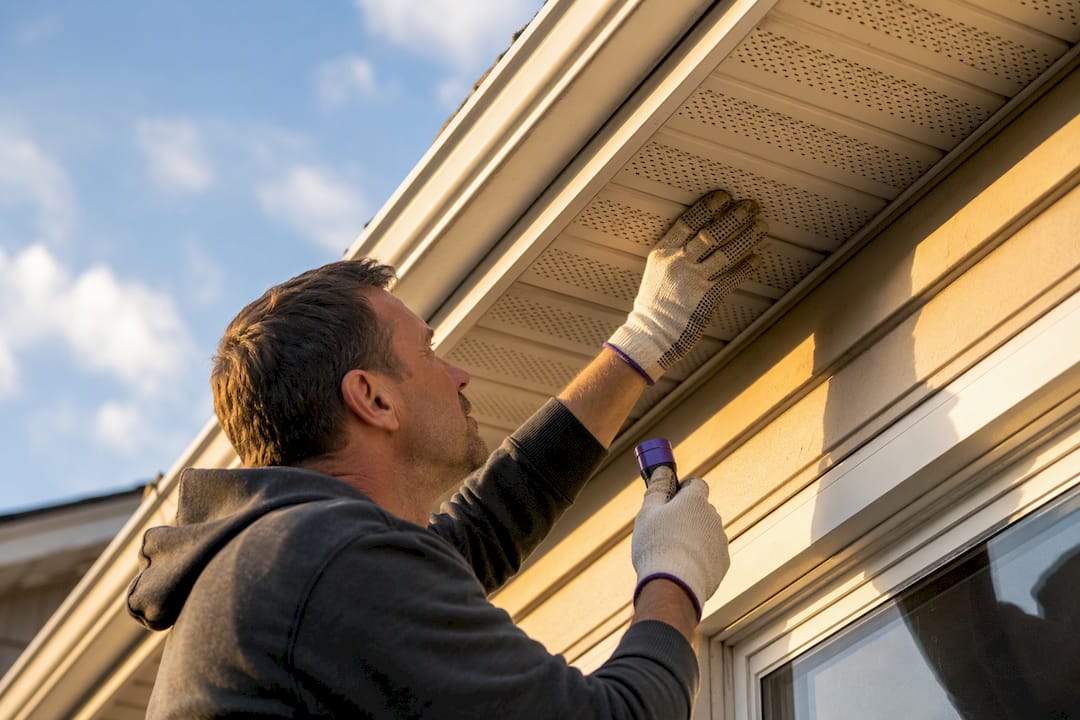
- Vent ratio mistakes in the attic itself. Building America’s air sealing guideline recommends roughly 1 square foot of net free vent area for every 300 square feet of attic floor, split between low intake and high exhaust. Get that ratio wrong and hot air just sits there.
A 5 to 8°F gap between floors is common in older two-story homes, according to the Department of Energy, but a gap that exceeds 8°F usually signals a real duct, insulation, or zoning problem rather than normal physics.
Two myths deserve a direct correction. Closing downstairs vents to “force” air upstairs doesn’t work and can damage your system, as noted above. And buying a bigger air conditioner without diagnosing the actual problem almost never fixes an upstairs heat issue. It just runs a bigger unit through the same leaky ducts and undersized returns, and your energy bill goes up while your comfort stays the same.
How Do I Measure the Upstairs to Downstairs Temperature Gap?
You don’t need a contractor to find out how bad the problem actually is. A cheap indoor thermometer or your thermostat’s remote sensor readout will do the job.
- Pick a hot, sunny afternoon, ideally between 2 and 5 p.m., when the stack effect and attic heat gain are both at their peak.
- Measure the temperature in two or three downstairs rooms and average them.
- Measure two or three upstairs rooms, including the one that feels worse, and average those too.
- Subtract the downstairs average from the upstairs average to get your split.
- If you can safely access your attic hatch, note that temperature too. It tells you how much heat is radiating down through the ceiling.
Here’s how to read the number you get:
| Temperature split | What it means | Likely next step |
|---|---|---|
| Under 3°F | Normal stack effect, nothing broken | No action needed |
| 3 to 6°F | Mild imbalance | Try the quick fixes above; recheck in a week |
| 6 to 8°F | Moderate problem | Inspect ducts, filter, attic insulation |
| Over 8°F | Likely duct, insulation, or zoning failure | Schedule professional diagnostics |
Before you call anyone, rule out the easy stuff yourself: a dirty filter, a thermostat set to AUTO instead of ON, visible gaps or crushed sections in accessible ductwork, and an attic that feels noticeably hotter than it should even with the fan running.
If the split holds above 8°F after those checks, a professional visit typically includes a Manual J load calculation to confirm your system is sized correctly, airflow and static pressure testing to see how much air is actually reaching upstairs registers, duct leakage testing to quantify losses, and an attic air-seal inspection to check for bypasses around lights, plumbing stacks, and top plates. Each of these tells a different part of the story, and skipping one usually means guessing at the fix.
What Does It Cost to Fix a Hot Upstairs, and What’s the Payoff?
Fixes scale with the problem, and it pays to work from cheapest to most expensive rather than jumping straight to a full system overhaul.
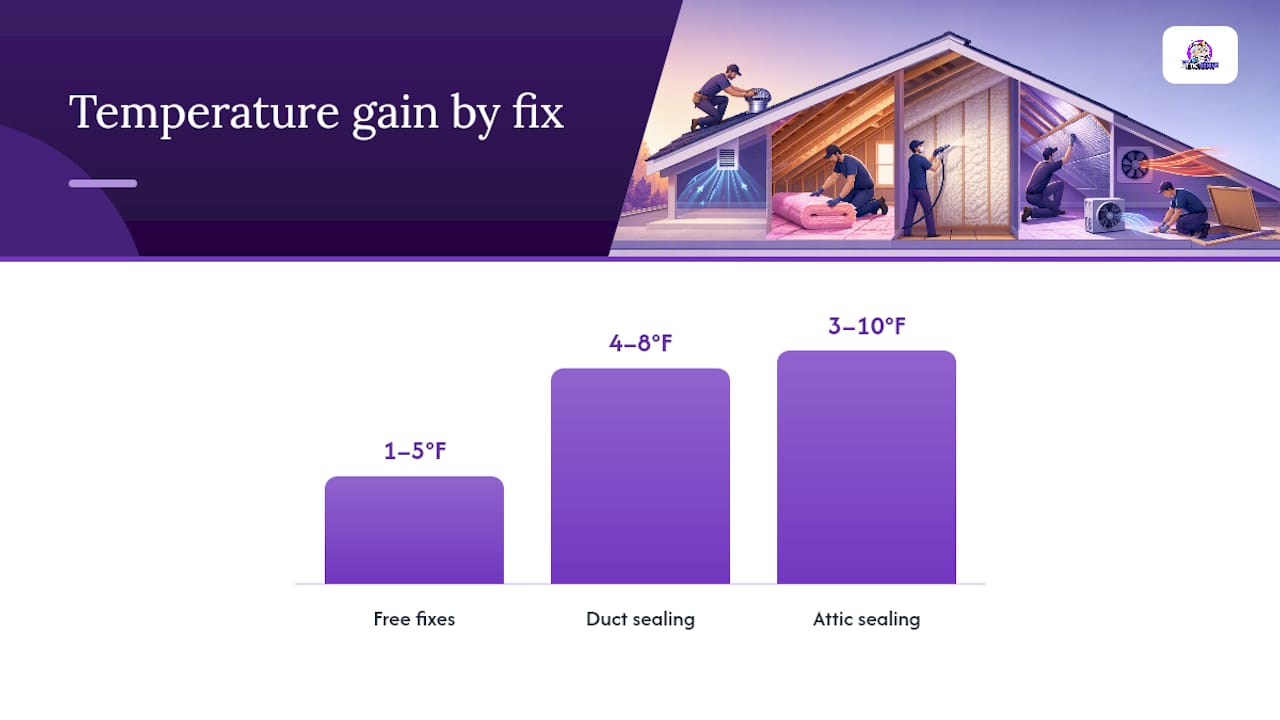
Free to nearly free fixes, covered in the checklist above, typically buy you 1 to 5°F of improvement. That’s the fan-ON setting, vent balancing, ceiling fans, and shading. Try these first, always, because they cost nothing and often solve mild cases entirely.
Low-to-mid cost fixes target the ductwork and airflow path directly:
- Duct sealing runs roughly $250 to $800 for most homes and often delivers 4 to 8°F of improvement, according to ENERGY STAR, which also notes that a basic sealing service commonly costs around $350.
- An HVAC tune-up with a coil cleaning restores lost airflow capacity system-wide, usually for under $200.
- Adding a dedicated upstairs return duct runs $500 to $1,500 and helps conditioned air actually circulate back down instead of stacking in closed rooms.
Attic-focused work addresses the heat source itself rather than just the symptoms. Air sealing attic bypasses, paired with an insulation upgrade to R-38 through R-60 depending on your climate zone, plus proper attic ventilation, commonly delivers 3 to 10°F of improvement. The range is wide because it depends heavily on whether your ducts also run through that attic. LBNL’s review of sealed and insulated attics confirms that airtightness and insulation depth have to work together, not one without the other, or you’re just masking the problem instead of fixing it.
High-cost solutions make sense only when diagnostics point to a real capacity or layout issue:
- Zoned HVAC with motorized dampers and a second thermostat typically runs $2,500 to $4,500 as a retrofit, and it’s the strongest long-term fix when your system has adequate capacity but poor distribution.
- A ductless mini-split for one persistently hot room costs $3,000 or more per zone installed, and makes sense when one space is chronically miserable no matter what else you fix.
- A second, dedicated HVAC system for the upper floor is the most expensive route, generally reserved for very large homes where even zoning can’t move enough air.
Pro Tip: Don’t skip straight to zoning or a second system. A Manual J load calculation often reveals that your existing equipment has plenty of capacity. The upstairs is hot because the air isn’t reaching the rooms, not because the system is too small.
Most homeowners feel the difference from duct sealing and attic work within a few days of completion, since it’s a physical change to airflow and heat gain rather than something that needs a full season to prove out. Zoning installations show results immediately once the dampers and thermostat are calibrated.
What Should You Expect From Professional Attic Work?
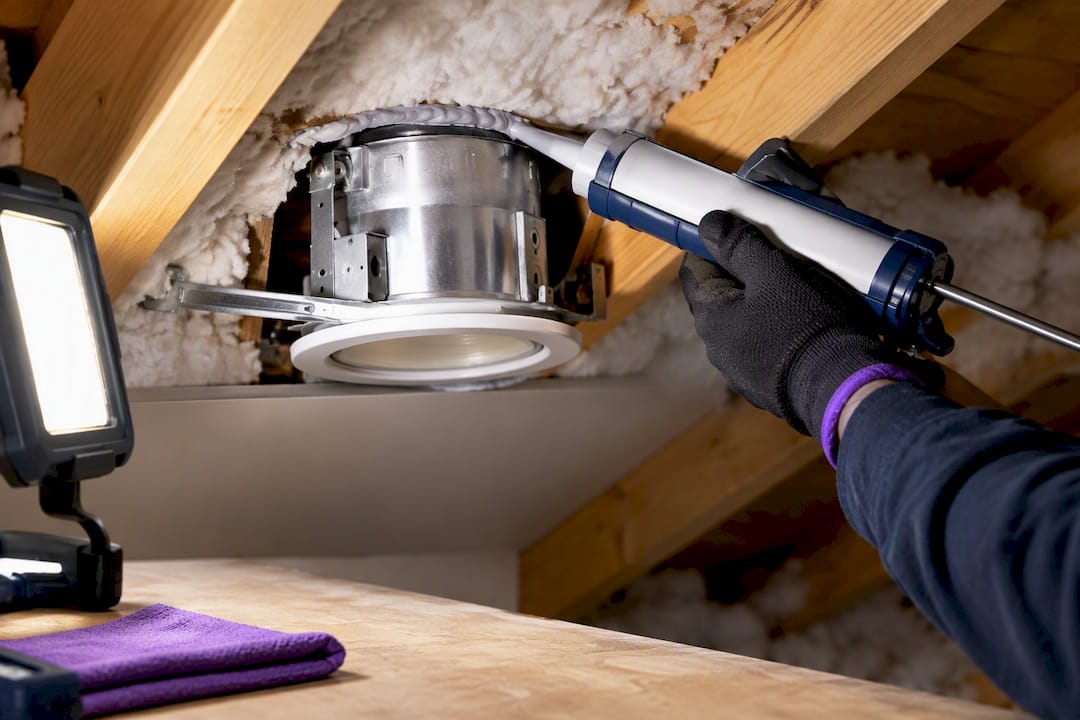
Air sealing has to come before insulation, not after. Recessed lighting cans, plumbing stacks, and gaps around top plates all act as chimneys for hot attic air, and piling new insulation over unsealed bypasses just buries the leak instead of stopping it. A contractor who skips straight to blowing in insulation without sealing first is treating the symptom, not the cause.
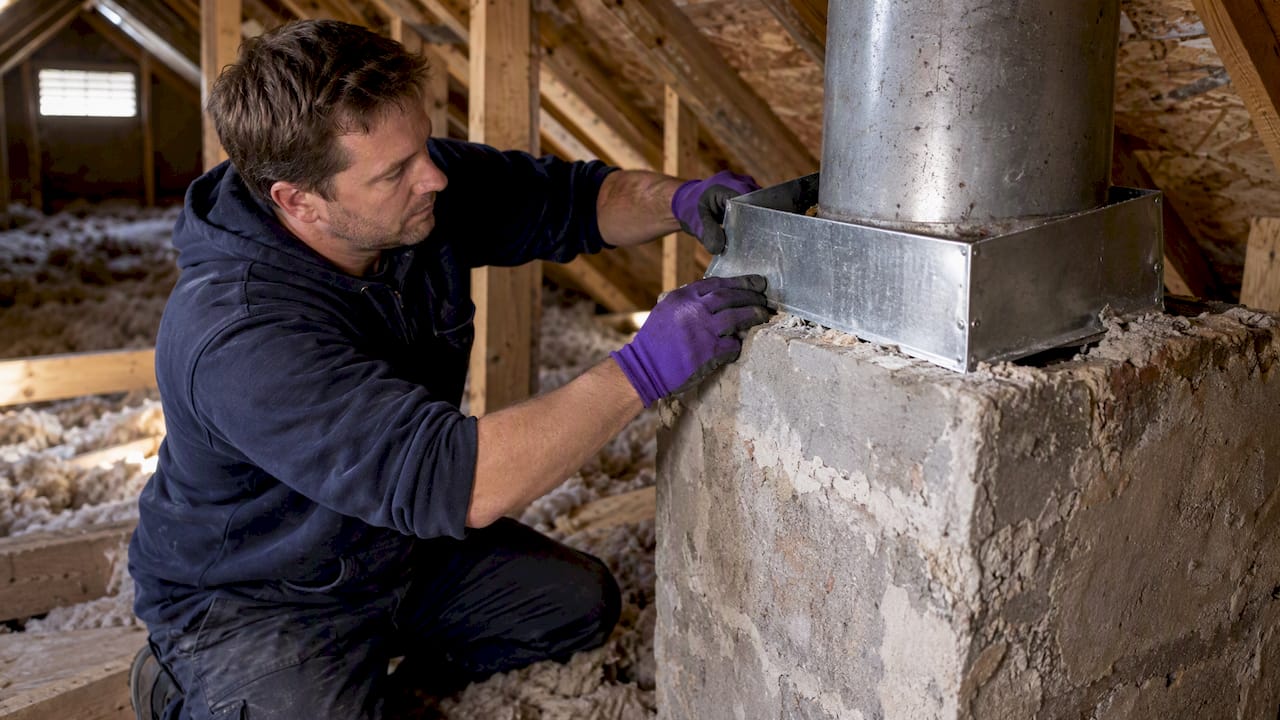
When ducts run through the attic, the calculus changes again. Sealing duct connections with mastic and insulating the ducts themselves to at least R-8 keeps conditioned air cold enough to matter by the time it reaches a register, and it also prevents condensation and sweating on the duct exterior during humid months.
A legitimate inspection should leave you with:
- Pre- and post-work temperature readings, not just a verbal “it’ll feel better.”
- A written scope of work listing exactly what’s being sealed, insulated, or replaced.
- A warranty on materials and labor, not just a handshake.
- Clear documentation of current R-values and the target R-value after the upgrade.
Pro Tip: Ask any contractor how they arrived at their recommendation before you sign anything. “Because it’s usually needed” is not an answer. “Because your duct leakage tested at 28 percent and your attic insulation measured R-13” is.
Red flags worth walking away from: no Manual J calculation offered for a system replacement, vague guarantees with no specifics attached, and pressure to replace your whole HVAC system before anyone has tested airflow or checked for duct leaks. The Attic Genius has spent more than 25 years combined diagnosing exactly this pattern across Chicagoland attics, and the fix is almost never “buy a bigger air conditioner.” It’s almost always air sealing the bypasses first, then bringing insulation up to target.
A Homeowner’s Decision Path for a Hot Upstairs
Here’s the order I’d actually follow if this were my house. Try the free fixes first: fan on ON, vents open, shades drawn, for a full 48 hours. Measure the split on a hot afternoon. If it’s under 6°F, you’re probably done. If it’s over 8°F, skip the guessing and get a real diagnostic instead of throwing money at a new thermostat or a bigger condenser.
The mistake I see most often is homeowners jumping straight to zoning or a second HVAC system because it sounds like the “serious” fix. In most cases, duct sealing and attic air sealing solve the problem for a fraction of the cost, and zoning only earns its price tag when a Manual J confirms your system genuinely can’t distribute enough air on its own. A professional visit worth paying for always starts with numbers, load calculations, static pressure readings, duct leakage percentages, not a sales pitch for equipment. Verify the work afterward the same way you diagnosed the problem: remeasure the split a week later and compare it to your baseline.
— Jim
Ready to Fix It? Where to Start
If quick fixes haven’t closed the gap, The Attic Genius offers free inspections across Chicagoland and southern Wisconsin, checking attic insulation levels, air sealing opportunities, and duct condition in one visit. Every job comes with upfront pricing and a written warranty, so you know the scope before work starts. If your ducts run through a hot, leaky attic, professional air sealing paired with an insulation upgrade is often the single most effective step you can take before considering zoning or a second system.
Sources
- ENERGY STAR — Duct sealing benefits
- A literature review of sealed and insulated attics — LBNL
- Building America — Attic air sealing measure guideline
FAQ
How Do I Fix My Upstairs Being So Hot?
Start with free fixes: set the HVAC fan to ON, open all downstairs vents, use ceiling fans, and block direct sun. If the temperature split stays above 8°F after a few days, the likely culprits are leaky ducts, insufficient attic insulation, or a single-zone thermostat, and professional diagnostics are the next step.
Is It Normal for the Upstairs to Be Hotter?
Yes, a small gap is normal because warm air naturally rises and settles on the upper floor. A 2 to 3°F difference is typical, but anything consistently over 8°F points to a duct, insulation, or zoning problem rather than ordinary physics.
Why Is the Second Floor of My House So Hot?
The second floor sits closest to a hot attic, which can hit temperatures well above 130°F on a summer afternoon, and that heat radiates through the ceiling. If your supply ducts also run through that attic, they lose 20 to 30 percent of conditioned air before it ever reaches a register.
How Do I Cool Down the Upstairs in My House?
Run the HVAC fan continuously, seal and insulate attic ducts, and consider sealing attic bypasses before adding insulation. For a single stubbornly hot room, a portable AC or ductless mini-split provides targeted relief while you address the whole-house causes.
Why Is My Upstairs Cold in Winter but Hot in Summer?
The same duct leaks and thin attic insulation that let cold air escape upstairs ducts in winter also let heat pour in through the ceiling in summer. Sealing ducts and upgrading attic insulation to the recommended R-38 to R-60 range addresses both problems at once, since it’s the same building envelope working year round.