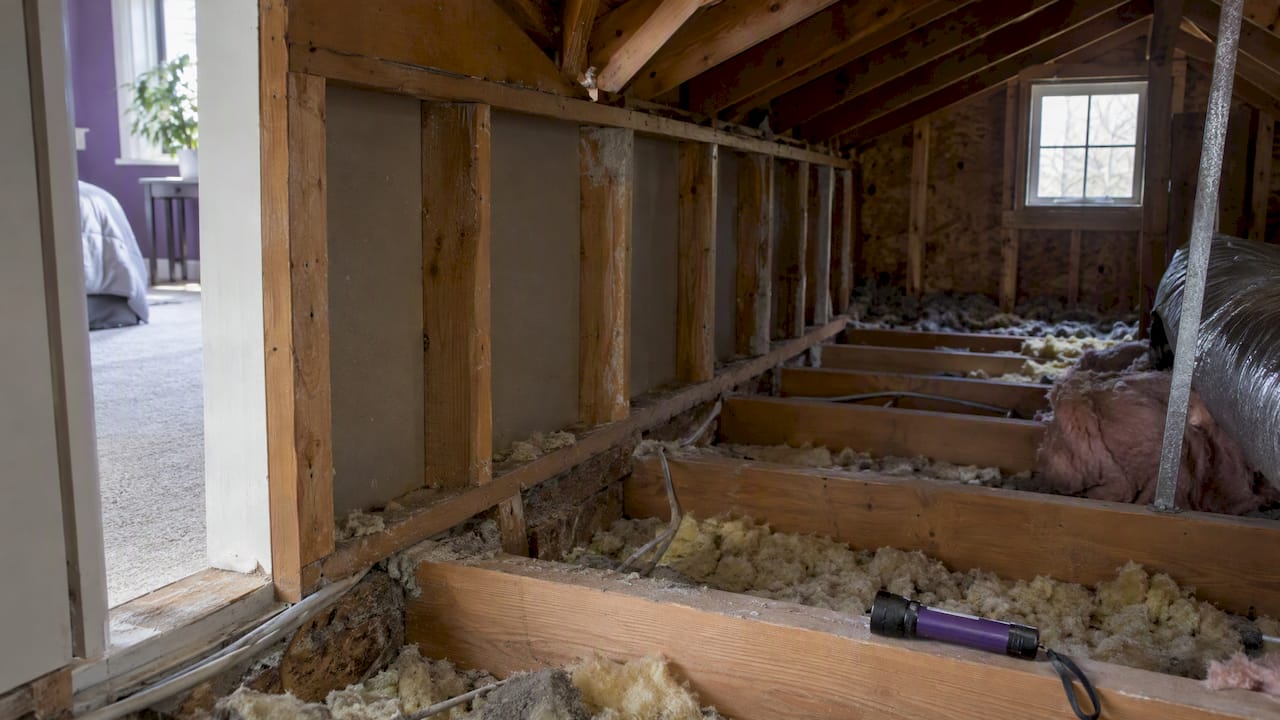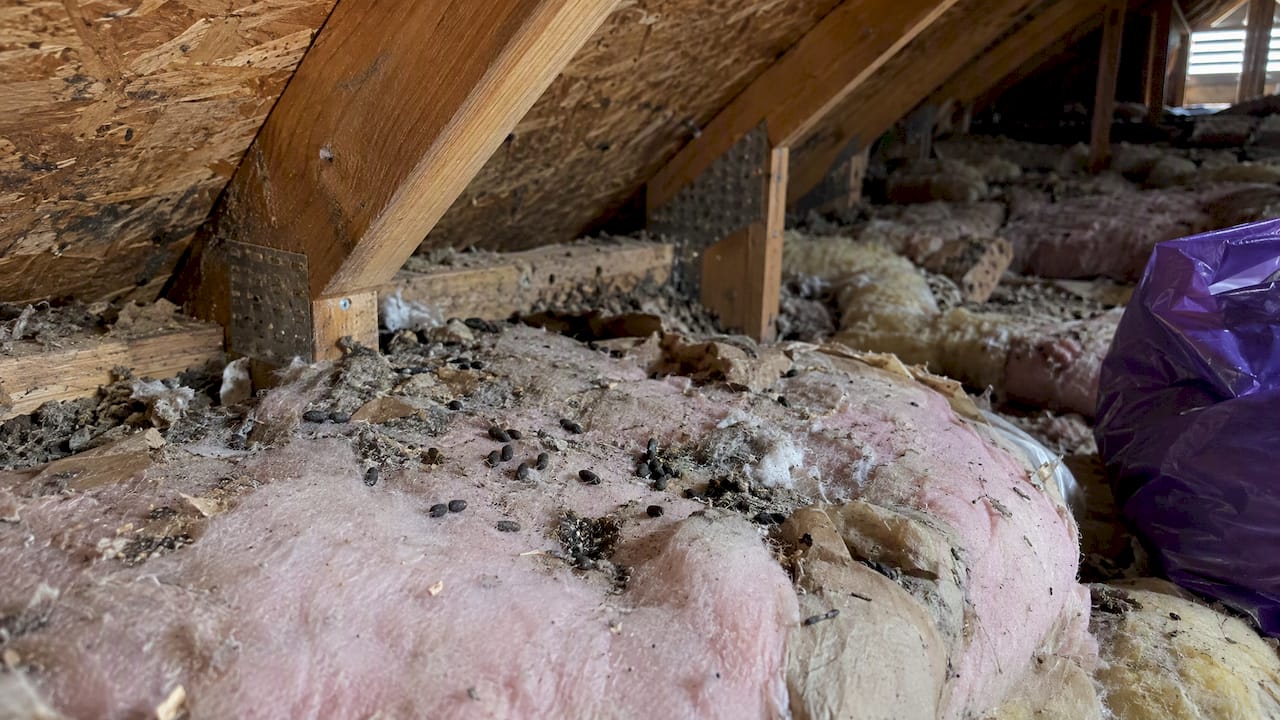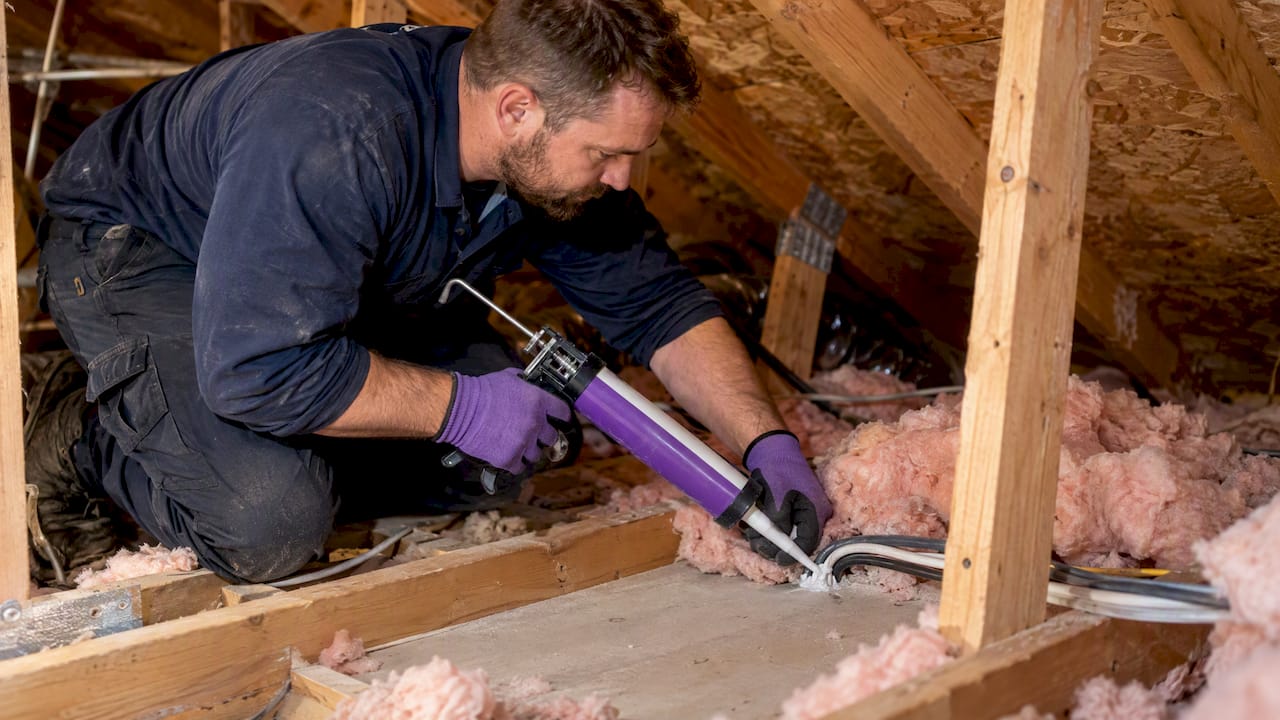
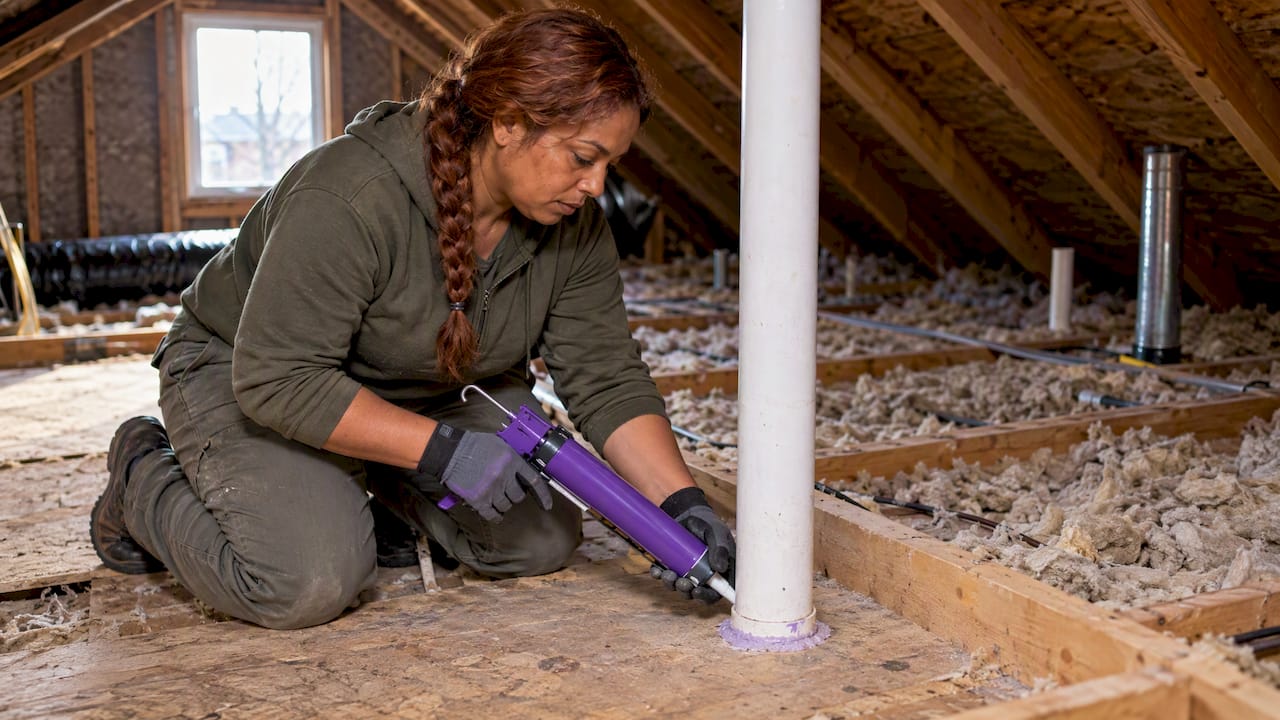
The most common attic air leaks are the attic hatch, the spaces behind and under kneewalls, wiring and plumbing penetrations, recessed lights, furnace flues and dropped soffits. ENERGY STAR lists these as the usual trouble spots. Most of them sit under the insulation, where you never see them. This guide shows what each leak looks like, how to track them down, what to seal first and when to hand the job to a specialist.
TL;DR
- Air leaks concentrate at the attic hatch, kneewalls, wire and pipe holes, recessed lights, flues and dropped soffits.
- Dirty, darkened insulation is a telltale sign that air is moving through it.
- Fix safety and moisture problems first, then air seal, then add insulation. Never the other way around.
- Never block soffit vents with insulation, and have combustion appliances checked for backdrafting before you seal.
- Wet insulation, moldy framing or knob-and-tube wiring means a professional should look before anyone seals anything.
Table of Contents
- Why attic air leaks matter in a Chicago-area home
- The most common attic air leaks, one by one
- Quick reference: leak, sign and fix
- How to find attic air leaks
- Leaks that carry moisture
- Air handler and duct leaks in the attic
- Seal in the right order
- Is a DIY seal realistic?
- When to call a specialist
- Our perspective: leaks are a system, not a checklist
- FAQ
- Sources
Why attic air leaks matter in a Chicago-area home
Your attic is the place where your house is most connected to the outdoors. Every hole in the ceiling below it is a path for heated air in winter and cooled air in summer. In the Northwest Suburbs, where winters are long and cold, that path runs for months.
The numbers are worth knowing. The State of Illinois’s Keep Warm program describes air sealing as the most effective and cheapest energy conservation measure a homeowner can apply, and says it can lower space-heating use by roughly 18 to 30 percent. Insulation alone does not give you that, because air passing through or around insulation carries heat with it.
Leaks also drive other problems. Warm, moist indoor air that escapes into the attic can condense on cold roof surfaces. In a cold climate it also melts snow on the roof unevenly, which feeds ice dams. We cover that connection in our guide to stopping ice dams from the attic.
The most common attic air leaks, one by one
Builders rarely seal the ceiling plane of a house the way they seal the exterior walls. The result is the same short list of leaks in house after house. Here is what each one looks like.
The attic hatch or pull-down stairs
The hatch is a hole in your ceiling with a lid on it. In most homes the lid is a thin piece of wood or a folding stair with a gap all the way around, and no insulation on top. It is the easiest leak to find and one of the easiest to fix, and it is on the ENERGY STAR list of common leak locations.
Look for daylight or dust lines around the frame, a loose-fitting lid and bare plywood with no insulation. A hatch that is cold to the touch in January is telling you something.
Kneewalls and the spaces behind them
In a finished or partly finished attic, the short walls that run along the sloped ceiling hide open cavities. The same ENERGY STAR page names the areas behind and under kneewalls as frequent leak sites. Air moves between the cavity, the floor below and the unconditioned space beyond the wall. Rooms over garages and bonus rooms in Cape Cods and split-levels are the typical complaints: a space that is too hot in summer and too cold in winter, no matter what the thermostat says.
Wiring and plumbing penetrations
Every wire, cable and pipe that runs from the living space up into the attic passes through a hole drilled by a tradesperson. Those holes are almost always larger than the wire. Multiply that by the number of ceiling lights, outlets, bath fans and pipe stacks in the house and you get dozens of small leaks that add up. They are on the ENERGY STAR list and are usually hidden by insulation.
Recessed lights
Older recessed cans are open to the attic, which makes them a direct duct for room air. They also cannot simply be buried in insulation unless they are rated for it. If you have a ceiling full of cans, see our walkthrough on stopping air leaks from recessed lights with retrofit LED kits.
Furnace flues and chimney chases
Flues and chimneys pass through the attic floor, and the framing around them is often left with a gap, because combustible framing has to stay clear of a hot flue. That clearance gap is a major leak, and the fix is a specific one: noncombustible sheet metal, sealed with the right high-temperature material, not foam stuffed into the gap. Our page on sealing chimney chase gaps from the attic with sheet metal explains the method.
Dropped soffits and bulkheads
A dropped soffit is the boxed-in lowered section of ceiling you see over kitchen cabinets or along a hallway. The box is often open on top to the attic, so a long run of the ceiling has no air barrier at all. The ENERGY STAR list includes dropped soffits for good reason: they can be many feet long and invisible from below.
Top plates and other bypasses
Interior walls end at a horizontal board called the top plate, and the gaps along it are another well-known leakage area. Contractors who work on attics call these routes bypasses, and the biggest ones are often the ones nobody has thought about. We explain them in why air sealing attic bypasses matters.
Quick reference: leak, sign and fix
| Leak location | What you may notice | Typical sealing approach |
|---|---|---|
| Attic hatch | Gaps around the lid, no insulation on top | Weatherstrip the frame and insulate the lid |
| Kneewalls | Uneven room temperatures, drafts at the base of the wall | Block open stud cavities with rigid foam or stuffed insulation bags |
| Wire and pipe holes | Dark streaks around holes in the insulation | Caulk small holes, spray foam for larger gaps |
| Recessed lights | Drafts at the fixture, dusty insulation nearby | Use rated covers or retrofit kits |
| Flues and chimney chases | Visible gap around the pipe or chimney | Sheet metal and high-temperature sealant |
| Dropped soffits | Long run of ceiling with no barrier above | Cover the open top with rigid board and seal edges |
The materials match the ENERGY STAR guidance: caulk for small holes, expanding spray foam for larger gaps, and stuffed insulation bags or rigid foam board to cover open stud cavities.
How to find attic air leaks
You do not need special equipment to get a first read on where air is moving. Four approaches work well.
- Look for dirty insulation. ENERGY STAR notes that dirty insulation is evidence of air moving through it. Insulation acts as a filter. Gray or black patches over a wall top or around a light fixture mark the path of leaking air.
- Check for frost and melt patterns. In winter, frosty spots on the underside of the roof deck near the attic floor, or snow that melts unevenly on your roof, hint at warm air escaping.
- Use smoke on a windy day. Natural Resources Canada suggests holding a burning incense stick near suspected leaks. The smoke drifts toward or away from a leak, and windy days make leaks easier to find.
- Map from below. Note where the ceiling has cans, bath fans, dropped soffits and walls. Each of those has a matching location above that needs a look.
A word on caution. Walk only on the joists or on boards laid across them, and watch for knob-and-tube wiring. If the incense test or a flashlight shows something you cannot identify, stop there. A specialist can usually pinpoint it faster than a weekend of crawling.
Leaks that carry moisture
Not every leak is just about energy. Air leaking from the house carries water vapor with it. According to a Department of Energy guideline on air sealing attics, attic air leaks can bring moist indoor air into the attic, where it may condense on cold roof surfaces. The same guideline says to air seal before insulating and to vent kitchen and bathroom fans outdoors.
That last point is a frequent finding in older homes: a bath fan whose duct simply ends in the attic, dumping a shower’s worth of moisture every morning. A second DOE guide is clear that leaking roofs and bathroom fans vented into attics must be fixed before air sealing and insulation.
If you already see frost, stains or a musty smell, read our list of attic moisture problems and what they look like and our note on how insulation controls moisture.
Air handler and duct leaks in the attic
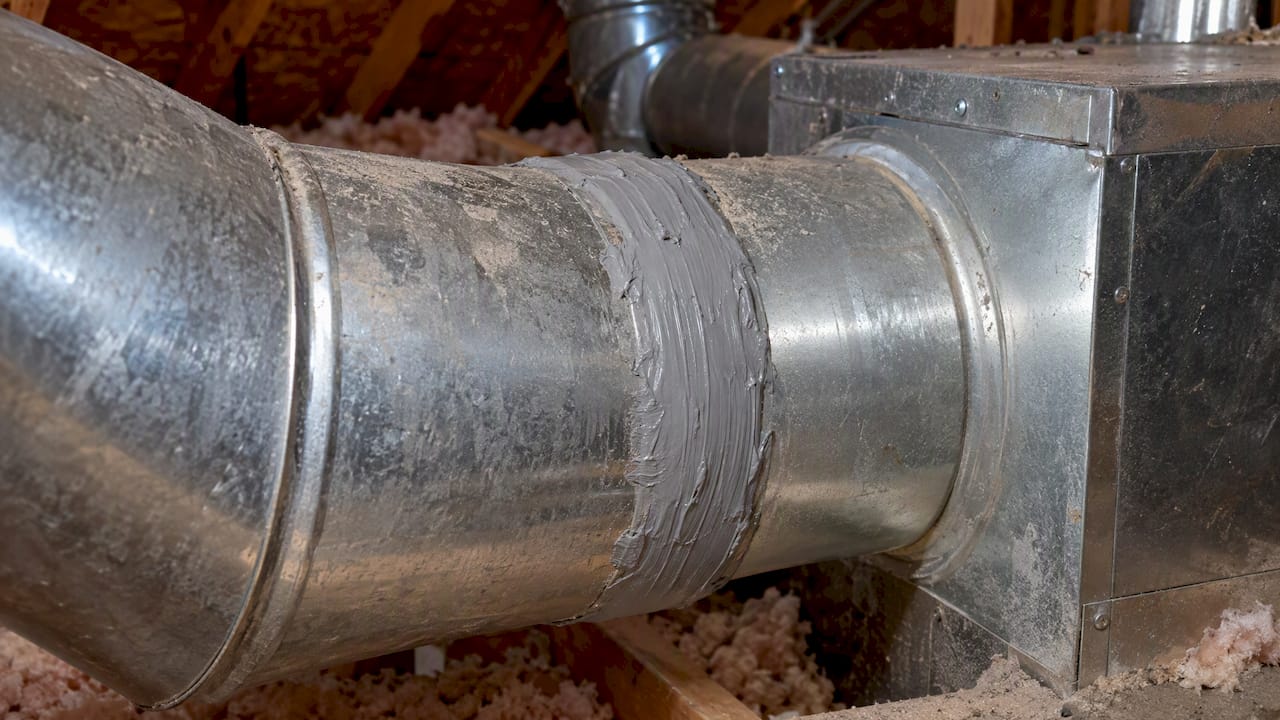
If your furnace or air handler sits in the attic, or your ducts run through it, leaks take another form. Ducts can leak at seams, sag and have sharp turns, and the Building America Solution Center says that sealing and repairing them can improve conditioned-air delivery and help extend the life of a furnace or heat pump.
The same guide recommends sealing all accessible duct seams and connections with UL-181 fiber-reinforced duct-sealant mastic paste. Ordinary cloth duct tape is not the answer. Separately, air handler closets and return plenums should be air-sealed so that attic air is not pulled into the air handler.
If ducts are dusty inside as well as leaky, air duct cleaning and duct repair are often worth considering together, since both involve opening up the system.
If you see water around an air handler in the attic, that is a different problem, usually condensation or a clogged drain line. Call an HVAC technician rather than sealing around it.
Seal in the right order
The sequence matters more than the products. The Department of Energy’s Building America program lays out the order in its attic air sealing guide: address safety first, install whole-house ventilation, air seal and then install insulation.

Safety first: combustion appliances
The Building America measure guideline says natural-draft gas or oil appliances require combustion air supplied directly from outdoors, and that homes with combustion appliances need carbon monoxide detectors. It also says homes with natural-draft appliances should be tested for backdrafting before air sealing. A tighter house can pull exhaust back down a flue. This is the single best reason to have a trained technician involved in a whole-attic sealing job.
Fresh air before a tighter house
The same Building America article notes that whole-house ventilation should be installed so the home gets adequate fresh air before it becomes tighter and better insulated.
Keep the attic ventilated
Air sealing the floor of the attic does not mean sealing the attic itself. ENERGY STAR explains that insulation and air sealing keep an attic cold in winter, which reduces ice-dam potential, while natural ventilation moves super-heated air out and removes moisture in summer. It adds that you should never cover soffit vents with insulation, and should use rafter vents to keep air moving. For more, see our pages on attic baffles and soffit versus gable vents.
Then insulate
Insulating over unsealed leaks wastes much of the insulation’s benefit. Our comparison, air sealing vs. insulation: which comes first, explains why the order is not a matter of preference.
Is a DIY seal realistic?
Some leaks are a fair Saturday project: the hatch, a few small penetrations, caulking around a light-duty wire hole. ENERGY STAR describes the job in its attic air sealing project and also draws the line. It says to hire a professional for wet or damp insulation, moldy or rotted attic rafters or floor joists, or knob-and-tube wiring.
Beyond that list, we would add one practical test. If the attic has combustion appliances, a flue chase, heavy older insulation or a layout you cannot walk safely, the job is no longer a weekend one. Our page on common DIY attic insulation mistakes shows where well-meaning projects go wrong.
When to call a specialist
The Attic Genius works only on attics and insulation-related services, including air sealing, ventilation, mold remediation, pest waste cleanup and insulation removal. Our team brings 25+ years of combined experience and has earned 400+ combined five-star reviews across the Northwest Suburbs and greater Chicagoland.
We start with an inspection. We look for the leaks above, check what the insulation and ventilation are doing, and tell you what the house actually needs, whether that is a top-up, a full upgrade or removal. You get upfront pricing and a written warranty. Same-day inspections are available. You can request a free inspection or read about our air sealing services.
If you have found black spots, damp insulation or pest droppings while looking for leaks, tell us at the start. Those need to be dealt with before sealing, and we handle moisture and mold remediation as well.
Our perspective: leaks are a system, not a checklist
We see the same pattern all over Chicagoland. A homeowner adds insulation because the attic looks thin, the bill barely changes, and the real culprit is the half-dozen open holes underneath.
We think of an attic as a system of four things: the air barrier, the insulation, the ventilation and the moisture sources below. Fix one and ignore the rest, and you often make a second problem worse. Tightening a house with a poorly vented bath fan, or burying soffit vents under new insulation, are the mistakes we are called in to correct most often.
That is why we assess before we quote. Not every attic needs a full job. Sometimes the right answer is to seal the top plates and the hatch, and leave the existing insulation alone. Telling a homeowner that is part of doing the work honestly.
If you take one thing from this page, make it the order: safety and moisture, then air sealing, then insulation, with ventilation kept clear throughout.
— Jim
FAQ
How do you air seal your attic?
Clear the insulation back from the attic floor, then seal each opening: caulk for small holes, spray foam for larger gaps, and rigid foam board or stuffed insulation bags over open stud cavities, as ENERGY STAR describes. Fix moisture problems and check combustion appliances first. Insulate only once the sealing is done.
How do I find out where air is leaking in my house?
Start in the attic and look for dirty or darkened insulation, which shows air has been moving through it. On a windy day, a burning incense stick held near suspect spots will show the direction of airflow. For a whole-house picture, a professional inspection is faster and more complete.
Why is my attic full of condensation?
The usual cause is warm, moist indoor air leaking into a cold attic and condensing on the roof deck. Department of Energy guidance points to air sealing first, and to venting kitchen and bathroom fans outdoors. Leaking roofs and fans that exhaust into the attic need to be fixed before anything is sealed or insulated.
Will sealing my attic make my house too airtight?
A tighter house needs a planned fresh-air supply, and homes with gas or oil appliances need a backdraft test and carbon monoxide detectors. The Building America guidance calls for whole-house ventilation before the home becomes tighter. That is one reason we inspect the whole system before sealing.
Sources
- Attic Air Sealing Project, ENERGY STAR
- About Attic Ventilation, ENERGY STAR
- Air Sealing, Illinois Keep Warm
- Keeping the Heat In, Section 4, Natural Resources Canada
- Measure Guideline: Guide to Attic Air Sealing, U.S. Department of Energy
- Measure Guideline: Air Sealing Attics in Multifamily Buildings, U.S. Department of Energy
- Attic Air Sealing Guide, Building America Top Innovations
- Air Seal and Repair Ducts, Building America Solution Center
- Air Sealing the Air Handler Closet, Building America Solution Center