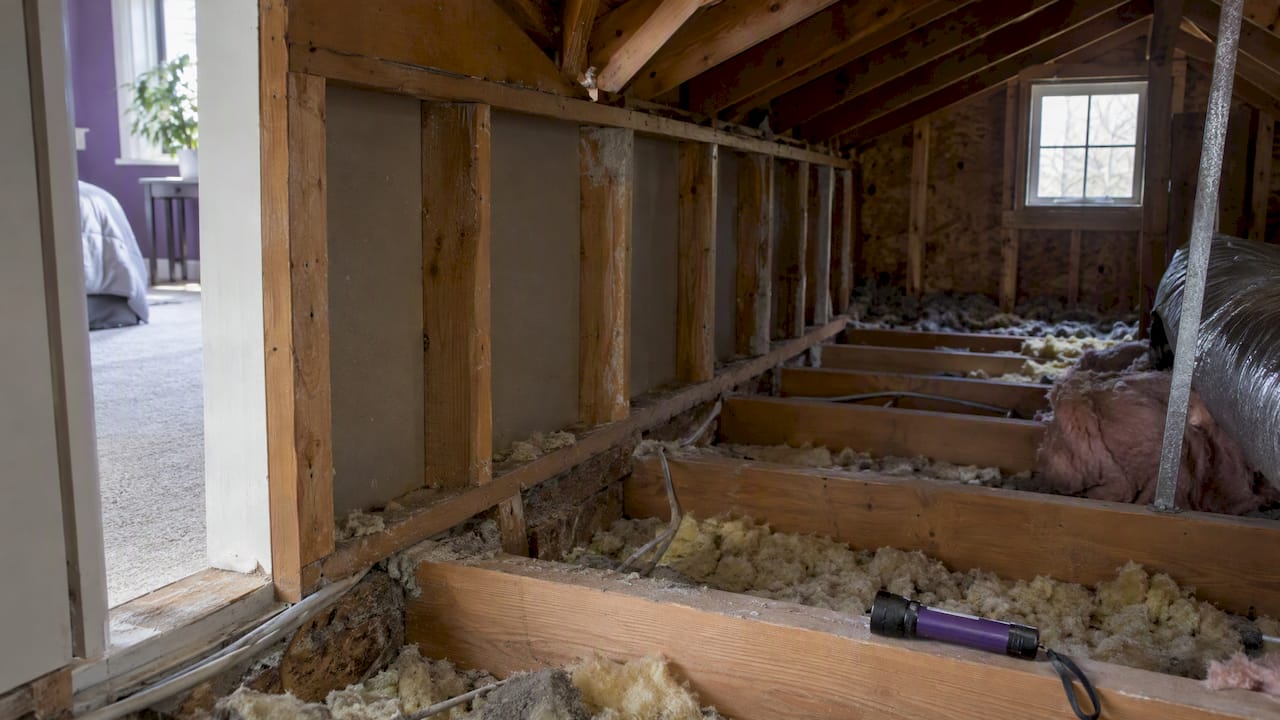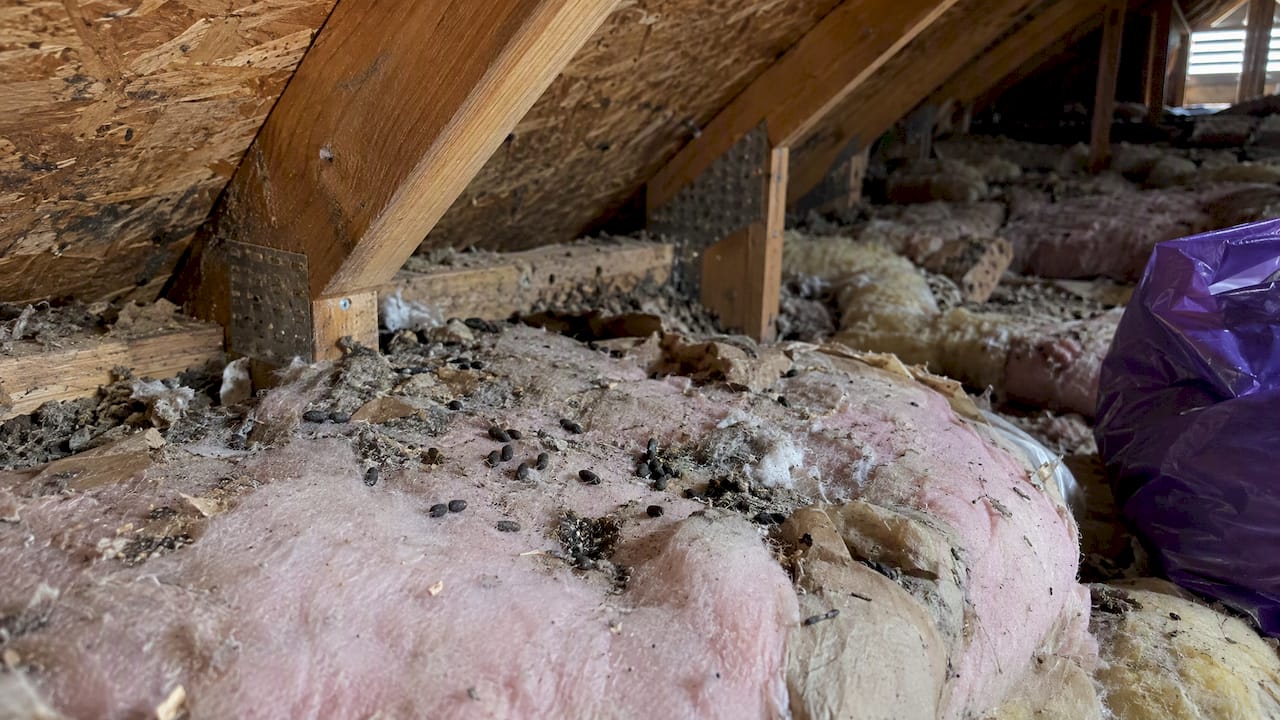

A hot attic is normal in summer. It only becomes a real problem when heat and trapped moisture start damaging your roof, spiking your energy bills, or straining your HVAC system. The fastest fixes: balance your intake and exhaust ventilation, then seal air leaks and check your insulation levels. If temperatures run extreme or you spot moisture, call a professional.
TL;DR:
- Proper attic ventilation should keep the temperature difference with outside air between 10 and 20 degrees Fahrenheit, otherwise airflow issues are likely present.
- Most hot attics result from a combination of solar gain, blocked vents, leaky ductwork, and poor insulation, not from a single cause.
- Elevated attic temperatures above 150°F or consistent gaps over 20 degrees indicate potential damage to roofing materials and increased energy costs.
- Sealing leaks around attic access points and ensuring soffit vents are unblocked provides more effective, low-cost improvements than insulation alone.
- In humid climates, fully sealed spray foam attics can trap moisture, making conventional ventilated attics with proper air sealing a safer choice.
Table of Contents
- Why Attics Get Hot: Solar Gain, Trapped Air, and Common Culprits
- What Attic Temperatures Are Normal, and When Should You Worry?
- How to Tell if Your Hot Attic Is Causing Damage or Higher Bills
- Fixes: Ventilation Fundamentals — Intake, Exhaust, and Avoiding Short-Circuiting
- Fixes: Insulation and Air Sealing the Attic Floor
- Fixes: Radiant Barriers, Roofing Choices, and Attic Fans
- Research Note: Sealed vs. Ventilated Attics and Moisture Risk
- Priority Checklist: What to Do Today
- What Attic Pros See That Homeowners Miss
- Get a Professional Attic Assessment From The Attic Genius
- Sources
Why Attics Get Hot: Solar Gain, Trapped Air, and Common Culprits
Your roof absorbs sunlight all day, and that heat transfers straight into the enclosed space below it. Dark shingles can push roof-surface temperatures well past 150°F on a sunny afternoon, and with nowhere for that heat to escape, your attic turns into a box that just keeps collecting it.
Ventilation problems make this worse. Blocked soffit vents, undersized exhaust, or mismatched vent types all trap hot air instead of letting it flow out.
A few other culprits show up again and again:
- Insulation placement: floor insulation controls heat transfer into living spaces, but it does nothing to cool the attic air itself
- Leaky ductwork: ducts running through the attic can leak conditioned air, adding cooling load without ever reaching your rooms
- Bath fans and dryer vents: appliances that exhaust into the attic instead of outside dump both heat and moisture into the space
- Roof color and material: darker, denser roofing absorbs more solar heat than lighter or reflective options
None of these causes act alone. Most hot attics are a combination of solar load, poor airflow, and a few small mechanical oversights that add up.
What Attic Temperatures Are Normal, and When Should You Worry?
Attics commonly run 20 to 40 degrees hotter than the outdoor air on a summer day, and in poorly ventilated attics with dark roofing, that number can climb toward 150°F or higher.
Attic heat threshold to know: roofing professionals generally consider an attic-to-outside temperature gap of 10 to 20 degrees Fahrenheit to be normal for a properly ventilated attic. Anything beyond a 20 degree gap signals a ventilation or airflow issue worth investigating.
Once attic temperatures push consistently above typical safe temperature ranges, the risks of damage compound. Asphalt shingles age faster and lose their granules sooner. Stored belongings, cardboard boxes, and even wiring insulation can degrade under sustained heat. Your HVAC ductwork, if it runs through the attic, absorbs that heat and forces your system to work harder just to hold a set temperature indoors; installing new interior doors can further improve overall energy efficiency by better maintaining thermal boundaries inside older Portland homes.
How to Tell if Your Hot Attic Is Causing Damage or Higher Bills
A hot attic crosses from “normal summer nuisance” to “actual problem” when it starts showing up in your home’s performance or your roof’s condition.
Watch for these signs:
- Shingles that look curled, cracked, or unusually worn for their age
- Rooms upstairs that never cool evenly compared to the rest of the house
- Cooling bills that climb without a clear reason
- Musty smells, water stains, or visible mold on the attic ceiling or insulation
- HVAC systems that short cycle or ducts that feel hot to the touch when the attic is at its peak
Any one of these on its own might be minor. Two or three together usually means the attic is actively working against your home rather than just sitting there hot. That combination is when a professional attic assessment earns its cost, especially if you can’t pin down the cause yourself.
Pro Tip: Check your attic on the hottest afternoon of the week, not a mild day. A quick $10 thermometer left in the attic for an hour will tell you more than any visual inspection alone.
Fixes: Ventilation Fundamentals — Intake, Exhaust, and Avoiding Short-Circuiting
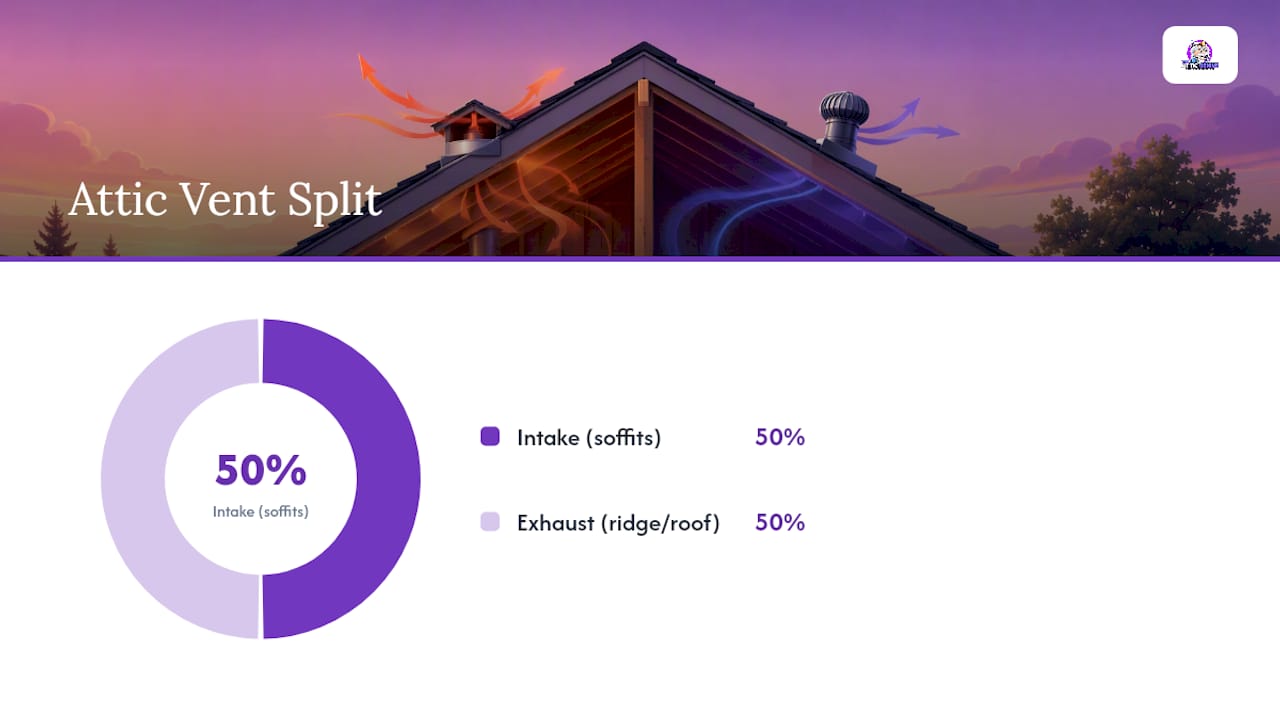
Balanced ventilation means air enters low, through soffit vents, and exits high, through a ridge vent or roof vents. Building codes commonly reference a 1:300 ratio, roughly 1 square foot of vent area for every 300 square feet of attic floor, split evenly between intake and exhaust.
Here’s how to check your own setup:
- Look at your soffits from outside. If they’re painted shut, packed with insulation, or covered by debris, no air is getting in no matter how good your exhaust is.
- Check for baffles at the eaves. These plastic or cardboard channels keep loose insulation from blocking the soffit-to-attic airflow path, and their absence is one of the most common ventilation failures homeowners never notice.
- Avoid mixing exhaust types. Running a powered attic fan alongside a ridge vent often backfires. The fan can pull air from the ridge vent instead of the soffits, short-circuiting the system.
- Consider a powered fan only as a supplement, not a fix. Solar or electric attic fans can help in specific cases, but they can’t compensate for blocked intake, and a leaky duct nearby means the fan may end up pulling conditioned air out of your living space instead of hot attic air.
Pro Tip: If you can’t remember the last time anyone checked your soffit vents, that’s reason enough to look. Baffles are cheap, but a blocked soffit undoes every other ventilation upgrade you make.
Fixes: Insulation and Air Sealing the Attic Floor
Air sealing usually delivers more value than insulation alone, and it’s the step most homeowners skip. Warm, humid air from inside your house rises through every gap, and once it hits the attic, it carries both heat and moisture with it.
The most common leak points worth sealing:
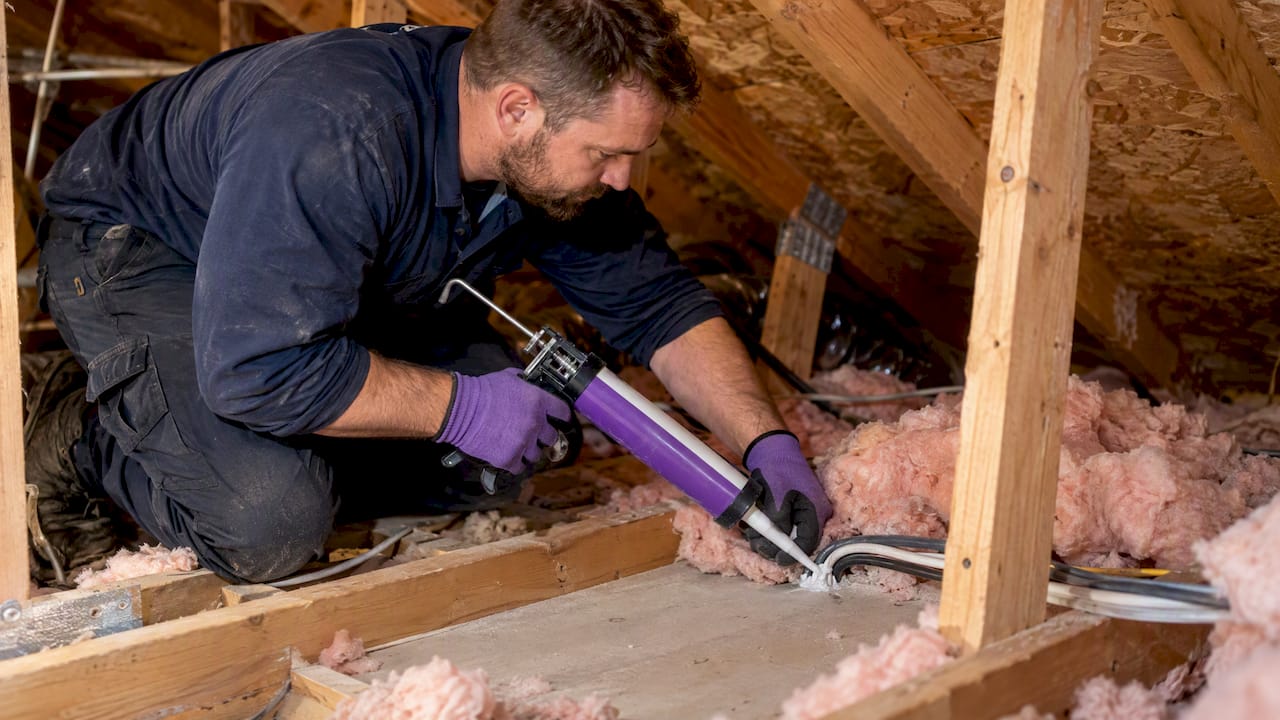
- The attic access hatch or pull-down stairs, which are rarely weatherstripped from the factory
- Recessed light fixtures that poke through the ceiling into the attic
- Duct boots and plumbing stacks where they penetrate the ceiling drywall
Once leaks are sealed, insulation does its job more effectively. Energy rather than guessing, and it’s worth checking that insulation isn’t compressed or piled over your soffit vents, which would choke off the intake airflow you just worked to protect. Insulation and ventilation aren’t competing priorities. They work as a pair, and one without the other leaves real performance on the table.
Fixes: Radiant Barriers, Roofing Choices, and Attic Fans
Each of these three fixes solves a different piece of the puzzle, and none of them substitutes for ventilation or air sealing.
- Radiant barriers reflect radiant heat before it enters the attic air, and they work best in hot, sunny climates with direct roof exposure. In milder or shaded climates, the payoff shrinks.
- Lighter or reflective roofing absorbs less solar heat than dark shingles, but reroofing purely for attic temperature rarely pencils out unless you’re already due for a replacement.
- Attic fans can lower peak temperatures, but a fan fighting leaky ducts may pull conditioned indoor air upward instead, quietly raising your cooling bill even as the attic feels cooler.
Treat all three as add-ons to a properly ventilated, well-sealed attic, not replacements for one.
Research Note: Sealed vs. Ventilated Attics and Moisture Risk
Sealing an attic with spray foam sounds like the ultimate fix for heat, but field research complicates that assumption. A two-year field study on sealed attics found that in hot, humid climates, spray-foam-sealed attics sometimes trapped moisture at the foam-to-sheathing interface, driven by solar heating cycling moisture in and out of that layer.
Ventilated attics in that same study showed sheathing temperatures 10 to 20 degrees Celsius cooler than sealed attics, and sealed attics occasionally saw relative humidity spike above 80 to 90 percent on hot afternoons, a sign of moisture accumulating where it’s hardest to spot.
The practical takeaway isn’t “never seal an attic.” It’s that the decision depends heavily on your climate and roof assembly. In much of the humid Midwest, a conventionally ventilated attic paired with solid air sealing and insulation that manages moisture properly remains the lower-risk choice. If you’re considering a fully sealed, foam-encapsulated attic, talk to a contractor who understands building science, not just spray foam installation.
Priority Checklist: What to Do Today
Start with what costs nothing and takes an afternoon, then work up from there.
- Check attic temperature on a hot afternoon with a basic thermometer, and compare it against the outdoor temperature at the same time.
- Look for blocked soffit vents from outside, and clear any insulation, paint, or debris covering them.
- Inspect for visible mold, water stains, or musty odors, especially near the roof deck and around exhaust vents.
- Seal the attic hatch and any obvious gaps around wiring, plumbing, and duct penetrations.
- Schedule a professional visit if temperatures run extreme, you see moisture, or you’re unsure whether your ventilation is actually balanced.
Before that visit, snap a few photos, jot down your temperature readings, and note where your current vents are located. It saves time and gets you a more accurate estimate.
What Attic Pros See That Homeowners Miss
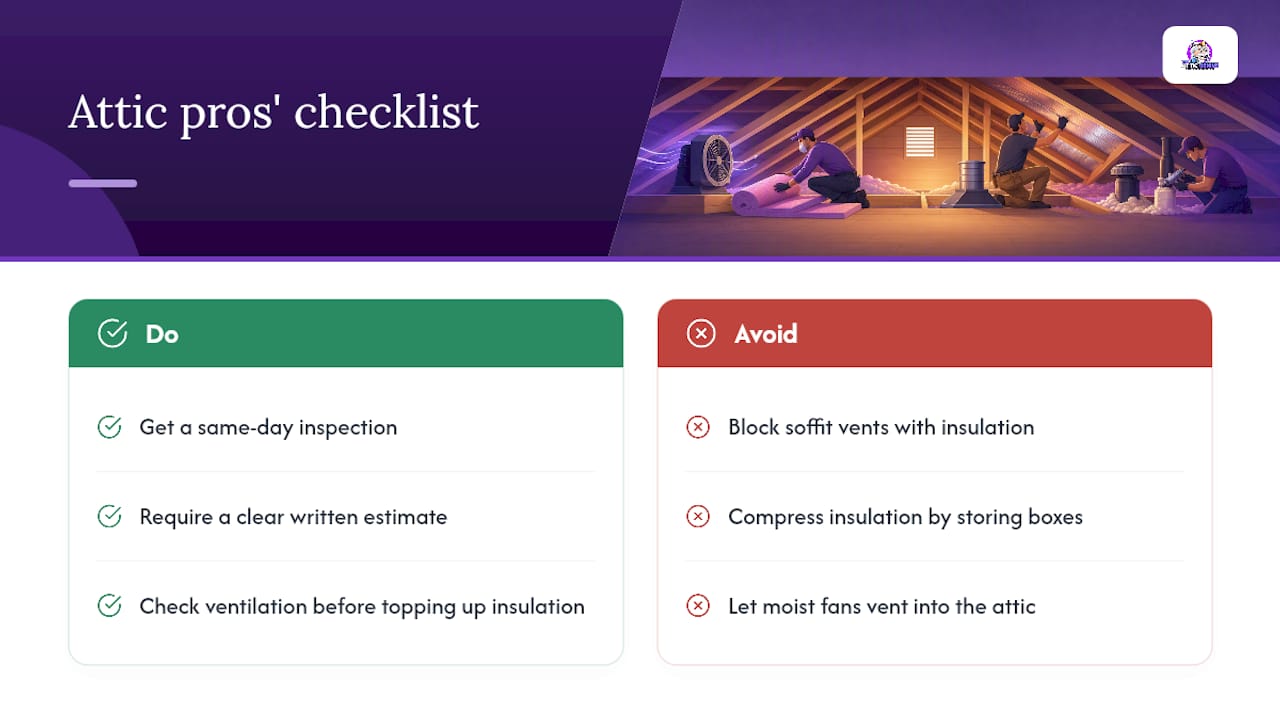
The mistakes that show up most often in attics aren’t exotic. Homeowners block their own soffit vents by piling insulation too high near the eaves, or they compress existing insulation when storing boxes, killing its effectiveness without realizing it. Moisture pathways, like an unvented bath fan dumping straight into the attic, get ignored for years because nothing looks wrong from the ceiling below.
A same-day inspection with a clear written estimate prevents the kind of costly rework that happens when a quick insulation top-up gets scheduled before anyone checks the ventilation underneath it.
— Jim
Get a Professional Attic Assessment From The Attic Genius
If you’ve worked through the checklist above and your attic is still running hot, or you found signs of moisture you can’t explain, a professional inspection settles the question instead of leaving you guessing. A professional service is a direct alternative to guessing your way through DIY fixes: experts assess what your attic actually needs, whether that’s ventilation correction, an insulation top-up, full air sealing, or mold remediation, and price it upfront before any work starts.

Services include attic inspections, insulation upgrades, air sealing, ventilation redesign, and moisture and mold remediation throughout various areas. Visits typically include a written estimate and a warranty on the work to clarify costs before starting. Same-day inspections may be available if the attic issue demands prompt attention.
Start with our guide on why attic floors need insulation to see what a proper upgrade actually involves, or reach out directly to get an inspection scheduled.
Sources
- Why Is My Attic So Hot? — BobVila
- Sealed Attics Exposed to Two Years of Weathering in a Hot and Humid Climate — OSTI
- How Hot is Too Hot in the Attic? — Roofing Contractor