
Scratching in an attic is almost always caused by wildlife, which homeowners can identify by logging the timing and character of the sounds. Daytime scratching, rolling, or bounding sounds, particularly between 6 am and 6 pm, strongly indicate squirrels. Conversely, light, rapid scratching at night along a fixed path typically points to Norway rats or mice, while heavy thumping or dragging sounds suggest raccoons. Physical evidence like droppings—mouse droppings resemble dark grains of rice, rat droppings are capsule-shaped, and raccoon droppings are blunt and tubular—further confirms the specific species.
Scratching in your attic is almost always squirrels working the joists by day, or rats, mice, and raccoons moving around after dark. The fastest way to narrow it down is timing and sound weight, not guesswork. Log when you hear it, leave any entry points alone for now, and either run a safe visual inspection or call a licensed wildlife technician if the activity sounds heavy or constant.
TL;DR:
- Most daytime scratching in the attic indicates squirrels, while nighttime rapid scurrying suggests rats or mice, and heavy thumping points to raccoons.
- Physical evidence like droppings, nesting materials, and chew marks help confirm the specific species and infestation severity.
- Conduct outdoor and attic inspections safely by wearing PPE, photographing evidence, and avoiding sealing entry points before animals are confirmed out.
- Sealing entry points during breeding seasons or without proper inspection risks trapping young animals or disturbing protected species.
- Call a licensed wildlife technician for heavy activity, wiring damage, or if you’re uncomfortable inspecting or handling the situation yourself.
Table of Contents
- Scratching in the Attic: What the Timing and Sound Tell You
- How to Safely Inspect Your Attic for Signs of Animals
- What to Do (and Avoid) Before Help Arrives
- Sealing Entry Points and Repairing the Damage for Good
- When It’s Time to Call a Licensed Wildlife Technician
- Where Homeowners Usually Get This Wrong
- Get a Professional Attic Assessment Without the Guesswork
- Sources
Scratching in the Attic: What the Timing and Sound Tell You
Before you climb a ladder or call anyone, listen. The clock and the character of the noise do most of the identification work for you, and they cost nothing but a few nights of attention.
Gray squirrels are active roughly from 6 am to 6 pm, which makes daytime scratching, rolling, or bounding sounds along the roofline a strong squirrel signal. Norway rats tend to run their routes during nighttime hours, producing light, rapid scratching or scurrying that often traces the same path along ceiling joists night after night. Raccoons are active during late night and early morning hours, and they don’t scurry so much as thump, drag, and shuffle. Bats show up briefly at dusk and dawn with a papery flutter or faint chittering as they leave and return to roost.
That time-of-day mapping isn’t guesswork. It’s the same framework wildlife control technicians use on a first call, before they’ve even opened the attic hatch:
- Daytime, light and quick: squirrels, sometimes birds shuffling near a vent or soffit gap.
- Late night, rapid scratching along a fixed line: rats or mice running an established route.
- Late night, heavy dragging or loud thumps: raccoons, especially if you also hear what sounds like a small child walking.
- Dusk or dawn, brief fluttering: bats entering or exiting a roost.
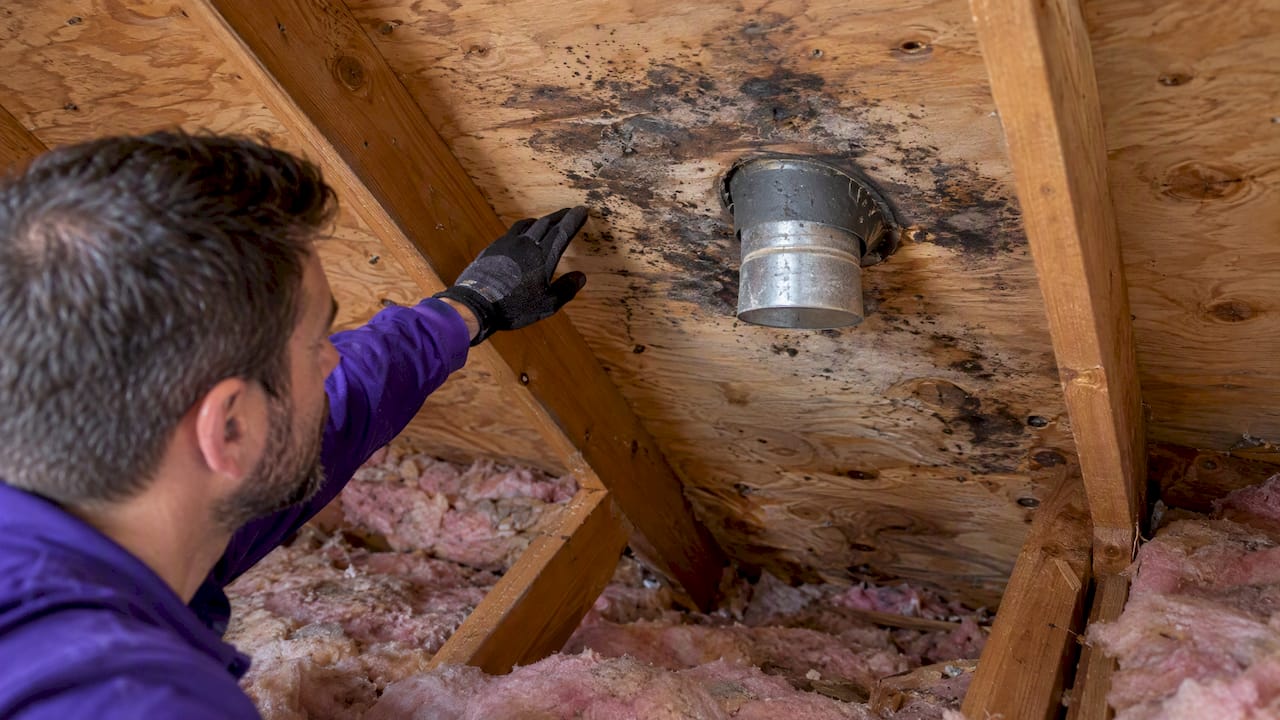
Sound alone gets you close, but physical evidence closes the gap. Droppings tell you a lot: mouse droppings look like dark grains of rice, rat droppings are larger and capsule-shaped, and raccoon droppings are noticeably bigger with a blunt, tubular shape, often left in one consistent spot. Nesting material (shredded insulation, leaves, fabric scraps) points to squirrels or rats setting up a den rather than just passing through. Chew marks on wood or wiring are a rodent hallmark that squirrels and raccoons rarely leave behind in the same way. And if you notice compressed, worn trails through your insulation, that’s typically rodents running the same route so often they’ve flattened the fibers, which is strong confirmation of an established infestation rather than a one-time visitor.
How to Safely Inspect Your Attic for Signs of Animals
You don’t need to become a wildlife biologist to gather good evidence. You do need to protect yourself and know when to stop.
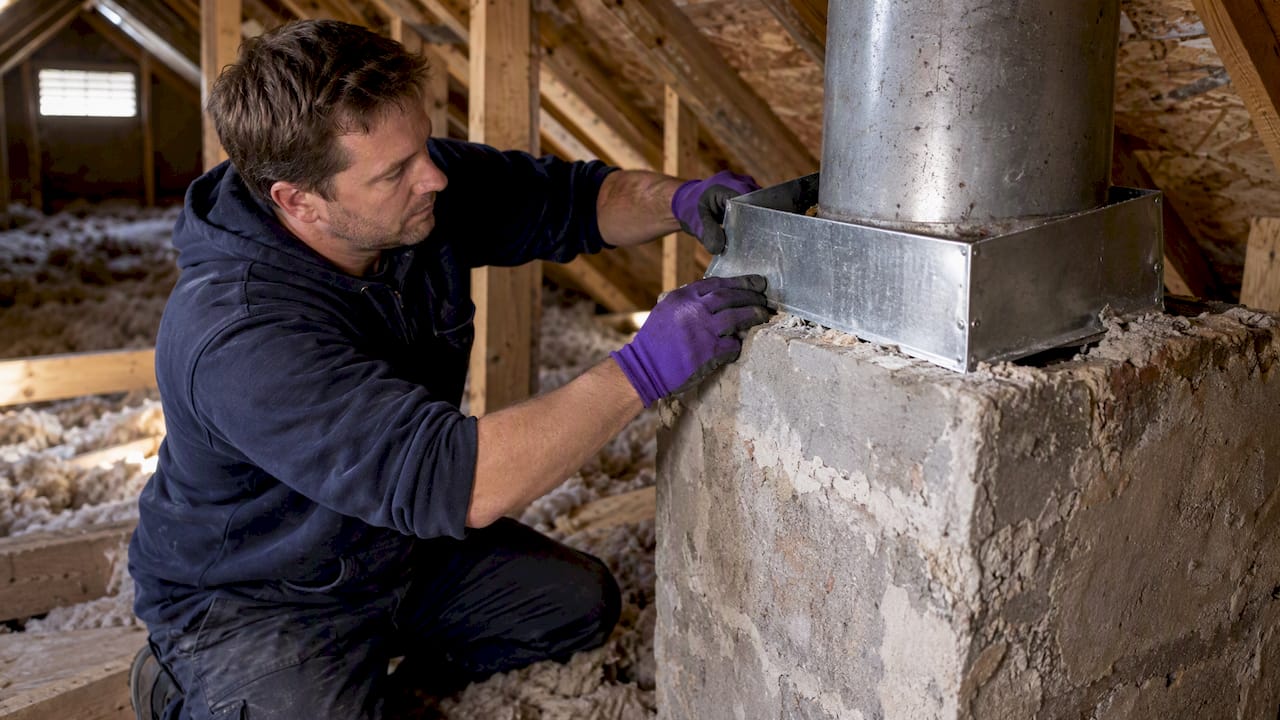
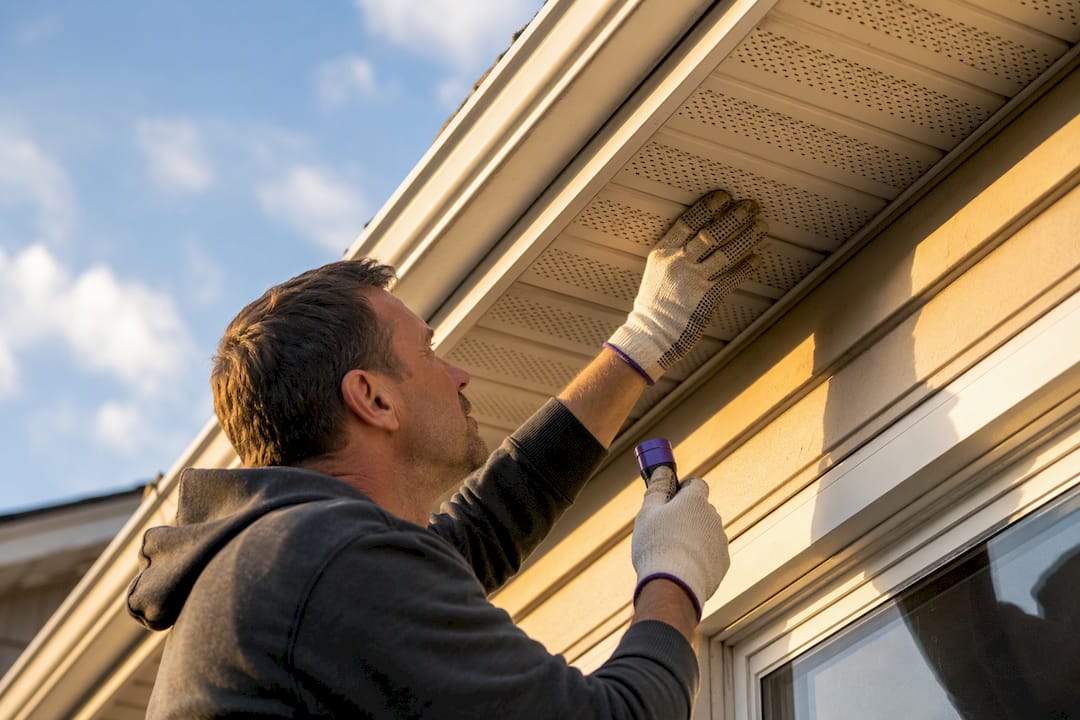
Start outside, from the ground, before you ever go up. Walk the perimeter of your house and look for chewed soffit vents, gaps where the roofline meets the chimney, missing or bent ridge caps, and any tree branch that touches or overhangs the roof. Squirrels use those branches like a bridge, and a single gap the size of a golf ball is enough for a mouse to slip through.
Once you’re ready to go inside the attic, follow these steps in order:
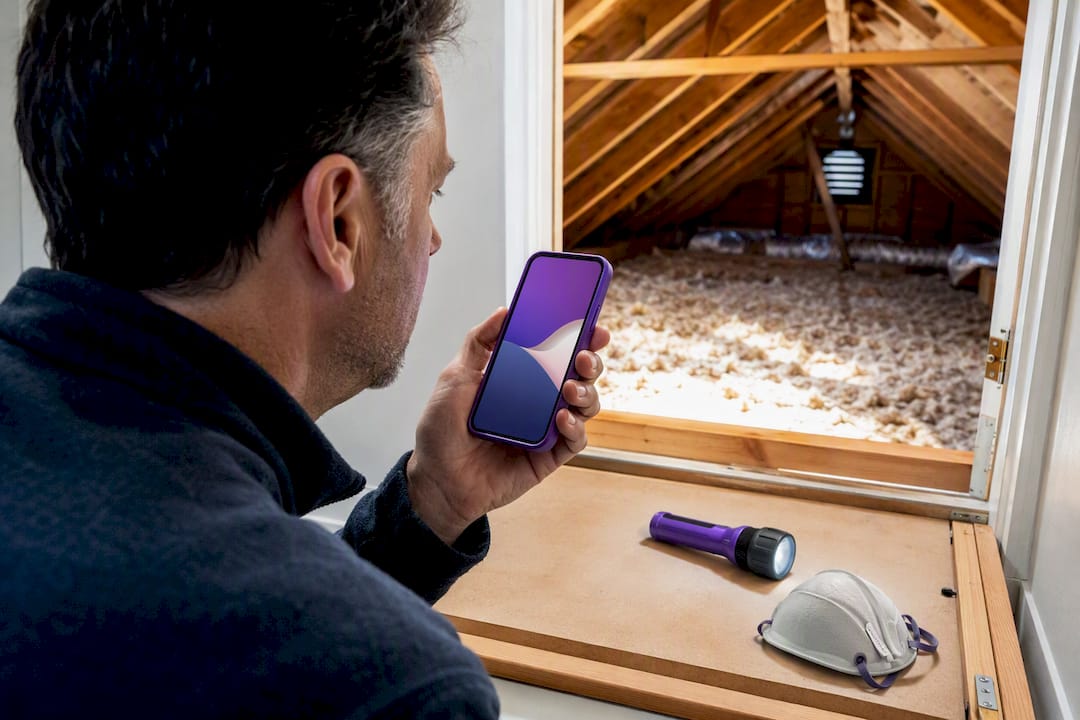
- Suit up first. Wear a dust mask or respirator, gloves, and long sleeves. Rodent droppings and urine can carry pathogens, and the CDC recommends this kind of PPE before disturbing any contaminated area.
- Shut off your HVAC system. If your ductwork runs through the attic, turning off forced air prevents contaminated dust or droppings from circulating through your living space while you’re up there.
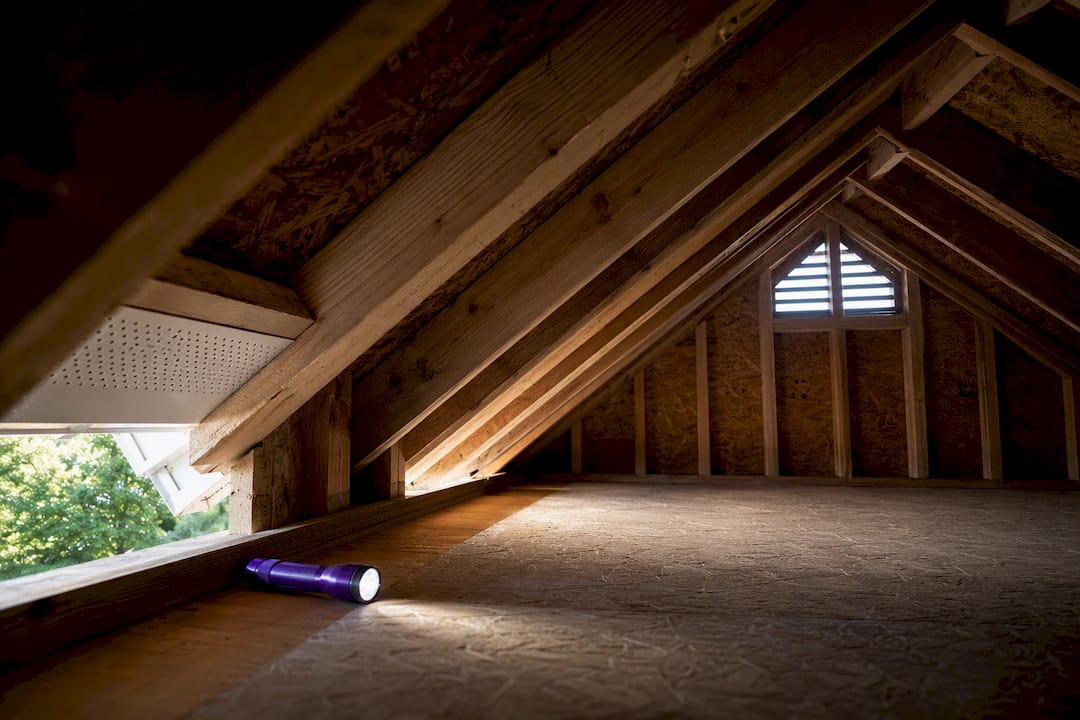
- Stay on the joists. Step only on the framing members, never directly on drywall or insulation, and use a flashlight to scan without crawling into tight, hot corners.
- Photograph everything you find. Droppings, chewed wire insulation, matted nesting material, and any trails through the insulation are all worth a picture, along with a rough location relative to the attic access point.
- Note the exact spot for your log. Even “near the northeast vent” is more useful to a technician than “somewhere in the attic.”
Some findings mean it’s time to back out and call a professional instead of pushing forward. Stop the inspection if you see chewed or exposed electrical wiring, signs of a large nest that might have young animals inside, a strong ammonia-like urine smell, or droppings scattered across a wide area rather than one contained spot.
Pro Tip: Bring your phone up with you and record a 30-second voice memo describing what you see in real time. It’s faster than typing notes on a ladder, and it gives a technician a timestamped account instead of your memory a week later.
What to Do (and Avoid) Before Help Arrives
The instinct to grab a caulk gun and seal every gap you can find is understandable and often exactly the wrong move. If an animal is still inside when you close its exit, you’ve trapped it, and a trapped animal in a wall or attic almost always means a much worse problem within days.
Here’s what actually helps in the short term:
- Keep a written log of every noise event: date, time, duration, and approximate location in the attic.
- Keep kids and pets away from the attic access point until you know what’s up there.
- Close the attic hatch or door to limit any contamination from drifting into living spaces.
- Photograph droppings, chew marks, and insulation damage as you find them.
- Call a licensed wildlife technician if the activity sounds heavy, repeats nightly, or if you suspect wiring damage.
And here’s what to avoid entirely:
- Don’t seal soffit vents, roof gaps, or chimney openings until you’re confident all animals have exited. Professionals typically install one-way exclusion devices first and seal only after confirming the attic is clear.
- Don’t attempt to trap or handle raccoons or bats yourself. Both can carry rabies risk, and bats in particular are protected under seasonal handling rules in many areas.
- Don’t use rodent poison in an attic near HVAC returns. A poisoned rodent that dies inside a wall or duct creates a far worse odor and cleanup problem than the noise ever did.
Chewed electrical wiring is one of the more overlooked dangers here. Rodents gnaw insulation off wires as a natural behavior, not out of malice, and a stripped wire running through dry, dusty insulation is a real fire risk that most homeowners never think about until an inspection turns one up.
If the pattern points to daytime squirrels, you generally have a little breathing room to schedule an inspection over the next several days. If it’s nighttime activity consistent with rats or raccoons, treat it with more urgency. Nighttime noise usually means an animal has already settled in rather than just passed through once.
Sealing Entry Points and Repairing the Damage for Good
Once the attic is confirmed clear, the real fix isn’t a single sealed hole. It’s closing every plausible entry point and repairing whatever the animal damaged on its way in.
Start with the usual suspects: gaps at the soffit, torn or missing vent screens, chimney flashing that’s pulled away from the roofline, and any ridge or roof penetration where a pipe boot has cracked. Mice can squeeze through very small openings, squirrels require somewhat larger gaps, and raccoons need much larger openings to enter. Fix the smallest gaps first since they’re the cheapest and easiest animals to keep out, then work up to the raccoon-sized openings.
Timing matters more than most homeowners realize. Sealing too aggressively during spring and early summer birthing season risks trapping newborn litters inside, and bats are protected during certain months in many jurisdictions, so check local wildlife rules before excluding a suspected bat roost. Cold weather often makes the problem worse in the short term rather than better, since animals seek indoor warmth right as your furnace kicks on for the season.
After exclusion, don’t stop at the entry point. Ask whoever handles the repair to check three things: whether insulation needs replacement due to contamination, whether any wiring shows gnaw damage that needs an electrician’s sign off, and whether ductwork was breached and needs cleaning.
A short annual maintenance routine keeps the problem from repeating:
- Trim tree branches back 6 to 8 feet from the roofline so squirrels lose their bridge.
- Replace or repair damaged vent screens and chimney caps.
- Check attic ventilation and baffles each fall, since gaps there double as both an airflow problem and an entry point.
- Schedule a walk-through inspection once a year, ideally before the weather turns cold.
Pro Tip: Do the branch trim and vent check in early fall, right before heating season. That’s when animals are most actively looking for a warm place to spend winter, and closing the door before they knock beats evicting them after.
When It’s Time to Call a Licensed Wildlife Technician
Some situations are worth handling yourself with a flashlight and a log book. Others aren’t, and knowing the difference saves you money and prevents a small problem from becoming a structural one.
Call a professional when you’re dealing with heavy or large-animal activity, noise that repeats nightly rather than as an isolated event, any visible wiring damage, a significant volume of droppings, or simply when climbing into a hot, cramped attic isn’t something you’re willing to do yourself. None of those are situations where a DIY trap from a hardware store gets the job done safely.
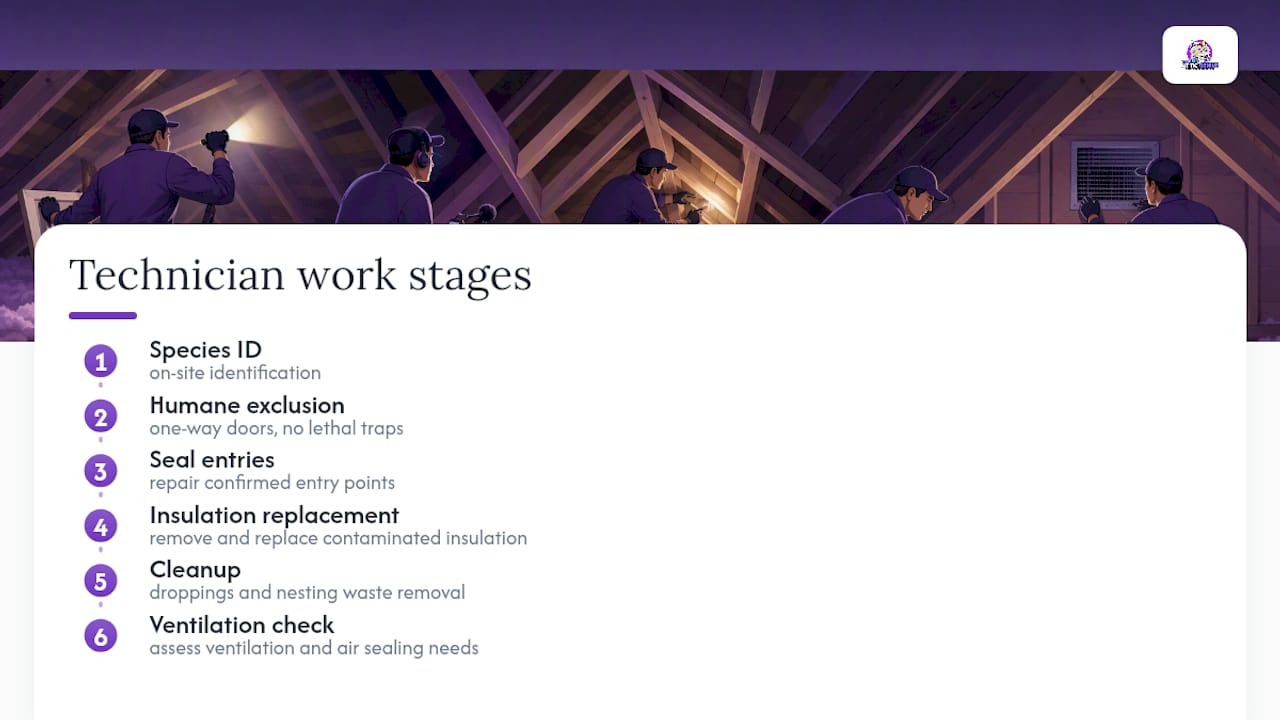
A licensed technician typically handles the work in stages: on-site species identification, humane exclusion using one-way doors rather than lethal traps, sealing and repairing the confirmed entry points, removing and replacing contaminated insulation, cleaning up droppings and nesting waste, and checking whether ventilation or air sealing needs correcting as part of the fix. Written estimates and warranties on the repair work are standard with most reputable companies, so ask for both before signing anything.
You can speed up that first visit considerably by having your noise log and photos ready, keeping the attic access point clear, and mentioning upfront whether your HVAC ductwork runs through the attic. The Attic Genius offers pest and vermin droppings cleanup alongside insulation and air-sealing repair work for homes where an infestation has already left contamination behind, which covers the cleanup side once exclusion is complete.
Where Homeowners Usually Get This Wrong
The mistake I see repeated most often isn’t failing to notice the noise. It’s sealing up the obvious hole the same weekend they hear it, before anyone’s confirmed the animal is actually gone. That traps a live animal inside a wall or attic cavity, and what started as an annoying nighttime scratch turns into a dead animal smell and a much bigger repair bill within a week.
The fix costs nothing and takes seven days: write down the time, duration, and rough location every time you hear the noise, for a full week. That pattern, more than any single sound, is what lets a technician walk in and diagnose the problem on the first visit instead of the third.
— Jim
Get a Professional Attic Assessment Without the Guesswork
Once you’ve logged the noise and ruled out an emergency, the next move is getting eyes on the actual damage, not just the animal. The Attic Genius handles the part homeowners can’t safely do themselves: confirming what’s living up there, cleaning up droppings and nesting waste, and repairing whatever the infestation left behind, all under one roof instead of juggling separate contractors for cleanup, insulation, and air sealing.

Contaminated insulation loses its effectiveness fast once animals have nested in it, and gnawed wiring or damaged vents rarely get flagged until someone’s actually up there looking. Some companies provide upfront written estimates and may schedule inspections promptly, so you’re not left guessing how bad it is or living with the smell while you wait for a callback. If you’ve already spotted droppings, chew marks, or a lingering odor, request a free inspection and get a clear answer on what it’ll take to fix it, backed by a written warranty on the repair work.
Sources
For deeper reading, Critter Control’s sound guide helps you match noises to species, the CDC’s rodent cleanup page covers safe decontamination, and the U.S. Fish and Wildlife Service offers broader context on wildlife regulations by region.
- Rodent control and cleanup — CDC
- What the scratching in your attic is telling you
- Wildlife in the attic during winter: what to do