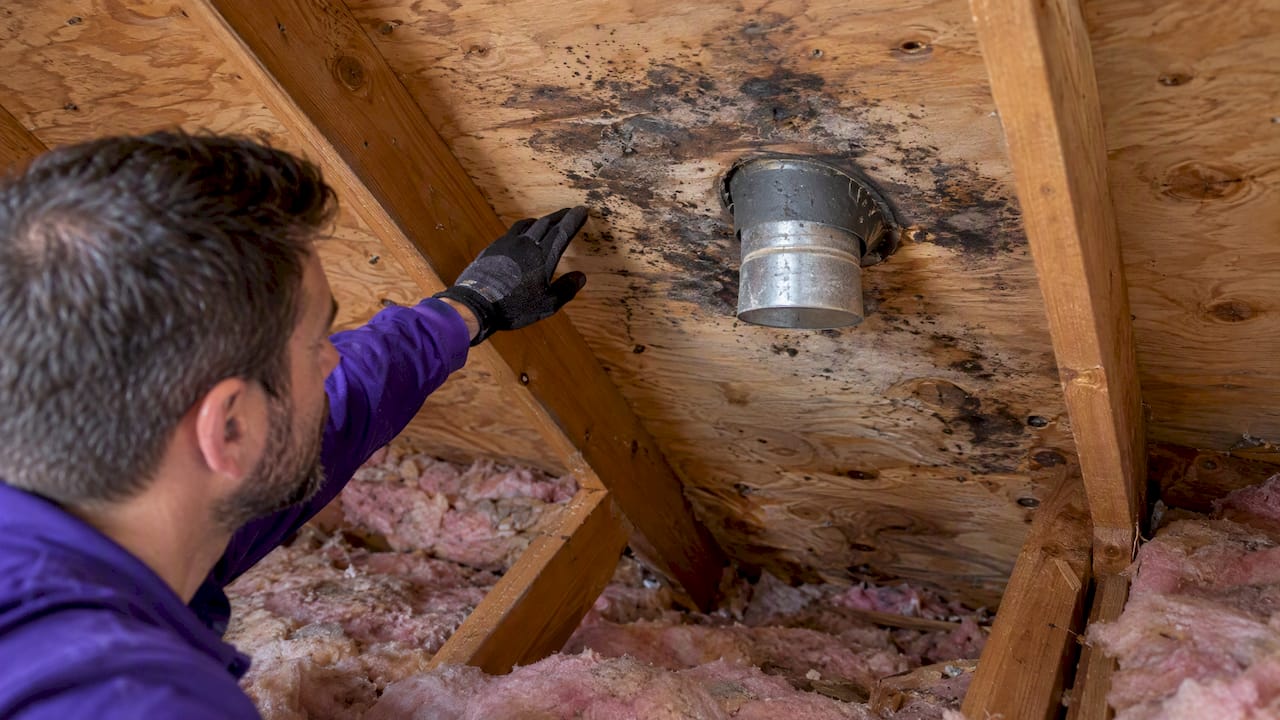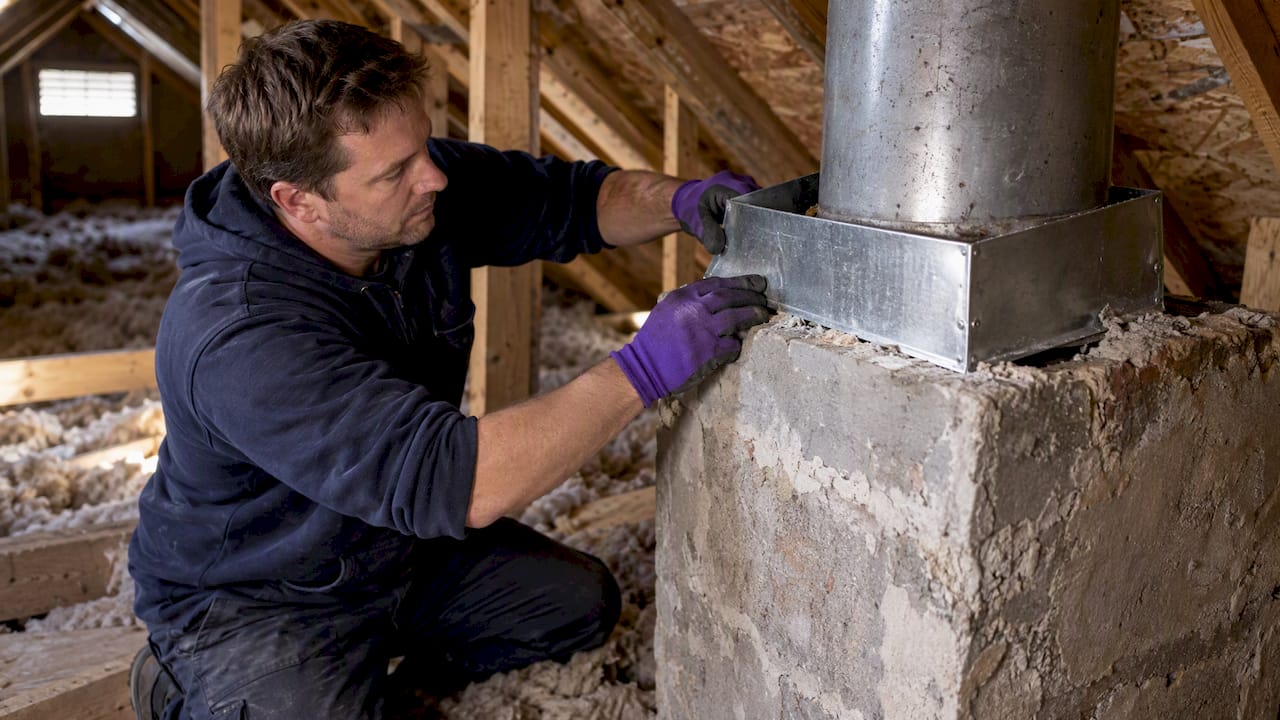
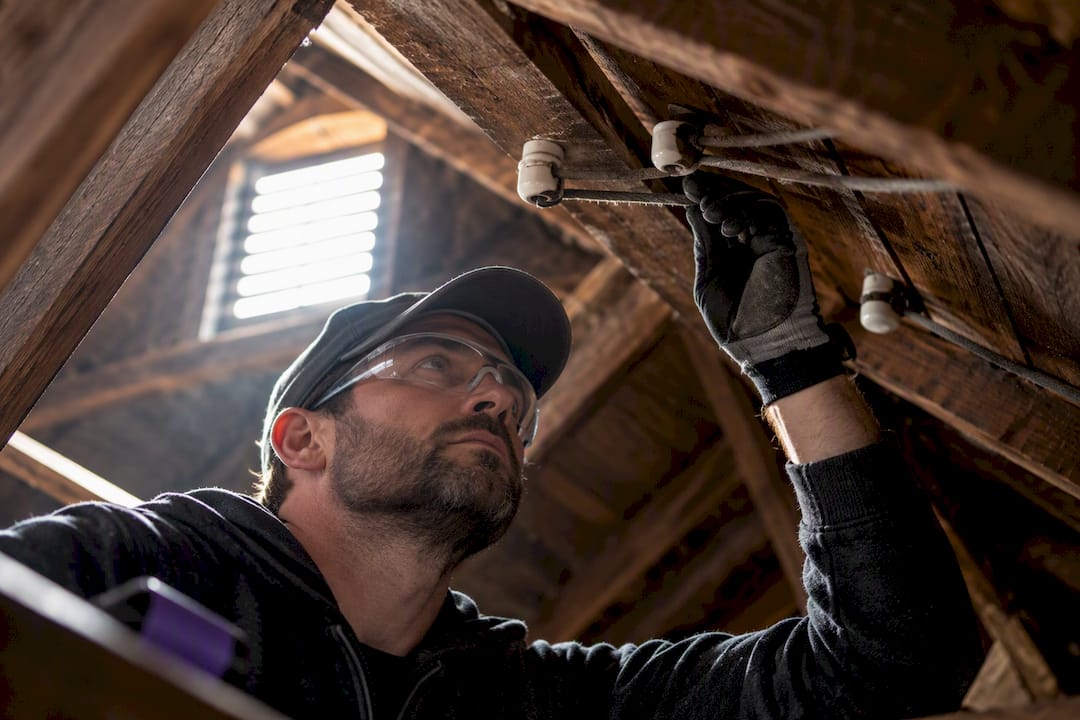
Insulating over knob-and-tube (K&T) wiring is allowed only if a licensed electrician certifies the wiring is in good condition and the home's electrical service is rated at least 60 amps. A written inspection is essential because K&T wiring was designed to dissipate heat into open air, and insulation can trap this heat, degrading the wiring and creating fire hazards. The electrician must confirm the wiring is free of damage, has proper clearances, and no unassessed live circuits, with measures like maintaining at least a 3-inch clearance for safe live circuits. Skipping this professional assessment can violate local code or create a fire hazard.
Insulating over knob-and-tube wiring is allowed only under specific conditions: the wiring must be in good condition, adequately rated, and cleared by a licensed electrician, or it must be selectively decommissioned first. Before scheduling any insulation work, call an electrician for a written inspection. Skipping that step can violate local code, void a lender’s approval, or create a fire hazard hiding under new insulation.
TL;DR:
- Insulation over knob-and-tube wiring is only permitted if an electrician certifies the wiring’s good condition and the home’s service is rated at least 60 amps.
- A licensed electrician’s written inspection must confirm that K&T wiring is free of damage, with proper clearances and no unassessed live circuits.
- Using insulation dams, caution tape, and keeping at least a 3-inch clearance can help mitigate risks if circuits are confirmed safe but remain live.
- Local jurisdictions and lenders may require decommissioning or rewiring, and final approval often depends on the electrician’s certification rather than national guidance alone.
- Homeowners should follow a strict inspection, documentation, and clearance process to ensure safety, code compliance, and approval from lenders or insurers.
Table of Contents
- Can you put insulation on knob and tube wiring? The technical explanation
- Code, lender, and jurisdiction caveats: when insulation is allowed, restricted, or prohibited
- What a professional electrical assessment should check
- Safe insulation methods and practical workarounds
- Step-by-step homeowner checklist before, during, and after insulating
- Why trust this guidance: The Attic Genius’s experience and onsite practices
- What the industry gets wrong about knob-and-tube insulation
- How The Attic Genius can help with attic insulation and knob-and-tube coordination
- Authoritative links and job-aids
- Sources
- FAQ
Can you put insulation on knob and tube wiring? The technical explanation
Knob-and-tube wiring was designed to shed heat into open air around the conductors, not to sit buried under insulation. When cellulose, fiberglass, or foam surrounds the wire, that airflow disappears and heat has nowhere to go. Over time, that trapped heat can degrade the rubber or cloth insulation coating the copper, making it brittle and more likely to crack or short. NFPA research points out that thermal insulation changes how small branch conductors dissipate heat, and that gaps remain in how ampacity is calculated once wiring gets embedded in insulation.
The practical risks show up in a few predictable ways:
- Localized hot spots can form where insulation packs tightly against a splice or knob.
- Brittle, aged insulation coating is more prone to arcing when disturbed during attic work.
- Reduced airflow around the conductor raises the odds of a slow, hidden failure rather than an obvious one.
That is why burying live, unassessed knob-and-tube wiring under new insulation is treated as a hazard rather than a shortcut.
Code, lender, and jurisdiction caveats: when insulation is allowed, restricted, or prohibited
Federal housing guidance offers a useful baseline. The HUD HOC Reference Guide states that knob-and-tube wiring can be acceptable when it is in good condition and the home’s electrical service is rated at least 60 amps. Appraisers who cannot confirm that condition on sight may request an electrical certification before signing off.
Local building departments do not all read that guidance the same way. A few points to keep in mind:
- Some jurisdictions allow insulation over K&T once an electrician certifies its condition; others require decommissioning or rewiring first, regardless of condition.
- Lenders and insurers frequently ask for a licensed electrician’s written statement before closing or underwriting a policy on a home with visible K&T.
- Local code officials, not national guidance, have the final say on what is required in your area.
A licensed electrician’s written certification, confirming at least 60-amp service and sound wiring condition, is the document that resolves most objections from HUD guidance, lenders, and insurers alike. Without it, an appraiser or underwriter has little basis to approve the property as-is.
What a professional electrical assessment should check
A qualified electrician’s inspection should go well beyond a quick glance in the attic. Ask for these specific checks:
- Visual inspection for scorch marks, brittle or cracked wire coating, and signs of amateur repairs or splices outside junction boxes.
- Confirmation of service ampacity, since HUD’s 60-amp threshold is the benchmark most appraisers use.
- Thermal imaging or temporary load testing to catch hot spots that aren’t visible during a cold inspection.
- A decision on which circuits, if any, should be decommissioned or replaced rather than left in service.
- Proper handling of junction boxes and splices, which must stay accessible and covered, not buried.
Pro Tip: Ask the electrician for a written statement, not just a verbal “it’s fine.” You will need that document later for lenders, insurers, or a future buyer.
Get the scope of any recommended repairs in writing too, along with a note on which K&T runs, if any, remain live and need to be flagged before insulation goes in.
Safe insulation methods and practical workarounds
The safest route is often the simplest one on paper: selectively rewire or decommission the circuits that run through the attic, then insulate without restriction. That is not always practical or affordable in one pass, so contractors use a few established workarounds when wiring is confirmed safe but still live.
- Insulation dams or baffles keep at least a 3-inch clearance around live knob-and-tube components, a minimum spelled out in the Standard Work Specifications.
- Live wiring gets marked with caution tape visible from 5 feet away, so future work does not disturb or bury it by accident.
- Loose-fill cellulose and fiberglass are generally more forgiving around dammed-off wiring than spray foam, which can fully encapsulate a conductor and trap heat if it is not kept clear.
- Non-IC rated recessed lights and junction boxes need their own clearance and, often, a fire-rated enclosure, following DOE job aid guidance on sealing around fixtures.
Pro Tip: Have your electrician and insulation contractor walk the attic together before work starts. Marking clearances as a team avoids the common problem of an installer covering a dam because nobody told them what it was for. Coordinating attic knee wall insulation steps around obstacles like wiring follows the same logic: identify the obstruction, build around it, and document what you did.
Step-by-step homeowner checklist before, during, and after insulating
Follow this sequence to keep the project safe and the paperwork in order:
- Stop before any insulation work begins and schedule a licensed electrician inspection of all attic wiring.
- Get written certification of safe wiring, or have unsafe circuits selectively decommissioned or replaced before insulation starts.
- Work with your insulation contractor to design dams around any remaining live K&T, choose an appropriate material, and confirm attic ventilation stays intact.
- Keep photos, the electrician’s written statement, and the contractor’s invoice on file. These documents satisfy most lender and insurer requests down the road.
This same sequence applies whether you are preparing an attic for an insulation upgrade or addressing knob-and-tube specifically. The paperwork is what turns a completed job into a closed file with your lender or insurer.
Why trust this guidance: The Attic Genius’s experience and onsite practices
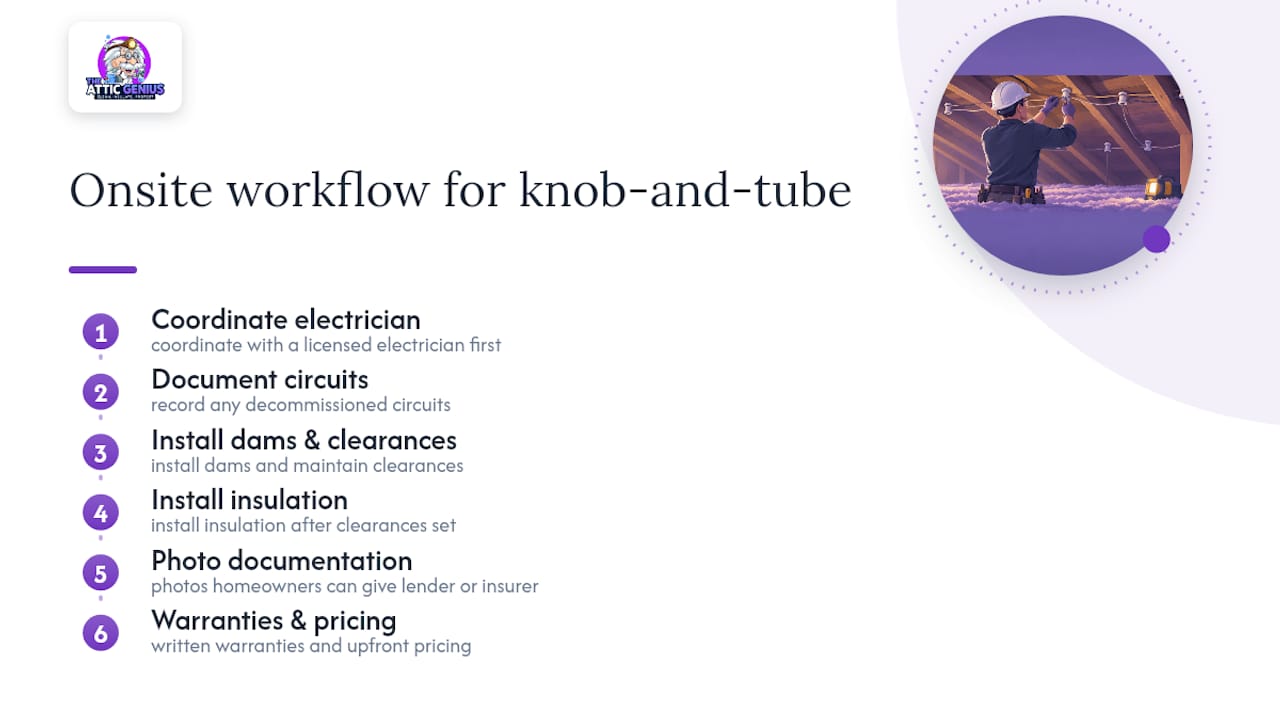
The Attic Genius specializes in attic insulation, air sealing, and related services for homeowners across Chicagoland and southern Wisconsin, backed by written warranties and upfront pricing. On homes with knob-and-tube wiring, the workflow follows the same order outlined above: coordinate with a licensed electrician first, document any decommissioned circuits, then install dams and clearances before insulation goes in. Every job includes photo documentation homeowners can hand to a lender or insurer later.
What the industry gets wrong about knob-and-tube insulation
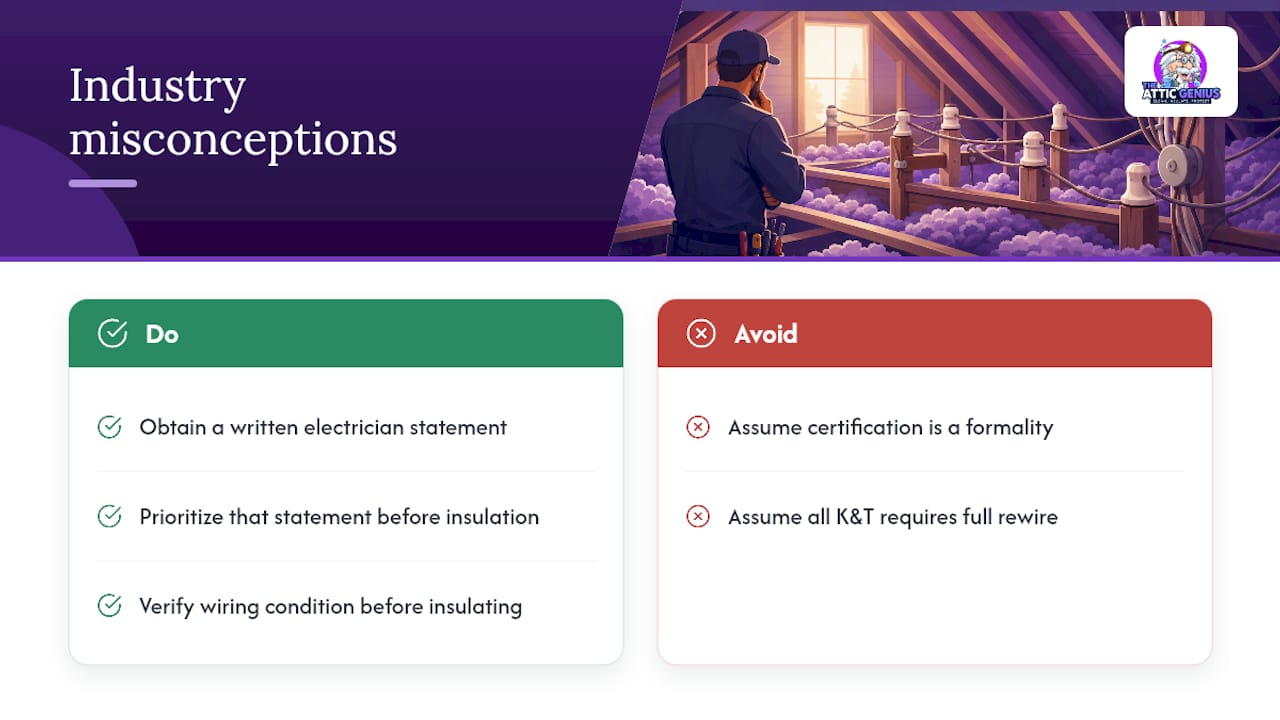
Most advice on this topic treats knob-and-tube wiring as either a dealbreaker or a non-issue, and both extremes miss the point. The wiring itself is not automatically dangerous just because it is old. The danger comes from insulating over it without knowing its condition first. Homeowners who assume a certification is a formality are taking on more risk than they realize, and homeowners who assume any K&T means a full rewire are often spending money they don’t need to spend.
The single highest-value step in this entire process is the written electrician statement. It settles the appraisal question, the insurance question, and the safety question all at once, and it costs far less than either a surprise repair or a denied loan. If you take one thing from this guide, prioritize that document before you think about insulation material, R-value, or contractor scheduling. Everything else follows from knowing what you’re actually insulating around.
— Jim
How The Attic Genius can help with attic insulation and knob-and-tube coordination
If you’re dealing with knob-and-tube wiring and want the insulation done right the first time, a professional insulation contractor can offer a free inspection, coordinate around any electrician findings, and install or remove insulation with a written warranty on the work.

- An inspection to assess your attic’s wiring, insulation, and ventilation together.
- Clear documentation, including photos and contractor invoices, that you can hand to a lender or insurer.
- Upfront pricing before any work starts, with no surprise charges once the crew is on-site.
Request a free inspection to get a straight answer on what your attic needs and what it will cost.
Authoritative links and job-aids
- HUD HOC Reference Guide: Electrical and Heating
- Standard Work Specifications: Knob and Tube Isolation
- DOE Weatherization Single Family Home Job Aids
- Building America Measure Guideline: Sealing and Insulating Ducts
- NFPA Research: Electrical Conductors in Thermal Insulation
- Top 10 Causes of Residential Fires in NY
Sources
- HUD Archives: HOC Reference Guide – Electrical and Heating (Page 1-26)
- Knob and Tube Wiring – Isolation | Standard Work Specifications
- Weatherization Single Family Home Job Aids
- Evaluation of Electrical Conductors in Thermal Insulation: Literature Review, Gap Analysis & Development of a Research Plan
- Measure Guideline: Sealing and Insulating of Ducts in Existing Homes
FAQ
Can you put insulation on a knob and tube?
Insulation can go over knob-and-tube wiring only after a licensed electrician confirms it is in good condition and properly rated, or after the affected circuits are decommissioned. HUD guidance treats K&T as acceptable when service is at least 60 amps and the wiring shows no damage. Burying live, uninspected K&T under insulation without that step is a fire risk.
Is it illegal to sell a house with knob and tube wiring?
Selling a house with knob-and-tube wiring is not illegal in itself, but it can complicate financing and insurance. Some lenders and insurers require an electrician’s written certification or evidence of rewiring before approving the sale. Local code requirements on disclosure and repairs vary by jurisdiction.
Will FHA approve a house with knob and tube wiring?
FHA appraisers can approve a home with knob-and-tube wiring when the HUD reference guide standard is met: the wiring is in good condition and the service is rated at least 60 amps. When an appraiser cannot verify that on inspection, they may require a licensed electrician’s certification before the loan moves forward.
Can I insure a house with knob and tube wiring?
Many insurers will cover a home with knob-and-tube wiring, but often only after reviewing an electrician’s written assessment of its condition. Some carriers ask for partial rewiring or decommissioning of specific circuits as a condition of coverage. Requirements vary by insurer, so check with yours directly before assuming coverage.