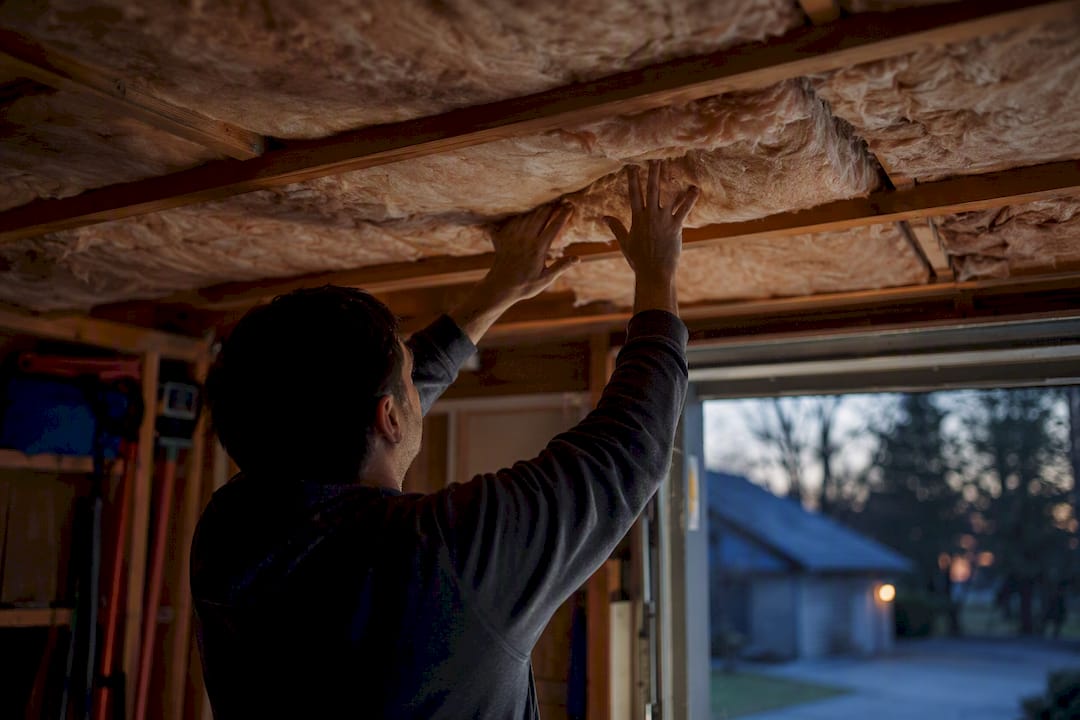
For most homeowners, the fastest way to fix a hot, cold, or noisy garage is insulating the ceiling to a solid R-30 to R-49 (depending on your climate) and air-sealing every penetration before the insulation goes in. Skipping the air-sealing step is the single biggest mistake DIYers make, since Energy Saver’s guidance treats sealing gaps as the prerequisite to effective insulation, not an optional add-on.
Before you buy a single batt, do three things:
- Confirm your climate zone’s target R-value using the DOE’s ZIP-Code Insulation Program guidance.
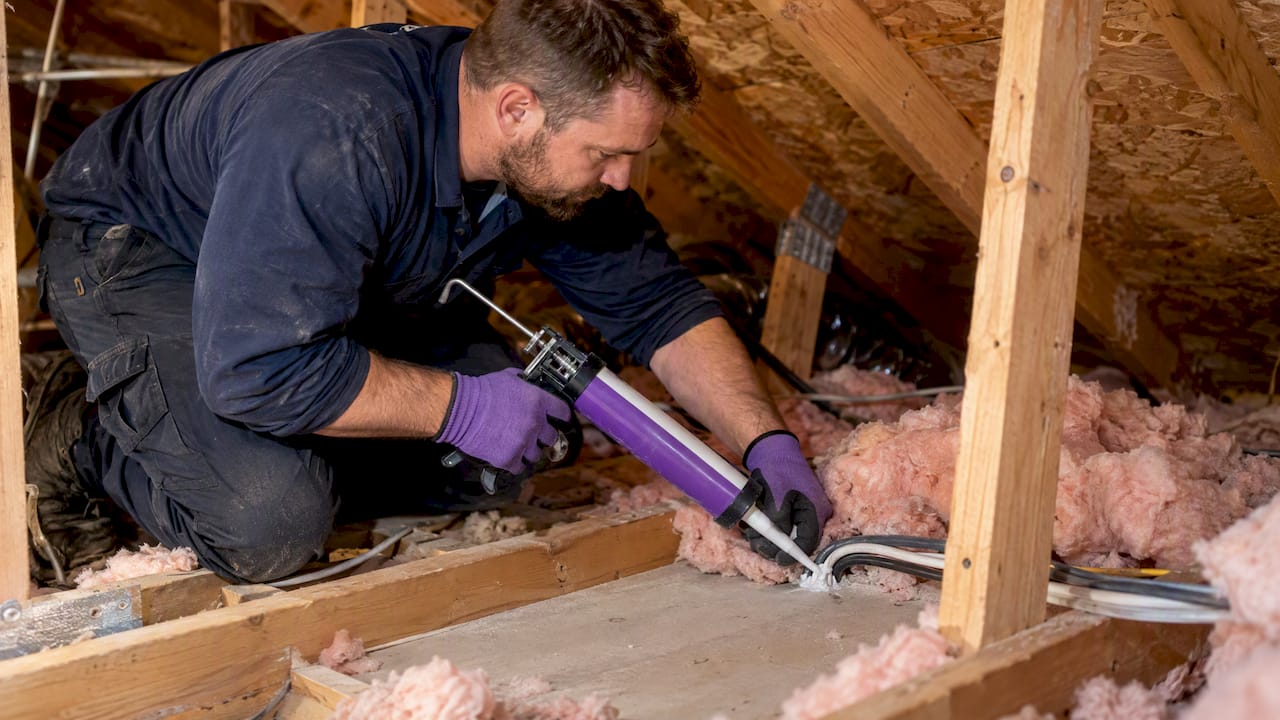
- Air-seal first: band joists, plumbing penetrations, and recessed lights leak more heat than bare joists ever will.
- Call a pro if your garage sits under living space and needs fire-rated drywall, or if moisture damage is already visible.
Combining air sealing with proper insulation can cut heating and cooling costs by up to about 15%, a number worth keeping in mind as you weigh materials and labor costs below.
Key Takeaways
Effective garage ceiling insulation requires air sealing first, an R-value matched to your climate zone, and material choice based on ceiling access and budget.
| Point | Details |
|---|---|
| Air-seal before insulating | Seal band joists, penetrations, and light housings before adding any material. |
| Match R-value to climate | Aim for R-30 to R-38 in mixed/hot zones, R-38 to R-49 in cold zones. |
| Choose material by access | Batts for open joists, blown-in or dense-pack for finished or attic-style ceilings. |
| Verify fire-rating needs | Confirm local code if living space sits above or beside the garage. |
| Get a professional inspection | The Attic Genius offers same-day inspections and written warranties on garage insulation work. |
Table of Contents
- Why Garage Ceiling Insulation Matters for Comfort and Energy Bills
- What R-Value Should a Garage Ceiling Have?
- Fiberglass, Cellulose, Rigid Foam, or Spray Foam: Which Is Best?
- How Do You Insulate Different Types of Garage Ceilings?
- Air Sealing and Fire Safety: What You Can’t Skip
- How Much Does Garage Ceiling Insulation Cost?
- Common Garage Ceiling Insulation Problems and Fixes
- What Attic Genius Installers Notice That Homeowners Miss
- Should You Insulate a Garage Ceiling Yourself or Hire a Pro?
- Let The Attic Genius Handle the Garage Ceiling for You
- Frequently Asked Questions
- Sources
Why Garage Ceiling Insulation Matters for Comfort and Energy Bills
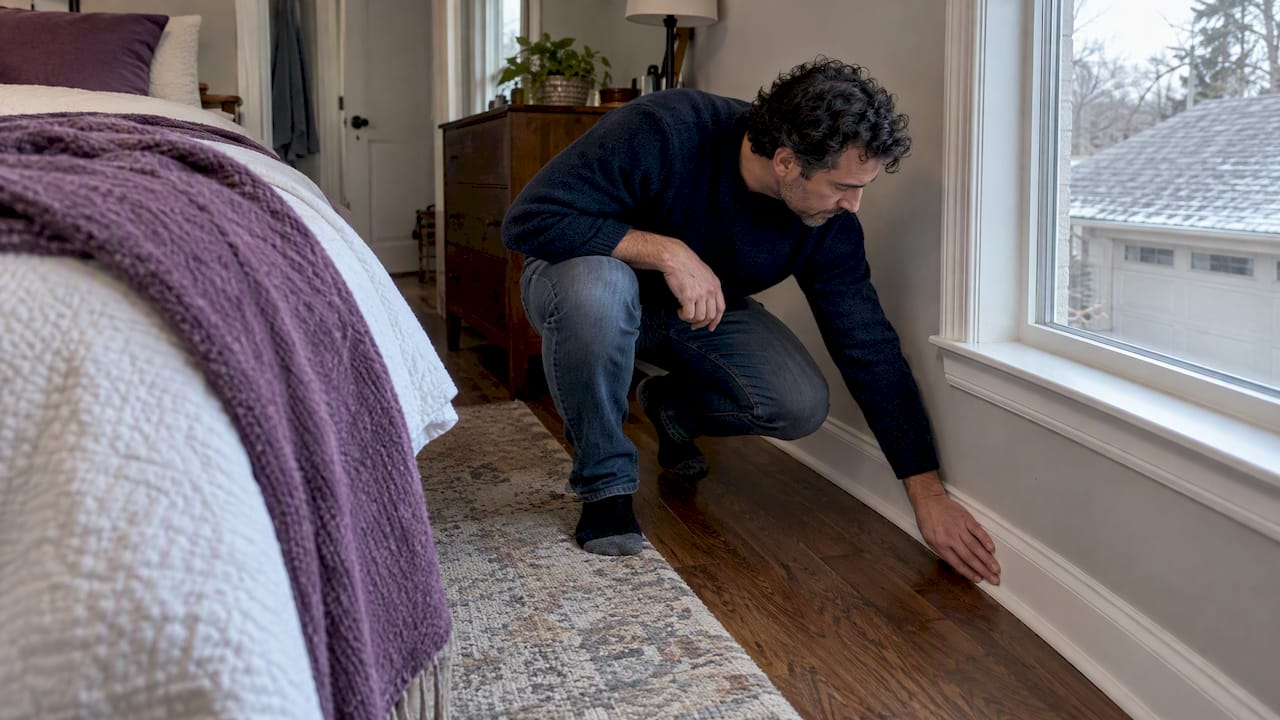
Heat rises, and an uninsulated garage ceiling is one of the biggest thermal blind spots in a home, especially when a bedroom or bonus room sits directly above it. Beyond comfort, an insulated, air-sealed ceiling blocks car exhaust, chemical fumes, and dust from migrating into living space, a specific concern Energy Saver flags for homes with garages under or beside conditioned rooms.
- Stabilizes temperatures in rooms above the garage year-round.
- Cuts heating and cooling costs when paired with air sealing.
- Reduces noise transfer and protects pipes from freezing.
What R-Value Should a Garage Ceiling Have?
Your target R-value depends on climate and whether the garage functions as part of your home’s thermal envelope. Energy Star recommends R-30 to R-38 for mixed and hot climates, and R-38 to R-49 for colder regions, treating garage ceilings the same as attic floors once living space sits above them.
| Climate Zone | Recommended R-Value | Notes |
|---|---|---|
| Mixed/hot (Zones 1-4) | R-30 to R-38 | Lower end fine for unheated garages with no living space above |
| Cold (Zones 5 and higher) | R-38 to R-49 | Push toward R-49 if a bedroom or office sits above the garage |
If you’re not sure which zone you’re in, the Oak Ridge ZIP-Code tool will give you a specific number instead of a guess.
Fiberglass, Cellulose, Rigid Foam, or Spray Foam: Which Is Best?
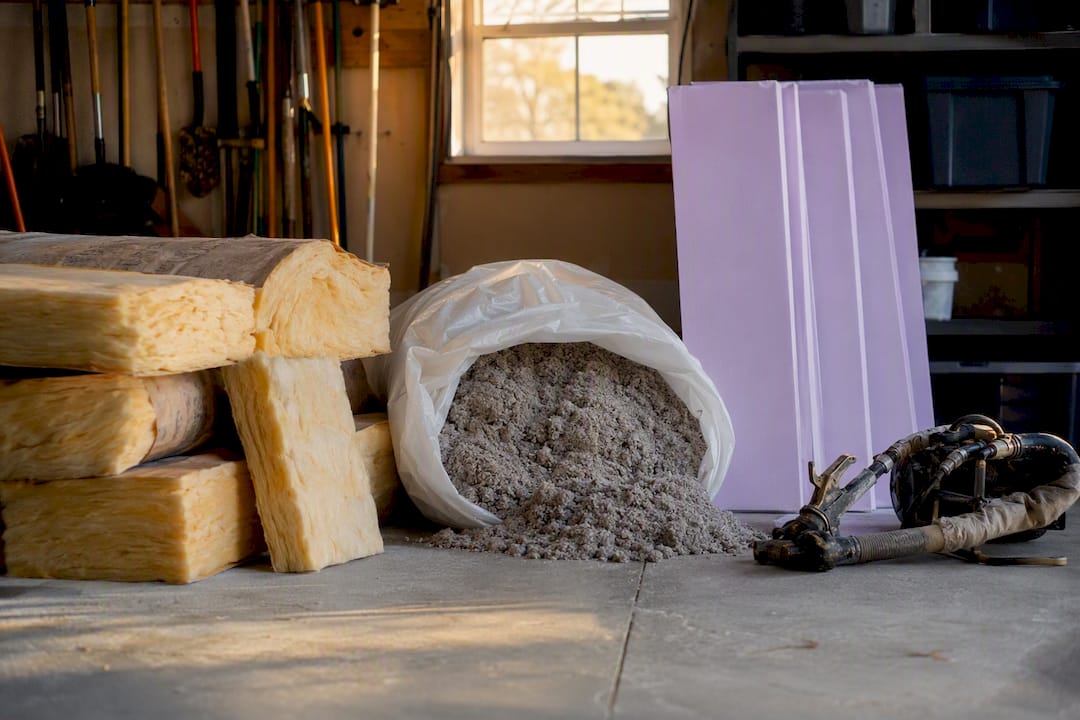
Each material fits a different ceiling type, budget, and skill level. Fiberglass batts remain the most DIY-friendly and lowest-cost option, while spray foam delivers the highest R-per-inch and air-sealing performance but almost always requires a professional installer.
| Material | R-Per-Inch | Best For | DIY Difficulty |
|---|---|---|---|
| Fiberglass batts | R-3 to R-4 | Open joists, standard budgets | Easy |
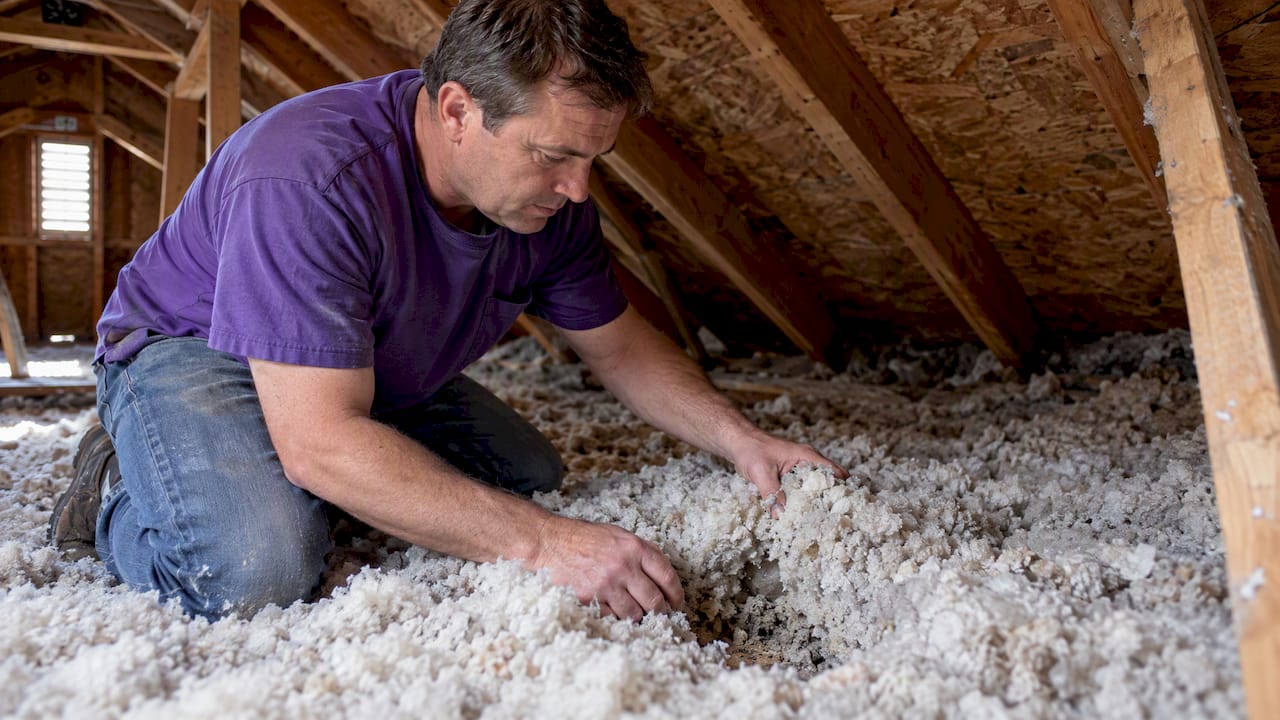
| Blown-in cellulose | R-3 to R-4 | Attic-style ceilings, retrofits | Moderate (rental equipment) |
| Rigid foam board | R-4 to R-6 | Shallow cavities, thermal breaks | Moderate |
| Spray foam | R-6 | Air sealing plus insulation in one step | Pro only |
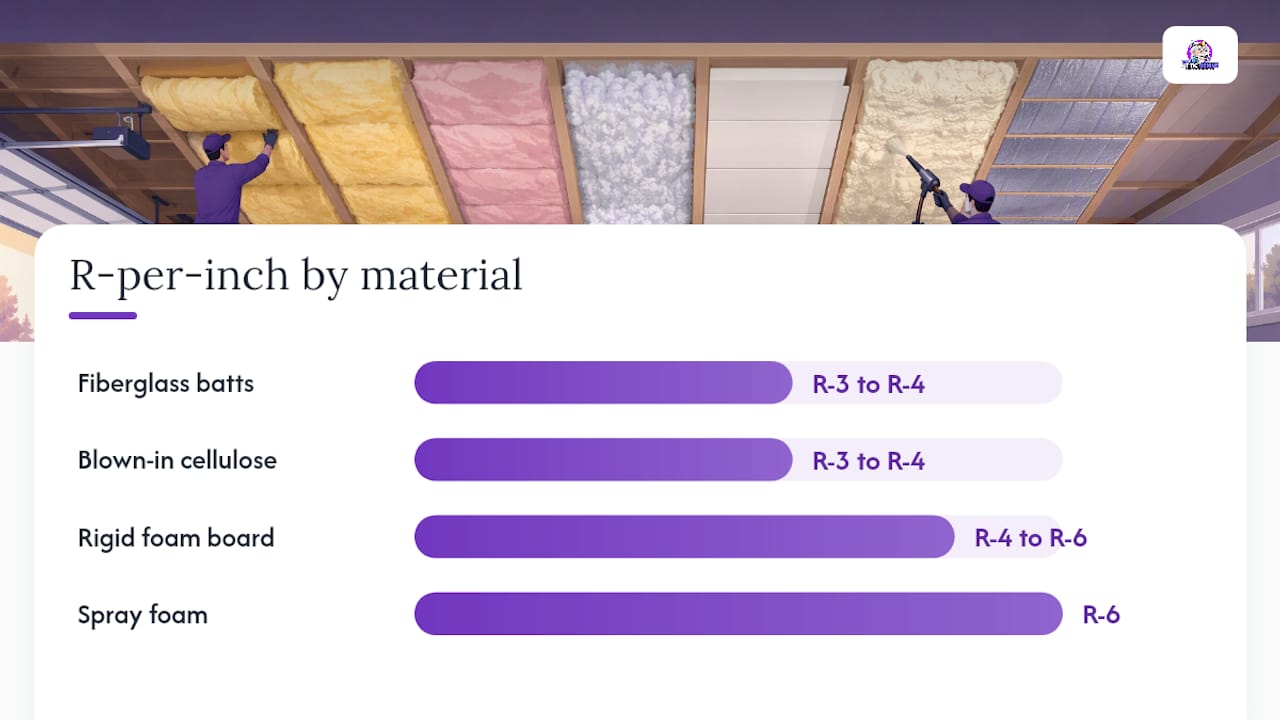
For most standard two-car garages, fiberglass batts hit the best balance of cost, availability, and simplicity, and spray foam only earns its higher price tag when air sealing and maximum R-per-inch are the priority. If your garage ceiling is a finished, drywalled surface, dense-pack cellulose blown through small access holes reaches strong R-values without tearing anything out.
Layering matters too; many homeowners combine insulation with a garage aesthetic upgrade when planning projects in the space. A thin layer of rigid foam against the joists, followed by fiberglass batts filling the cavity, breaks the thermal bridge created by wood framing while keeping material costs reasonable.
Pro Tip: If a finished room sits above your garage, ask about the assembly’s fire rating before choosing a material. Foam products vary widely in flame-spread performance, and some require a fire-rated drywall layer regardless of which insulation you pick.
- Fiberglass batts: cheapest, easiest, best for open joists.
- Blown-in cellulose: fast coverage from attic access points.
- Rigid foam: ideal for shallow cavities or thermal breaks.
- Spray foam: highest performance, but hire a professional.
How Do You Insulate Different Types of Garage Ceilings?
The right method depends entirely on what you’re working with. An open-joist ceiling with no floor above gives you the most flexibility; a finished, drywalled ceiling limits you to blown-in or injection methods; an attic-style ceiling above the garage behaves just like a standard attic floor.
- Measure the space. Note joist depth, spacing, and any existing insulation.
- Air-seal first. Seal band joists, wiring holes, and light fixture housings with caulk or foam sealant.
- Pick your R-target. Match it to your climate zone and whether living space sits above.
- Install the material. Batts between open joists, blown-in from attic access, or dense-pack injected through finished drywall.
- Finish the assembly. Add fire-rated drywall where code requires it, or leave joists exposed if unfinished is acceptable.
DIYers with open joist access can usually handle batts or a rented blower for cellulose over a weekend. Dense-pack injection into a finished ceiling, spray foam, or any project involving fire-rated separation is worth handing to a professional, since mistakes there are expensive to correct later.
Air Sealing and Fire Safety: What You Can’t Skip
Insulation without air sealing under-performs no matter how thick it is. Target the band joist, rim joist, plumbing and wiring penetrations, and recessed light housings first, since these gaps drive most of the heat loss Energy Saver identifies in garage ceiling assemblies.
- Seal penetrations with caulk, foam, or fire-rated sealant before adding insulation.
- Check vapor barrier placement carefully; the wrong location traps moisture inside the assembly.
- Verify local code if the garage sits below or beside living space. Buildingscience notes 5/8-inch Type X drywall is a common fire-separation requirement.
Learn more about how air barriers work before assuming any assembly is sealed correctly.
How Much Does Garage Ceiling Insulation Cost?
DIY fiberglass batt projects typically run cheapest, while spray foam and dense-pack retrofits cost more due to equipment and labor. Access is the biggest cost driver: an open-joist ceiling is quick work, but a finished ceiling requiring injection or fire-rated drywall adds both time and expense.
Most projects run from a half-day DIY job to several days for professional work involving spray foam or fire-rated assemblies. Before hiring anyone, ask:
- What’s the full scope, including air sealing and vapor barrier work?
- Is there a written warranty on materials and labor?
- Will the project need a permit for fire-rated assemblies?
- How will you check for existing moisture damage first?
Common Garage Ceiling Insulation Problems and Fixes
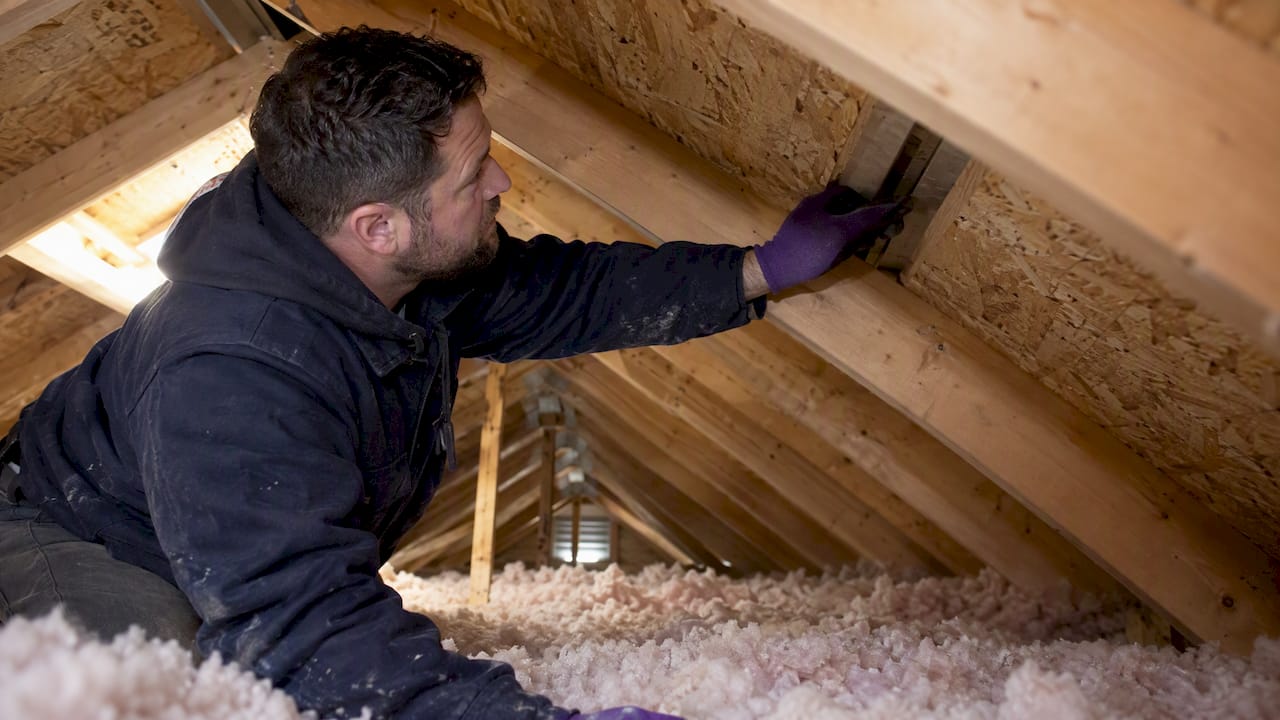
Settled or compressed batts lose R-value fast, and damp insulation is a red flag for a hidden air leak or vapor barrier placed in the wrong spot. Blocked soffit vents and pest droppings inside insulation are two more issues homeowners frequently discover only during a depth and condition check.
- Wet or matted insulation: locate and seal the leak, then replace the damaged section.
- Blocked vents: clear obstructions to maintain airflow and prevent trapped moisture.
- Pest signs: schedule cleanup before installing new material over contaminated areas.
- Recurring condensation: call a professional to diagnose vapor barrier or ventilation issues.
What Attic Genius Installers Notice That Homeowners Miss
The Attic Genius brings 25+ years of combined field experience and more than 400 five-star reviews to garage and attic insulation projects across Chicagoland, backing every job with upfront pricing, written warranties, and same-day inspections. Installers routinely catch air bypasses at band joists, compressed batts hiding behind stored boxes, and missing soffit baffles that homeowners never think to check.
Pro Tip: When requesting a quote, ask that air sealing, attic baffles, and fire-rated drywall (where required) be itemized separately, not bundled into one vague “insulation” line.
- Compressed or shifted batts near attic access hatches.
- Missing or blocked baffles at the soffit-to-attic transition.
- Recessed lighting fixtures leaking conditioned air.
Should You Insulate a Garage Ceiling Yourself or Hire a Pro?
Open-joist ceilings with simple batt or blown-in installs are reasonable DIY territory if you’re comfortable on a ladder and handy with a caulk gun. Spray foam, dense-pack injection into finished ceilings, and any fire-rated assembly work belong with a licensed contractor. Budget-conscious DIYers do fine with batts; homeowners converting space above the garage should hire out the fire-separation work.
Let The Attic Genius Handle the Garage Ceiling for You
If you’d rather skip the ladder, the blower rental, and the guesswork on fire-rating requirements, The Attic Genius handles garage insulation projects across Chicagoland and southern Wisconsin from inspection through installation, backed by written warranties on every job.

When you request a quote, ask us to itemize air sealing scope, your target R-value, and any fire-rated drywall your assembly needs, the same checklist covered above. We also handle the air sealing that has to happen before insulation goes in, so you’re not paying twice for a job done out of order. Same-day inspections are available if you want a real number instead of a guess. Start with a look at our garage insulation services or request a free inspection to get a firm quote on your specific ceiling type.
Frequently Asked Questions
Should I insulate my garage ceiling if it’s unheated?
Yes, especially if living space sits above it. An unheated garage still transfers heat and cold through the ceiling, and Energy Saver recommends treating that ceiling like a floor above unconditioned space.
Is garage door insulation worth it too?
Garage door insulation helps with temperature swings inside the garage itself, but ceiling insulation delivers a bigger return when your priority is protecting living space above or beside the garage.
What’s the best insulation for a detached garage?
Fiberglass batts or blown-in cellulose work well for a detached garage ceiling since fire-separation rules are less strict without attached living space, making cost and DIY ease bigger factors than in attached garages.
How much does garage ceiling insulation cost?
Cost varies by material and access, with DIY fiberglass batts on the low end and spray foam or fire-rated finished-ceiling retrofits on the high end. Get a written quote itemizing air sealing, material, and any required fire-rated drywall.
Can garage ceiling insulation reduce noise from the garage below?
Yes. Denser materials like blown-in cellulose or spray foam reduce sound transfer better than lightweight fiberglass batts, which matters most when a bedroom or office sits directly above the garage.