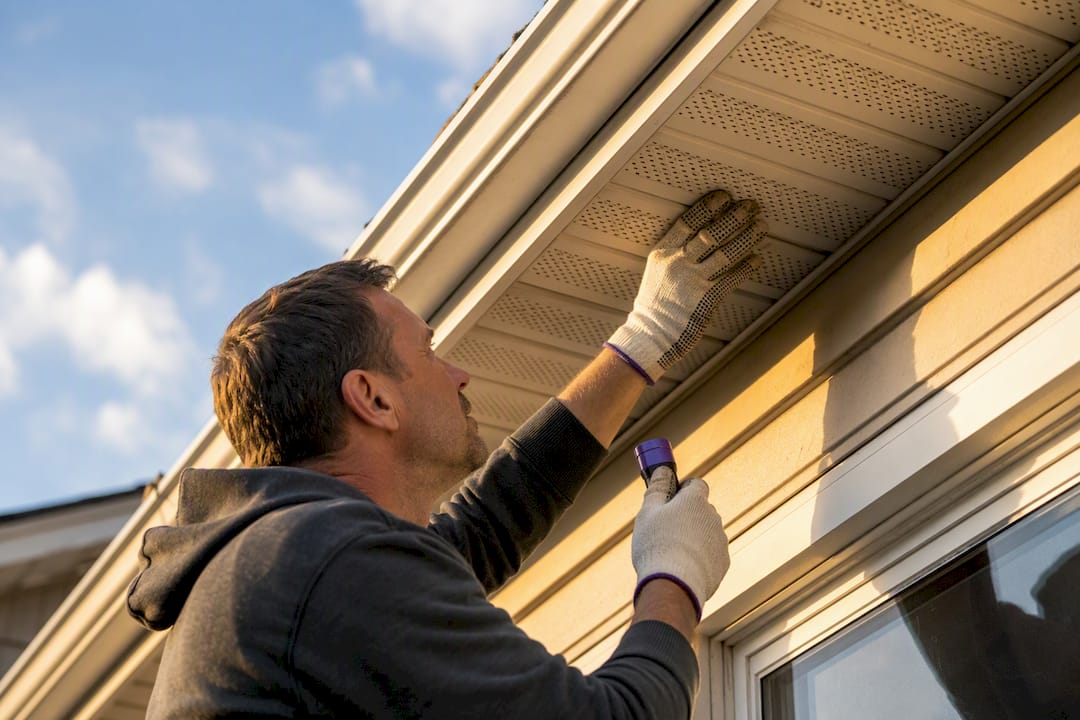
Blocked soffit vents, typically caused by insulation, debris, or pests, restrict crucial attic airflow, leading to moisture buildup, heat damage, and increased energy bills for homeowners. Overstuffed insulation is a common culprit, often spilling into the vent openings and necessitating the installation of baffles and air sealing to prevent future blockages. The Attic Genius recommends installing both a rigid baffle and a wind dam to maintain open airflow and prevent recurring issues from wind and insulation shifting.
Blocked soffit vents, usually from insulation, debris, or pests, cut off the airflow your attic needs and often lead to moisture buildup, heat damage, and higher energy bills. If you suspect a blockage, grab a flashlight and check the attic first: look at each rafter bay near the eaves for stuffed insulation or trapped debris. Clear what’s safe to reach, then plan on baffles and air sealing for a fix that lasts.
TL;DR:
- Overstuffed insulation often spills into soffit vents, requiring a baffle and air sealing to prevent future blockages.
- Wind-washing and insulation migration can push loose-fill insulation away from vents, visibly creating gaps or dips at the eaves.
- Pest activity includes nests or droppings, which need professional removal to avoid ongoing contamination and damage.
- Clearing minor debris or insulation from vents can be done safely by homeowners, but significant damage or pests demand expert intervention.
- Installing both a rigid baffle and a wind dam helps maintain open airflow and prevents recurring blockages caused by wind and insulation shifting.
Table of Contents
- How to check soffit vents in five minutes or less
- What typically blocks soffit vents and how to spot each cause
- Step-by-step methods for clearing blocked soffit vents
- Preventing soffit vents from getting blocked again
- When a blocked vent is a job for a professional
- How our field process handles blocked vents from start to finish
- What most homeowners get wrong about soffit vents
- Get your soffit vents inspected and fixed the right way
- Where to verify this information
- Sources
- FAQ
How to check soffit vents in five minutes or less
You can confirm a blockage without any special tools. Start in the attic, then verify from outside.
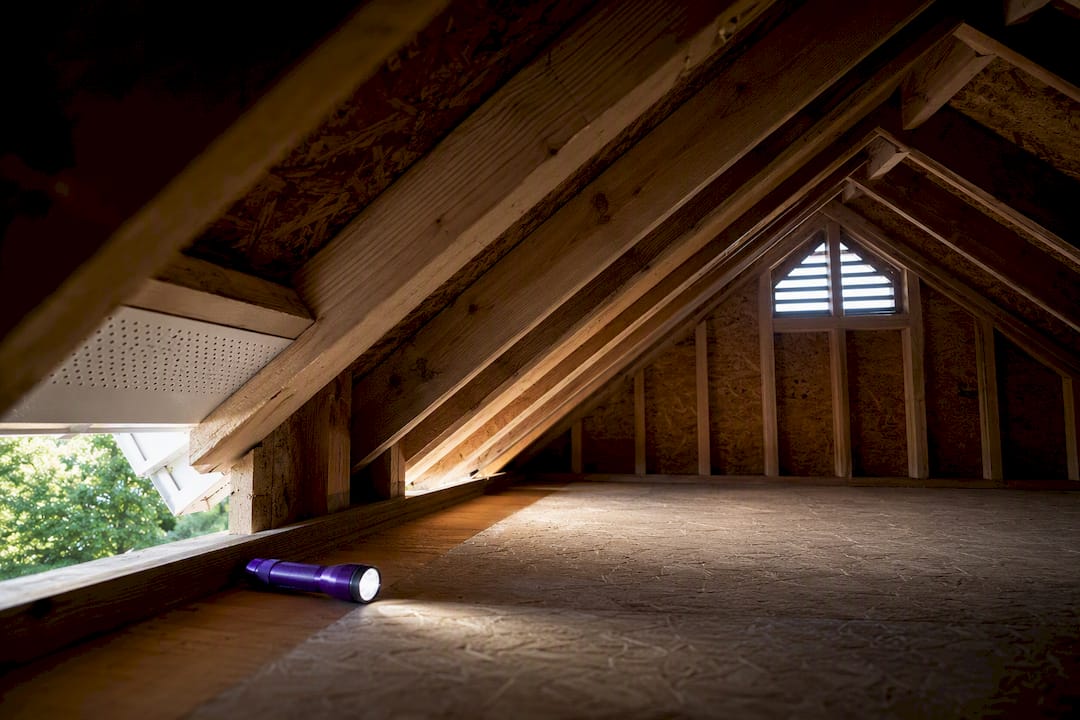
- Grab a flashlight and head to the attic, working along the eaves where the roof meets the exterior walls.
- Check each rafter bay for insulation pressed against the roof deck or spilling into the vent opening.
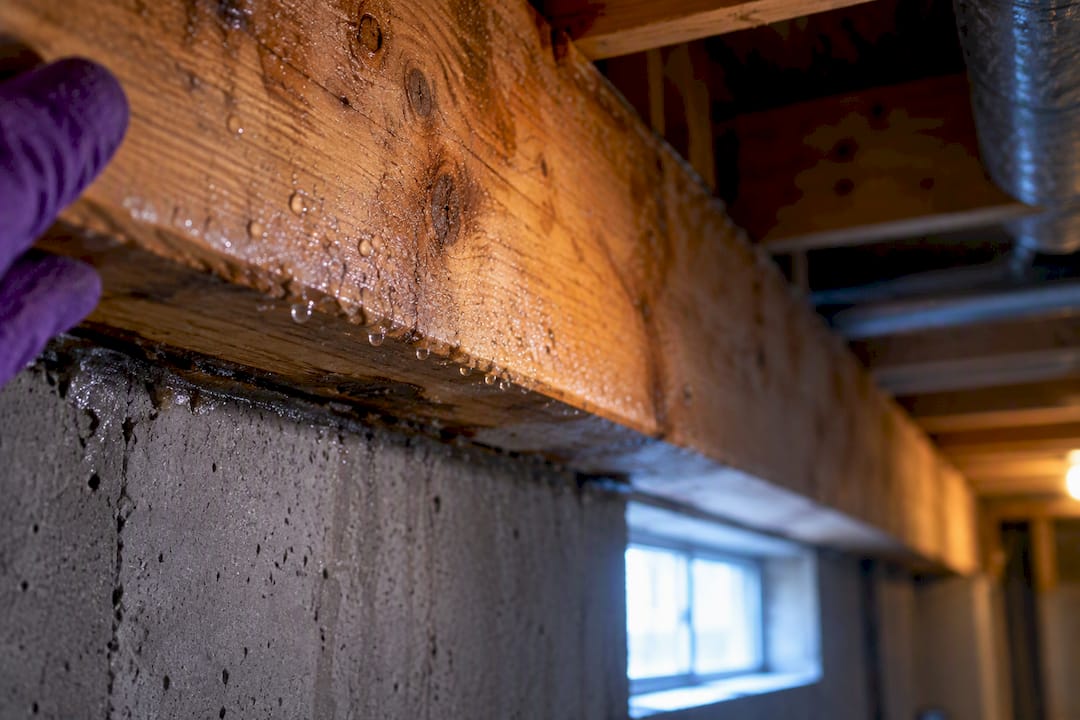
- Look for wet, matted, or discolored insulation, a sign moisture is already collecting.
- Hold your hand near the eave on a breezy day and feel for a faint draft, which tells you air is still moving.
- Step outside and scan the soffit panels for sagging, staining, gaps, or leaf debris packed into the vent slots.
- Look for small entry holes, chewed wood, or droppings that suggest pests have moved in.
Minor blockages, like a patch of loose leaves or a few inches of insulation, are usually safe to clear yourself. Rotted wood, heavy nesting material, or signs of a large infestation call for professional help. Wear a dust mask and gloves whenever you’re working near attic insulation.
Pro Tip: Check your soffit vents right after storm season and again in early fall, when rodents and birds are actively looking for winter shelter.
What typically blocks soffit vents and how to spot each cause
Most blockages trace back to one of a few repeat offenders, and each leaves its own clues.
- Overstuffed insulation: Blown-in or batt insulation installed without baffles often spills over the top plate and buries the vent opening completely.
- Wind-washing and insulation migration: Constant airflow at the eaves can push loose-fill insulation away from the vent over time, leaving thin or uneven coverage that you’ll notice as a dip or gap near the eave edge.
- Debris buildup: Leaves, pine needles, and windblown dust collect in continuous soffit vent slots, especially on homes near trees.
- Pest nests: Squirrels, birds, and wasps favor soffit vents for their sheltered entry points. A musty smell, scratching sounds, or visible nesting material are the giveaways, and removal timing matters since many species are protected during nesting season.
- Missing or crushed baffles: Sometimes the vent itself is clear, but a missing or bent baffle lets insulation collapse into the airway anyway, which looks like a blockage but is really a support problem.
Getting the cause right matters because clearing debris won’t fix a wind-washing problem, and vacuuming loose fill won’t solve a pest issue. You can read more about how eave vents control attic heat and moisture to see how each cause affects airflow differently.
Step-by-step methods for clearing blocked soffit vents
Once you know the cause, the fix depends on whether you’re working from inside the attic or from outside at the eaves.
Interior attic method:
- Put on a respirator, gloves, and eye protection before disturbing old insulation.
- Gently pull insulation back from the vent opening, reshaping it rather than compressing it elsewhere.
- Use a shop vacuum to remove loose debris, nesting material, or dust from the bay.
- Install or re-seat a rigid baffle (vent chute) in the rafter bay, leaving a minimum air gap of about two inches between the insulation and the roof deck.
- Check the surrounding wood and insulation for moisture stains or mold before closing the area back up.
Exterior method:
- Set up a stable ladder with a stabilizer bar against the fascia, never against the soffit panel itself.
- Remove or unscrew the soffit vent cover to access the opening directly.
- Clear out nests, leaves, or debris by hand or with a small brush.
- Replace any cracked vent mesh or damaged panel sections rather than patching them.
- Reattach the vent securely and confirm it sits flush against the soffit.
Useful tools include a flashlight, respirator, work gloves, a shop vacuum, rigid foam baffles, plastic vent chutes, replacement vent panels, pest-proof mesh covers, a pry bar, and a ladder stabilizer.
If a vent blocks again shortly after you clear it, look upstream. Loose insulation that keeps drifting back or continued pest activity means the underlying cause is still active, not the vent itself.
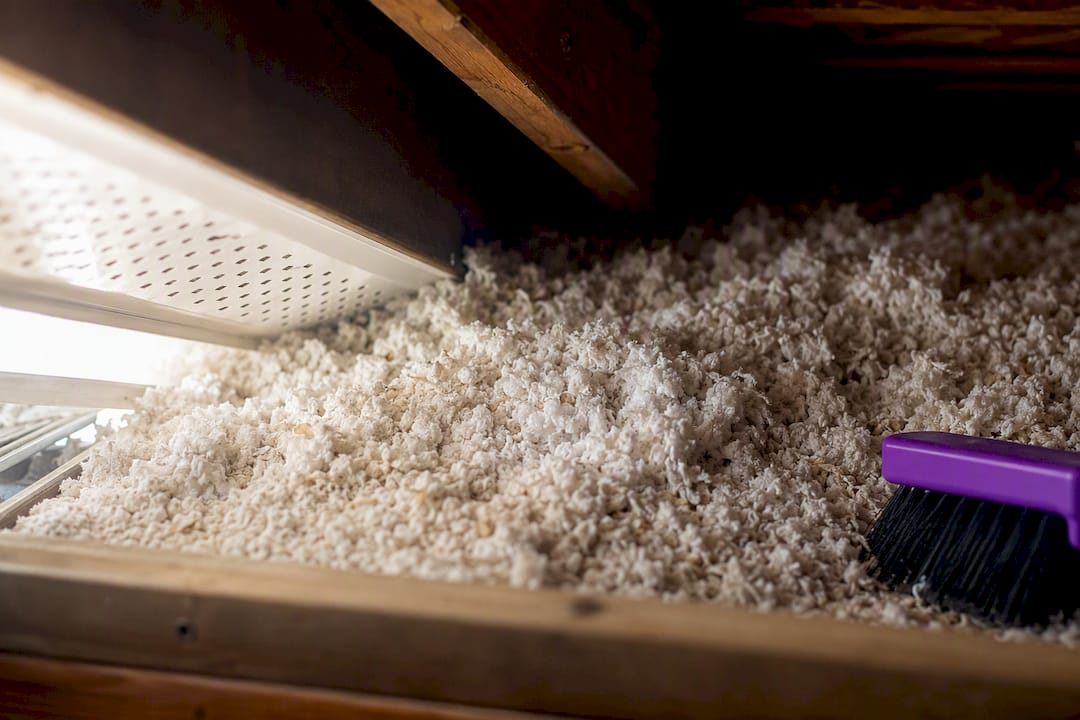
Blocked airflow at the soffit disrupts the moisture balance in your attic, and ENERGY STAR notes that restricted attic airflow can cause warped or rotted roof wood, mold growth, and insulation that no longer performs as it should, all of which push energy bills higher.
Preventing soffit vents from getting blocked again
The lasting fix isn’t repeated clearing. It’s making sure insulation, wind, and air leaks can’t reach the vent in the first place.
- Install a rigid baffle in every rafter bay that has a soffit vent, keeping a minimum air gap to the roof deck as recommended by building science guidance on wind-washing.
- Pair baffles with soffit dams (wind dams) at the top plate. The baffle keeps the air channel open above the insulation, while the dam blocks wind from pushing loose fill sideways into the eave.
- Air seal the attic floor before addressing ventilation, since sealed penetrations stop moisture from reaching the roof deck in the first place, a step covered in more detail in how insulation controls moisture in your home.
- When adding blown-in insulation, respect depth markers and stopping lines near the eaves, and secure baffles well enough that wind can’t shift them out of place.
- Check soffit vents each spring and fall, trim back nearby branches, and install pest-proof covers on vents in wooded or rural areas.
Pro Tip: A baffle installed without a wind dam still lets air scour insulation sideways along the top plate, so install both together rather than one or the other.
For more on how baffles fit into the bigger picture, see attic baffles and their role in ventilation.
When a blocked vent is a job for a professional
Some situations go beyond a flashlight and a shop vacuum.
- Visible mold on attic wood or insulation, which needs assessment before any insulation work continues.
- Rotted or warped soffit and fascia boards, a sign moisture has been accumulating for a while.
- Insulation contaminated across a wide area rather than in one isolated spot.
- A large or established pest infestation, which often involves droppings, urine, or nesting material that needs specialized cleanup.
A professional visit typically includes a full attic inspection, air sealing of floor penetrations, baffle and vent repair or replacement, insulation removal and replacement where needed, and pest waste cleanup or mold remediation as required. Some contractors verify the fix with a blower-door test or infrared scan to confirm air leaks are sealed. Costs vary widely based on attic size, insulation type, and how much contamination or damage is involved, so an in-person estimate is the only reliable number. You can read about common red-flag signs in attic moisture problems examples for homeowners.
How our field process handles blocked vents from start to finish
Our team brings extensive experience to attic ventilation problems, along with many positive reviews from homeowners. Every job follows the same sequence: inspect the attic thoroughly, air seal the floor penetrations first, then install or restore baffles at each soffit vent, and finally remediate any contaminated insulation or pest waste found along the way. All work comes with a warranty, and prompt inspections are available for homeowners who want an answer quickly rather than waiting weeks for a callback.
What most homeowners get wrong about soffit vents
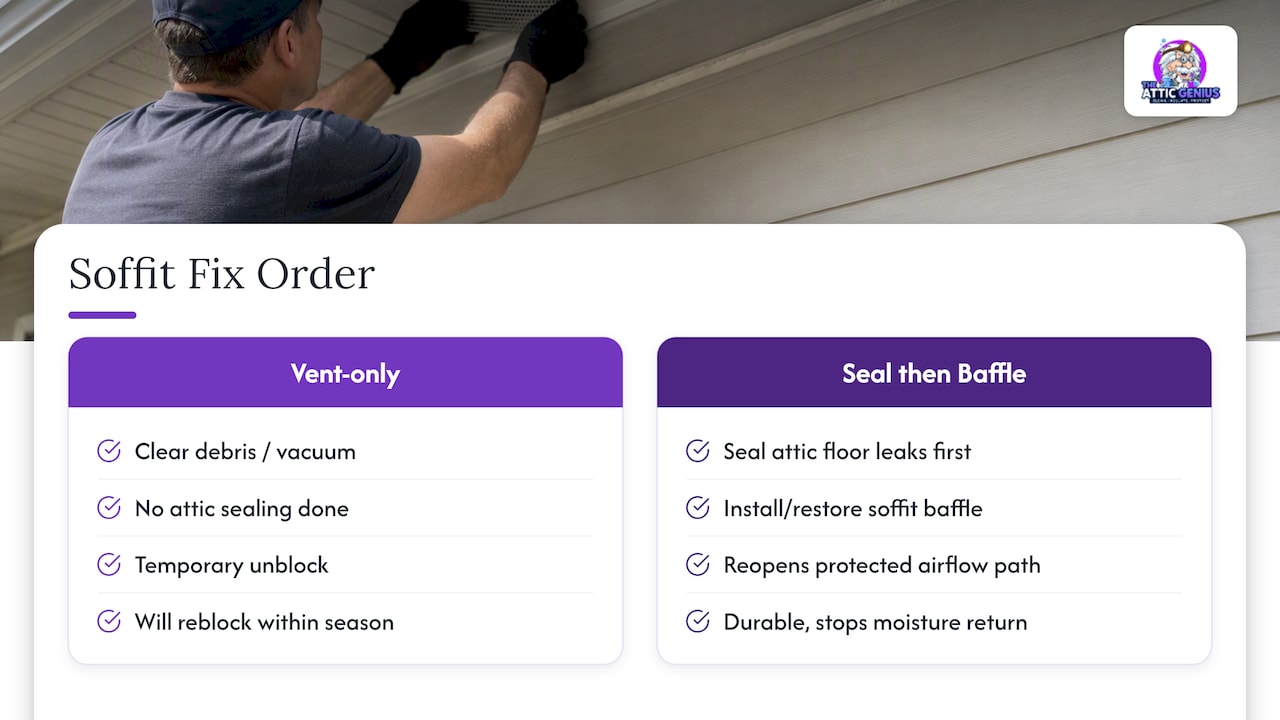
Most advice on this topic treats the vent opening as the whole problem, when it’s usually a symptom. Clearing debris or vacuuming out old insulation feels like a fix, but if the attic floor still leaks warm, moist air upward, that air will find its way to the eaves again and undo the work within a season. The order matters more than people think: sealing first, then restoring the vent path with a baffle, is what keeps a fix from unraveling.
The other overrated fix is the power attic fan. Bolting on mechanical ventilation instead of dealing with a blocked soffit vent can pull conditioned air out of the living space and draw in more moisture than it removes. A blocked vent isn’t a fan problem. It’s an airflow and air-sealing problem, and treating the actual cause is worth more than any added equipment.
If you take one thing from this, prioritize the 5 minute attic check over guesswork, then fix causes in order: seal, baffle, then remediate whatever contamination is left behind.
— Jim
Get your soffit vents inspected and fixed the right way
A blocked soffit vent rarely shows up alone. It usually comes with air leaks, thin insulation, or pest activity that a quick vent-clearing won’t solve. The Attic Genius handles the full sequence in one visit: a free inspection to find the actual cause, air sealing to stop moisture at the source, baffle installation or vent repair to restore airflow, and insulation removal or pest waste cleanup where contamination has already set in.

Homeowners get a written quote, a clear timeline, and a warranty on the work performed, not just a patched-up vent that fails again next season.
- Attic Ventilation Solutions: inspection, baffle installation, and vent repair
- Air Sealing: stops moisture before it reaches the eaves
- Moisture & Mold Remediation: for contamination already in place
Schedule your attic ventilation inspection and get a straight answer on what your soffit vents actually need.
Where to verify this information
For deeper reading, ENERGY STAR’s attic ventilation guide covers practical airflow basics, the DOE guide to durable attics addresses moisture standards, and PNNL’s wind-washing resource explains baffle and insulation science in more depth. For humidity issues in nearby spaces, this partner guide on garage condensation is a useful companion read.
Sources
- ENERGY STAR — About attic ventilation
- PNNL / BASC resource guide on wind-washing
- DOE Guide to durable attics
FAQ
How do you open up soffit vents that are blocked?
Clear insulation, debris, or nesting material from the vent opening by hand or with a shop vacuum, then install a rigid baffle to keep the airway open going forward. If the vent cover itself is damaged, remove it from outside and replace it with a new panel or mesh insert.
How much does it cost to replace a soffit vent?
Pricing depends on the extent of damage, the type of vent, and whether insulation or pest cleanup is also needed, so costs vary by project. The Attic Genius does not publish a flat rate online, but offers a free inspection that includes a written quote based on your attic’s specific condition.
What happens if soffit vents stay blocked?
Blocked vents disrupt attic airflow, which can lead to trapped moisture, warped or rotted roof wood, mold growth, and insulation that no longer performs well, according to ENERGY STAR. Over time, this can also raise energy bills as your attic loses its ability to regulate heat.
How do you keep blown-in insulation out of soffit vents?
Install rigid baffles in every rafter bay with a soffit vent before blowing in insulation, keeping a minimum 2 inch air gap to the roof deck as outlined in building science guidance. Pairing baffles with a wind dam at the top plate helps stop loose fill from migrating back into the eave over time.
Can I clear soffit vents myself or do I need a professional?
Minor blockages like leaves or light debris are usually safe to clear yourself with basic protective gear. Rotted wood, heavy mold, or a significant pest infestation calls for a professional assessment, since those issues often extend beyond the vent itself.