The federal attic insulation tax credit is gone for any project placed in service after December 31, 2025. If your insulation, air sealing, or related building envelope work went in during 2025, you can still claim it on your 2025 return, but there’s no federal credit for insulation installed starting in 2026.
That cutoff comes straight from the IRS Energy Efficient Home Improvement Credit guidance, backed by the statutory language in 26 USC §25C and confirmed in ENERGY STAR’s insulation credit summary. Here’s what matters right now:
- Placed in service after 12/31/2025? No federal credit, period.
- Placed in service in 2025? You may still qualify for 30% back, up to $1,200, using Form 5695.
- Deadline for action: Gather your 2025 invoices and contractor documentation now, before you file.
The Section 25C credit did not fade quietly. Legislation moved its expiration date up by several years, and a lot of homeowners who assumed they had until 2032 got caught off guard.
Key Takeaways
Federal attic insulation tax credits ended for property placed in service after December 31, 2025, making documentation and state rebate research the top priorities for homeowners in 2026.
| Point | Details |
|---|---|
| Confirm your placed-in-service date | If insulation work finished in 2025, you can still claim 30% up to $1,200 on Form 5695. |
| No federal credit for 2026 installs | Section 25C ended under Section 70505; only pre-2026 completions qualify. |
| Keep every document | Save dated invoices, manufacturer certifications, and proof of payment for any 2025 claim. |
| Check state and utility rebates first | Programs tied to HOMES and HEAR often remain active even after the federal credit expired. |
| Question outdated contractor math | Any 2026 quote assuming a 30% federal credit needs a corrected, real net-cost estimate. |
Table of Contents
- Attic Insulation Tax Credits 2026: What the Law Actually Says
- Who Can Still Claim the Credit for 2025 Attic Work
- What Qualified Under the Insulation Credit Before It Expired
- How to Claim Your 2025 Attic Insulation Credit
- Where to Look for Insulation Savings Now That the Federal Credit Is Gone
- Should You Still Insulate Your Attic Without the Federal Credit?
- Attic Insulation Tax Credits Are Gone, but Smart Planning Still Pays
- Editorial Take: What Homeowners Get Wrong About the 2026 Cutoff
- Frequently Asked Questions
- Sources
Attic Insulation Tax Credits 2026: What the Law Actually Says
Section 70505 of recent tax legislation accelerated the termination of the Energy Efficient Home Improvement Credit under Section 25C, along with the residential clean energy credit under Section 25D. Both credits originally ran through 2032 under the Inflation Reduction Act. That timeline got cut short. Now, any qualifying insulation, window, door, or air sealing improvement placed in service on or after January 1, 2026, gets zero federal credit.
Not every energy incentive vanished on the same schedule. A few narrower federal programs survive into 2026, and the distinction matters:
- Section 25C (insulation, air sealing, doors, windows): Ended for property placed in service after December 31, 2025.
- Section 25D (residential clean energy, like solar and battery storage): Also ended on the same date.
- Section 30C (certain alternative fuel vehicle refueling property): Remains available through mid-2026 in limited cases, per the Alternative Fuel Vehicle Refueling Property Credit overview.
The takeaway: don’t assume “energy tax credit” is one blanket category. Congress can end one program while leaving another alone, and 2026 is a textbook example of that. If a contractor tells you insulation “still qualifies for a federal credit,” ask them to point to the statute. They can’t, because it doesn’t.
Who Can Still Claim the Credit for 2025 Attic Work
“Placed in service” doesn’t mean the day you signed a contract or paid a deposit. It means the day the insulation was actually installed and ready to perform its job in your home. That distinction decides whether you’re eligible or shut out.
Three common scenarios trip people up:
- You signed a contract in 2025 but installation happened in January 2026. You’re out of luck. The credit follows the installation completion date, not the contract date.
- You paid a deposit in 2025 but the crew finished the job in 2025 too. You’re fine, since the placed-in-service date is what counts, and full payment isn’t a requirement for the credit year.
- Your project spanned two phases, insulation in 2025 and air sealing finished in early 2026. Only the 2025 portion qualifies. Ask your contractor for a clear cost breakdown by completion date.
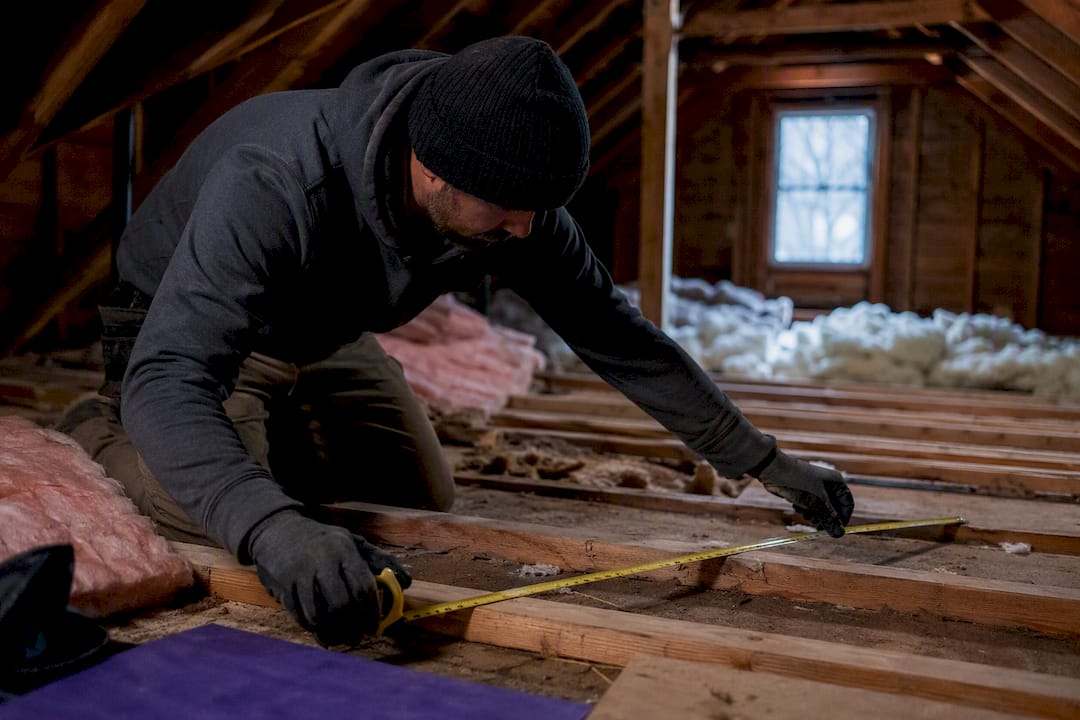
Before you file, pull together dated invoices, contractor completion statements, and any manufacturer certification sheets for the insulation products used. The IRS wants proof the work was finished, not just ordered, within the tax year you’re claiming.
Pro Tip: If your contractor hasn’t already broken out labor and materials by completion date on multi-phase jobs, call and ask for an itemized invoice now. Trying to reconstruct that after your accountant asks for it in March is a headache you can avoid.
What Qualified Under the Insulation Credit Before It Expired
For 2025 projects, the credit covered what the tax code calls “energy efficient building envelope components.” That’s a broad category that included several common insulation types:
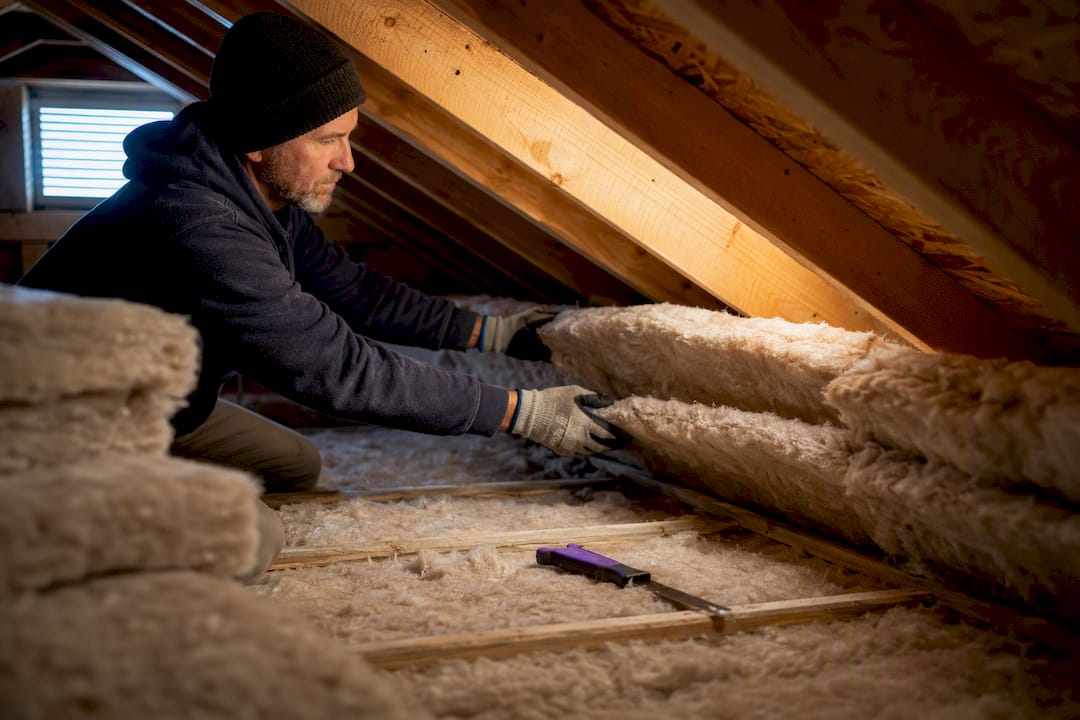
- Fiberglass batts and rolls
- Blown-in cellulose or fiberglass
- Rigid foam board
- Spray foam insulation
- Pour-in-place insulation
Air sealing materials and systems, think weatherstripping, caulk, and sealant used to close attic bypasses, also counted when installed as part of a qualifying project.
Eligibility wasn’t just about the material. It also depended on meeting International Energy Conservation Code (IECC) prescriptive criteria. The rule that tripped people up: the applicable IECC edition was the one in effect two years before the placed-in-service year. For a 2025 install, that meant the 2021 IECC standard governed, not whatever the newest code happened to be.
On the math: the credit paid 30% of qualifying costs, capped at $1,200 per year for envelope items like insulation, doors, and windows combined. Heat pumps and certain HVAC equipment fell under a separate annual cap, meaning a homeowner who did both projects in the same year could claim separate credits totaling more than the envelope items credit.
How to Claim Your 2025 Attic Insulation Credit
If your insulation work was placed in service in 2025, here’s the process:
- File IRS Form 5695 with your 2025 federal return. This is the form for residential energy credits, and it’s where you’ll calculate your 30% credit against the annual caps.
- Attach or retain supporting documentation, including a dated contractor invoice showing project completion, proof of payment, and manufacturer certification statements for the specific insulation products installed.
- Double check the placed-in-service date matches what you’re claiming. A mismatch here is one of the more common reasons a return gets flagged for review.
If you completed qualifying work in 2025 but already filed your return without claiming the credit, an amended return using Form 1040-X may recover it. That process is worth a phone call to a tax professional, especially for larger claims where the paperwork trail needs to be airtight before you file.
Pro Tip: Keep a dedicated folder, physical or digital, with every invoice, receipt, and product spec sheet from your 2025 insulation project. If the IRS ever asks questions, having everything in one place saves you from a scramble.
Where to Look for Insulation Savings Now That the Federal Credit Is Gone
Federal tax credits and state or utility rebates are two entirely different systems, and losing one doesn’t mean losing the other. Many state energy offices and local utilities run rebate programs that operate independently of what Congress does with Section 25C, and a good number of them remain active in 2026.
Specialists point out that these state and utility rebate programs are sometimes more generous than the federal credit ever was, particularly for low and moderate income households, according to ENERGY STAR’s state and tribal rebate program directory. That directory is a solid starting point for finding programs tied to the Home Efficiency Rebates (HOMES) and Home Electrification and Appliance Rebates (HEAR) initiatives administered through the Department of Energy.
A few practical moves to make this work in your favor:
- Search your state energy office’s website and your utility’s rebate portal before requesting quotes.
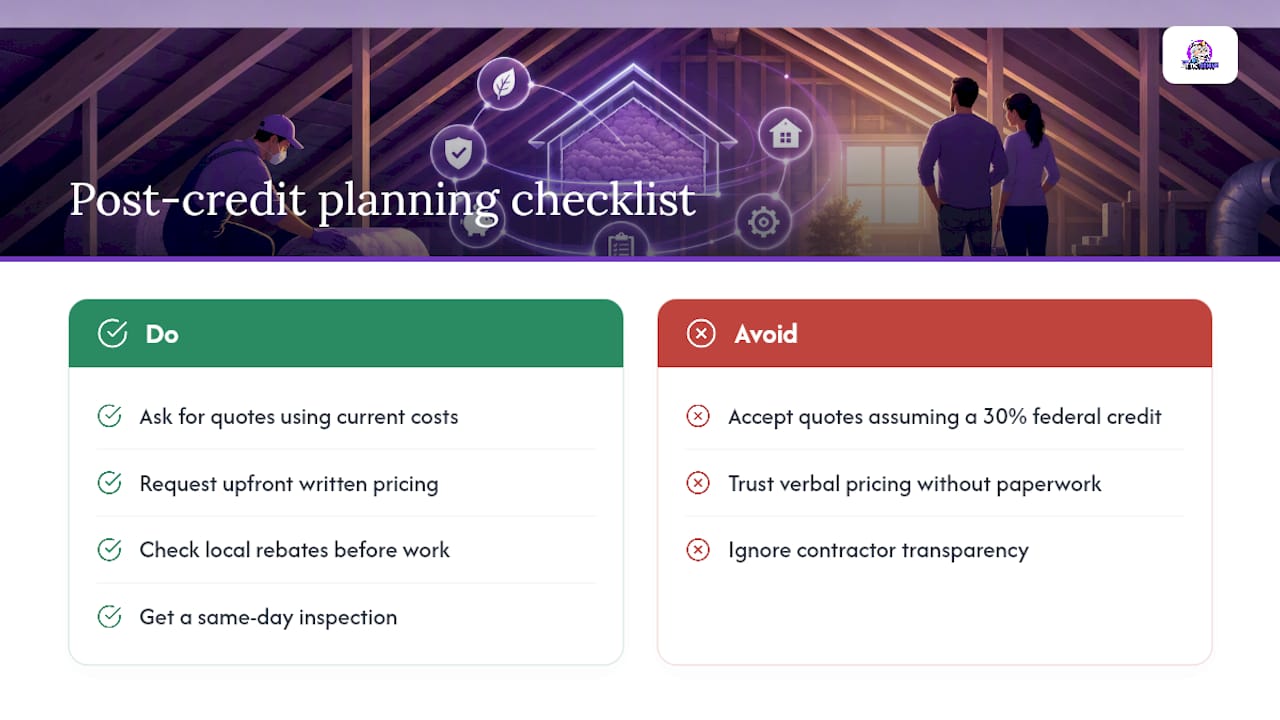
- Ask contractors to itemize any rebate assumptions directly in their written estimate, not just verbally.
- Apply for utility pre-approval before work begins, since some programs require sign-off ahead of installation, not after.
- Ask about financing offers, but insist on seeing the real net cost after rebates, not a number that assumes an expired federal credit.
Should You Still Insulate Your Attic Without the Federal Credit?
Yes, and the math still works in most cases, even without the $1,200 federal credit that used to sweeten the deal.
Here’s a simple before-and-after: an attic insulation and air sealing project used to net a lower out-of-pocket cost after applying the federal credit. In 2026, that same project costs the full price unless a state or utility rebate fills part of the gap. The energy savings on your utility bill don’t change. Only the upfront subsidy disappeared.
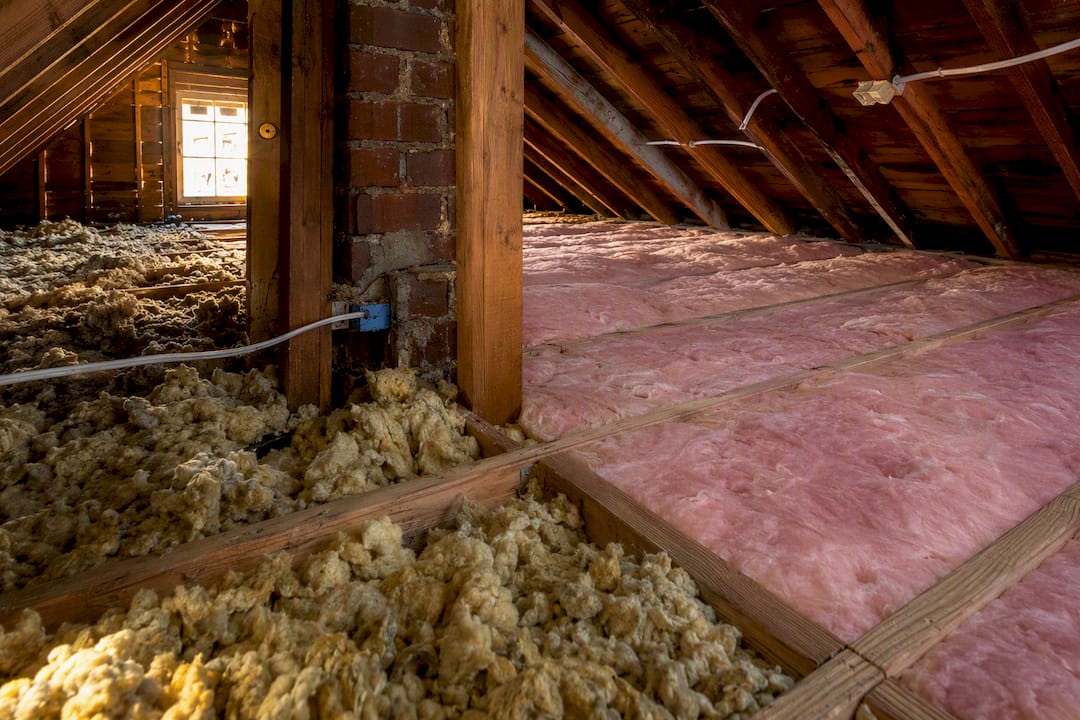
Prioritize air sealing before adding insulation. Sealing attic bypasses, gaps around chimneys, wiring penetrations, and recessed lighting, tends to deliver the highest first-year energy savings per dollar spent, and it makes any insulation added afterward perform closer to its rated value.
When you’re comparing contractor quotes in 2026, check for one specific red flag: any pricing sheet or payback estimate that still bakes in a “30% federal tax credit” line item. That assumption is outdated, and a quote built on it will make your real costs look better than they are.
Attic Insulation Tax Credits Are Gone, but Smart Planning Still Pays
The federal insulation tax credit expiring doesn’t erase the value of a well-insulated attic. It just means the return on investment now rests entirely on energy savings and whatever local rebates you can stack, not a federal subsidy.
Most contractors quoting attic work in 2026 should be transparent about that shift. If a company is still leaning on a 30% federal discount to make their numbers work, that’s a signal to ask more questions, not fewer. At The Attic Genius, we build every quote around real, current costs and help homeowners across Chicagoland and the Northwest Suburbs identify what local rebates might apply before work ever begins. If you’re weighing whether 2026 is the right year for an attic upgrade, our guide on why attic floors need insulation walks through the energy savings math without assuming a credit that no longer exists. Same-day inspections and upfront written pricing mean you know exactly where you stand before committing to anything.
Editorial Take: What Homeowners Get Wrong About the 2026 Cutoff
The biggest mistake I see in how this topic gets covered is treating the credit’s expiration like a footnote. It’s not. Homeowners who assumed they had until 2032, because that’s what the original Inflation Reduction Act promised, got the rug pulled out with almost no warning. That’s the real story here, not just “the credit ended.”
The second thing conventional advice gets wrong is treating state and utility rebates as a consolation prize. They’re not. In plenty of cases, local programs were always the better deal, and the federal credit’s disappearance just forces homeowners to notice what was sitting there the whole time.
What you should prioritize first: verify your placed-in-service date if you did any work in 2025, and don’t wait until March to do it. Second, call your utility before you call a contractor. Rebate pre-approval windows and program funding caps both matter, and they run on a different clock than the tax code.
Frequently Asked Questions
Is there a federal attic insulation tax credit for 2026?
No. The Energy Efficient Home Improvement Credit under Section 25C does not apply to insulation placed in service on or after January 1, 2026, per IRS guidance.
Can I still claim a credit for insulation I installed in 2025?
Yes, if the work was completed and placed in service by December 31, 2025, you can claim 30% of qualifying costs, up to $1,200, on Form 5695 with your 2025 return.
What if I paid a deposit in 2025 but installation finished in 2026?
The claim follows the placed-in-service date, meaning completion, not payment. That project would not qualify for the federal credit.
Are there any state incentives to replace the expired federal credit?
Many state energy offices and utilities run their own rebate programs, some tied to the HOMES and HEAR initiatives, that operate independently of federal tax law.
What insulation types qualified before the credit ended?
Fiberglass batts, blown-in cellulose, rigid foam board, spray foam, and pour-in-place insulation all qualified when installed in 2025, along with related air sealing materials.
This article is general information, not a substitute for advice from a qualified financial advisor. Consult a qualified financial professional about your own circumstances before acting on anything here.
Sources
- IRS Energy Efficient Home Improvement Credit
- Insulation Tax Credit (ENERGY STAR)
- 26 USC 25C: Energy efficient home improvement credit