ARC Insulation’s customer reviews trend positive overall, with most homeowners praising workmanship quality and crew professionalism, while a smaller but consistent thread of complaints points to scheduling delays and vague warranty follow-up. Before you sign anything, verify the reviews yourself and ask for a written warranty plus references from recent Chicagoland jobs.
What reviewers most often say:
- Praise: Clean work, friendly crews, noticeable energy savings after installation, and competitive pricing on blown-in jobs
- Complaints: Scheduling slippage after deposit, change orders that weren’t flagged upfront, and difficulty getting warranty service in writing
- Immediate next step: Pull their Google, Yelp, and BBB profiles, look for photo documentation, and ask for two or three local references before committing
Table of Contents
- What do ARC Insulation reviews actually say?
- How can you verify ARC Insulation reviews?
- What does attic insulation cost, and when does it pay back?
- Which insulation material should you choose for a Chicagoland attic?
- What red flags should you watch for in reviews or contractor behavior?
- What should you ask at the estimate?
- If ARC Insulation’s reviews leave you unsure, consider The Attic Genius
- Key Takeaways
- What the review patterns really tell you
- Get an on-site inspection from The Attic Genius
- Sources and further reading
What do ARC Insulation reviews actually say?
Across verified platforms, the recurring praise centers on the installation crew itself. Reviewers frequently mention that the team showed up prepared, worked cleanly, and left the attic in better shape than they found it. Energy savings comments are common, though most are anecdotal rather than measured.
The complaint pattern is narrower but worth noting. A subset of reviewers describes a gap between the sales process and what happens after the deposit clears: scheduling windows that stretch without notice, and warranty claims that get routed through voicemail without resolution. These aren’t universal, but they appear often enough to be a pattern rather than outliers.
That kind of feedback is the most actionable signal for a homeowner. It tells you the workmanship may be solid, but the post-job support process needs scrutiny. Ask for the warranty document before you schedule, not after.
What reviewers say you should verify before hiring:
- Before-and-after photos from a job similar to yours (attic size, house age, material used)
- A written estimate that breaks out materials, labor, and any conditions that could trigger extra charges
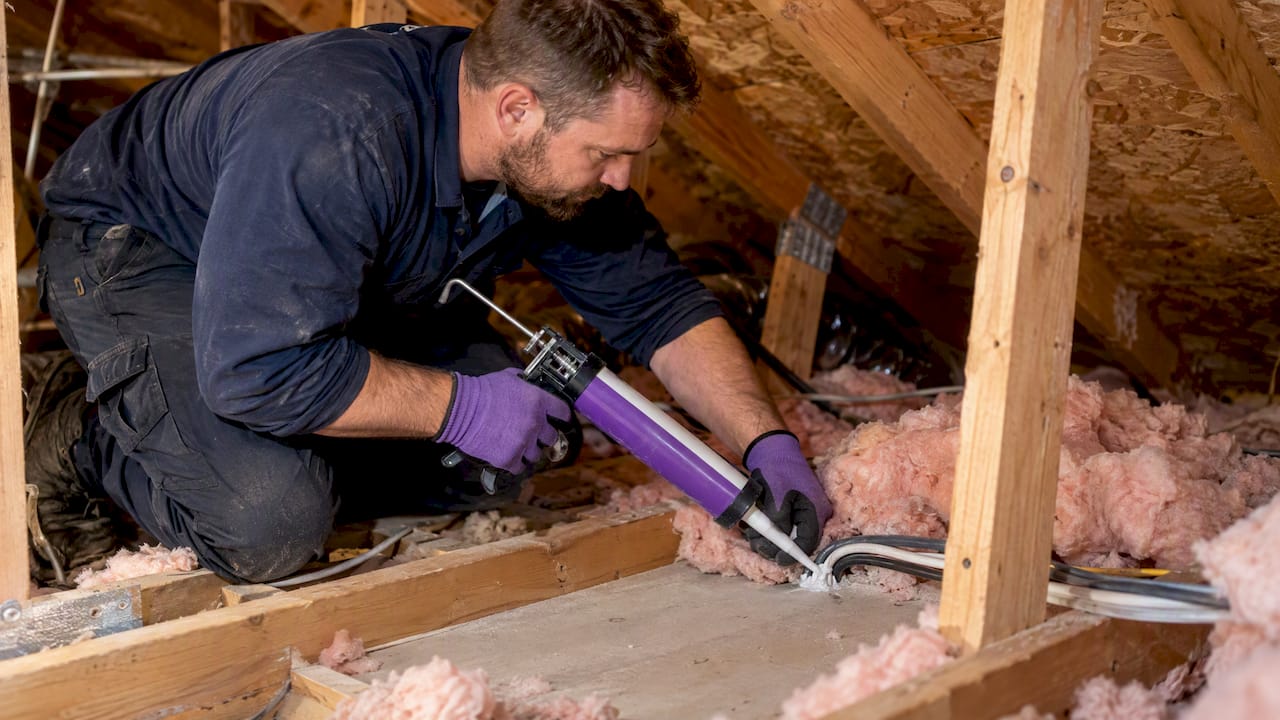
- Proof of air sealing scope, not just insulation depth
How can you verify ARC Insulation reviews?
Use this five-step checklist before you commit.
- Check Google, Yelp, and BBB. Look at the total review count, the average rating, and the date distribution. A company with 200 reviews spread over five years reads differently than one with 50 reviews all posted in the same month.
- Ask for recent local references. Request two or three homeowners from Chicagoland jobs completed in the past 12 months. Older references or out-of-area jobs don’t tell you much about current crew quality.
- Request documented performance proof. Thermal camera images or a blower-door test result before and after the job are the gold standard. Not every job will have them, but a contractor who offers them is signaling confidence in the work. A professional attic assessment typically includes this kind of diagnostic.
- Confirm written estimate and warranty terms. The estimate should list materials by brand and R-value target, labor scope, and any conditions that could change the price. The warranty should name who backs it (manufacturer, contractor, or both), what it covers, and how to file a claim.
- Call at least one reference. Email is easy to ignore. A five-minute phone call tells you whether the reviewer is real and whether the job held up.
Pro Tip: Fake or incentivized reviews tend to share a few tells: generic language (“great service, very professional”), no mention of the specific job type or location, and tight date clusters. If you see ten five-star reviews posted within two weeks, that’s worth a second look.
Sample questions to ask a reference:
- Did the crew complete the job on the day they promised?
- Did you receive a written warranty, and have you needed to use it?
- Did the final price match the written estimate?
What does attic insulation cost, and when does it pay back?
For a roughly 2,000 sq ft attic in Chicagoland, installed costs vary by material. Blown-in cellulose is the most common choice for vented attic floors and generally costs less. Spray foam costs significantly more per square foot, with closed-cell foam delivering high R-values per inch but costing considerably more than cellulose on an installed basis.
| Material | Typical installed cost (2,000 sq ft attic) | Estimated simple payback |
|---|---|---|
| Blown-in cellulose | — | 3–6 years |
| Fiberglass batts/blown-in | — | 4–7 years |
| Open-cell spray foam | — | 6–10 years |
| Closed-cell spray foam | — | 8–14 years |
| Hybrid (foam + cellulose) | — | 4–8 years |
Ranges are market estimates for the Chicagoland area. Get at least two written quotes before using these as benchmarks.
ENERGY STAR and the DOE report that combining air sealing with insulation typically yields noticeable savings on heating and cooling costs. For a home spending $2,400 a year on energy, savings can be substantial enough to put a cellulose job on a payback timeline within several years. Building America recommends simple payback as a homeowner-friendly metric for evaluating these projects, with many well-planned attic retrofits recouping costs within a reasonable timeframe.
Callout: 9 out of 10 U.S. homes are under-insulated. If your attic hasn’t been assessed in the last decade, there’s a good chance you’re losing money every month.
Which insulation material should you choose for a Chicagoland attic?
The right material depends on your attic’s assembly, not the contractor’s supplier relationship. Here’s how the main options stack up.
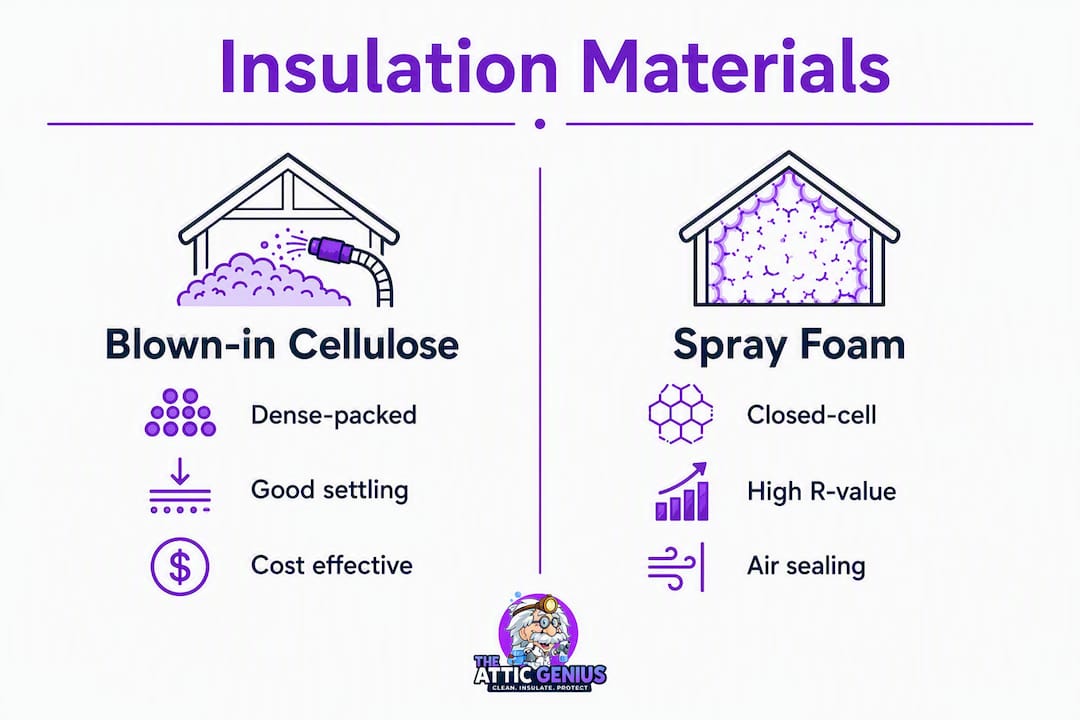
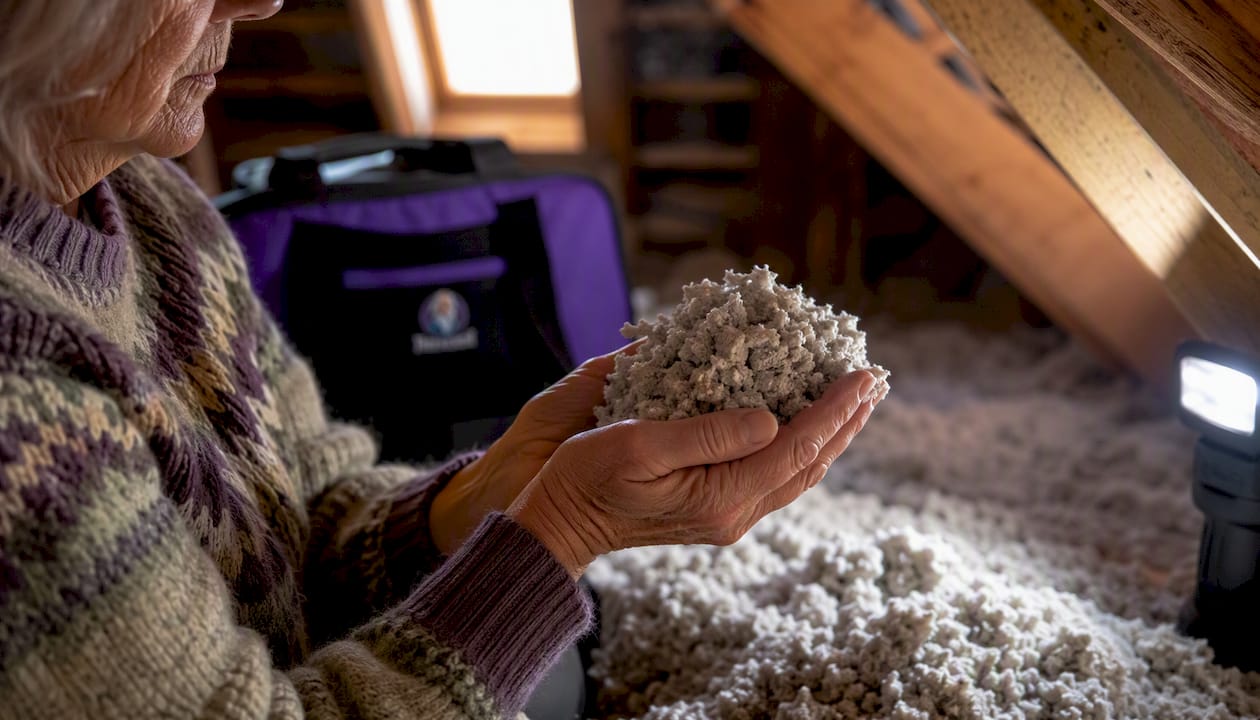
Blown-in cellulose is the workhorse for conventional vented attic floors. It’s dense-packed, handles settling well, and costs less than foam. Reviewers who got cellulose jobs tend to praise the value. The tradeoff: it doesn’t air-seal on its own, so it must be paired with foam or caulk at penetrations.
Closed-cell spray foam wins in constrained spaces: rim joists, knee walls, and unvented assemblies where you need both R-value and an air barrier in one pass. The cost premium is real, but so is the performance. Reviewers who complain about spray foam jobs usually flag one of two things: price surprises or a contractor who applied it over a roof deck without first checking for leaks. Spray foam can seal against a deck and mask a slow leak that cellulose would have revealed through staining.
Fiberglass batts are familiar and widely available, but they’re the most installation-sensitive of the three. Gaps, compression, and missing air sealing undercut their rated R-value significantly.
The hybrid approach targets the best of both: closed-cell foam at penetrations, rim joists, and critical air-sealing points, then blown-in cellulose across the attic floor to hit the target R-value. This is the approach most building scientists favor for retrofit work, and it’s what experienced contractors recommend for most Chicagoland homes.
| Material | R-value per inch | Air sealing? | Relative cost | Best use case |
|---|---|---|---|---|
| Blown-in cellulose | — | No | Low | Vented attic floors |
| Fiberglass (blown) | — | No | Low–medium | Vented attic floors |
| Open-cell spray foam | — | Yes | Medium–high | Unvented assemblies |
| Closed-cell spray foam | — | Yes | High | Rim joists, tight spaces |
| Hybrid | Varies | Partial–full | Medium | Most retrofit attics |
Pro Tip: Ask your installer to explain why the material they’re recommending matches your specific attic assembly. If they can’t answer that in plain language, that’s a red flag.
Understanding attic insulation types in more detail can help you evaluate whether a contractor’s recommendation makes sense for your home.
What red flags should you watch for in reviews or contractor behavior?
Some warning signs are easy to miss until after the contract is signed.
- Repeated complaints about missed schedules with no documented follow-up or explanation
- Warranty language that says “we’ll make it right” without specifying what that means, how long it lasts, or who to contact
- No before/after photos and no willingness to provide references from recent local jobs
- A large upfront payment demand (more than 30%–40% of the total) with no itemized materials and labor breakdown
- Clusters of one-line five-star reviews with identical phrasing and no job-specific detail
- No mention of air sealing in the scope, which DOE guidance flags as a prerequisite for effective insulation work
- Refusal to provide a written warranty before the job starts
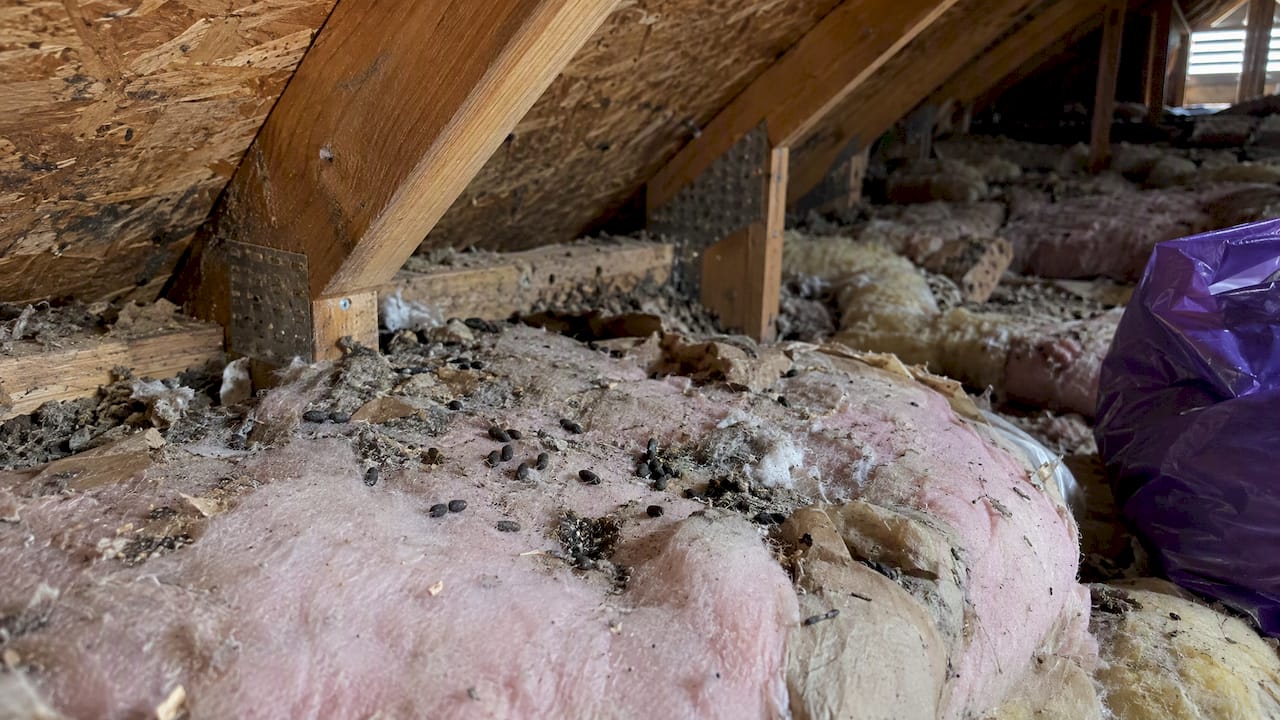
If you’re also dealing with pest damage or mold in the attic, those need to be addressed before new insulation goes in. Covering contaminated material is a shortcut that creates bigger problems later.
What should you ask at the estimate?
Walk into every estimate with this checklist. It levels the playing field between contractors and gives you a consistent basis for comparison.
- What is the target R-value, and which DOE climate zone recommendation are you using?
- What air sealing work is included, and where specifically will you seal?
- What material will you use, and what brand? Why does it fit this attic?
- Will you remove existing insulation, and how will you dispose of it?
- What is the ventilation strategy, and will you inspect or adjust baffles?
- What is the timeline from deposit to completion?
- What does the written warranty cover, and who backs it?
- How are change orders handled, and what triggers them?
Script for the tough ask: “Can you give me a written estimate that lists materials by type and brand, labor scope, target R-value, and any conditions that could change the final price?”
What to request as proof:
- References from two or three Chicagoland jobs completed in the past year
- Before-and-after photos from a comparable attic
- Any manufacturer or installer certifications
- Inspection report or thermal images if available
Comparing two estimates: Match scope first, price second. An estimate that includes air sealing, removal, and a written warranty is not the same as one that doesn’t, even if the number looks similar. Use the attic insulation prep guide to understand what a complete scope should include before you compare quotes.
If ARC Insulation’s reviews leave you unsure, consider The Attic Genius
If you’ve read through ARC Insulation’s reviews and still have questions, The Attic Genius is a Chicagoland-based alternative worth a call. They cover the Northwest Suburbs and the broader Chicagoland area, including parts of southern Wisconsin.
Trust signals The Attic Genius brings to the table:
- 25+ years of combined team experience
- 400+ five-star reviews across verified platforms
- Same-day inspections available, with thermal imaging and blower-door diagnostics
- Written warranties and upfront pricing on every job
- Full-service scope: attic insulation, air sealing, ventilation, mold remediation, pest waste cleanup, garage insulation, and basement/crawl space work
That last point matters if your attic has more going on than just thin insulation. A contractor who only installs insulation will hand you a referral for the mold or pest issue. The Attic Genius handles it in one project.
Suggested next step: Request a same-day inspection and ask for a written estimate that lists scope, R-value target, air sealing plan, and warranty terms. That’s the same checklist you’d use for any contractor, and The Attic Genius is set up to deliver it.
Key Takeaways
ARC Insulation’s reviews show solid workmanship but inconsistent post-job support, so verify before you sign and always get the warranty in writing.
| Point | Details |
|---|---|
| Review verdict | Mostly positive on workmanship; recurring complaints about scheduling and warranty follow-up. |
| Verify before signing | Check Google, BBB, and Yelp; call references; request before/after photos and written warranty terms. |
| Air sealing first | DOE and ENERGY STAR recommend air sealing before new insulation; combined savings typically reach 10%–20% on heating and cooling costs. |
| Cost context | A 2,000 sq ft attic runs roughly between low to high cost depending on material; simple payback for most jobs is typically within a few years. |
| The Attic Genius | Offers same-day inspections, written warranties, and 400+ five-star reviews across Chicagoland and the Northwest Suburbs. |
What the review patterns really tell you
The gap between a contractor’s installation quality and their post-job support is one of the most consistent patterns in home services reviews, and ARC Insulation’s feedback fits it. Crews who do good physical work often come from a different part of the organization than the people handling warranty calls. That’s not an excuse; it’s a structural problem worth asking about directly before you hire.
The other thing that gets underweighted in reviews: air sealing. A homeowner who gets a beautiful blown-in cellulose job but no air sealing will see modest savings and wonder why their energy bills didn’t drop more. The insulation gets blamed, but the real gap was never addressed. A Chicagoland home with a 1970s or 1980s attic typically has dozens of penetrations, bypasses, and gaps that move more heat than the insulation level itself. Any installer who doesn’t mention air sealing in the first five minutes of an estimate is telling you something about their process.
The best attic jobs I’ve seen in this region combine targeted foam at the penetrations with blown-in cellulose to hit R-49 or higher on the floor. The material cost difference between that and full-coverage spray foam is substantial, and the performance difference is minimal for a vented attic. Homeowners who understand that going in are much harder to oversell.
*— Jim
Get an on-site inspection from The Attic Genius
If you want a second opinion or a fresh set of eyes on your attic before committing to any contractor, The Attic Genius offers same-day inspections across Chicagoland and the Northwest Suburbs. You’ll get a written estimate with a clear scope, R-value target, air sealing plan, and warranty terms spelled out before any work begins.
Before you call, check the signs your attic needs an upgrade and review the air sealing services page so you know what questions to bring. Bring the checklist from this article to the estimate. It takes five minutes and it’s the fastest way to tell whether a contractor knows what they’re doing.
Sources and further reading
- ENERGY STAR: Why seal and insulate — DOE/EPA data on energy savings from combined air sealing and insulation (10%–20% on heating and cooling costs)
- Building America Best Practices: Energy Renovations — Insulation — Guidance on inspection, R-value checks, air sealing sequencing, and simple payback as a homeowner metric
- Adding insulation to an existing home | Energy.gov — Practical steps for checking current insulation levels and recommended R-values by climate zone
- Closed-cell foam vs. cellulose: when each wins — Material comparison with R-values and cost differentials for spray foam vs. cellulose
- Spray foam vs. blown-in cellulose: an 18-year contractor verdict — Long-term practitioner perspective on material selection and the hybrid approach
- ENERGY STAR Attic Insulation Project — Step-by-step guidance on attic insulation, material selection, and when to hire a professional
- The Attic Genius: attic insulation services — Local service page covering insulation options, warranties, and inspection services for Chicagoland homeowners
- The Attic Genius: attic insulation in Barrington — Local coverage and proof points for Northwest Suburbs homeowners
- Why attic floors need insulation — Performance reasons for insulating attic floors, with links to related services
- HVAC efficiency tips for homeowners — How insulation and air sealing interact with HVAC sizing and system efficiency