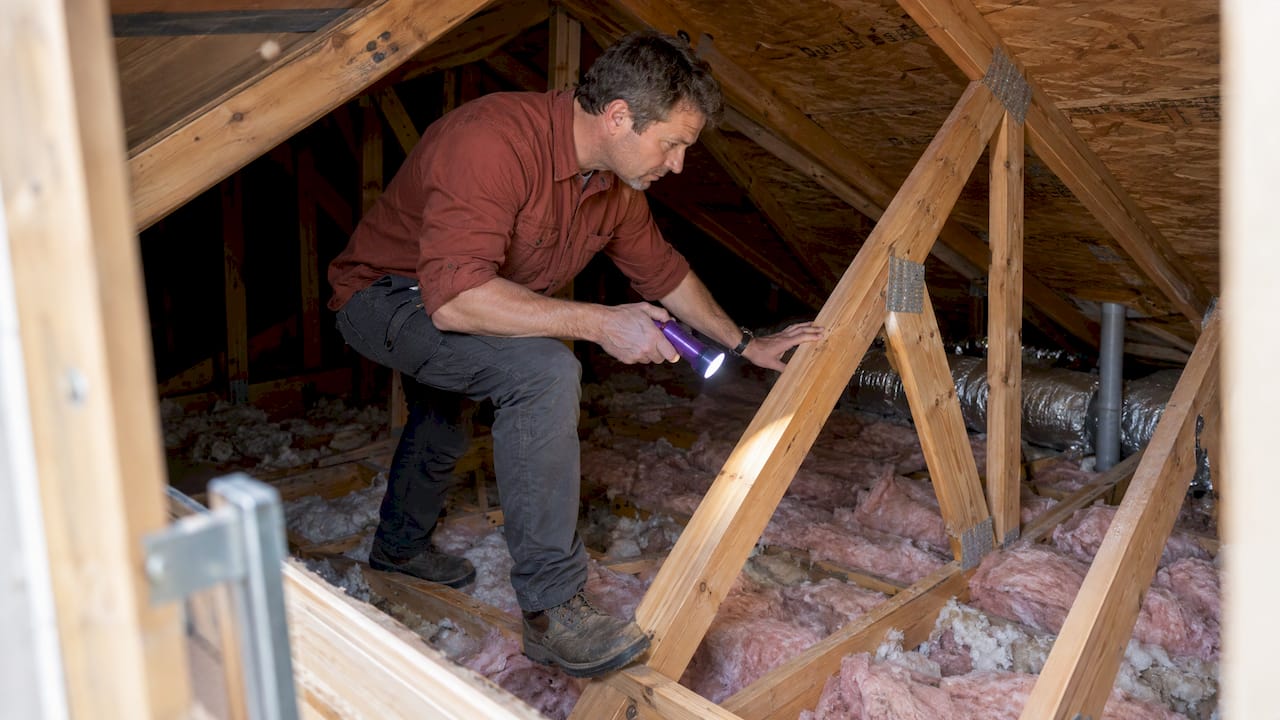
A good attic inspection comes down to six checks: insulation depth, air leaks, ventilation, moisture, pests and wiring or ductwork. Do the walk-through twice a year, in spring and fall, and bring in a specialist the moment you find wet insulation, mold, droppings or anything you can’t safely reach. The Attic Genius offers free inspections across the Northwest Suburbs and greater Chicagoland, so a second set of trained eyes costs you nothing but the appointment.
TL;DR
- Look at insulation first: if it sits level with or below the attic floor joists, or is uneven near the eaves, ENERGY STAR says you likely need more.
- Wet insulation, stained or rotted wood, mold, rusted nails and droppings are the red flags for moisture and pests.
- Walk only on joists, wear a dust mask, gloves and eye protection, and never disturb vermiculite insulation.
- Check twice a year, spring and fall. Our Chicago winters make the fall check the one that matters most.
- Any problem you can’t safely reach or identify deserves a professional look.
Table of Contents
- Before you climb up: stay safe
- The checklist, area by area
- Quick reference table
- What a professional inspector covers
- When to stop and call a specialist
- What we do with your findings
- Our perspective
- FAQ
- Sources
Before you climb up: stay safe
Prepare before you open the hatch. Take a flashlight or headlamp, safety glasses, gloves, a dust mask and a cap or hard hat. ENERGY STAR advises stepping only on joists or truss chords, never on exposed ceiling drywall or on insulation, because the drywall will not hold you.
If you see loose, pebble-like, gray-brown insulation, it may be vermiculite. ENERGY STAR says not to disturb it unless an approved lab has tested it for asbestos. Look, do not touch, and stop there.
Plan on about an hour. Inspector Brian Cooper recommends a walk-through twice a year, ideally in spring and fall. Midsummer attics get dangerously hot, so go in the morning.
The checklist, area by area
1. Insulation depth and coverage
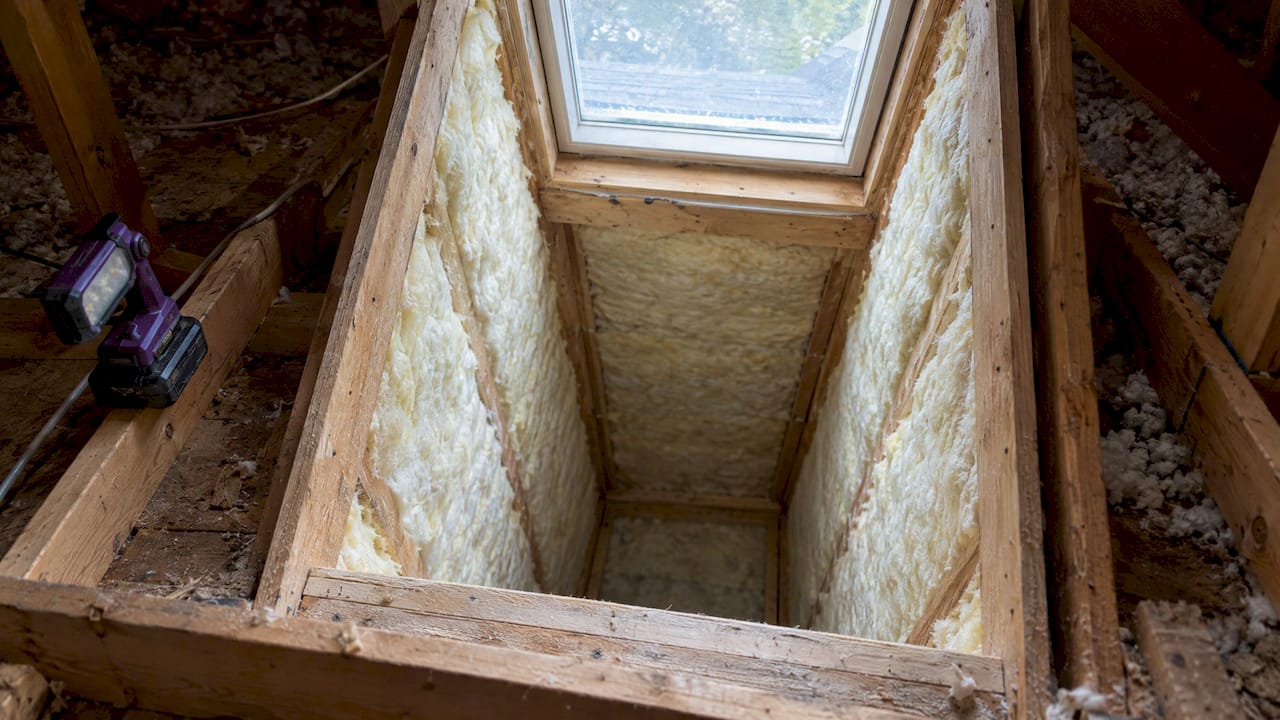
This is the check that saves the most money. Look at the insulation against the tops of the floor joists. If it is level with or below them, ENERGY STAR notes that usually signals a need for more. Also look for:
- Low spots or bare patches, especially along the eaves where the roof comes down.
- Matted, flattened or damp material. Insulation can settle over time.
- Insulation pushed aside around wiring, pipes or recessed lights.
- The attic hatch itself. An uninsulated hatch leaks like an open window; see why attic hatch insulation matters.
For a sense of the numbers, our guide on attic insulation thickness shows that R49 equals about 14 inches of cellulose. Measure with a ruler in several spots, not just by the hatch.
If the material looks tired rather than just thin, condition matters more than age.
2. Air leaks and bypasses
Warm indoor air escapes into the attic through small gaps, and in winter that moisture-laden air is what feeds frost and mold. The Department of Energy recommends checking around ductwork, wires, plumbing, light fixtures and the attic access. Dark, dirty streaks in the insulation often mark a leak, because air carries dust and filters through it.
Common hiding places are listed in our guide to attic air leaks, and homes with knee walls have their own set, covered in knee wall air leaks. Sealing comes before adding insulation, which is why air sealing vs. insulation is a question of order.
3. Ventilation
Look for open soffit vents at the eaves and a ridge or roof vent near the peak. Insulation stuffed into the eaves can block the airflow. InterNACHI’s training material explains that a poorly vented attic can cause serious moisture problems and shorten the life of roof coverings.
Signs of poor ventilation, per Family Handyman, include mold, rusted nails and condensation on the sheathing. Winter is when it shows. Our winter attic ventilation guide explains the two-inch clearance to keep at the eaves.
Also confirm that bathroom, kitchen and dryer exhausts run all the way outdoors. The DOE warns that exhaust vented into the attic causes moisture and mold.
4. Leaks and moisture
Shine the light on the underside of the roof sheathing, the plywood or boards under the shingles. The Wisconsin Extension’s home maintenance checklist recommends exactly this check for moisture or leaks. The DOE lists these signs of possible water intrusion:
- Wet insulation
- Mold or mildew
- Warped or rotted attic wood
- Warped or rotted soffit or fascia
- Worn or warped shingles
Leaks most often start around chimneys, plumbing stacks and roof vents, according to Family Handyman’s inspector. Check those spots first, ideally after rain or snowmelt.
In our area, ice dams are the other thing to think about. The Chicago Bungalow Association explains that attic heat and weak ventilation contribute to them, and that air sealing, insulation and soffit and ridge ventilation are the remedy. A musty smell is an early warning too: see our note on fixing a musty attic smell.
5. Pests
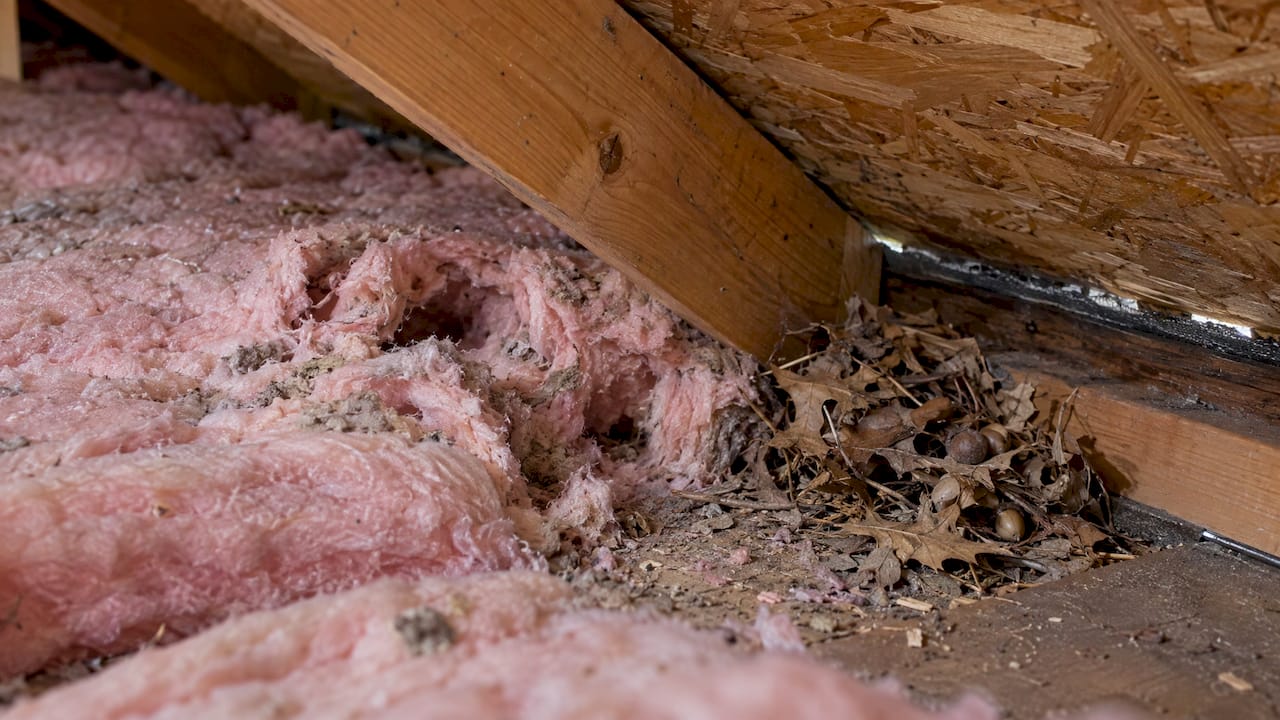
Look for droppings, nests, leaves, acorns and chewed or tunneled insulation, as Family Handyman lists. Note where they enter: gaps at the eaves, vents and roof edges. Pest waste contaminates insulation, and what to do next is covered in attic insulation after a pest infestation.
6. Wiring, ducts and framing
Inspectors also look at visible wiring and junction boxes, roof framing and ductwork. Check that rafters and trusses are not cracked or sagging, that wires are not buried under insulation or showing overheating, and that ducts are connected, sealed and insulated. ATI Home Inspector Training notes that disconnected or damaged ducts and poor duct insulation can reduce HVAC efficiency. If ducts are dripping, see attic duct sweating.
Electrical problems and structural damage are not for you to fix. Note them and call a licensed electrician or a roofer or contractor as appropriate.
Quick reference table
| Check | Good sign | Red flag |
|---|---|---|
| Insulation | Even, above the joists, no bare spots | Level with or below joists, flattened, damp |
| Air leaks | Clean insulation around penetrations | Dirty streaks, gaps at ducts, wires, hatch |
| Ventilation | Clear soffit and ridge vents | Blocked eaves, frost, rusted nails |
| Moisture | Dry sheathing and framing | Stains, rot, mold, wet insulation |
| Pests | No signs | Droppings, nests, chewed insulation |
| Ducts and wiring | Connected, insulated, visible | Loose ducts, buried or damaged wires |
What a professional inspector covers
A professional attic inspection is visual. InterNACHI’s Standards of Practice have inspectors describe the insulation type and its approximate depth, and report a general absence of insulation or ventilation as needing correction. ASHI’s standard, effective January 1, 2027, adds roof structure and vapor retarders, and says inspectors need at least 30 inches of clearance and an 18 by 24 inch opening to enter.
A general home inspector will tell you what they see. An insulation and ventilation specialist can go on to tell you what to do about it. Standalone attic inspections run $200 to $500 on average, within a $100 to $1,000 range per HomeGuide’s 2026 figures, with size and finished versus unfinished space driving the price. Bob Vila notes that some insulation companies offer the inspection free or bundled.
When to stop and call a specialist
Call in help when you:
- Find mildew covering more than about 10 square feet. Focus on Energy says to consult a professional at that point.
- See active infestation or hear animals. The same guide points to licensed pest control for live animals.
- Suspect vermiculite or other hazardous material.
- Find roof leaks, rot or structural damage.
- Are buying or selling, or can’t safely get into the space. Family Handyman lists these as reasons to hire an attic inspector.
We handle moisture and mold remediation, pest and vermin waste cleanup, air sealing and attic ventilation. If you are listing a house, see attic insulation before selling.
What we do with your findings
The Attic Genius specializes in attic and insulation-related work for homeowners across the Northwest Suburbs and Chicagoland, from Arlington Heights and Schaumburg to Naperville and Lake Geneva. We offer same-day inspections where available, upfront pricing and written warranties. Whether your attic needs a top-up, a full upgrade or removal, we assess what you actually need first.

Bring your checklist notes to a free inspection. If your attic needs an upgrade, signs your attic needs an insulation upgrade shows what we look for.
Our perspective
Most homeowners never go into the attic, and that is why most never learn how much conditioned air is escaping. We say up to 40% of heated or cooled air can be lost through a poorly insulated attic, and the cause is rarely one thing. Thin insulation, unsealed gaps and blocked vents usually work together.
That is why we treat an inspection as a whole-attic assessment: insulation, air sealing, ventilation, moisture and pests together. Fixing one without the others tends to leave the real problem in place. Our crews are specialists in attics, not generalists who visit them occasionally, and every job carries a written warranty.
Use the checklist above. Then let us confirm what you found and put a clear plan in writing.
Jim
FAQ
How often should I inspect my attic?
Twice a year, ideally spring and fall, according to inspector Brian Cooper. Add a check after severe storms or heavy snowmelt. A walk-through takes about an hour.
How much does an attic inspection cost?
HomeGuide reports $200 to $500 on average in 2026, with a $100 to $1,000 range. Unfinished attics cost less than finished ones. Our inspections are free.
What do home inspectors look for in attics?
Insulation type and depth, ventilation, roof framing, signs of moisture, visible wiring, ductwork and pest activity. Low clearance or stored belongings can limit what they can see.
Can I walk around in my attic?
Only on joists or truss chords, never on bare drywall or insulation. Wear a mask, gloves, glasses and a cap, and go when it is cool.
Sources
- ENERGY STAR: DIY checks and inspections
- Family Handyman: How to inspect your attic
- Family Handyman: What to expect with an attic inspection
- DOE: Guide to Durable Attics
- InterNACHI Standards of Practice
- InterNACHI Residential Standards of Practice Course
- ASHI Standard of Practice
- Wisconsin Extension: Maintaining Your Home
- Chicago Bungalow Association: Bungalow Maintenance
- ATI Home Inspector Training: Attic inspections
- Focus on Energy: DIY insulation guide
- HomeGuide: Attic inspection cost
- Bob Vila: Attic insulation cost