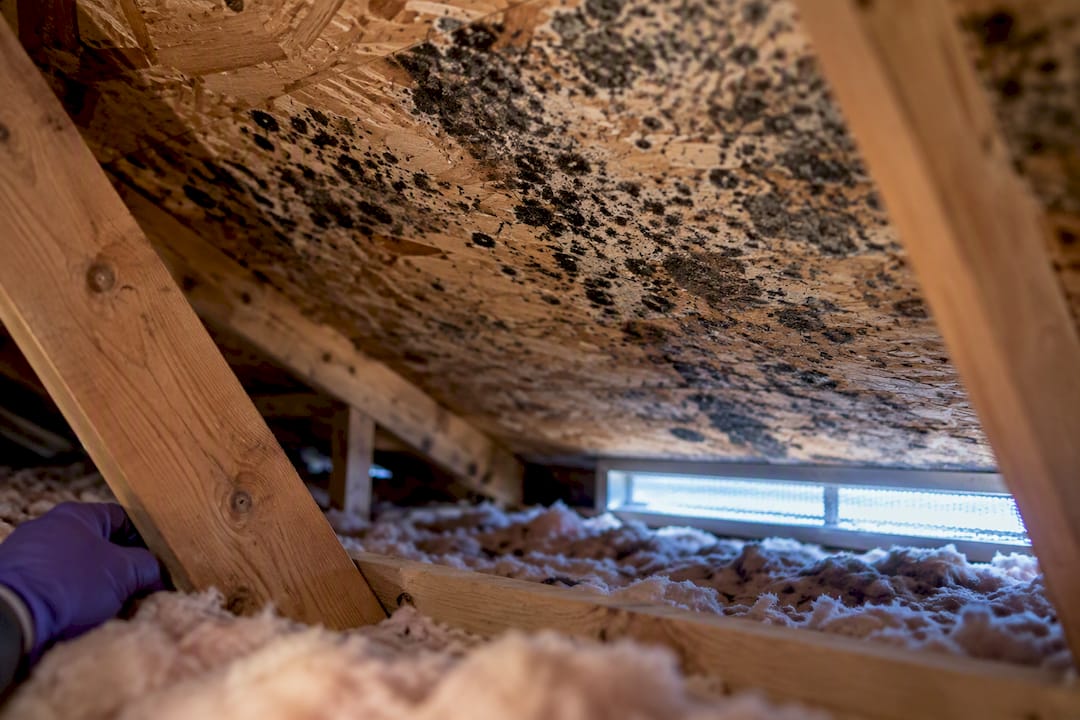
A musty attic smell almost always means trapped moisture has fed mold, damp insulation, or pest waste up there. Stop the moisture source first. Cleaning the odor or piling on new insulation before that leak, vent, or airflow problem is fixed just seals the problem in and guarantees it comes back. What follows is the inspection checklist and the fixes, organized by cause, to help you find and stop it.
TL;DR:
- The musty attic smell is caused by mold, mildew, pests, roof leaks, or ventilation issues, all requiring targeted repairs before cleaning or insulation replacement.
- Inspecting involves checking roof sheathing, rafters, insulation, ducts, and pest signs, with humidity levels and odor sources traced uphill from the strongest smell.
- Fixes include sealing roof leaks, rerouting exhaust ducts outside, improving attic ventilation, and replacing damp insulation to prevent odor recurrence.
- Regular seasonal maintenance like clearing vents and sealing penetrations can prevent future mold and moisture buildup in the attic.
- Attic mold and contaminants often affect indoor air quality, so addressing the source is essential to reduce health risks for allergy sufferers and sensitive individuals.
Table of Contents
- What Causes a Musty Smell in an Attic?
- How Do You Inspect an Attic for a Musty Smell?
- How Do You Fix the Different Causes of Attic Odor?
- Attic Maintenance Checklist to Prevent Musty Smells From Returning
- Can a Musty Attic Smell Affect Indoor Air Quality?
- When Should You Call a Professional for a Musty Attic?
- Sources
- FAQ
What Causes a Musty Smell in an Attic?
That earthy, damp smell is a chemical signature, not just an inconvenience. Mold and mildew produce it directly, releasing microbial volatile organic compounds as they digest wood, paper-faced insulation, and dust. According to the EPA’s guidance, if you can see or smell mold, you should address it since testing rarely changes what needs to happen next.
But mold isn’t the only culprit. Several distinct sources produce that same “something’s wrong up here” feeling, and each one needs a different fix:
- Mold and mildew grow wherever wood, dust, or insulation stays damp for more than 48 hours, typically along roof sheathing and rafters.
- Wet or contaminated insulation traps moisture against wood and holds odor long after a leak is patched.
- Pests and carcasses leave droppings and decomposition odors that also seed mold growth, since urine and feces hold moisture.
- Roof leaks and seasonal condensation soak sheathing from above, often showing up worse in spring and fall temperature swings.
- Bathroom, kitchen, or dryer exhaust fans that vent into the attic instead of outdoors dump pints of warm, humid air into the space every time they run.
- Blocked soffit or ridge vents starve the attic of airflow, letting humidity climb even when there’s no active leak.
Bathroom fans venting into attics are a surprisingly common wiring mistake, and each shower can push several pints of water vapor into the space if that ducting dead-ends at the attic instead of the roofline.
How Do You Inspect an Attic for a Musty Smell?
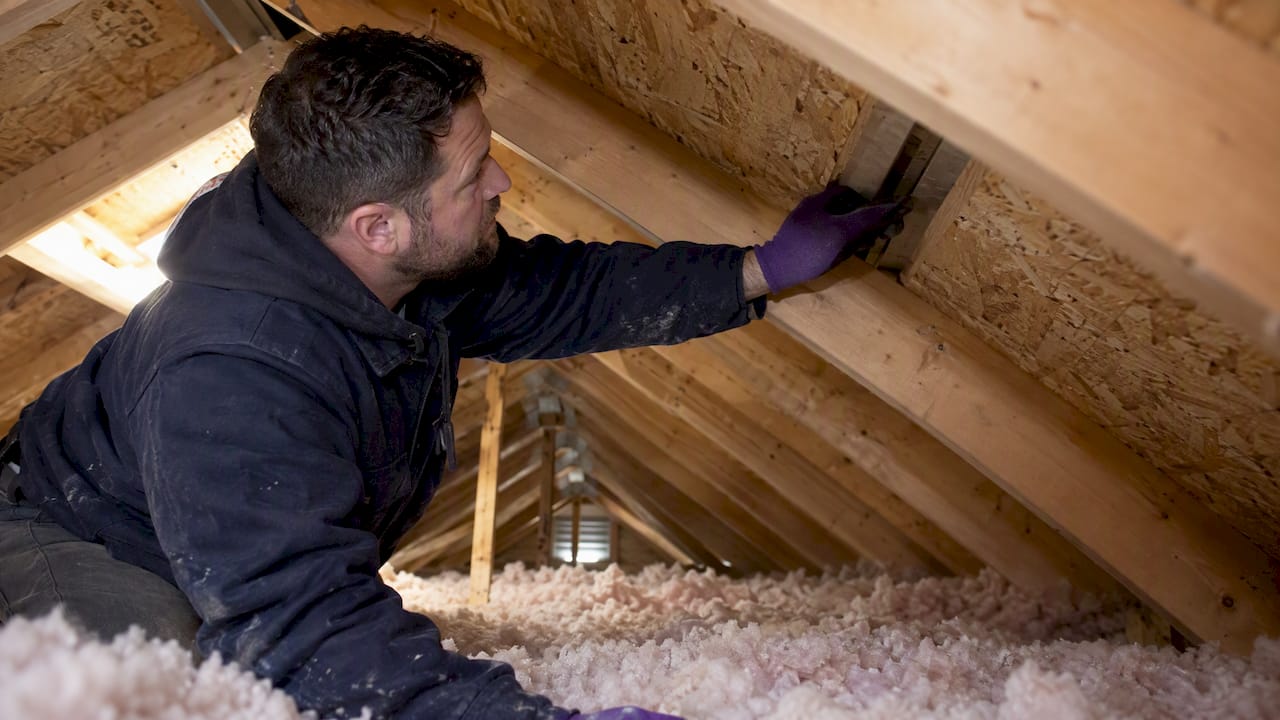
Grab a flashlight, an N95 mask, and a phone camera before you climb up. Attic dust often carries mold spores and rodent droppings, so skip the inspection on a day when you’re already dealing with allergies or asthma symptoms. Dry days are best, since fresh rain can mimic or mask the exact staining pattern you’re trying to trace.
- Follow the smell. Move toward the strongest odor and inspect uphill from there, since gravity pulls moisture down roof slopes and stains often start well above where you first notice it.
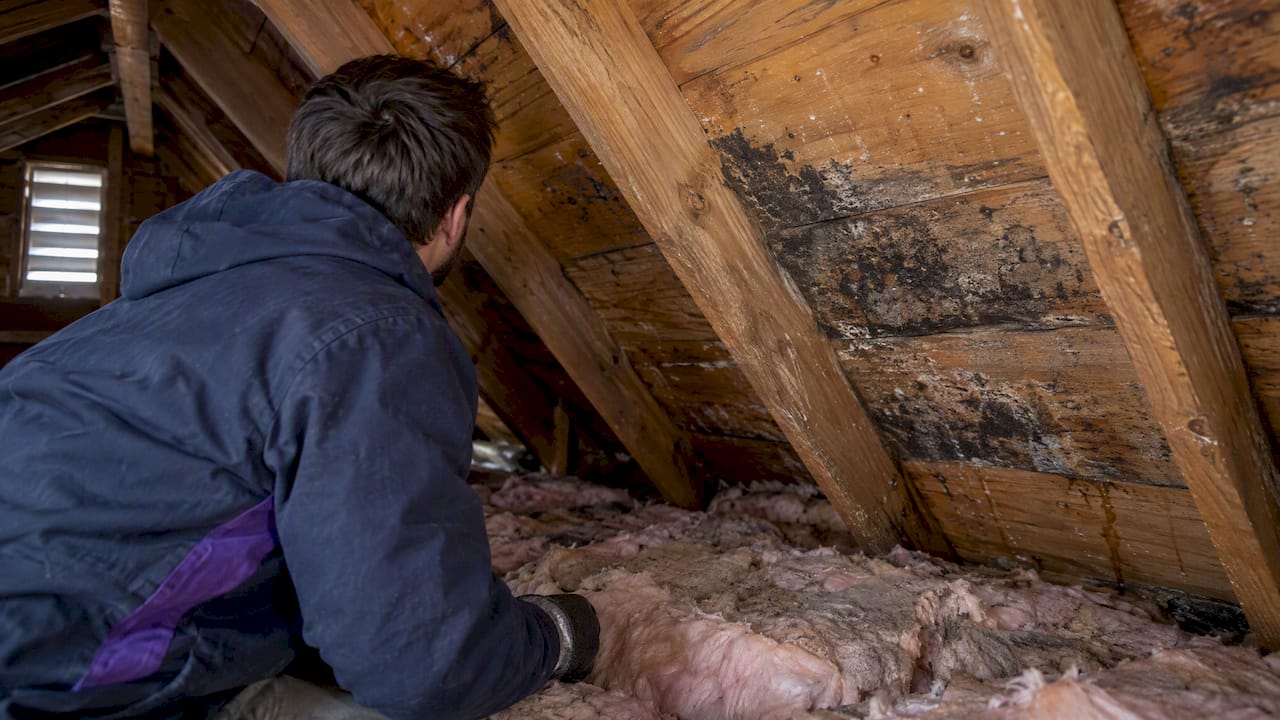
- Check the sheathing and rafters for dark streaking, fuzzy or powdery growth, and beads of condensation on the underside of the roof deck.
- Look for rusty nail tips poking through the sheathing. Corrosion on nails is one of the most reliable low-cost signs of chronic condensation.
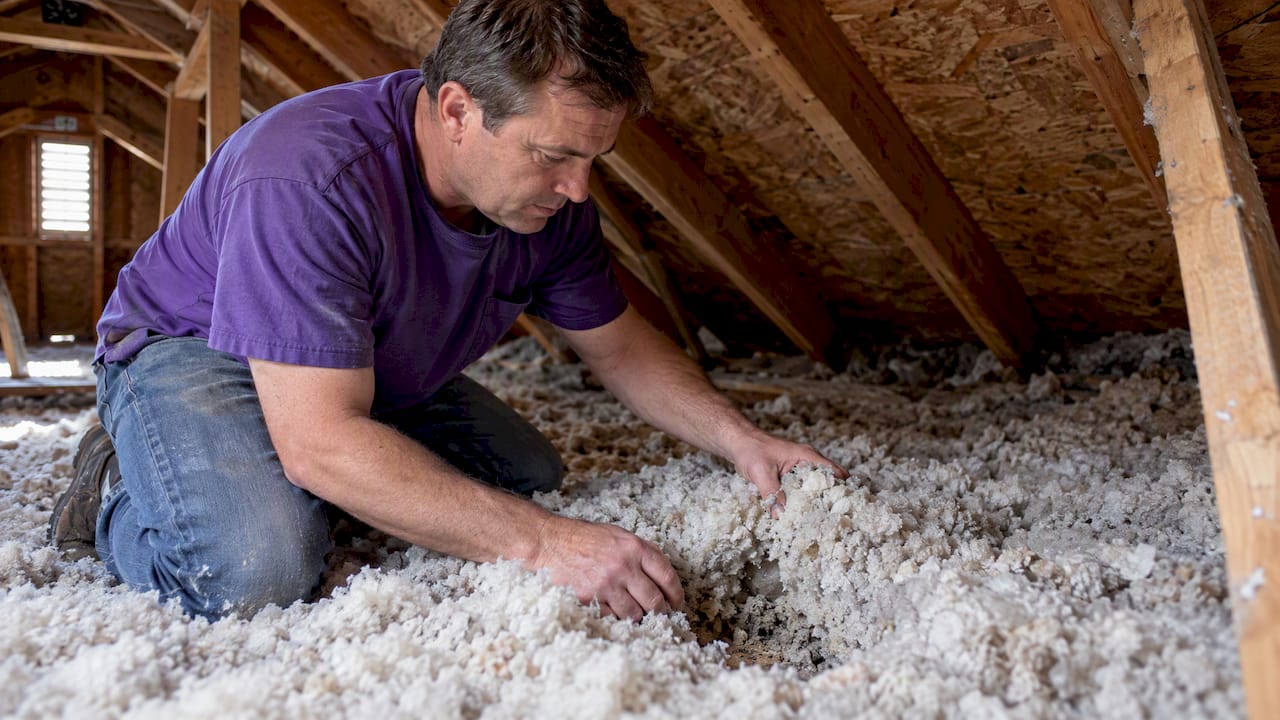
- Press the insulation. Clumping, staining, or a heavier-than-normal feel means it’s holding water and losing its ability to insulate.
- Trace every duct that runs through the attic and confirm it terminates outside, not in a soffit or loose coil near the vent.
- Watch for pest evidence. Look for droppings, chewed insulation, greasy rub marks along joists, or a carcass smell that’s sharper and more sour than mildew.
- Take a humidity reading with a cheap hygrometer and log it along with photos and notes, since one visit rarely tells the whole story.
Pro Tip: Photograph every stain and reading with a date stamp. If you inspect again in a month and the same spots have grown or the humidity reading climbed, you’re dealing with an active leak or ventilation failure, not a one-time event.
How Do You Fix the Different Causes of Attic Odor?
Fix the moisture source before you clean anything or add a single bag of insulation. Skipping that order is the single most common reason musty smells return within a season.
- Roof leaks and flashing: Check flashing around chimneys, vent pipes, and valleys first, since that’s where most leaks originate. Small flashing repairs are a reasonable DIY job; anything involving shingle replacement or a chronic leak location is worth a roofer’s eye.
- Exhaust ducts: Reroute any bathroom, kitchen, or dryer duct that ends in the attic so it terminates outdoors through a proper roof or wall cap, using rigid insulated duct rather than flexible foil for dryers.
- Ventilation: Clear soffit vents of blown insulation, install baffles to hold that airflow channel open, and confirm ridge or gable vents are actually exhausting air rather than sealed shut with paint or debris. Building codes commonly call for a 1:150 ratio of net free ventilation area to attic floor space, meaning a 1,500 square foot attic needs roughly 10 square feet of combined intake and exhaust vent area.
- Insulation: Insulation that’s merely damp from a now-fixed leak can sometimes dry in place with good airflow. Insulation that’s stained, matted, or has held moisture for weeks needs to come out, since it will keep releasing odor and feeding mold no matter how dry the attic gets afterward. Homeowner guides consistently recommend cleaning or replacing contaminated material rather than trying to deodorize it in place.
- Pest and carcass cleanup: Droppings and carcasses carry pathogens that make this one of the few attic jobs where professional cleanup, not DIY, is the safer call.
- Interim measures: A dehumidifier or moisture absorber can buy you time while a repair is scheduled, but neither one replaces fixing the actual leak, duct, or vent. Masking the smell with odor sprays does nothing but hide a problem that’s still actively growing.
Attic Maintenance Checklist to Prevent Musty Smells From Returning
A little seasonal upkeep keeps a fixed attic fixed. Walk through this list every spring and fall:
- Confirm soffit vents and baffles are clear of insulation, leaves, and nesting material.
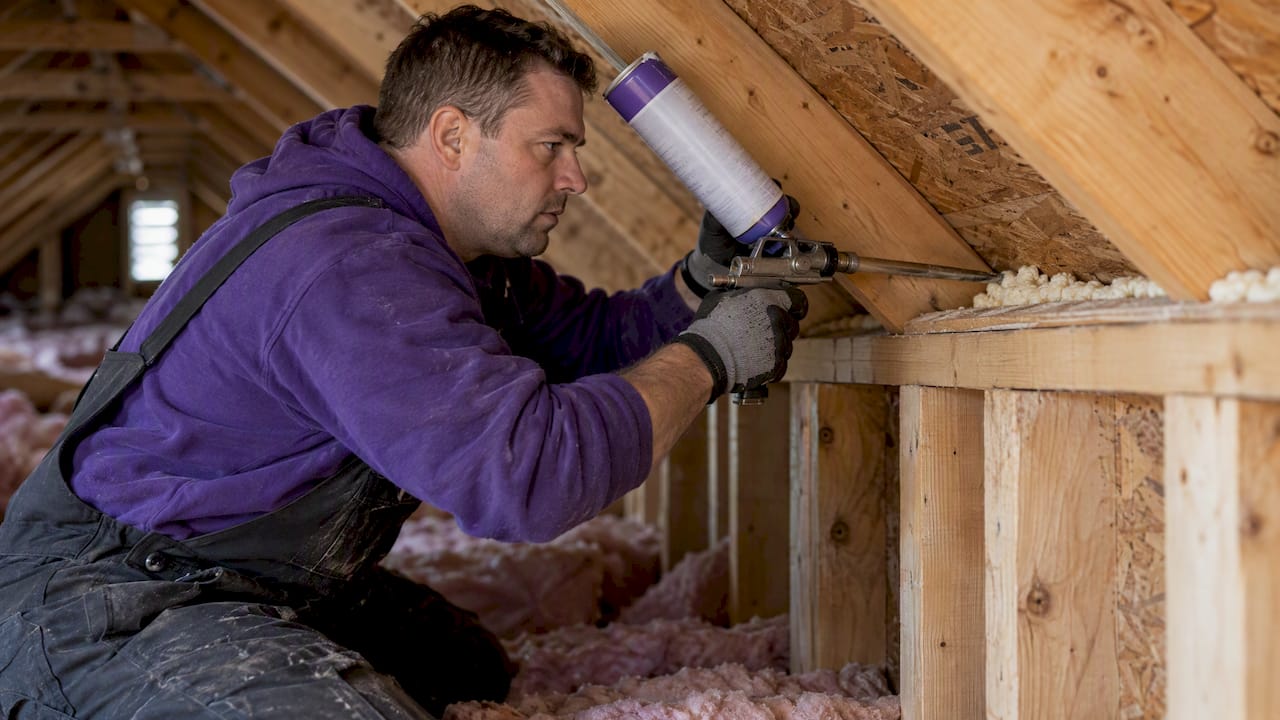
- Seal attic bypasses around the access hatch, recessed lighting, and plumbing or electrical penetrations, since warm indoor air leaking upward is a leading cause of sheathing condensation.
- Inspect roof flashing and shingles after major storms, not just once a year.
- Consider a powered attic fan or whole-house dehumidification if your region runs consistently humid regardless of ventilation improvements.
- Keep a simple log of inspection dates, humidity readings, and repairs so a recurring issue shows up as a pattern instead of a surprise.
Attic mold doesn’t always die when conditions dry out. It frequently just goes dormant and waits for humidity to return, which is exactly why odors that “went away” after a quick cleanup often come back the following summer.
Can a Musty Attic Smell Affect Indoor Air Quality?
Yes, and this is the part homeowners underestimate most. Attics aren’t sealed off from the rooms below. Field observations from building science researchers show that attic air and airborne contaminants can move downward into living spaces under certain pressure conditions, particularly when air conditioning or exhaust fans pull air through ceiling gaps, can lights, or an attic hatch.

That means mold spores, dust from pest droppings, and musty air aren’t necessarily staying contained to the space above your ceiling. For households with asthma, allergies, or young children, a musty attic isn’t just an unpleasant smell. It’s a plausible contributor to indoor air problems that show up as symptoms nobody connects back to the attic.
The fix is the same one that stops the odor at its source: seal ceiling penetrations, correct the ventilation and moisture issue driving the mold, and remove contaminated material rather than letting it sit. Anyone dealing with unexplained respiratory irritation alongside a musty smell upstairs has good reason to treat the attic as a starting point for investigation, not an afterthought.
When Should You Call a Professional for a Musty Attic?
Some attic problems are genuinely DIY territory. A blocked soffit vent or a single damp patch of insulation from a now-fixed leak, you can often handle yourself. Others cross a line where professional remediation stops being optional.
Building science guidance generally points to professional involvement once mold coverage spans a large contiguous area, roughly the size of a small room, rather than an isolated stain. The same goes for wet insulation across multiple bays, a dead animal, or a leak that keeps reappearing despite repeated patch jobs.
A qualified inspection should trace the actual moisture path, not just treat the symptom. That means checking air sealing, ventilation balance, insulation condition, and any pest evidence in one pass. When you’re vetting a contractor, ask for a written scope of work, a warranty on the repair, proof of insurance, and specifics on how they handle mold or pest waste disposal. The Attic Genius team approaches attic odor cases exactly this way: diagnose the moisture source first, then scope the air sealing, ventilation, insulation, or mold remediation work the attic actually needs, backed by a written warranty on the finished work.
— Jim
Sources
- Mold in attic: how to find it, what causes it, and what to do — MoldGuide
- How to get rid of musty smells in an attic — Homes & Gardens
- Attic mold contamination — Inspectapedia
FAQ
How Can I Get Rid of a Musty Smell in My Attic?
Find and stop the moisture source first, whether that’s a roof leak, a duct venting into the attic, or blocked soffit vents. Once the source is fixed, remove any contaminated insulation, improve ventilation toward the 1:150 net free area ratio, and run a dehumidifier temporarily while things dry out.
Does a Musty Smell Mean You Have Mold?
Not always, but mold is the most common cause of that smell. Pest droppings, decaying organic matter, and stagnant water can produce a similar odor, and the EPA’s own guidance treats a visible or detectable mold smell as reason enough to act without needing lab testing first.
Will a Musty Smell Go Away on Its Own?
No. A musty smell signals an underlying moisture or contamination problem that won’t resolve without a fix. Mold can go dormant when conditions dry out temporarily, but it reactivates the next time humidity climbs, so the smell tends to return unless the actual source gets addressed.
What Could Be Causing a Strange Smell in My Attic?
Beyond mold, common causes include wet or compressed insulation, a dead animal or active pest nest, a duct that terminates inside the attic instead of outdoors, or condensation dripping from the roof sheathing. Tracing the smell to its strongest point and inspecting nearby insulation, ducts, and vents usually narrows it down quickly.