The fastest way to make a hot garage noticeably cooler is to tackle it in order: ventilate first to push out trapped hot air, then block solar gain with shade or lighter colors, then insulate or seal wherever heat is actually leaking through. Start with fans and open doors during cool hours, park hot vehicles outside, and run a high-velocity fan for immediate relief. If a room above the garage stays hot too, or you want a permanent fix, that’s when it’s time to bring in a professional for insulation and air sealing.
TL;DR:
- Ventilation using fans and controlled opening during cooler hours provides immediate relief but does not address heat buildup caused by insulation gaps or radiant heat.
- Upgrading to insulated garage doors or adding foam insulation can reduce interior temperatures by several degrees, especially under direct sunlight.
- Sealing air leaks around doors and walls and insulating the ceiling below rooms above the garage significantly lowers temperature swings from 10-15 degrees to just 2-4 degrees.
- External shading, reflective paint, and radiant barriers can prevent heat from entering before it accumulates inside the garage.
- Professional assessment is recommended if the temperature difference remains above 10-15 degrees Fahrenheit or if moisture issues suggest significant structural leaks.
Table of Contents
- Why Is My Garage So Hot? Root Causes to Check First
- Quick, Low-Cost Fixes You Can Do Today
- Insulation and Air Sealing: What Actually Fixes the Heat
- Ventilation and Active Cooling: What Actually Moves the Air
- Shading and Surface Fixes That Block Heat Before It Gets In
- Why Your Garage Stays Hot at Night (and What to Do About It)
- When to Call a Pro: Signs, Costs, and What to Expect
- Managing Humidity and Thermal Mass Together
- The Order of Operations Most Homeowners Get Backwards
- Get a Professional Look at What’s Actually Making Your Garage Hot
- Sources
- FAQ
Why Is My Garage So Hot? Root Causes to Check First
Before buying anything, figure out which of these is actually driving the heat in your garage. Most garages suffer from a combination of factors, and the fix that works depends on which ones apply to you.
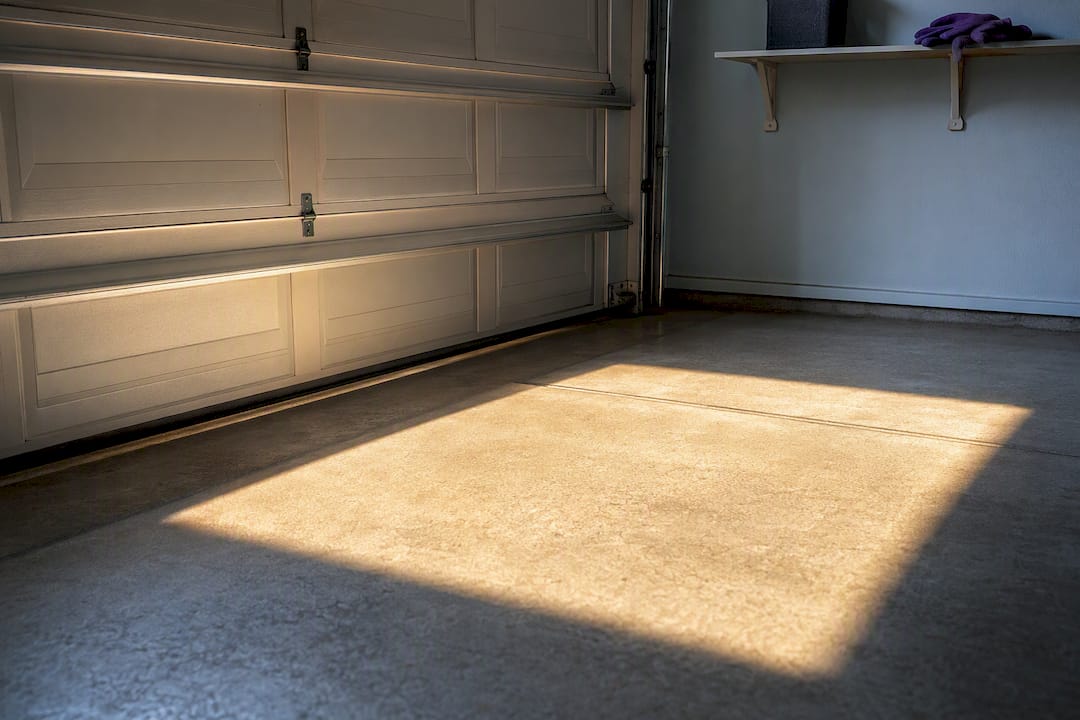
Solar gain through the garage door is usually the biggest culprit. A single-layer, uninsulated steel door facing direct afternoon sun can push interior temperatures significantly higher than an insulated door on an identical garage, according to industry data on garage door temperature impacts. Dark-colored doors absorb even more radiant heat than lighter ones, and a west or south-facing orientation compounds the problem all afternoon.
Then there’s the slab under your feet. Concrete absorbs heat all day and slowly releases it after sundown, which is why a garage can still feel like an oven at 10 p.m. even after the sun’s been down for hours.
Poor insulation and air leakage tie it all together. Gaps around the door, unsealed walls, and an uninsulated ceiling let heat pour in and let cool air escape, and that same leakage often lets garage heat creep into rooms directly above.
- Solar gain through metal doors and roofing, worsened by dark colors and full-sun orientation
- Concrete slab thermal mass that stores and re-releases heat overnight
- Missing or thin insulation in walls, ceiling, and door
- Air leaks around the door frame, service door, and wall penetrations
Quick, Low-Cost Fixes You Can Do Today
You don’t need a contractor to make a hot garage tolerable within the hour. Start with the actions that cost nothing and work up from there.
- Park hot vehicles outside until they cool down. A car that’s been sitting in the sun radiates heat for hours after you pull in, and keeping it out of the garage for even 30 minutes before parking can shave several degrees off the ambient air temperature.
- Open the garage in the cool morning or evening, then close it during peak afternoon heat. Treat the door like a window: crack it when outside air is cooler than inside air, seal it up once the sun peaks, and combine trips in and out to limit how often you’re opening it during the hottest hours.
- Position a high-velocity fan for cross-flow, not just noise. Set one fan blowing air in from a low, shaded opening and point a second fan or an open window to exhaust it out the other side. This Old House notes that fans mainly create a wind-chill effect rather than lowering actual air temperature, so pair them with real airflow, not just recirculation.
- Install a magnetic screen door on your service door. It lets you keep that door open for cross-ventilation without inviting in bugs.
- Clear clutter away from vents and wall openings. Boxes stacked against your only airflow path defeat the purpose of any ventilation you set up.
- Check and replace worn weatherstripping and the bottom door seal. These wear out faster than most homeowners realize, and a cracked or gapped seal lets in both heat and humidity; for detailed guidance, see how to winterize your doors for the cost of a $20 kit.
Pro Tip: Run your cross-flow fan setup for 15 minutes before you plan to work in the garage. Moving stale, superheated air out first makes a bigger difference than running the fan the whole time you’re in there.
Insulation and Air Sealing: What Actually Fixes the Heat
Fans and open doors buy you comfort for an afternoon. Insulation and air sealing are what keep the garage from turning into an oven in the first place, and they’re the difference between a quick fix and a permanent one.
Garage door insulation kits, the foam-panel type you install yourself, typically knock a few degrees off interior temperature and cost relatively little. Swapping to a factory R-rated insulated door goes further, since it addresses the door’s core material rather than adding a layer on top. Given that an uninsulated door can run significantly hotter under direct sun, upgrading the door itself is often the single highest-impact fix available to a homeowner.
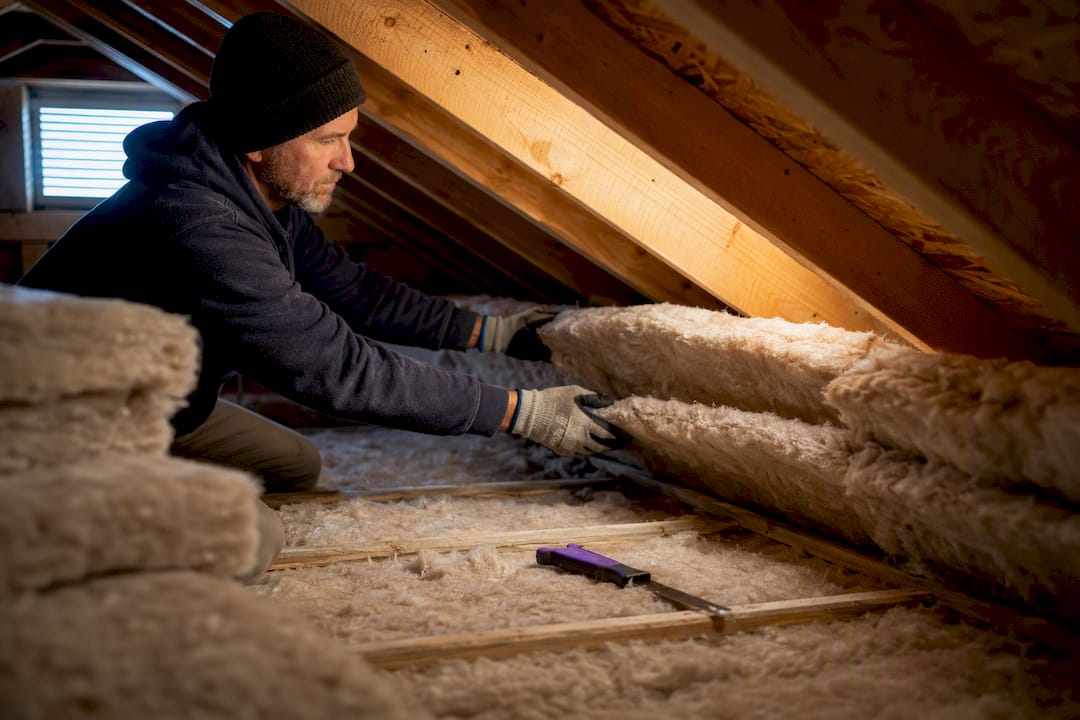
Ceiling and wall insulation matter just as much, especially if a room sits above the garage. Dense-pack cellulose or closed-cell spray foam in the joist bays does two jobs at once: it slows heat transfer and helps seal the small gaps where conditioned air escapes into the garage. Sealing the garage-to-house boundary, the shared wall, ceiling, and any pass-through for wiring or ductwork, closes off the leaks that let garage heat migrate into living space above.
- Foam garage door insulation kits: modest, budget-friendly reduction
- R-rated replacement garage door: bigger, more consistent reduction
- Dense-pack cellulose or spray foam in ceiling joist bays: addresses both insulation and air sealing at once
- Sealing the garage-to-house shared wall and ceiling: stops heat and air transfer into rooms above
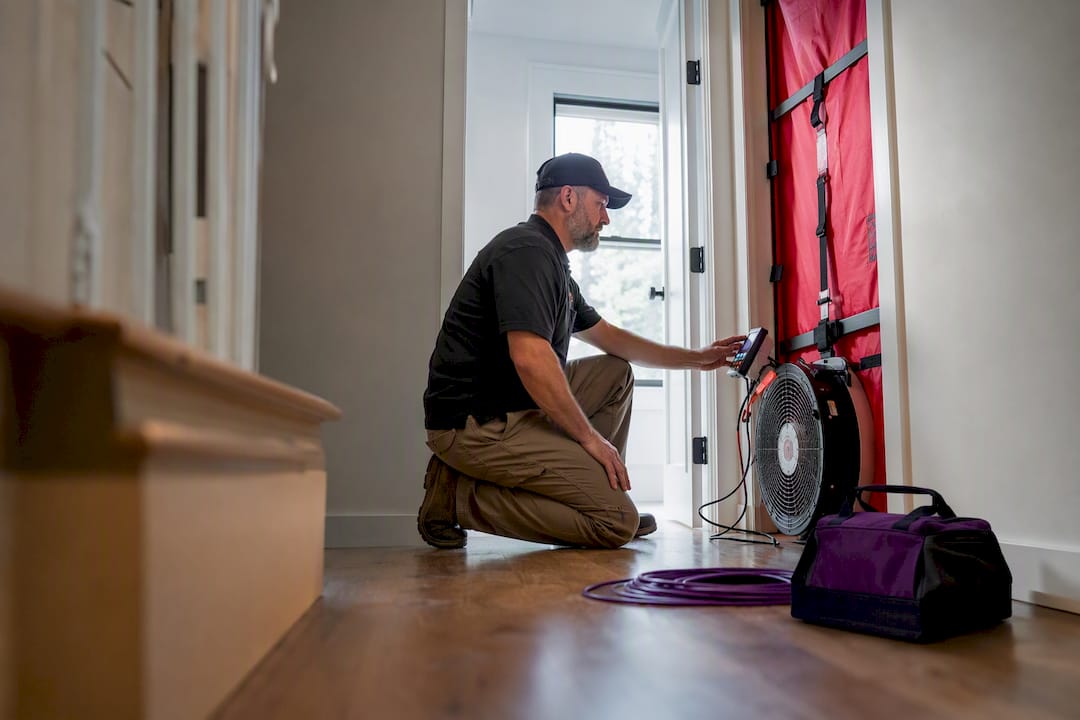
Dense-pack cellulose and spray foam installation is where most DIYers should stop and call a professional. These materials require specialized equipment to install correctly, and a botched job can trap moisture instead of blocking heat. A professional will often run blower-door testing or thermal imaging first to find exactly where air is leaking before recommending a fix, similar to the diagnostic approach used for air sealing attic bypasses.
The payoff is real. Professional air sealing and insulation of the garage-to-home boundary can reduce the temperature swing in rooms above the garage from a 10 to 15 degree Fahrenheit differential down to within 2 to 4 degrees of the rest of the house.
Ventilation and Active Cooling: What Actually Moves the Air
Insulation slows heat from getting in. Ventilation gets rid of what’s already there, and the two work together rather than as substitutes for each other.
The goal is a balanced intake and exhaust system: cooler air comes in low, hot air exits high, since heat naturally rises. Ridge vents and soffit vents create this path passively if your garage has an accessible roofline, while wall-mounted vents placed on opposite sides support cross-ventilation even in an attached garage without roof access.
A thermostat-controlled exhaust fan takes this further by automatically pulling hot air out once temperatures cross a set threshold, without you having to remember to flip a switch. Pairing a low intake vent with a high-mounted exhaust fan creates continuous airflow that a passive vent alone can’t match.
- Ridge and soffit vents for passive intake and exhaust in garages with roof access
- Wall vents placed on opposite sides for cross-ventilation
- Thermostat-controlled exhaust fans that activate automatically above a set temperature
- Ductless mini-split systems for garages used as workshops or living space
For active cooling, a window or portable AC unit works for occasional use but struggles to keep up in a poorly insulated garage on a 100 degree day. A ductless mini-split is the better long-term option for a garage you actually spend time in. Energy for spaces without existing ductwork, and Bryant specifically cautions against extending central HVAC ducts into an unconditioned garage, since that forces your main system to fight against a space it was never designed to condition. If your garage houses a water heater or furnace, any mechanical ventilation plan needs to account for that combustion appliance’s airflow needs, and larger ventilation changes may require a permit depending on your local code.
Shading and Surface Fixes That Block Heat Before It Gets In
Every fix so far deals with heat that’s already inside. Shading and surface treatments stop some of it from arriving in the first place.
Repainting a dark garage door or south-facing wall in a lighter, more reflective color reduces how much solar radiation the surface absorbs. Homes & Gardens lists reflective coatings and light colors among the practical, low-effort measures that meaningfully cut heat gain.
- Light-colored paint or reflective coatings on doors and sun-facing walls
- External awnings or shade sails positioned over the door during peak sun hours
- Deciduous trees planted for shade, which take a few seasons to mature but reduce radiant heat absorption long-term, per CEMC’s guidance on shading strategies
- Radiant barriers under attic roof decking where the garage shares attic space with the home
Why Your Garage Stays Hot at Night (and What to Do About It)
That concrete slab under your car is a heat battery. It soaks up solar energy all day and releases it slowly after dark, which is why opening the door at 9 p.m. doesn’t always bring the relief you’d expect.
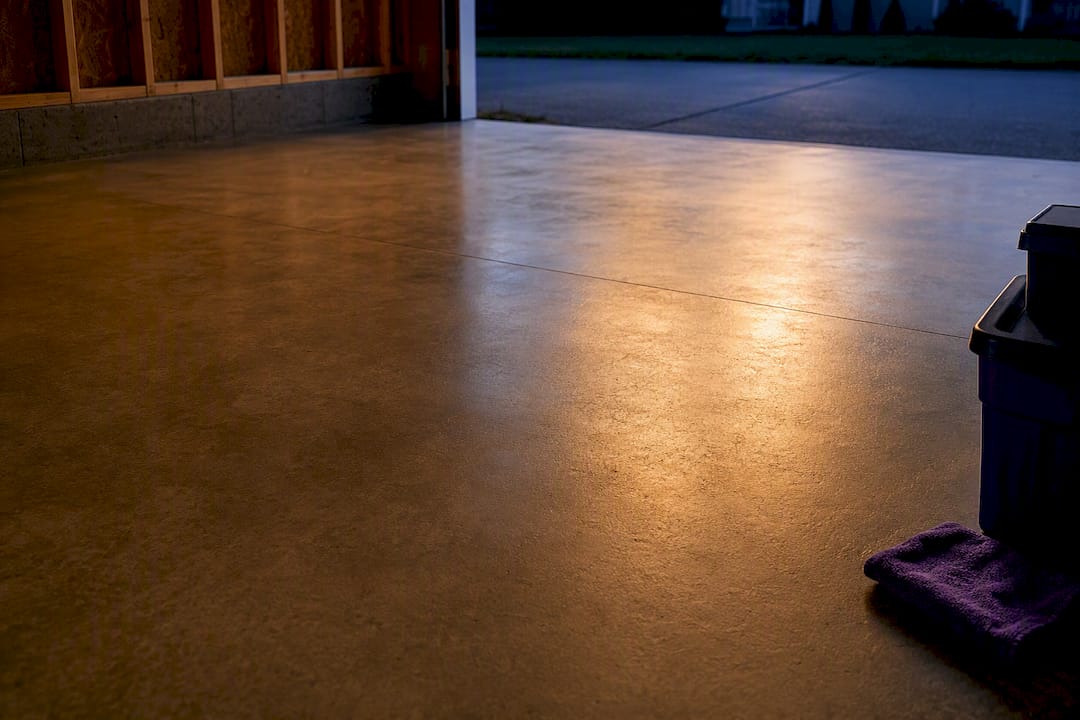
Night flushing, opening the garage once outdoor temperatures drop below indoor ones, works well when the air itself is the main heat source. It works far less well when the slab has stored hours of heat, since the concrete keeps re-radiating warmth into the space long after the air around it has cooled.
A dehumidifier won’t lower the temperature, but it improves how the heat feels. High humidity makes warm air feel worse because sweat can’t evaporate efficiently, so pulling moisture down to around 50% relative humidity makes a 85 degree garage feel noticeably more tolerable even without changing the thermometer reading.
Pro Tip: If your garage still feels muggy and hot well after sunset, the slab is likely the culprit, not the air. That’s a sign to focus on insulation and radiant barriers rather than relying on night ventilation alone.
When to Call a Pro: Signs, Costs, and What to Expect
Most of the fixes above are things you can do yourself over a weekend. A few signs mean it’s worth bringing in a professional instead.
- Temperature differential of more than 10 to 15 degrees Fahrenheit between the garage and outside air, even with fans running
- A room directly above the garage that stays noticeably hotter than the rest of the house
- Visible moisture, staining, or musty odors suggesting air leakage or trapped humidity
- Insulation that’s missing, compressed, or clearly outdated in the ceiling or shared walls
A professional visit typically starts with a blower-door test or thermal imaging scan to pinpoint exactly where air and heat are moving through the structure, the same diagnostic approach covered in garage ceiling insulation guidance. From there, the fix usually involves air sealing the garage-to-house boundary and adding dense-pack cellulose or spray foam insulation. Timelines for a single-garage insulation and sealing job typically run a day or less once the assessment is complete, and the resulting temperature variance in rooms above the garage often drops from a 10 to 15 degree swing down to within 2 to 4 degrees of the rest of the home.
Managing Humidity and Thermal Mass Together
Heat and humidity in a garage aren’t separate problems. They compound each other, and treating only one leaves the other unresolved.
The slab’s thermal mass means your garage can stay warm well past sunset regardless of how much you ventilate, since the concrete itself is the heat source at that point rather than the trapped air. This is why a dehumidifier often does more for comfort late in the day than another fan. Running a dehumidifier to hold humidity around 50% cuts down on that sticky, oppressive feeling even when the air temperature hasn’t dropped much.
If you’re using the garage as a workshop or storage space for anything moisture-sensitive, tools, electronics, stored fabric, that humidity control matters beyond comfort. Trapped moisture against a warm concrete slab is a common setup for mildew, especially in a garage with limited airflow. Running a dehumidifier alongside your ventilation plan, rather than instead of it, addresses both the thermal mass problem and the moisture risk at the same time. For garages with a real humidity problem tied to slab moisture or ground contact, a unit sized for the square footage and run on a humidistat setting works better than one you switch on and off manually.
The Order of Operations Most Homeowners Get Backwards
A lot of homeowners buy a window AC unit before they’ve done anything about insulation, and that’s usually the wrong first move. Cooling an uninsulated, unsealed garage is like running an air conditioner with the windows open. It’s not that the AC doesn’t work, it’s that it’s fighting a losing battle against heat pouring in through an uninsulated door and a leaky ceiling.
The homeowners who get the best results treat this as a sequence, not a shopping list: cheap ventilation and shading fixes first, insulation and air sealing second, active cooling last. Skipping straight to a mini-split or window unit without addressing the door and ceiling means paying to cool air that’s constantly being reheated by a hot slab and a sun-baked door. Many professionals see this pattern often: garages where the AC gets blamed for a problem that’s actually insulation. DIY works fine for weatherstripping and fans. Once you’re talking about dense-pack cellulose, spray foam, or diagnosing why a room above the garage won’t cool, that’s a job for someone with a blower door and thermal camera, not a weekend project.
— Jim
Get a Professional Look at What’s Actually Making Your Garage Hot
If you’ve tried the fans, the shading, the weatherstripping, and your garage still turns into a furnace by 2 p.m., the issue is probably built into the structure itself, not something a $30 accessory will fix. Some companies specialize in exactly this: assessing whether your garage needs door insulation, ceiling insulation, air sealing, or some combination of the three, instead of guessing and buying the wrong product twice.

A site inspection identifies where your garage is actually losing the battle against heat, whether that’s a leaky garage-to-house boundary, an under-insulated ceiling, or gaps around the door frame that a $20 seal won’t solve. Some companies provide upfront pricing and written warranties on completed work, with same-day inspections available for homeowners across Chicagoland, the Northwest Suburbs, and parts of Wisconsin. If your garage insulation needs a full upgrade or your current insulation was never installed correctly, schedule a garage insulation assessment and find out what it actually takes to stop the heat at the source.
Sources
FAQ
How hot does a garage get in 100 degree weather?
An uninsulated garage can run 10 to 15 degrees Fahrenheit hotter than outside air, according to The Garage Guide, which means a 100 degree day outside can push a garage temperature significantly higher.
How can I reduce the heat in my garage?
Ventilate first with fans and cross-flow airflow, block solar gain with shading or lighter paint, then add insulation to the door and ceiling for a lasting fix; professional air sealing addresses the rest.
How can I quickly cool down my garage?
Park hot vehicles outside, open the door during cool morning or evening hours, and run a high-velocity fan positioned for cross-ventilation rather than just recirculating the same hot air.
Why is my garage so hot in summer?
Solar gain through an uninsulated metal door, a concrete slab that stores and re-releases heat, and air leaks around the door and ceiling combine to trap heat that has nowhere to escape.
Should I insulate my garage door or install ventilation first?
Ventilation and shading give the fastest relief for the lowest cost, but insulation and air sealing deliver the more permanent fix, especially if a room above the garage runs hot too.