
Properly sealing attic air leaks, insulating the attic floor, and ensuring balanced ventilation are the most effective long-term solutions to prevent ice dams from forming year after year. When ice dams appear, homeowners should act within the first 48 hours by documenting damage with photos, safely clearing snow from eaves with a roof rake, and applying calcium chloride ice melt. The Attic Genius emphasizes that these preventative measures address the root causes of ice dams—air leaks, insufficient insulation, and poor ventilation—unlike temporary fixes like heat cables, which only treat symptoms and can worsen moisture issues.
If ice is backing up at your eaves right now, document the damage, protect what’s underneath, and call a professional if water is actively entering your home. For the season ahead, the only fix that actually holds is sealing and insulating your attic floor and balancing ventilation from soffit to ridge, not chipping ice or running heat cables every January.
TL;DR:
- Properly sealing and insulating the entire attic floor, along with balanced ventilation, is the most effective way to prevent ice dams from forming year after year.
- Using a roof rake to remove snow from the ground helps reduce meltwater feeding the dam, but unsafe methods like shoveling ice or using heat torches must be avoided.
- A true ice dam appears as a thick ice ridge at the eave line, often with visible pooled water and interior water stains, requiring professional diagnosis for resolution.
- DIY quick fixes such as heat cables or attic fans only address symptoms and can worsen moisture problems if the root causes—air leaks, insufficient insulation, and poor ventilation—are not fixed.
- An inspection that includes blower-door testing, infrared scanning, and attic assessment is essential before any permanent repair to effectively break the cycle of recurring ice dams.
Table of Contents
- What Should You Do First When You See Ice Dams in Chicago?
- How Do You Know You Actually Have an Ice Dam?
- What’s Safe to Try Before Calling a Professional?
- What Actually Stops Ice Dams from Coming Back?
- When Does an Ice Dam Need a Professional, Not a DIY Fix?
- Why Do Ice Dams Cause More Damage Than They Look Like?
- What Does The Attic Genius See in Chicagoland Attics?
- The Real Problem with Most Ice Dam Advice
- Get Your Attic Assessed Before the Next Cold Snap
- Where This Guidance Comes From
- Sources
What Should You Do First When You See Ice Dams in Chicago?
Ice dams in Chicago don’t wait for a convenient weekend. Once you spot that thick ridge of ice at the roofline, you’re on a clock, and the first 48 hours matter more than anything you do afterward.
Start with your camera, not your roof rake.
- Photograph and video the damage from multiple angles, inside and outside, with timestamps. Insurance adjusters want a timeline, not just a snapshot.
- Move furniture, electronics, and anything irreplaceable away from ceilings showing stains or bulging. Set out buckets and towels if water is actively dripping.
- Clear snow from the eaves using a long-handled roof rake, working from the ground. Never climb onto an icy roof.
- Clear visible debris from gutters using the same ground-based approach, since clogged gutters make the dam worse.
- Place calcium chloride ice melt in a sock or mesh bag across the dam, running perpendicular to the eave, following the product’s own placement instructions.
- Stop and call a professional if you see active interior leaking, a steep or icy roof you can’t safely reach from a ladder, or an ice buildup that spans multiple sections of the roofline.
Pro Tip: Keep the receipt for every bag of calcium chloride, every tarp, and every emergency service call. Chicago-area insurers routinely ask for proof of “reasonable steps to mitigate damage” before they’ll pay out on an ice-dam claim.
How Do You Know You Actually Have an Ice Dam?
Icicles hanging off a gutter look dramatic, but they’re not automatically a problem. A true ice dam is a thick ridge of solid ice sitting right at the eave line, often several inches deep, that traps meltwater behind it with nowhere to go but under your shingles.
Outside, watch for a defined ice ridge rather than scattered icicles, standing water pooling on the roof above that ridge, and ice building up unevenly, thicker over rooms with recessed lighting or bathroom vents where heat escapes fastest.
Inside, the tells show up away from the roof itself:
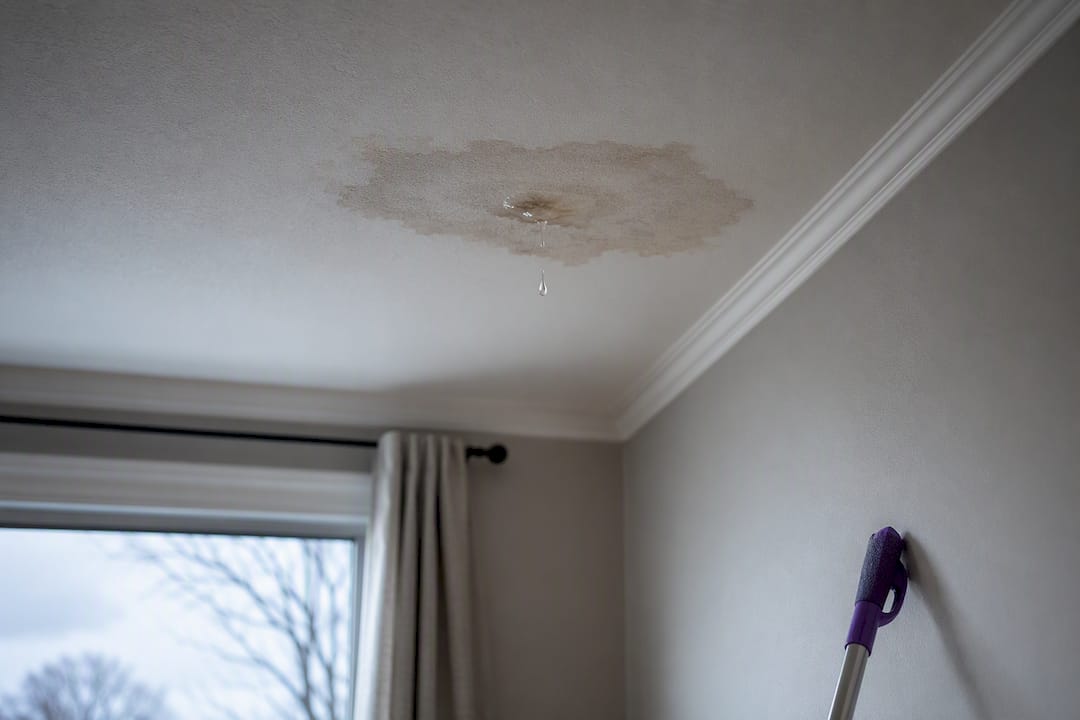
- Brownish water stains on ceilings near exterior walls, especially in upstairs bedrooms and closets.
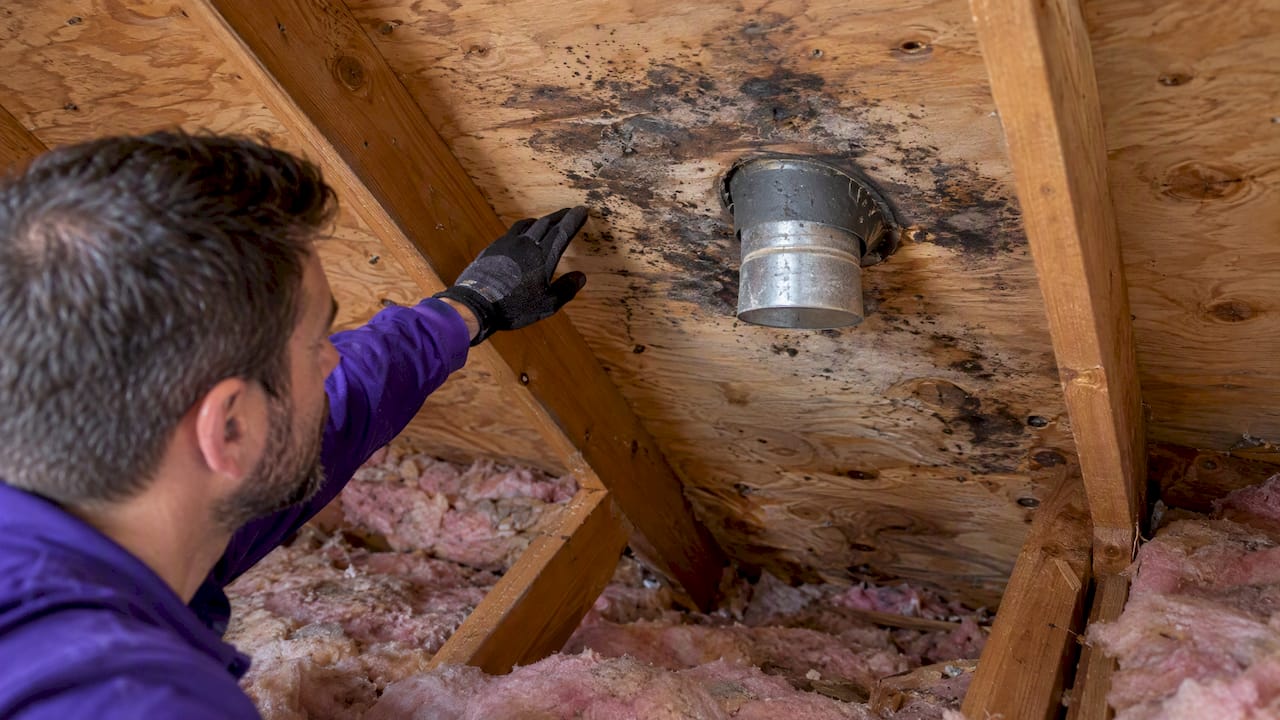
- Insulation in the attic that looks matted, damp, or has slid away from where it should be.
- A musty smell in the attic, even when you can’t see obvious water.
- Peeling paint or bubbling drywall near exterior wall lines.
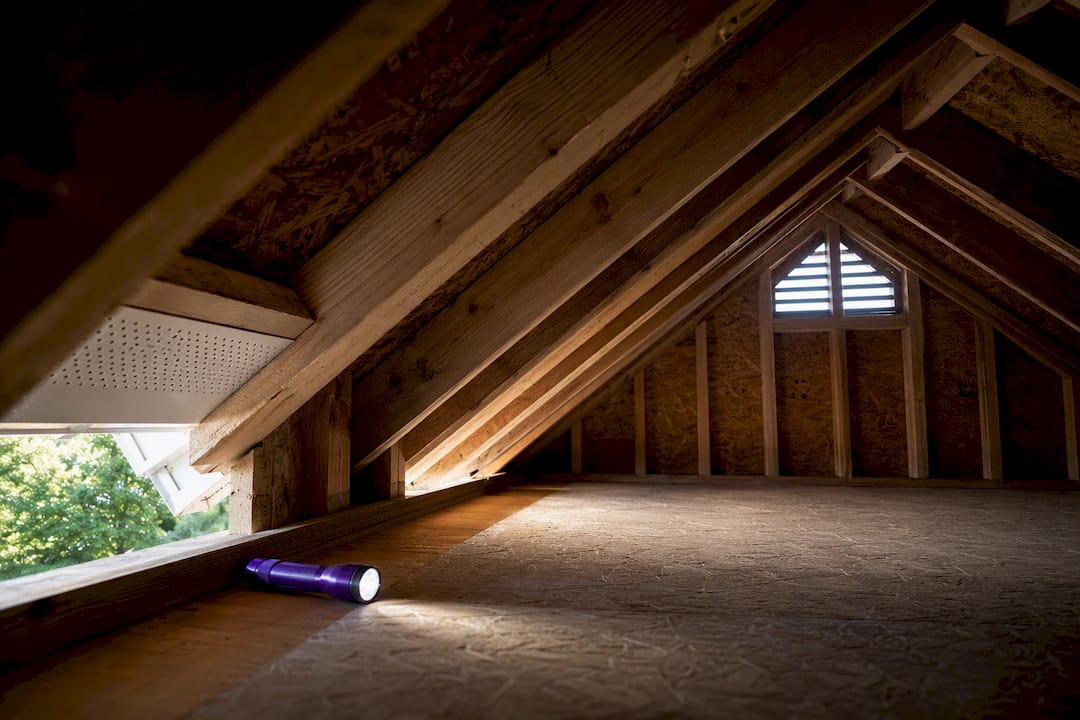
If you can safely open the attic hatch and shine a flashlight around without walking on unsupported joists, do it. Otherwise, this is a job for someone with the right harness and experience, not a homeowner in socks on a ladder.
What’s Safe to Try Before Calling a Professional?
A roof rake used correctly, from the ground, pulling snow down and away from the eave, remains the single safest DIY move against Chicago ice dams. Less snow load on the roof means less meltwater feeding the dam. Skip the aluminum ladder-and-shovel combo entirely; that’s how roof damage and emergency-room visits happen in the same afternoon.
Calcium chloride socks work, but only within limits:
- Place them across the ice ridge, not just anywhere on the roof, and let gravity carry the melt down through the dam.
- Rock salt is a poor substitute. It’s harder on shingles, gutters, and the plants below your downspouts.
- Warm water poured to cut a channel through a dam can offer a few hours of relief on a mild day, but it refreezes fast once temperatures drop again, so treat it as a stopgap, not a fix.
Avoid these outright: chipping or hammering at ice with a shovel or chisel, which tears shingle granules and opens the roof to future leaks; standing on an ice-covered roof, full stop; and heat guns or propane torches, which have started roof fires and voided shingle warranties in equal measure. Building science guidance is blunt on this point: heat cables and quick fixes treat the symptom, not the cause, and roughly 2 inches of snow sitting on a roof with the wrong temperature profile is enough to start the cycle over again.
What Actually Stops Ice Dams from Coming Back?
Every ice dam has the same root cause: parts of your roof deck sit above 32°F while the eaves stay below freezing, so meltwater runs down and refreezes right at the edge. The fix isn’t a better rake. It’s making your entire roof deck cold and uniform, which means treating your attic floor like the lid on a pot.
Building scientists call this the “attic lid” approach, and it has three parts that only work together:
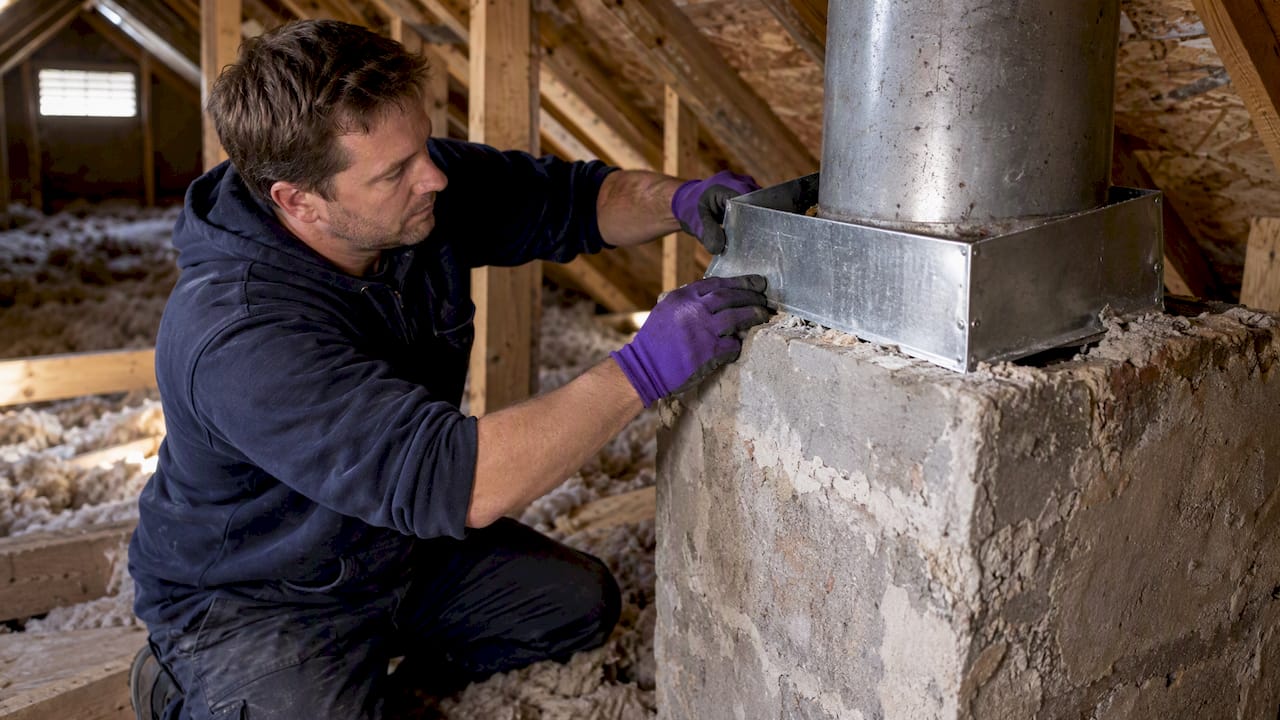
- Air sealing first. Recessed lights, plumbing stacks, HVAC chases, and the attic hatch itself leak more warm air into the attic than most homeowners realize, and sealing these bypasses is usually the highest-impact single step before you add a single inch of insulation.
- Deep, continuous insulation. Cold-climate guidance from Building Science points toward R-60 in attics across the Chicago region, well beyond what many older homes actually have.
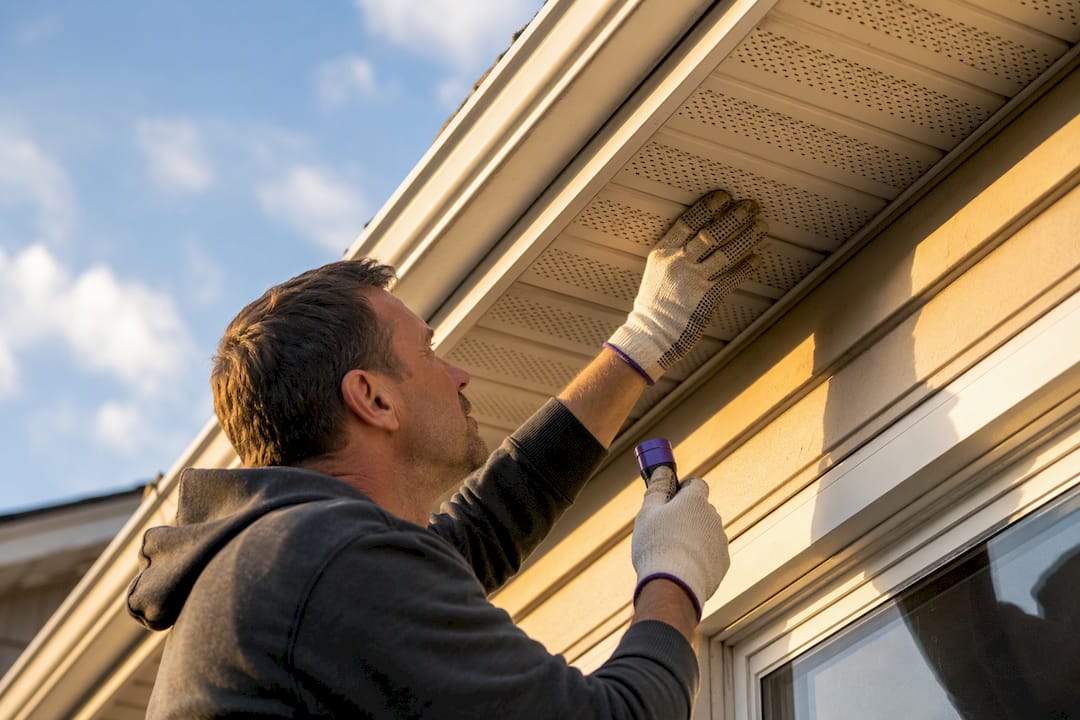
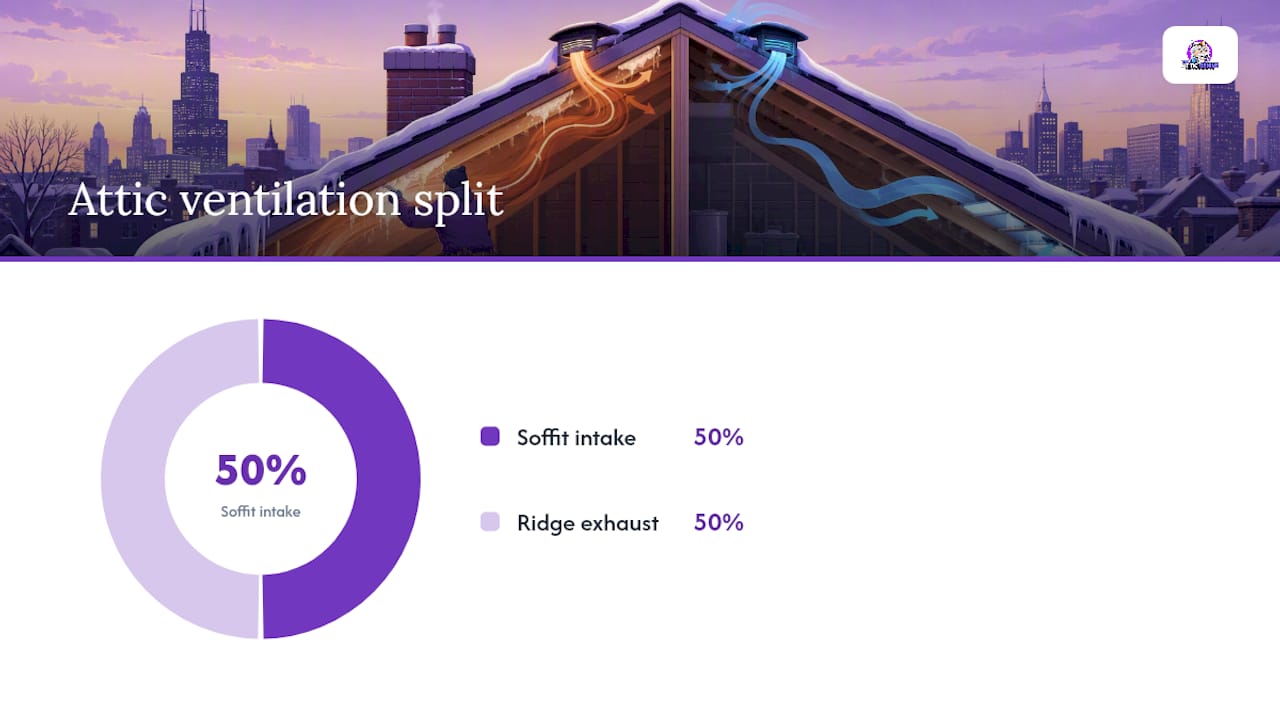
- Balanced ventilation. Vented attics need roughly 1 square foot of net-free vent area for every 300 square feet of attic floor, split evenly between soffit intake and ridge exhaust, so the whole roof deck stays the same cold temperature. Baffles at the eaves keep that airflow moving even after insulation goes in, since blocked soffits are one of the most common installation mistakes homeowners never see.
Mechanical attic fans and heat cables get pitched as fixes, but treat them with caution. Fans can pull conditioned air out of your living space and worsen moisture problems in a cold climate like Chicago’s, and heat cables only manage the symptom along one section of roofline while the rest of the attic keeps leaking heat. Some complex roofs, ones with multiple valleys or dormers, may need a contractor-recommended over-roof approach to keep the deck reliably cold, but that’s a decision for a site visit, not a guess from the driveway.
Pro Tip: Ask any contractor whether they’ll confirm the fix with a blower-door test or infrared scan before and after the work. If insulation R-value alone is the pitch, you’re only getting half the job.
A professional inspection paired with air sealing, attic insulation, and properly installed attic ventilation is what actually breaks the cycle, not another bag of calcium chloride every February.
When Does an Ice Dam Need a Professional, Not a DIY Fix?
Call a professional the moment water is actively entering your home, the ice dam spans more than a small section of roofline, or reaching the affected area would mean standing on a steep or ice-covered roof. None of that is a reasonable weekend project, and pushing through it usually costs more in ER visits or roof damage than the service call would have.
A qualified contractor brings tools most homeowners don’t own: steam equipment for safe ice removal that won’t tear shingles, a blower door to pinpoint exactly where conditioned air is escaping into the attic, and infrared scanning to map thermal bridges invisible to the naked eye. They’ll also give you a written estimate and a defined scope of work before anyone touches the roof.
For an insurance claim, timing matters:
- Document damage before any repair work begins, not after.
- Keep every receipt tied to emergency mitigation, including ice removal and temporary tarping.
- Ask your contractor for a written condition report; most adjusters accept these as supporting evidence.
Cost and timeline depend heavily on roof complexity, how much water intrusion already occurred, and whether attic remediation gets bundled into the same visit. A simple air-sealing and insulation upgrade moves faster than a job that also involves drywall repair or mold cleanup.
Why Do Ice Dams Cause More Damage Than They Look Like?
An ice dam that gets removed but never addressed at the source just comes back next winter, often worse. Trapped moisture from repeated leaks compresses attic insulation and cuts its effective R-value, which feeds more heat loss and more melting the following season.
- Damp insulation loses R-value and stops performing the way it’s rated to.
- Persistent moisture creates conditions where mold can take hold, which affects indoor air quality well beyond the attic itself.
- Partial fixes, like sealing one bypass but missing others, leave enough uneven heat loss for dams to reform in the same spots.
- Years of freeze-thaw cycles stress gutters, fascia boards, and roof decking, turning a seasonal nuisance into a structural repair bill.
If you’re seeing recurring stains or a musty attic smell, that’s a sign the moisture issue predates this winter’s ice, and it’s worth a look from moisture and mold remediation specialists alongside the insulation fix.
What Does The Attic Genius See in Chicagoland Attics?
Most of the ice-dam calls we get in the Northwest Suburbs and across Chicagoland trace back to the same three culprits: air leaking around recessed can lights, gaps at the top plates where walls meet the attic floor, and baffles that were installed wrong (or not at all) when the insulation went in. None of these show up from the driveway. They show up on an infrared scan.
A cold roof deck isn’t an accident. It’s the result of a continuous air barrier, adequate depth of insulation, and ventilation that actually moves air from soffit to ridge, checked with real diagnostic tools instead of a guess.
Our standard visit includes an insulation depth check across the whole attic floor, a blower-door test to quantify air leakage, an infrared scan to find hidden thermal bridges, and a walkthrough of your existing soffit and ridge ventilation. With extensive experience and many positive reviews across the region, we’ve built our process around finding the actual cause before quoting a fix, not the other way around.
The Real Problem with Most Ice Dam Advice
That’s backwards. Removal buys you a few days. It never touches the reason the dam formed in the first place, which is heat escaping unevenly through your attic floor.
The conventional wisdom also oversells heat cables as a “solution” rather than what building scientists actually call them: an emergency patch for one section of roofline while the rest of the attic keeps leaking warm air. Same problem with mechanical attic fans. They sound proactive, but in a Chicago winter they can pull more conditioned air out of the living space into the attic and make moisture problems worse, not better.
If you take one thing from this guide, prioritize the diagnosis over the fix. A blower-door test and an infrared scan tell you exactly where your attic is failing, so the money you spend on insulation and air sealing goes where it actually stops the cycle. Skipping that step and just adding insulation on top of unsealed bypasses is why so many Chicago homeowners fight the same ice dam every single winter.
— Jim
Get Your Attic Assessed Before the Next Cold Snap
This company offers an alternative to another season of rakes, ice melt, and roof damage: instead of managing ice dams every January, they find and fix the heat loss causing them, with a same-day inspection and a written scope before any work starts.

Our process starts with an inspection that checks insulation depth, air leakage, and ventilation balance in one visit, the same diagnostics described above. From there, you get a written estimate covering exactly what your attic needs, whether that’s air sealing around recessed lights and top plates, an attic insulation upgrade to cold-climate R-values, corrected attic ventilation with proper baffles, or moisture and mold remediation if past leaks left damage behind. Every job comes with a written warranty, and scheduling doesn’t require weeks of waiting during peak winter demand.
If your home has been on the ice-dam-every-winter list, this is the year to break that pattern. Book an attic inspection and get a straight answer about what your attic actually needs before the next cold snap sets in.
Where This Guidance Comes From
- Building America Solution Center: air sealing, insulation, and ventilation specs for ice dam prevention.
- University of Minnesota Extension: practical homeowner removal and prevention steps.
- This Old House: insulation strategy and diagnostic testing guidance.
- CDC: health effects of mold linked to attic moisture.
For broader home-envelope upkeep during Chicago winters, winterizing exterior doors closes another common gap where heat escapes and cold air pushes in.
Sources
- Attic air sealing, insulating, and ventilating for ice dam prevention | Building America Solution Center
- BSD-135: Ice dams | Building Science
- Dealing with and preventing ice dams | UMN Extension
- Insulate the attic to prevent ice dams | This Old House
- Mold | About mold and health | CDC
What Other Attic Resources Are Recommended?
- Other recommended attic resources include articles on 'The Role of Attic Hatch Insulation in Saving Energy' and 'Whole-House Energy Efficiency Attic Tips That Work' to further enhance your home's efficiency.