
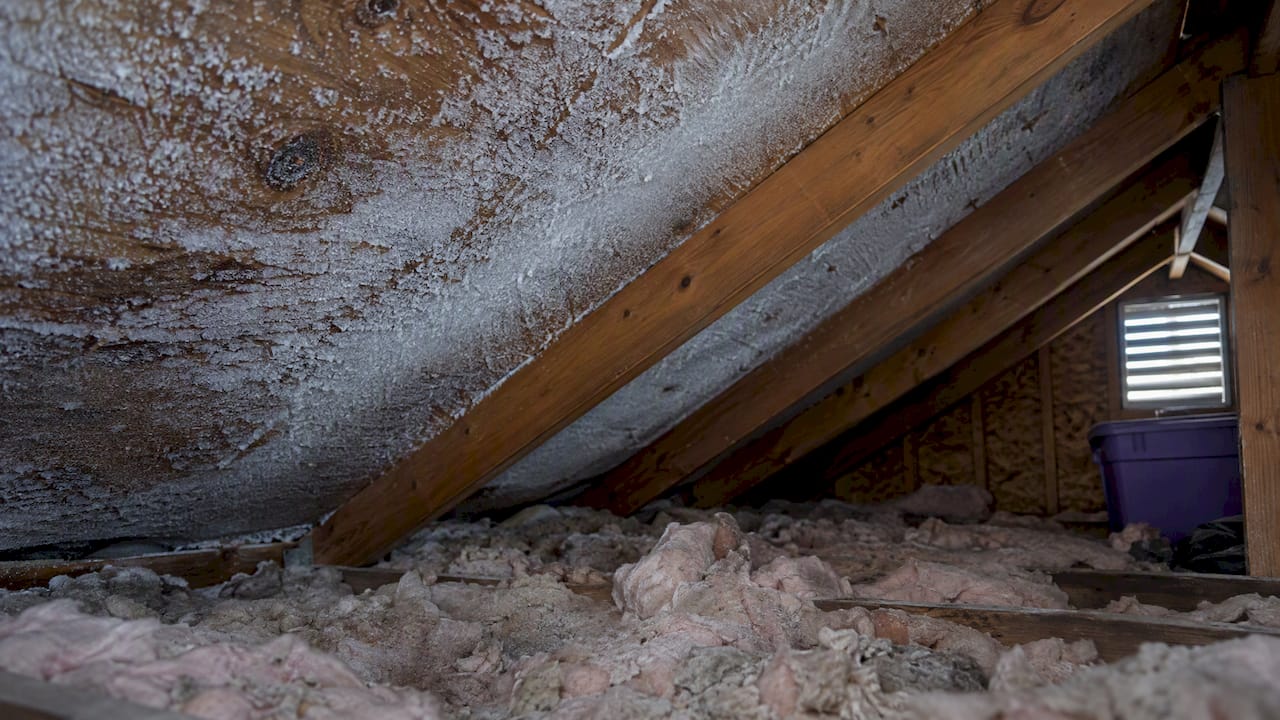
Yes, a humidifier can cause frost in your attic. Whole-house and portable units add moisture to the air you live in, and that warm, humid air leaks upward through gaps in your ceiling. When it reaches the cold underside of the roof in a Chicago-area January, it freezes on the roof decking. The fix has two parts: lower the humidity you run in winter, and seal the leaks that let house air into the attic.
This guide explains how the frost forms, what humidity setting to use as the temperature drops, what else besides a humidifier can cause it, and what to do when you climb up and find a white coating on the rafters.
TL;DR
- A humidifier adds moisture that travels as warm, humid air into the attic and freezes on cold roof decking during frigid weather.
- Lower your humidistat as the outdoor temperature falls. At 20°F outside, the recommended setting is 35% relative humidity.
- Frost melts when it warms up and then it effectively rains inside your attic, soaking insulation and framing.
- Turning the humidifier down treats the symptom. Air sealing the ceiling plane and checking vents and exhaust ducts treats the cause.
- Wet insulation should not be covered up until the source is fixed and the material is dry.
Table of Contents
- How a humidifier ends up frosting your attic
- Why frost is a bigger deal than it looks
- What humidity setting is safe in winter
- Other moisture sources that cause the same frost
- How to check your attic for the source
- What to do when you find frost
- Should you keep using a humidifier at all?
- Perspective
- Get an expert to look at the attic
- FAQ
- Sources
How a humidifier ends up frosting your attic
Frost in an attic is a moisture delivery problem. Water vapor from your living space has to get up there somehow, and it needs a cold surface to turn into ice. A humidifier supplies the vapor. Your ceiling leaks supply the delivery route. The roof deck, which sits near outdoor temperature in winter, supplies the cold surface.
In practice it goes like this:
- You run a humidifier because winter air feels dry, your skin itches or the furnace makes static.
- Indoor humidity climbs, often well past the level your windows and walls can tolerate.
- Warm air rises. Building America researchers note that the attic is a major source of air exchange in many homes, with air driven between the house and the attic by stack effect and pressure imbalances.
- The moisture-laden air slips through recessed lights, the attic hatch, wiring holes, duct boots and plumbing stacks.
- On the cold roof sheathing, the vapor condenses and freezes. Nights below freezing build it into a layer of white crystals.
Here is the part most people miss. Airflow transports an order of magnitude more water vapor than diffusion through building materials in most circumstances. So the problem is rarely moisture passing through drywall. It is moisture riding on air that escapes through holes, which is why a modest humidifier setting can still produce heavy frost in a leaky house.
The pattern is well documented in cold states. A Minnesota news report on the topic describes how indoor humidifiers can contribute to attic frost in frigid weather. Northern Illinois winters are milder than Minnesota’s, but cold snaps below 20°F happen most years, and that is when the frost shows up.
Why frost is a bigger deal than it looks
A light dusting on the nail tips may seem harmless, and in a dry, tight, well-ventilated attic it can come and go without trace. The trouble starts when it thaws. As the same Minnesota report puts it, the frost stays until the weather warms, then it starts to rain in the attic.
That meltwater has places to go:
- Into the insulation, where wet fibers or granules lose much of their ability to slow heat flow.
- Onto the ceiling drywall, showing up as brown stains or drips from light fixtures and smoke detectors.
- Into the roof sheathing and rafters, which can start to rot or grow mold if they stay damp.
Natural Resources Canada lists rotting wood, musty odors and stained ceilings as the usual signs of a moisture problem, and says to identify and correct the cause. A repeat winter after winter pattern is how a “little frost” becomes a mold job. If you already smell something stale, our guides on a musty attic smell and attic mold in winter explain how fast damp materials turn.
What humidity setting is safe in winter
The right number depends on the outdoor temperature, which is why a “set it and forget it” humidistat is a common culprit. Colder outside means your house has colder surfaces, and those surfaces cause condensation at lower indoor humidity.
| Source | Recommendation |
|---|---|
| AHRI (heating and cooling industry) | Lower the humidistat as outdoor temperatures drop; 35% relative humidity when it is 20°F outside |
| Virginia Tech building research | No higher than 35% to 40% in winter, and below 35% when it is 20°F or colder outdoors |
| University of Minnesota Extension | 25% in winter and 50% in summer is generally healthy and comfortable |
The sources are not identical, and that is fine. They agree on the direction: in cold weather, lower is safer. If you have already had frost, start at the low end of the range and watch what happens over a couple of cold weeks before nudging it up.
Two practical tips:
- Watch your windows. Condensation on the lower corners of several windows is a plain sign your humidity is too high for the weather. Drop the setting before the next cold night.
- Buy a small hygrometer. A basic digital one costs little and tells you the real number in the house, which often differs from the dial on a humidifier.
One engineering guide puts the principle well: good humidification design in cold climates is as much about limiting indoor humidity as adding it. A humidifier is not the enemy. An uncontrolled one in a leaky house is.
Other moisture sources that cause the same frost
If you turn the humidifier off and the frost still comes back, something else is feeding it. Often it is a combination. Check these in order.
Exhaust ducts that end in the attic
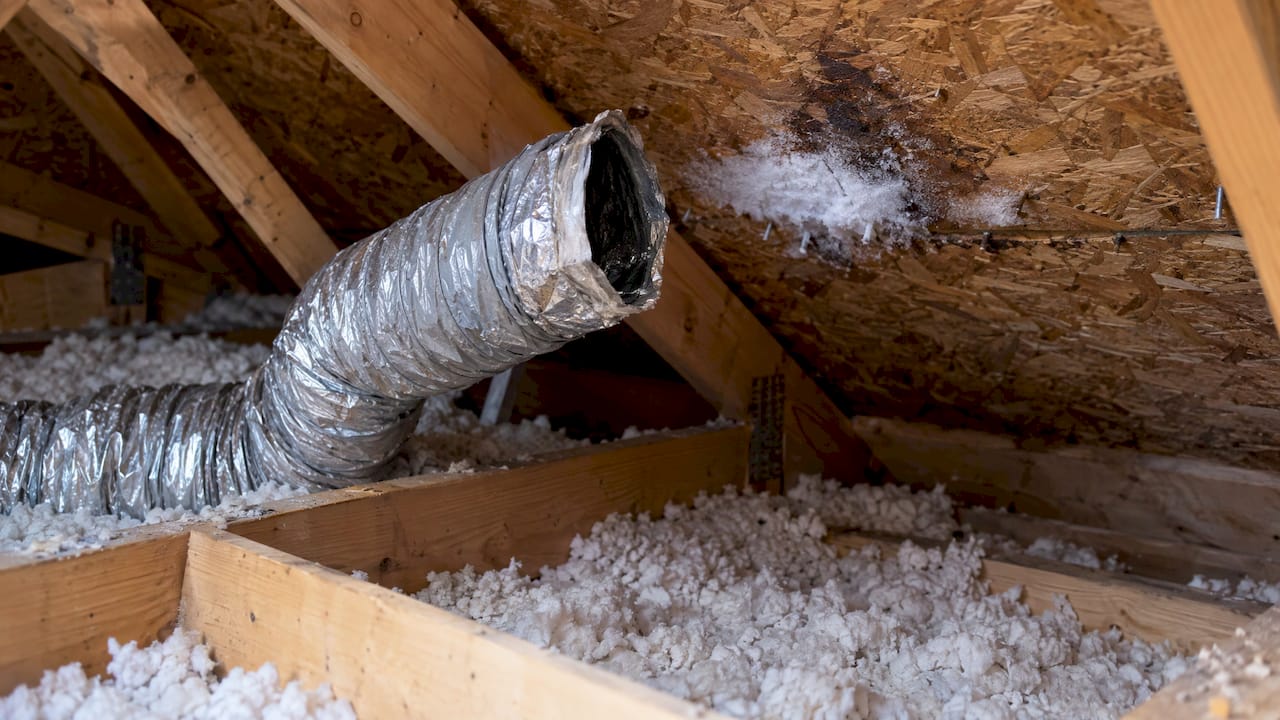
Bathroom fans, kitchen hoods and clothes dryers must send air outdoors. Guidance for sealing and insulating homes states that these vents should discharge outdoors, not directly into an attic. After a re-roof, a disconnected or crushed vent pipe is a classic cause, and frost concentrated around one spot often points straight at it. A building-materials trade group suggests that frost near the ridge or localized in one area can help identify the source, including bathroom or kitchen ducts and dryer vents.
Air leaks through the ceiling
Pacific Northwest National Laboratory notes that warm, moist house air leaks into attics through ceiling penetrations and condenses against cold sheathing, and that sealing around wiring, ducting, flues and other penetrations helps. Natural Resources Canada adds plumbing stacks, chimney chases and light fixtures to the list of usual leak points. Our pages on common attic air leaks and knee wall air leaks show where these hide in typical suburban homes.
Blocked or missing ventilation
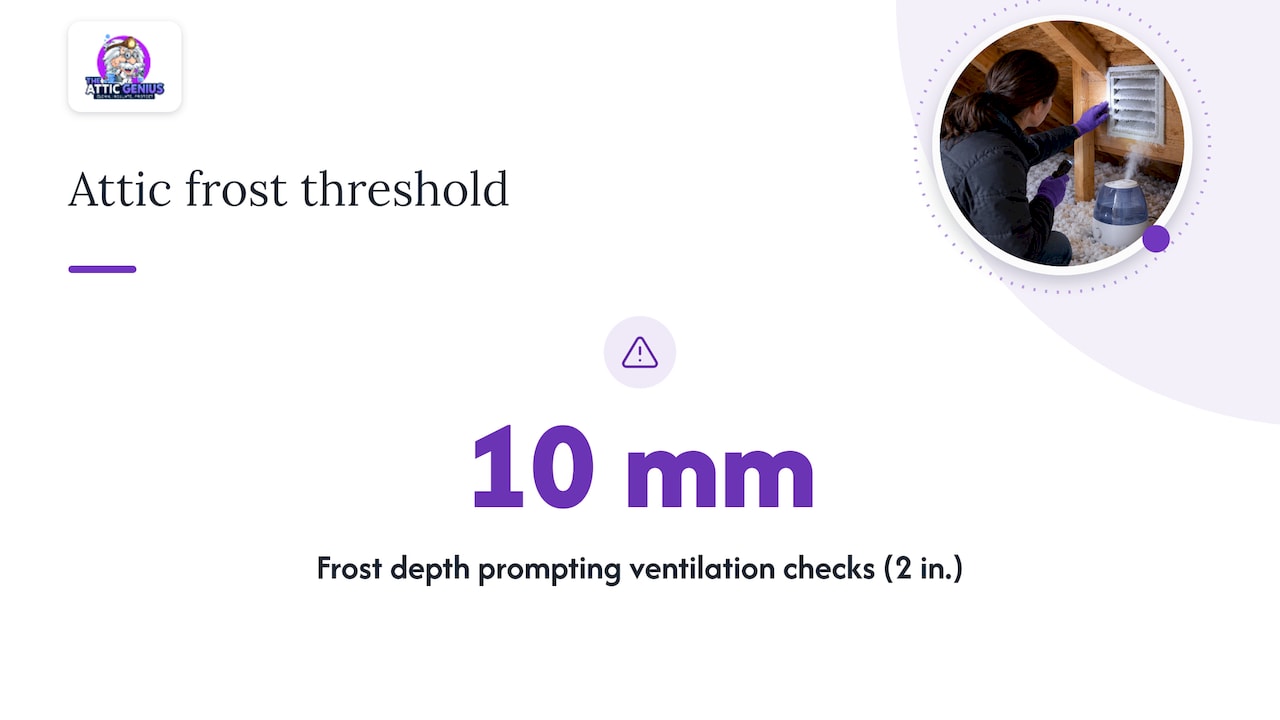
Ventilation does not cure a leaky ceiling, but it helps carry off the moisture that gets through. When insulation has been pushed into the eaves and covers the soffit vents, air can no longer move. Heavy frost is a trigger to look: Natural Resources Canada says that if frost is particularly heavy, 10 mm (2 in.) or more, you should check that ventilation is present and not blocked by insulation. Baffles keep that channel open, and we explain them in attic baffles and their role in ventilation. A home inspector going through attic insulation inspection checks will also look at whether vents are clear.
Too much insulation?
People often ask whether adding insulation causes condensation. Insulation by itself does not create moisture. The issue is that insulation products are generally not effective air barriers, so leaks through ceiling penetrations can still cause attic moisture problems, and ventilation is recommended alongside air sealing and adequate insulation. More insulation on top of an unsealed ceiling makes the attic colder, which makes the roof deck a better place for frost. The order matters: seal first, then insulate. We cover that in air sealing vs. insulation: which comes first.
Combustion and daily living
Large families, long showers, simmering pots and indoor clothes drying all add moisture. Experienced tradespeople in forum threads often note that lifestyle alone can cause the problem even without a humidifier. Treat the humidifier as one contributor, not the only suspect.
How to check your attic for the source
Do this during or just after a cold snap, when frost is present. Natural Resources Canada advises that checking during or just after a cold snap can reveal frost buildup.
- Look at the pattern. Frost spread evenly across the whole roof deck suggests widespread air leakage from below or very high indoor humidity. Frost in one patch suggests a single source, such as a bath fan duct.
- Trace every duct. Follow bathroom, kitchen and dryer ducts to a roof, wall or soffit termination. Look for disconnected joints.
- Look at the insulation. Dark stripes or patches show where air flows out of the house, because discolored insulation indicates dusty house air being filtered as it escapes into the attic. Those dark spots are a map of your leaks.
- Check the eaves. Confirm the soffit vents are open and that insulation is not stuffed against the roof deck at the edges.
- Check the hatch. An unsealed, uninsulated attic hatch is among the largest holes in many ceilings.
- Look for stains and rot. Dark staining on plywood can mean this has been going on for years. Our 10 square foot rule for attic black spots helps you judge how serious it is.
Wear a respirator and eye protection, step only on joists, and stay out if you see signs of wiring damage or pest droppings. Those are jobs for a professional.
What to do when you find frost
The government guidance is consistent. Natural Resources Canada’s advice is to identify and correct the moisture source, air-seal attic leaks and make sure exhaust fans discharge outdoors, and not to cover wet insulation until the source is removed and the material has dried.
A workable plan:
- Turn the humidifier down or off today. Then watch the frost over the next cold nights. A fast improvement confirms the humidifier was a major contributor.
- Fix exhaust ducts. Reconnect, insulate and route them outdoors through a proper termination.
- Lower moisture at the source. The University of Minnesota says that if a moisture source cannot be removed, use a dehumidifier or ventilate the house.
- Air seal the ceiling plane. This is the permanent fix and the step most homeowners skip. Our three step attic repair to stop frost walks through it.
- Dry or replace wet insulation. Matted, stained or damp material needs to dry out or be removed before you add new insulation.
- Restore ventilation. Clear soffits, install baffles and confirm the exhaust side works. See winter attic ventilation and soffit vs. gable vents.
A word on a dehumidifier in the attic. It is a temporary bandage some homeowners use in a bad winter. It does not stop house air from flowing upward, so the leaks stay.
Should you keep using a humidifier at all?
Most people can, with discipline. Once the ceiling is sealed and ventilation is working, the attic is far less sensitive to indoor humidity, and you can run a modest setting that keeps you comfortable. Until then:
- Use the lower end of the ranges in the table above.
- Lower the setting before a forecast cold snap rather than after frost forms. The AHRI guidance is explicit that homeowners should anticipate drops in outdoor temperature and reduce humidistat settings.
- Prefer a humidifier with a humidistat you can read and trust, and confirm it with your own hygrometer.
- If you rely on a portable unit in a bedroom, keep the door cracked less in the coldest weeks and keep it away from leaky ceiling areas such as stairwell openings.
Perspective
When we open an attic after a cold snap, the frost is rarely a humidifier problem alone. It is almost always a humidifier problem sitting on top of an air leak problem. The humidity you add has to go somewhere, and in a house with open wiring holes, bypasses around chimneys and a poorly sealed hatch, it goes straight up.
That is why we assess before we recommend anything. Some attics need a top-up of insulation, some need a full removal and replacement because the material is wet or contaminated, and some only need sealing and a few cleared vents. We would rather show you the dark, dirty streaks in your insulation and the bare spots around the fixtures than sell you more material that will sit on top of the same leaks.
Our approach is built around doing the work in the right order: stop the moisture, fix the air leaks, restore ventilation, then insulate to what the home actually needs. Specialists who work only on attics see the same patterns again and again in Northwest Suburb homes, and the fix is predictable when it is done in that sequence. All of our work is backed by written warranties, because a repair that does not hold through the next January is not a repair.
Jim
Get an expert to look at the attic
If you have found frost, stains or damp insulation, you do not have to guess at the cause. The Attic Genius is a specialist team for attic insulation, air sealing, attic ventilation and moisture and mold remediation across Chicagoland and the Northwest Suburbs. We assess what your attic needs, explain the findings, and offer upfront pricing and written warranties. Same-day inspections are available.

If frost is already forming, request a free inspection before the next cold snap, so the source is found while the evidence is still visible.
FAQ
Can a humidifier really cause frost in the attic?
Yes. A humidifier raises indoor humidity, and warm moist air leaks through ceiling gaps into the attic, where it freezes on cold roof sheathing. Frost is more likely in leaky homes and during cold snaps. Lowering the humidistat and sealing the ceiling plane addresses both halves of the problem.
What humidity level should I keep in winter to avoid attic frost?
Guidance from building researchers and the heating industry points to no higher than about 35% to 40% in winter, and around 35% or lower when it is 20°F outside. Some university guidance gives 25% as healthy and comfortable in winter. Start low if you have had frost before.
Is frost in the attic normal?
A thin, occasional layer can appear in cold weather in many homes, but it signals that moist house air is reaching the attic. What matters is how much, how often and what happens when it melts. Heavy frost, stains on ceilings or damp insulation mean you should find the source and fix it.
Is it a good idea to put a dehumidifier in the attic?
Only as a short-term measure. A dehumidifier can reduce moisture when the source cannot be removed right away, but it does not stop the leaks that let house air in. The lasting fix is air sealing, working exhaust ducts and clear ventilation.
What is the “7 and 7 rule” for attics?
The phrase is most often used for the size an attic needs to be before it can be converted to living space, not for frost or moisture. For ventilation, rules differ by local building code, so ask a qualified attic professional what applies to your home.
Sources
- Using A Humidifier In This Cold Weather? Check Your Attic (CBS Minnesota)
- Keeping the Heat In, Chapter 5 (Natural Resources Canada)
- Managing Indoor Humidity and Ventilation in Cold Weather (PNNL, Building America Solution Center)
- A Do-It-Yourself Guide to Sealing and Insulating
- Moisture Problems (Natural Resources Canada)
- Causes and Cures of Attic Condensation and Roof Ice Damming (Cornell)
- Causes and Cures of Attic Condensation and Roof Ice Damming (Cornell Cooperative Extension)
- Frost Build Up (APA)
- Solving Moisture Problems with Vapor Barriers (Virginia Tech)
- Controlling Moisture Problems in Your Home (UMN Extension)
- How Humidifiers Work (AHRI)
- Humidification in Cold Climates (HVAC Engineering Canada)
- Managing the Drivers of Air Flow and Water Vapor Transport (Building America)
- Attic Insulation Inspection: 8 Safe Checks


